

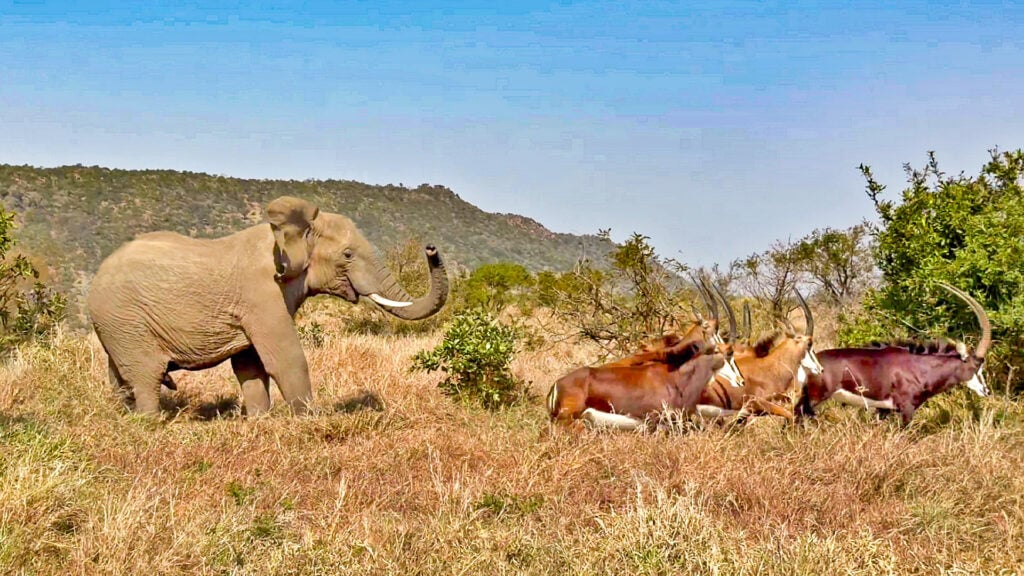
For the most part, game species, such as antelopes, warthogs, and elephants, get along just fine. Sometimes, however, younger animals feel the need to test boundaries.
Amy Barnes submitted this amusing footage to Latest Sightings. She filmed it on the H10 Lower Sabie-Tshokwane Road in South Africa’s Kruger National Park.
Elephants on the move
As we join Amy’s sighting, the first thing we see is a young male elephant. Its rounded forehead tells us that it is a male, while its short, emerging tusks suggests it is into its third year.
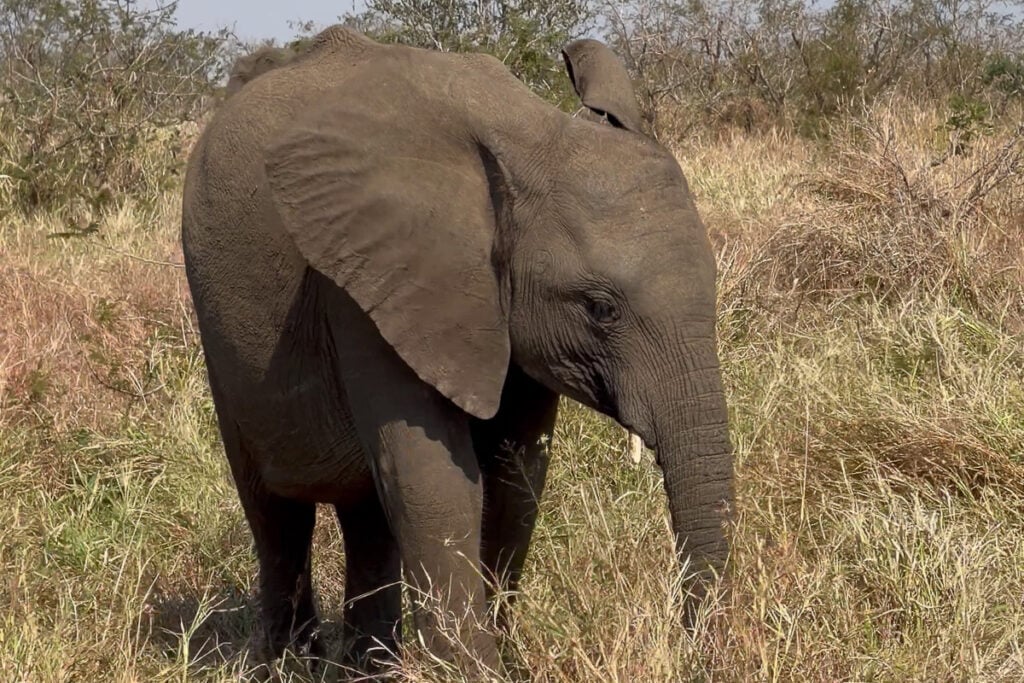
In the video, we can see several other elephants in the background, suggesting this individual is part of a larger breeding herd.
Non-stop buffet
Like all elephants, it needs to feed for up to eighteen hours a day to fuel its massive body. Their non-stop buffet includes a mixture of grass, fruit, bark, and leaves.
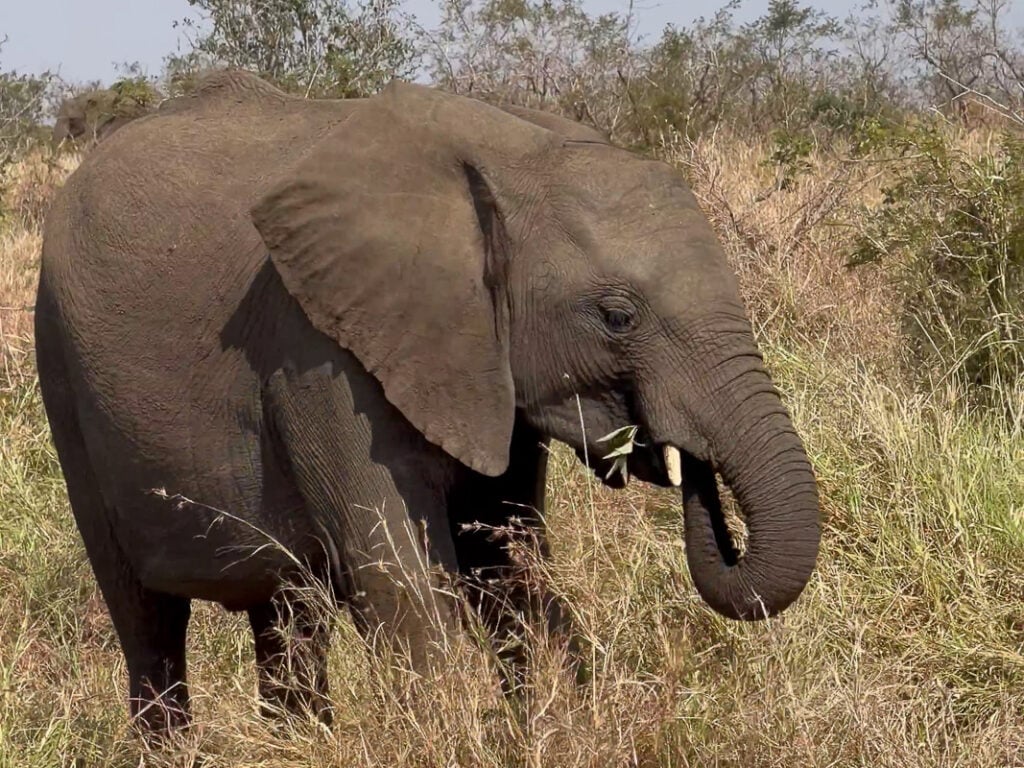
Their massive diets and high density in Kruger mean they compete with all other herbivores for food, space, and water.
Never Miss A Viral Safari Video
Strange behaviours, like this leopard tiptoeing through water, are popular with our members. To be among the first to see our latest sighting videos, join our exclusive alert list. Click the button above to join the WhatsApp chat right now and never miss another thrilling moment.
Rare sables
Subsequently, Amy’s footage cuts to a very rare sighting. A herd of sable antelopes is grazing near the elephants. Only a few hundred of these charismatic antelopes live in the Kruger Park.
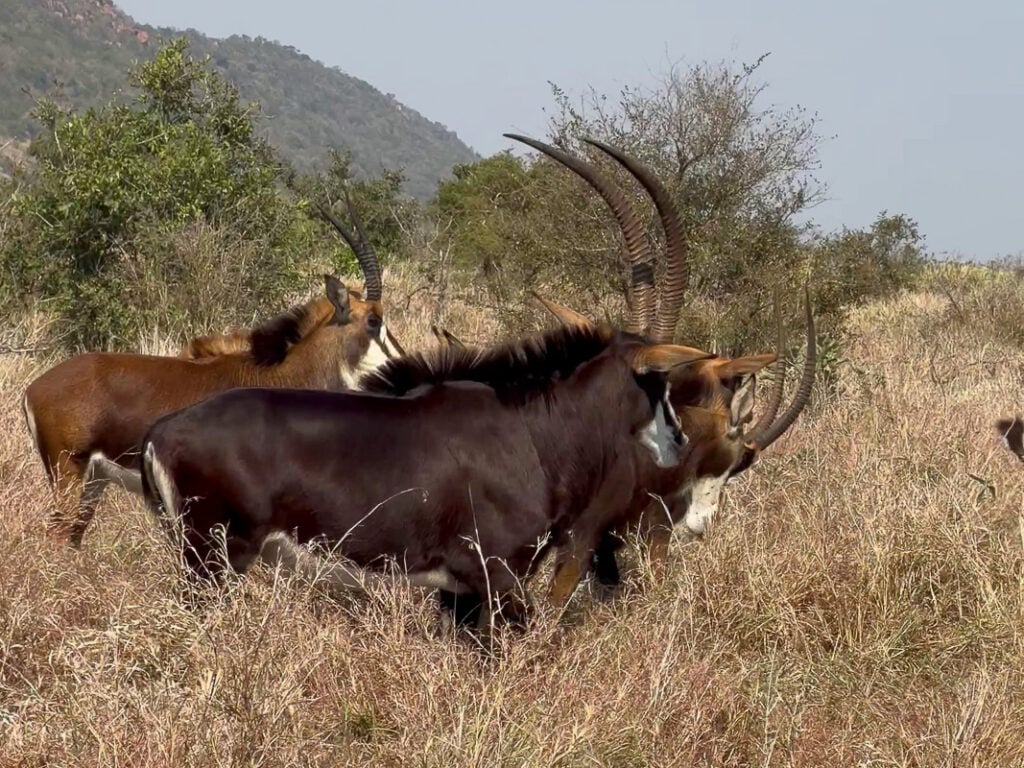
Above, we see a dark male in the foreground, with a couple of his lighter-coloured cows in the background. These scimitar-horned antelopes are mostly seen in the lightly wooded savannas of the southern Kruger.
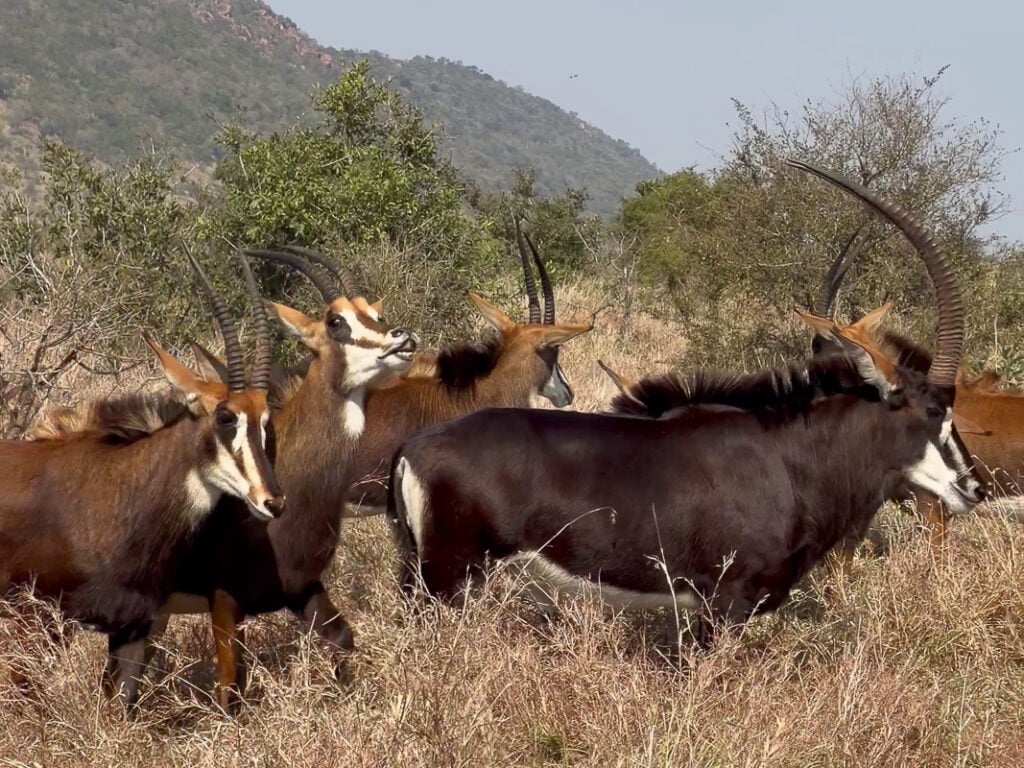
As we watch, we notice one of the sable cows raises her head as if alarmed by something. Sables are known to behave aggressively when threatened, so we watch with anticipation.
Emerging confidence
Subsequently, Amy zooms out, and we see that another member of the elephant herd is approaching the sables.
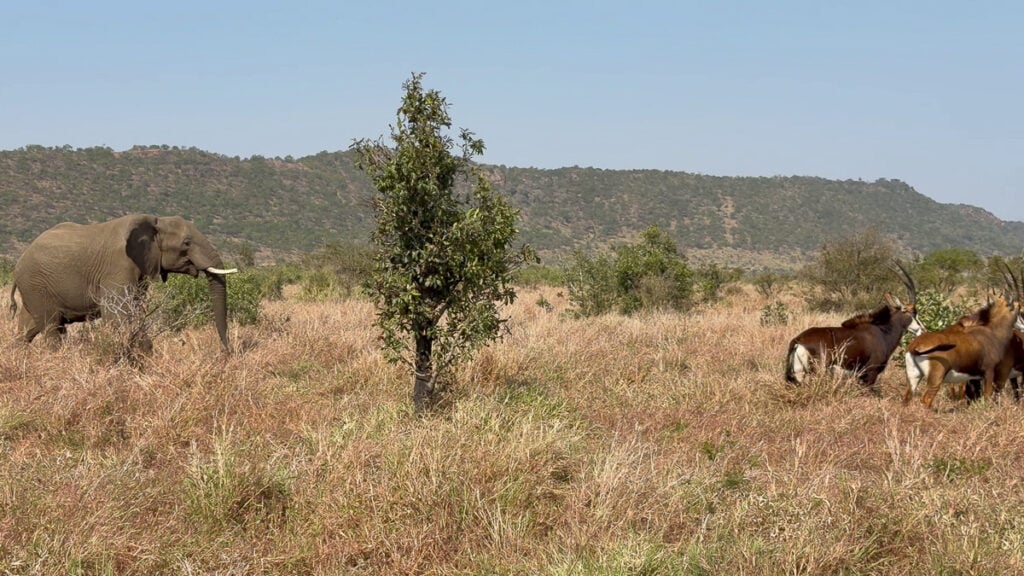
At a glance, we see that the elephant is a young male, probably less than 12 years old. At this age, young males are still part of their natal herd.
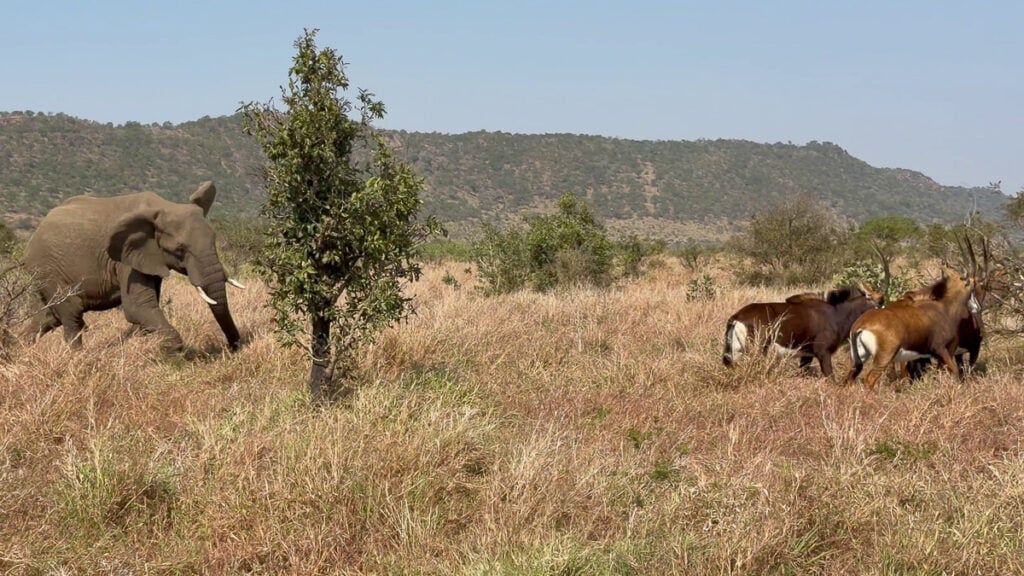
And as becomes evident when he shakes his head threateningly, he is beginning to flex his emerging confidence. Perhaps seeing the sables as encroaching on his family’s space, it’s a great opportunity to test boundaries.
No contest
Unsurprisingly, despite their reputation, when the sables see the bull approaching, they immediately run in the opposite direction.
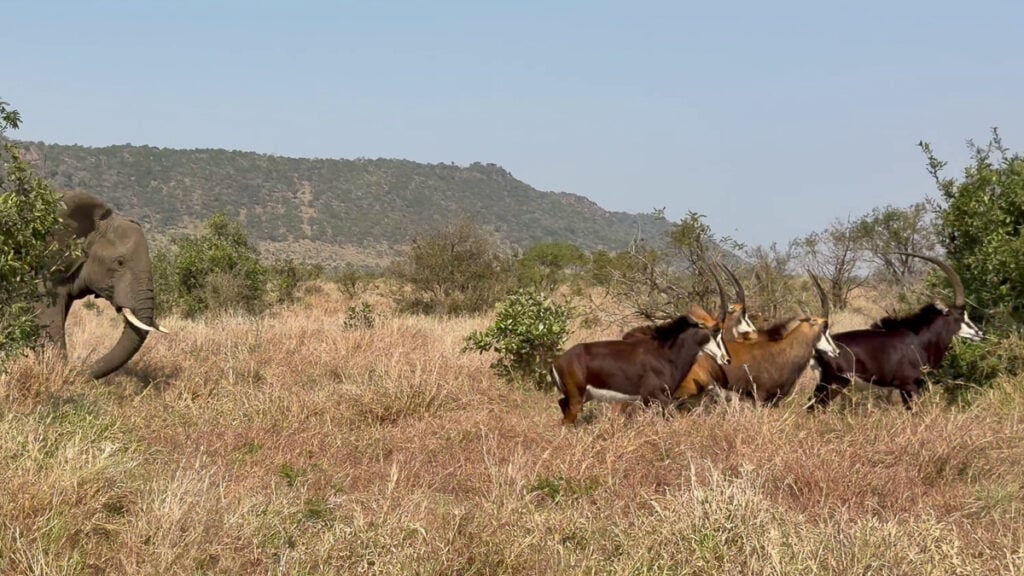
But then again, who wouldn’t? After all, the bull has a massive size advantage over every other species in the park.
Get our Best Sightings as they Come in
Job done
Amusingly, no sooner has the elephant got the result he was looking for than he stops and waves them off with his trunk held high.
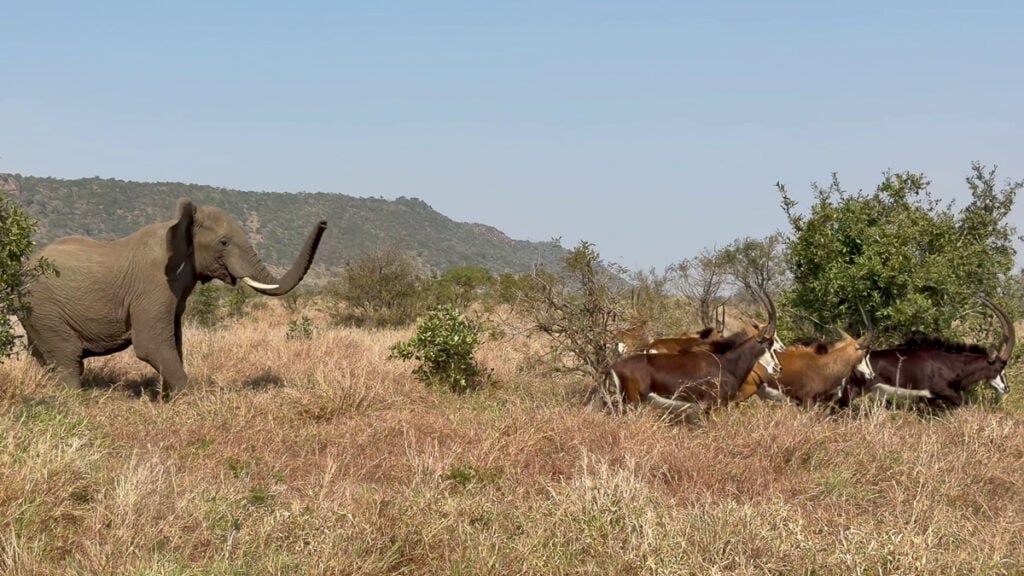
It’s almost as if he is mocking them for falling for his prank.
Use of comfort zones
However, the sables don’t run very far. As they realise the bull is no longer chasing them, they too stop.
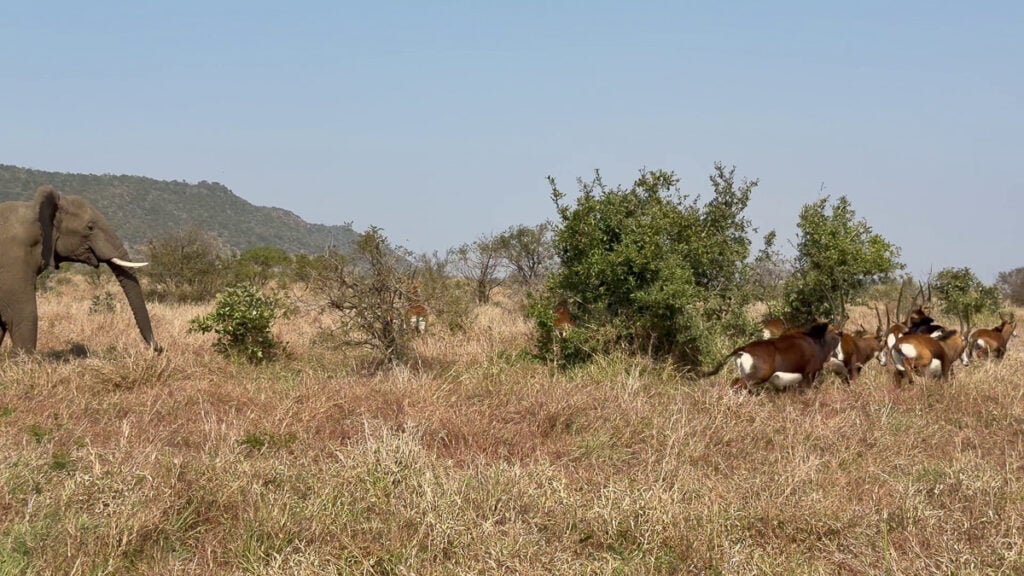
This is a great example of animals conserving energy by observing comfort zones.
Comfort zones are imaginary circles around animals within which they feel safe. These vary depending on the species they are interacting with.
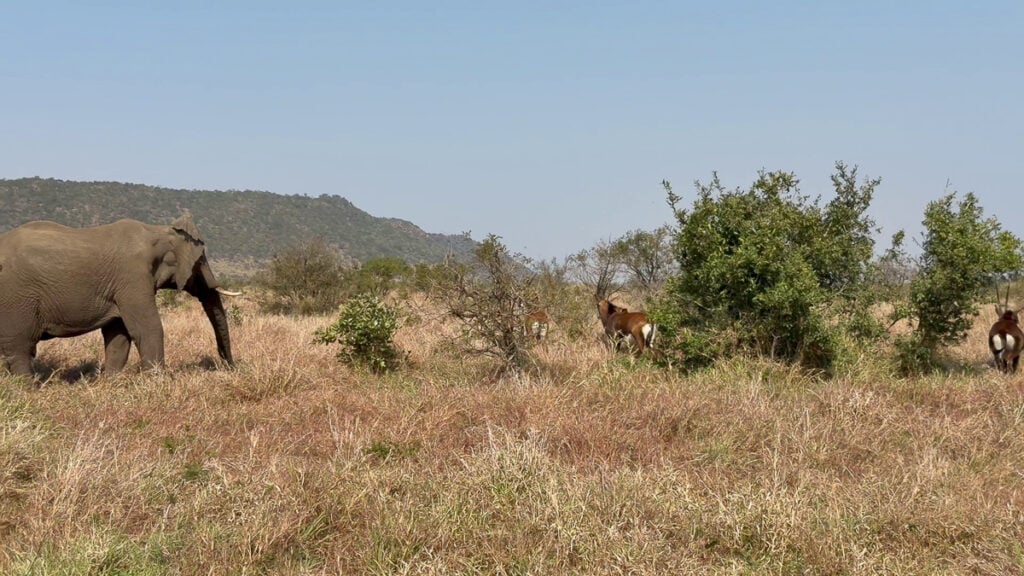
For instance, an antelope will apply a smaller comfort zone when encountering a zebra than it would if confronted by a lion.
Accordingly, as Amy’s footage ends, peace is already restored on the grasslands. By understanding these dynamic behaviours, you can greatly enhance your safari experience.


