

What is a Thermal Camera?
Before getting into technique, it helps to understand what you’re working with. A thermal camera doesn’t amplify light the way night vision does. Instead, it detects heat radiation, the infrared energy that every warm-bodied animal constantly emits, and converts it into a visible image on your screen.
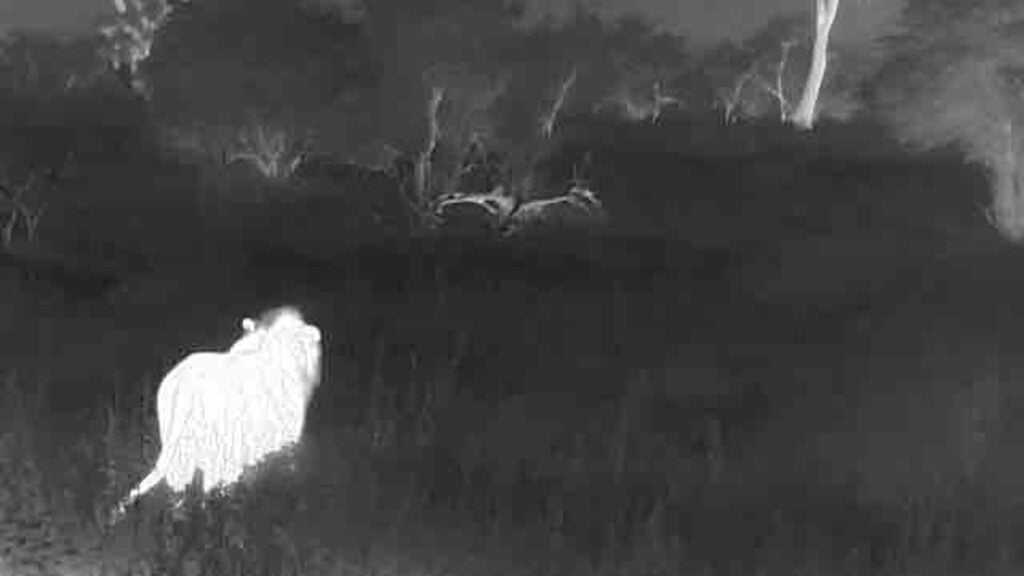
Lions, with their large body mass, show up as bright, high-contrast signatures even when they’re completely invisible to the naked eye. The dense grass, shadow, and thick scrub that make big cats so hard to find, means nothing to a thermal sensor.
The Best Times to Use It
Thermal imaging is most powerful when the temperature difference between an animal and its background is greatest. That means early morning before the ground has warmed up, and after sunset when the surrounding landscape begins to cool.
During the heat of the midday African sun, rocks and earth can absorb enough warmth to reduce contrast, making detection harder. Dawn and dusk drives are where thermal cameras earn their keep.
We put this to the test ourselves out in the field. Latest Sightings founder Nadav Ossendryver took a thermal camera out on a morning drive along the S112 and pulled up to a rocky outcrop.
A visual scan with binoculars turned up nothing, and the group was about to move on. On a whim, Nadav gave it a quick sweep with the thermal.
“There were huge dots on the thermal,” he said. He put the binoculars back up and spotted what had been invisible seconds earlier: a group of lion cubs lying flat against the rocks.
How to Scan Effectively
Technique matters. The most common mistake is scanning too fast. Move the device slowly across likely areas: tree lines, dry riverbeds, rocky outcrops, or open clearings near water.
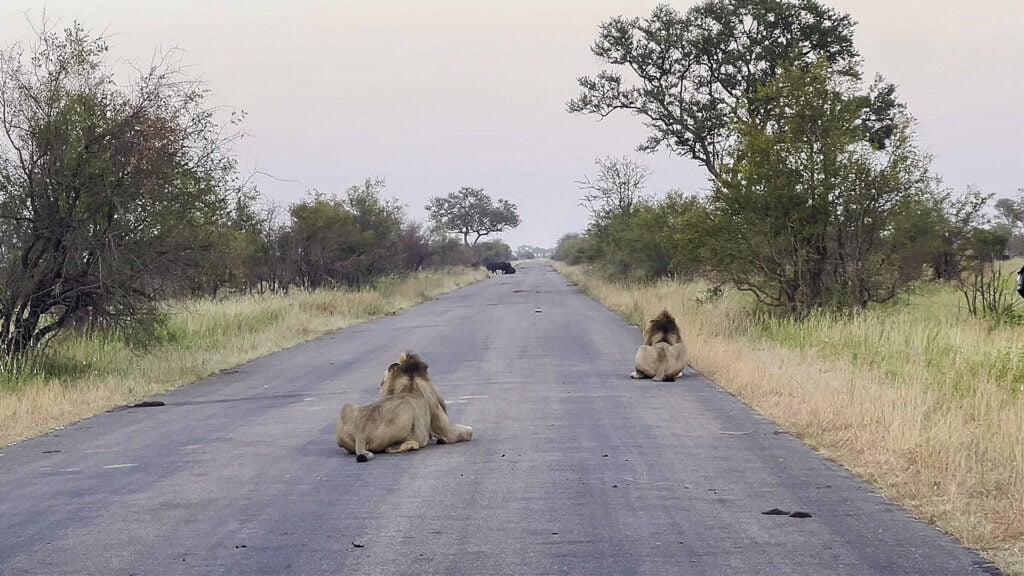
When you get a hit, a bright blob that holds shape and doesn’t flicker, pause. Let the image stabilize and study the signature.
A single lion lying flat will appear as a compact, rounded heat source. A coalition resting together will give you multiple signatures close together, often partially overlapping.
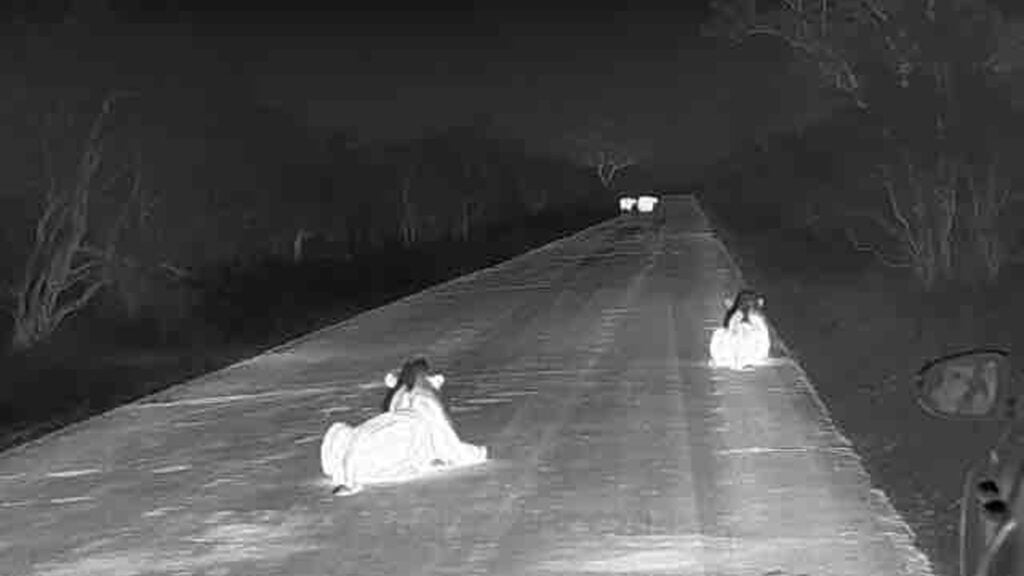
Pay attention to shape and movement because animal heat has a consistent form. Ground heat from sun-baked rock can have irregular edges and tends to radiate more broadly.
If you’re in a private reserve or on a self-drive, having the thermal out during slow sections of road costs nothing and often reveals animals that would otherwise send you home thinking you’d had a quiet morning.
Using Thermal to Track Lion Movement
One of the most underrated applications of thermal on safari is keeping a sighting alive after the lions have moved off. Once a pride disappears into the bush, most vehicles give up and drive on, but a thermal camera changes that entirely.
We found this was the case repeatedly in the field. “It’s helped me follow lions way past when others thought they were gone” Nadav said.
Get our Best Sightings as they Come in
When a lion moves off the road and into thick vegetation, sweeping ahead along the treeline will often reveal exactly where the animal is heading before it steps back into the open. For relocating animals that have temporarily disappeared, the thermal is almost unfailingly useful.
As Nadav put it: “Almost every time, the thermal picks them up again.”
Stragglers and cubs that hang back often go uncounted on a normal sighting, but their heat signatures give them away. In dry, open terrain like the Kruger lowveld, a thermal monocular can track a moving lion across the broken ground, turning a frustrating lost sighting into one you can stay with.
Stay in the Loop
If you’re keen to stay across unusual sightings and real-time updates from Kruger, join our exclusive WhatsApp group. Here, members share live game sightings from the park, including lion activity, road closures and other useful park updates as they happen.
Choosing the Right Device
Not all thermal devices perform equally in the field, and the spec sheet can be misleading if you don’t know what to look for. Cape Thermal, who specialize in this technology, point out that the newest generation of HD thermal devices has created an interesting trade-off: higher resolution images don’t always mean better performance.
Some high-resolution models sacrifice frame rate, meaning the image on screen is less fluid. This can matter a lot when you’re trying to track a moving lion through grass.
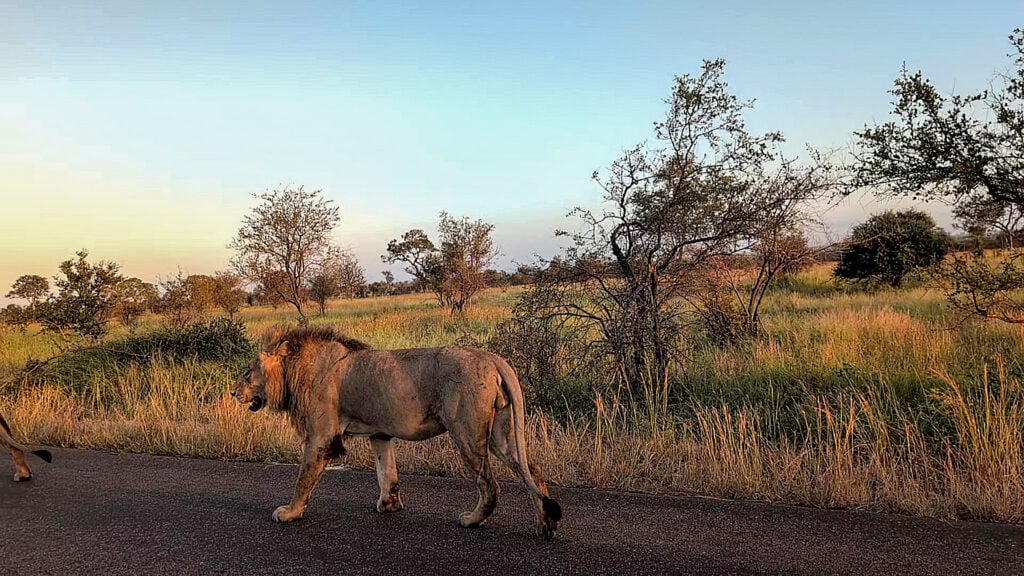
The sweet spot for safari use is a device that balances good image detail with a smooth, responsive picture. For form, a handheld monocular is practical and easy to operate one-handed from a moving vehicle, while thermal binoculars offer a more immersive viewing experience and tend to be better for extended scanning sessions.
Cape Thermal stocks a wide range of options across both categories, and their team offers guidance to help you match the right device to how you actually plan to use it. If you’re buying through the Latest Sightings network, make sure to register your details first here:
https://capethermal.com/latestsightings
When you purchase a qualifying thermal device, the warehouse team will automatically upgrade your delivery with a free tactical gear drop!


