

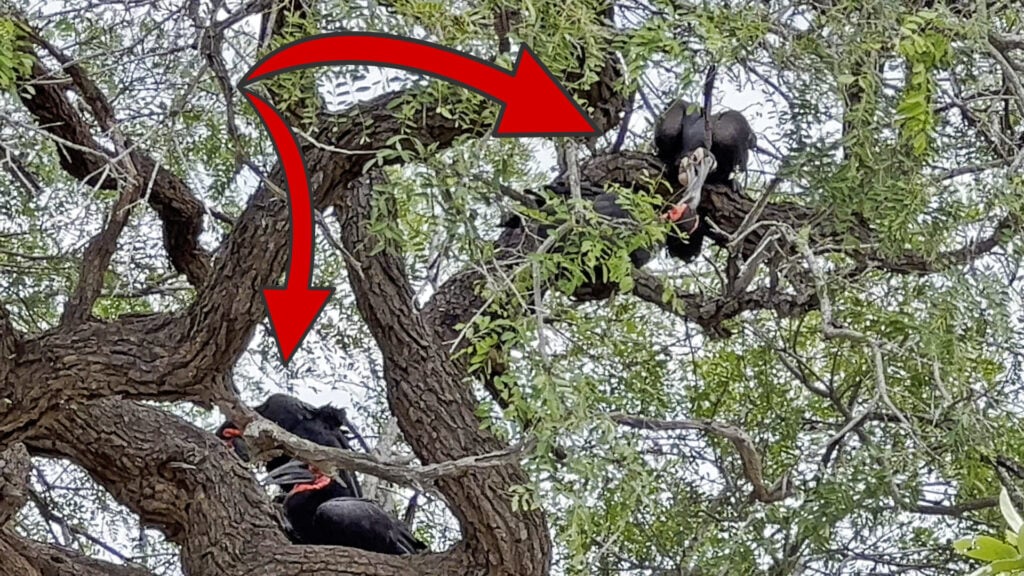
While many flock to the Kruger National Park to see the Big Five, the huge diversity of feathered friends, including the Birding Big Six, draws birders. Here, we join a family of its most vulnerable members as they rest in a tree.
Jaco Fourie submitted this amazing footage to Latest Sightings. He filmed it while visiting South Africa’s Kruger National Park.
Birds of a feather
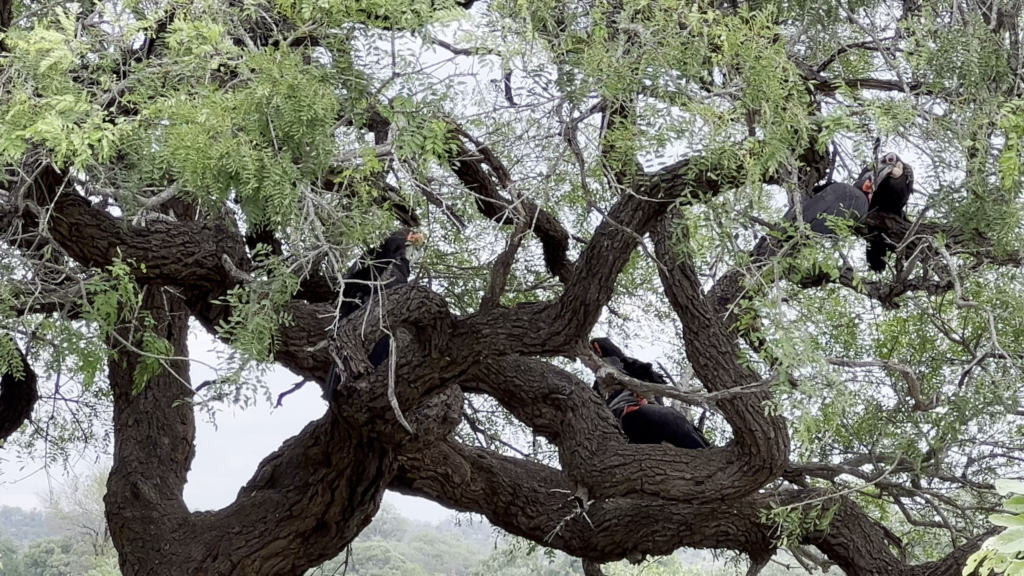
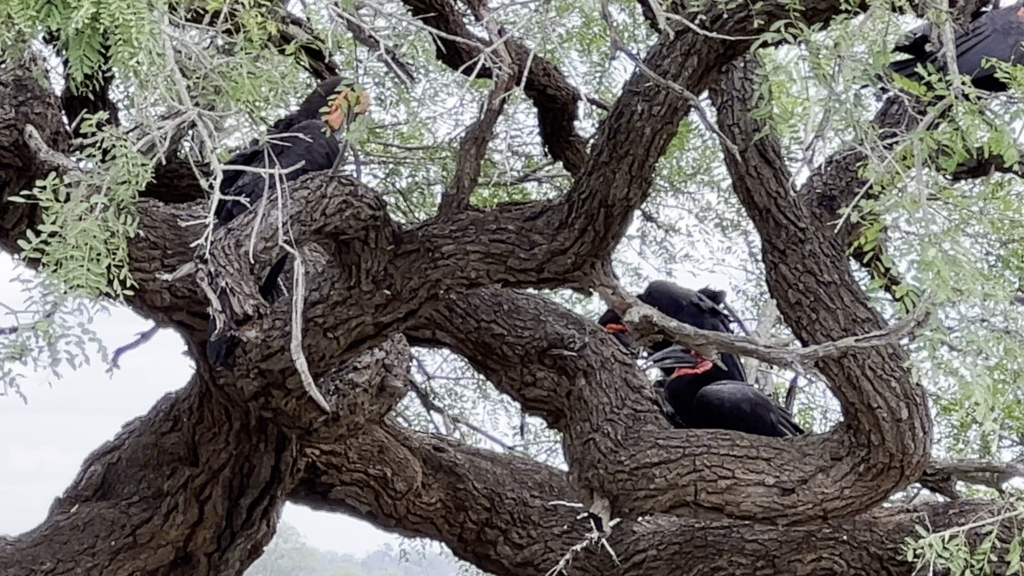
As we join Jaco at the sighting, we see a family of very special birds perched in a tree. They are southern ground hornbills, the second-largest members of the hornbill family, after their Abyssinian relatives.
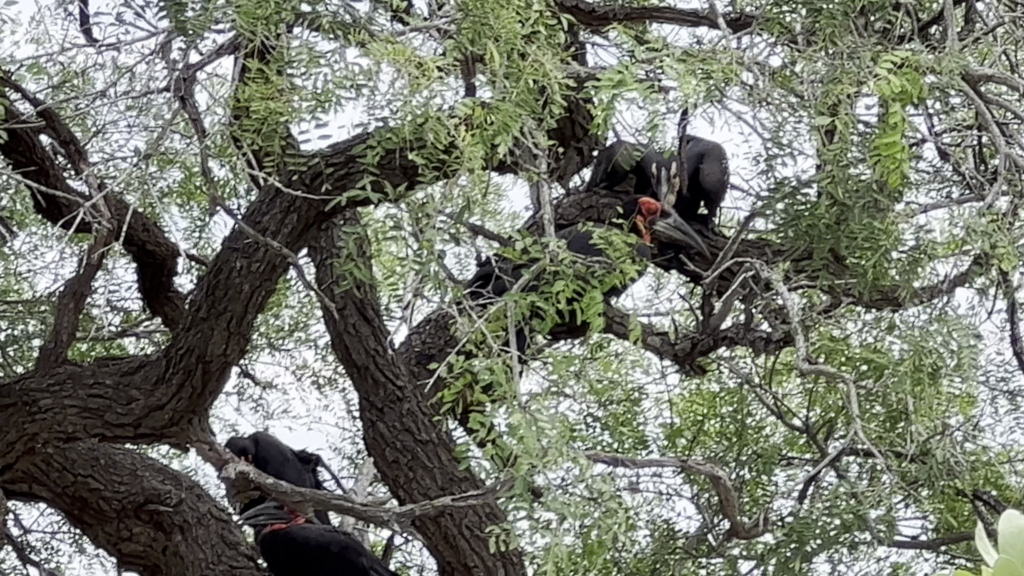
What makes this sighting particularly special is that CITES lists the species as Vulnerable. This is due to the unfortunate proliferation of the illegal trade in the species.
Big bird
Ground hornbills are large birds, roughly the size of a wild turkey, as found in North America. Although they spend most of the time on the ground, they are majestic in flight.
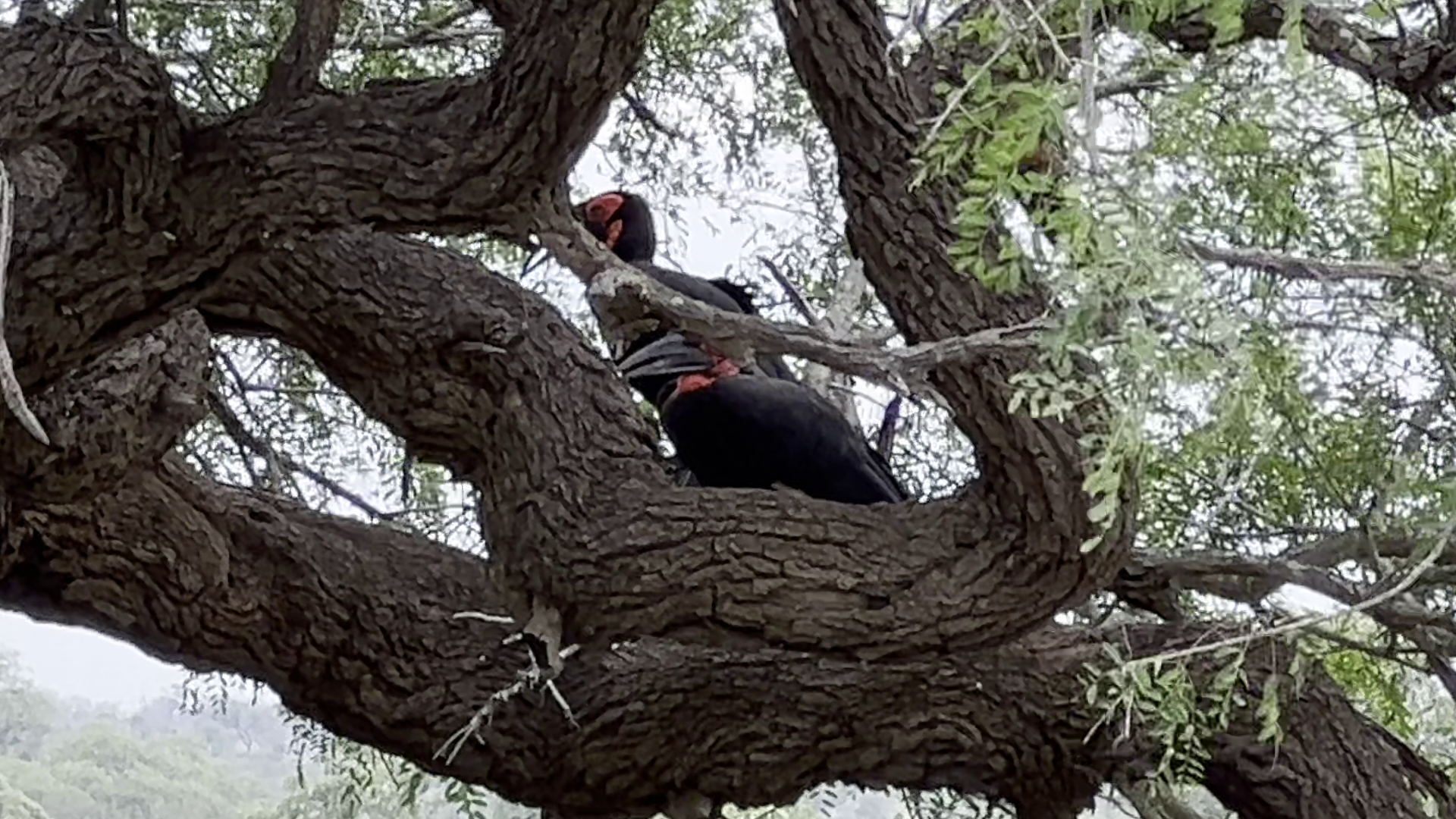
They have large, broad wings, spanning 1.2 to 1.8 meters (about 4 to 6 feet), with distinctive white feathers on each end. In the video, the flock appears to be taking a break from foraging.
Never Miss A Viral Safari Video
Rare bird sightings, like this flock of ground hornbills, cause a flap among our members. To be among the first to see our latest sighting videos, join our exclusive alert list. Click the button above to join the WhatsApp chat right now and never miss another thrilling moment.
Sexual dimorphism
However, the ground hornbill’s most distinctive feature is also its brightest. Their vivid red throat patches are clearly visible against the grey sky.
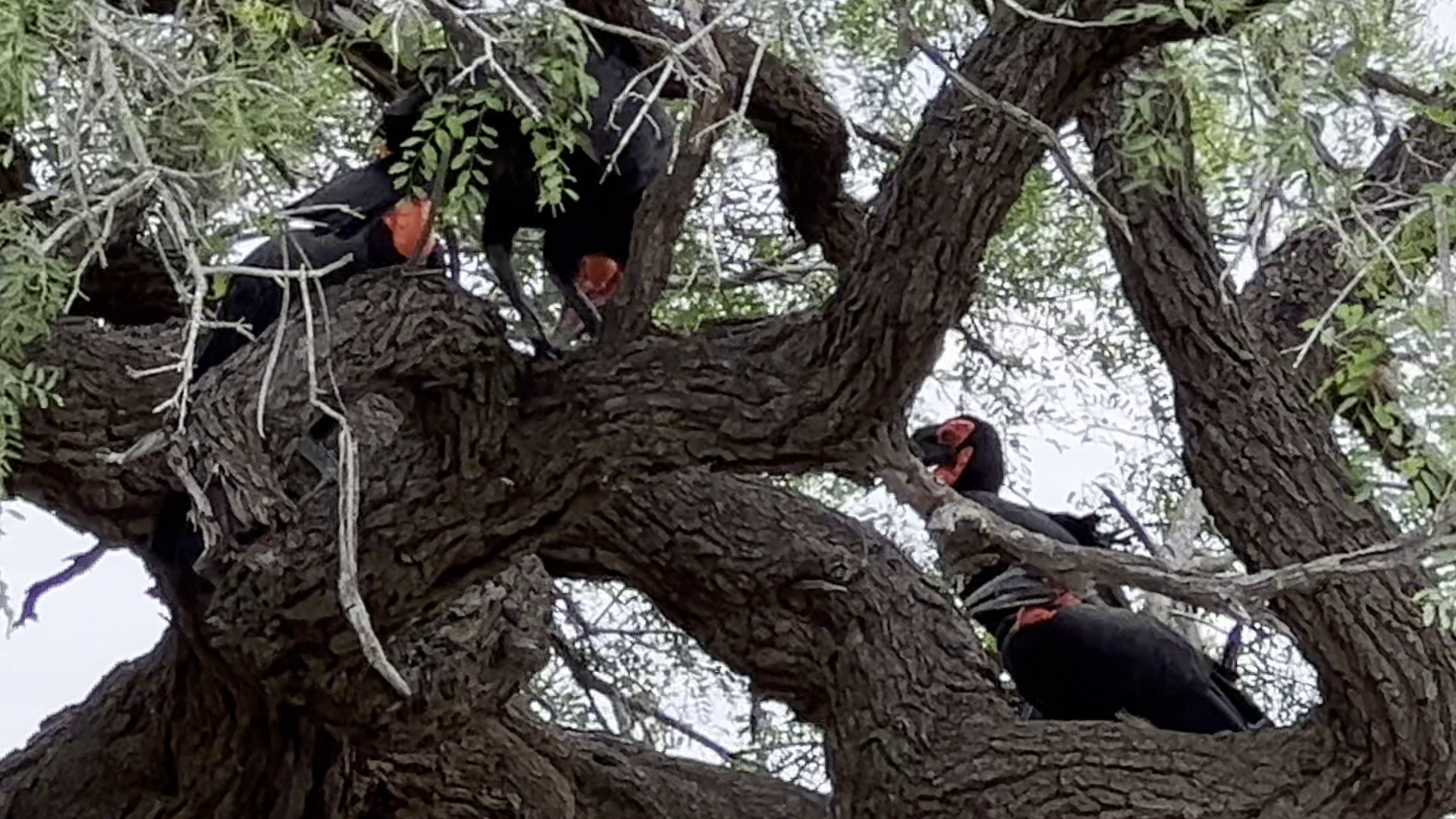
However, to tell males from females, one needs to be able to see directly under their heavy beaks. In females, the bare skin is violet-blue, whereas the male’s is uniformly red.
A long life ahead
As we enjoy the sighting, the two birds in the upper right of the frame draw our attention. Facing towards us, we see a juvenile bird begging its mother for food.
In captivity, the species can live for more than seventy years. In the wild, those that reach maturity typically live for over thirty years.
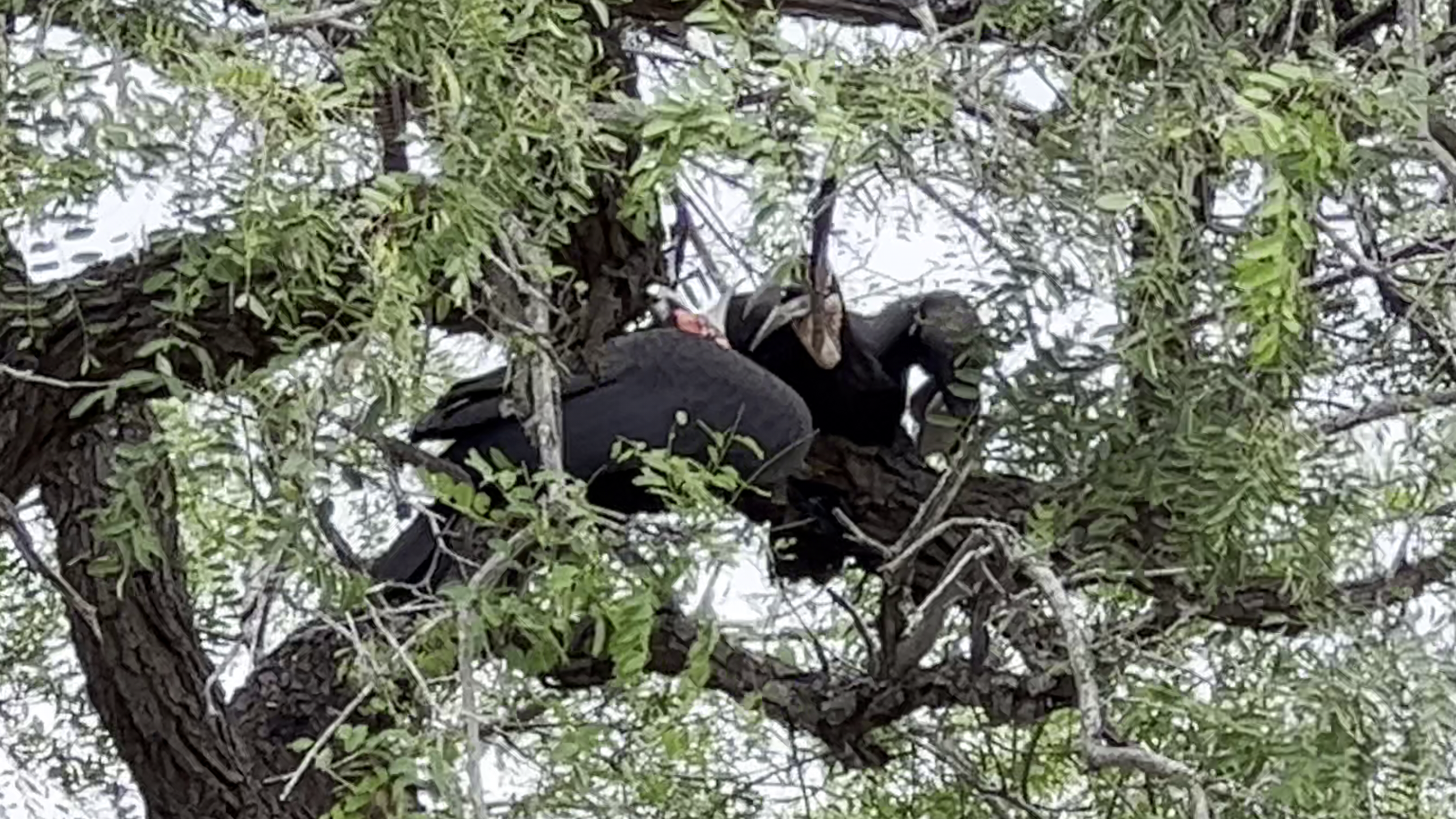
Furthermore, as seen above, the chicks have pale yellow throat skin that turns red at around six years old. Until then, the whole flock raises them.
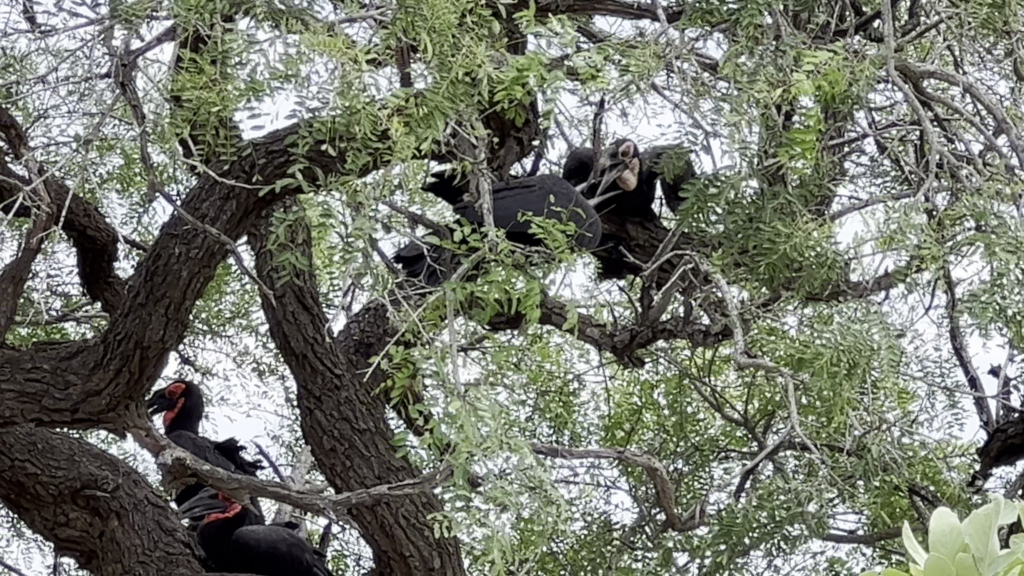
As apex predators, these birds are ecologically important. Their diet consists of insects, reptiles, bird eggs, amphibians, and small mammals up to the size of a scrub hare.
Get our Best Sightings as they Come in
Deadly weapon
Small prey can be wheedled out of crevices using their long, curved, sharp-tipped bills. Large prey is often stabbed repeatedly before being swallowed whole, when possible.
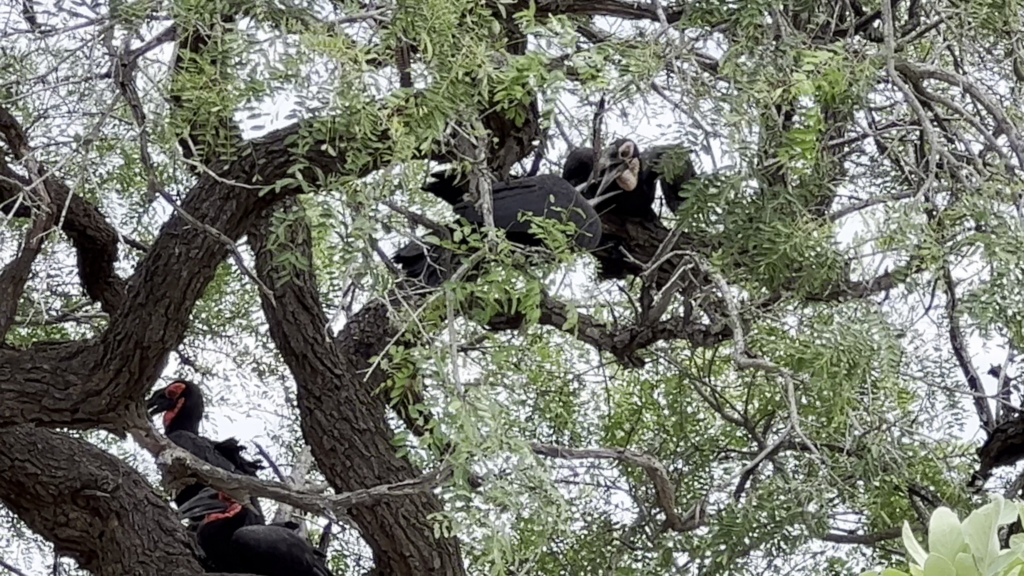
In the footage, though, the adult repeatedly regurgitates morsels, which the chick retrieves from its gullet.
Birding Big Six
As mentioned, birdwatching is a huge drawcard in Kruger. For beginners, a great place to start is with easily recognisable species, like the Big Six of birding.
Alongside these ground hornbills, the other member species are the kori bustard, martial eagle, saddle-billed stork, Pel’s fishing owl, and lappet-faced vulture.


