

It is natural to assume that when the camp gates close, the day’s game viewing ends. However, if you know where to look, you can still see action, like this African wildcat hunting birds on the wing.
Ernest Porter shared this amazing footage with Latest Sightings. He filmed the action while staying at Satara Rest Camp in South Africa’s Kruger National Park.
The OG cat
As we join Ernest at the sighting, we encounter what, at first glance, appears to be a domestic cat. However, since we’re in a national park, this doesn’t seem right.
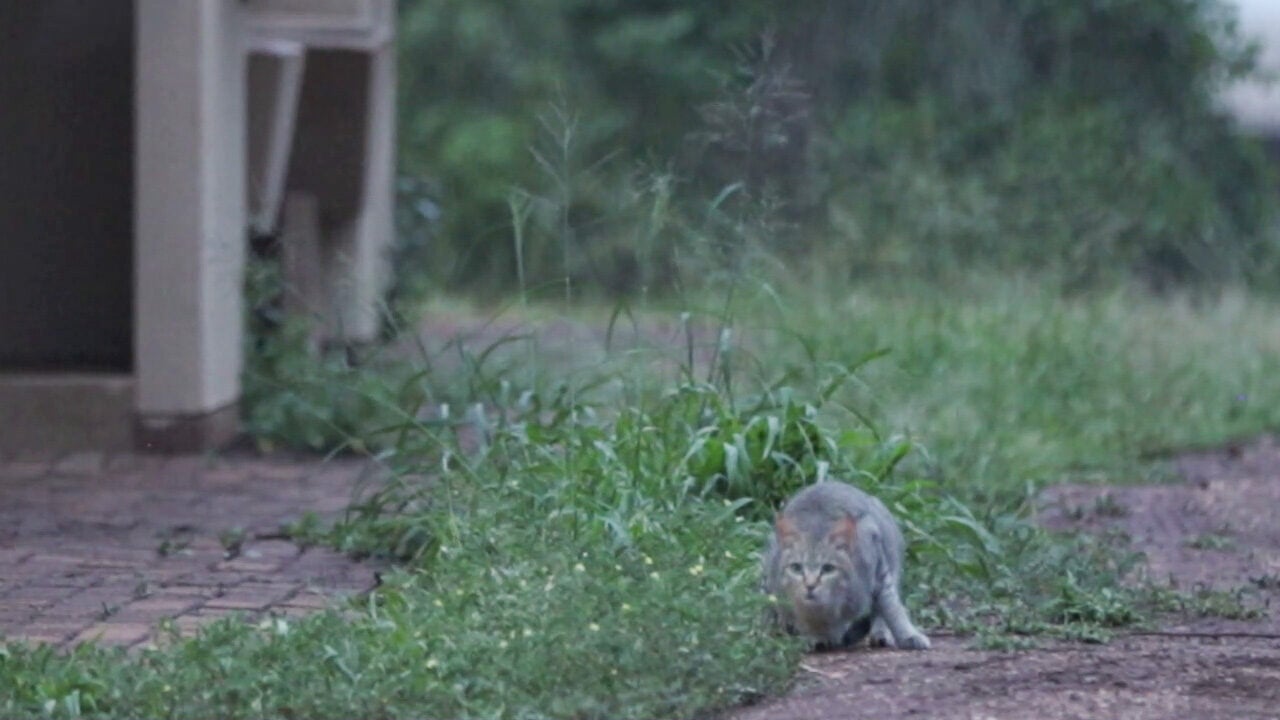
Thankfully, this feline has every right to be here. In fact, it is the ancestor of every modern domestic cat: the African wildcat.
Hunting among humans
As a previous visitor to the camp, Ernest knows that this is one of the few places where you can easily observe African wildcats. Albeit, as in this case, against the backdrop of human infrastructure.
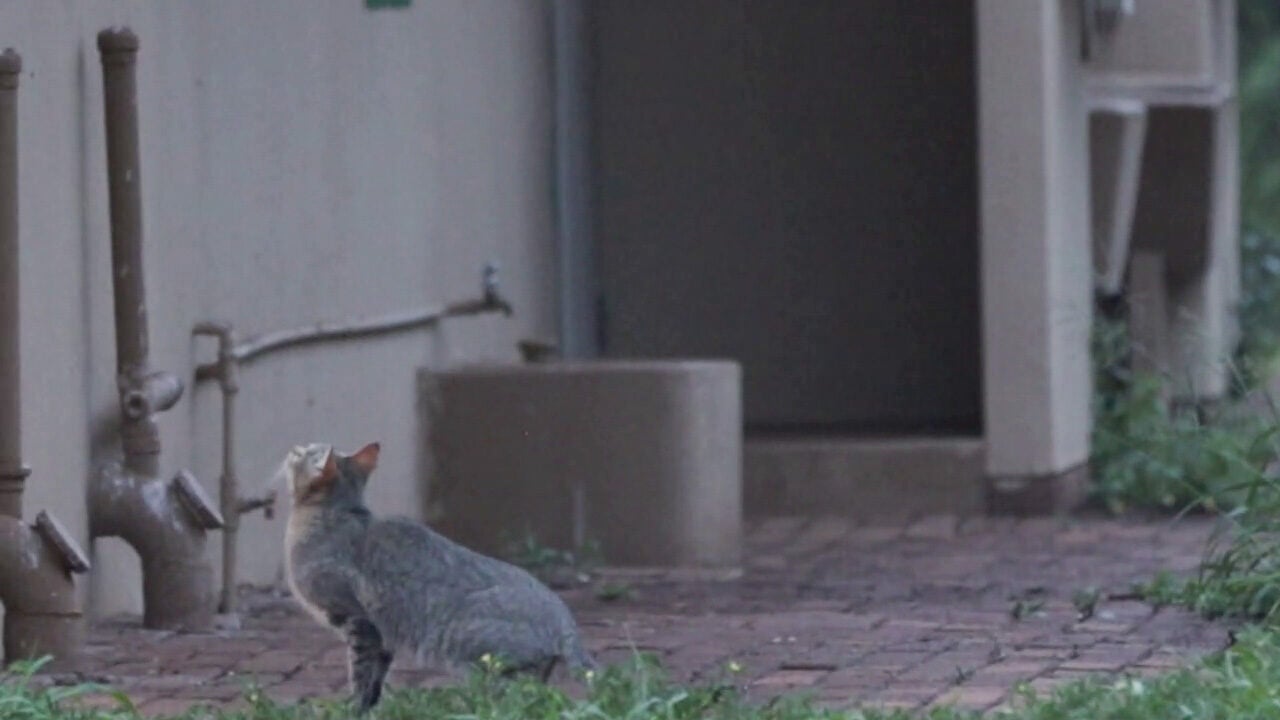
With the abundance of rodents attracted by human activities, the camp offers wildcats an ideal hunting habitat, without competition from other predators.
However, in this case, the cat is not after rodents but the numerous swifts that roost overnight in the eaves of the camp’s buildings. But that’s not where it plans to catch them.
Join our WhatsApp group with thousands of community members so you never miss another amazing sighting, like this African wildcat hunting as night falls. https://latestsightings.com/whatsapp-updates
A true African wildcat
African wildcats roam across Africa outside of tropical rainforests, and their range extends into Central Asia. Sadly, interbreeding with domestic cats has left very few true wildcats.
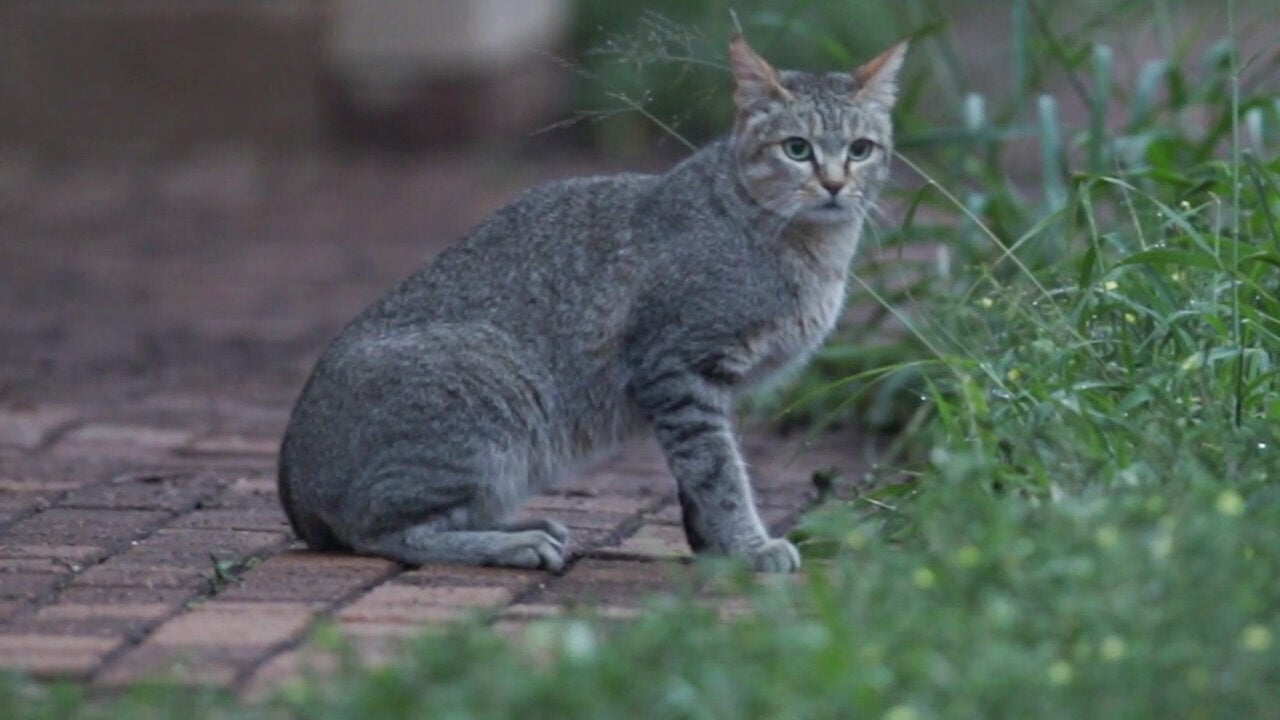
A distinctive feature of true wildcats is dark bands on the upper forelegs. As such, we know this is a purebred African wildcat.
Get our Best Sightings as they Come in
Hunting on the wing
Evidently, this cat has learned that the swifts return to their roost as night falls. Accordingly, it has positioned itself near a building where they spend the night.
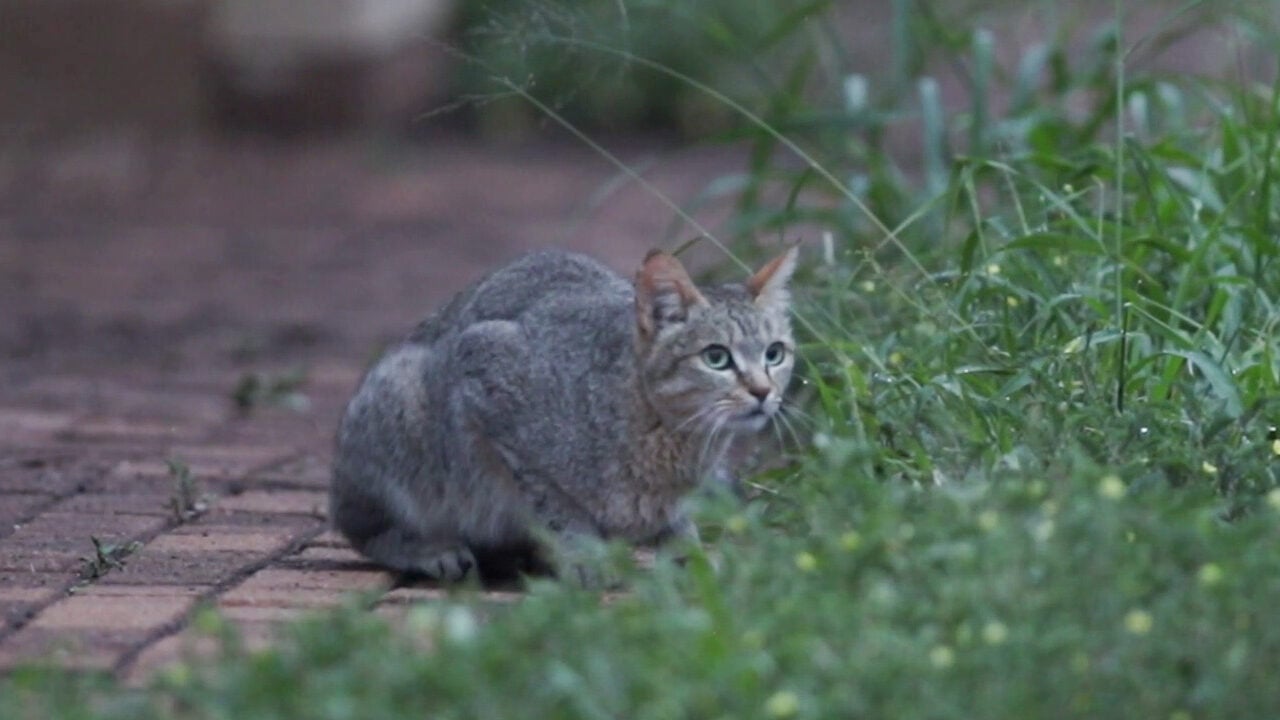
Its pupils are fully dilated, letting in as much light as possible as it gets darker. A cat’s eyes have a tapetum lucidum, a reflective layer that enhances their night vision; they can see well in one-eighth of the light we need.
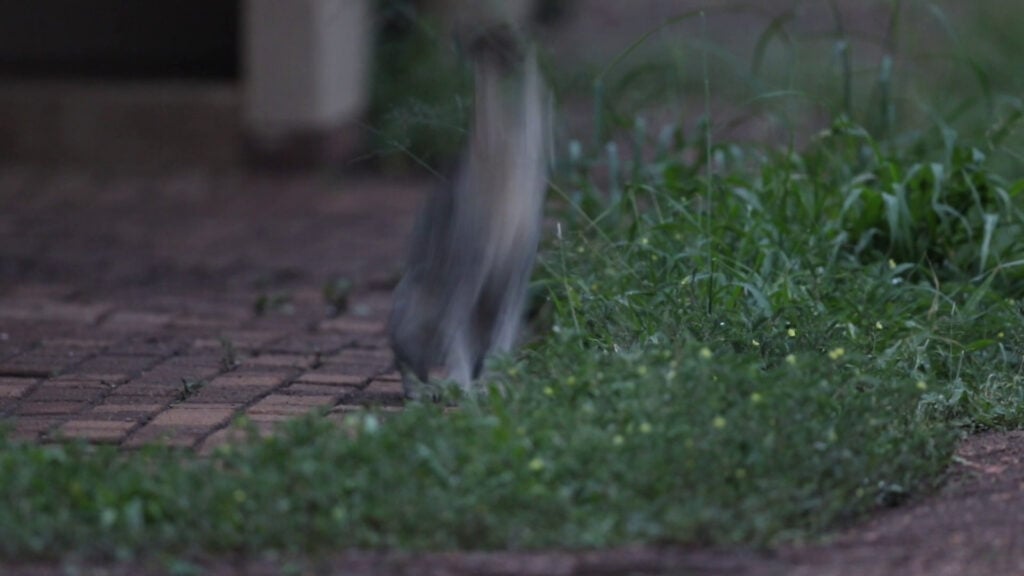
Additionally, their muscles are densely packed with fast-twitch fibres, which enable explosive leaps from a standing start. Couple these with their legendary reflexes, and you have a predator well-equipped to catch birds in mid-flight.
Unusual hunting strategy
But this is no easy task. For one thing, swifts fly really fast and seldom in a straight line. Accordingly, the wildcat lies crouched low, watching the swifts as they approach.
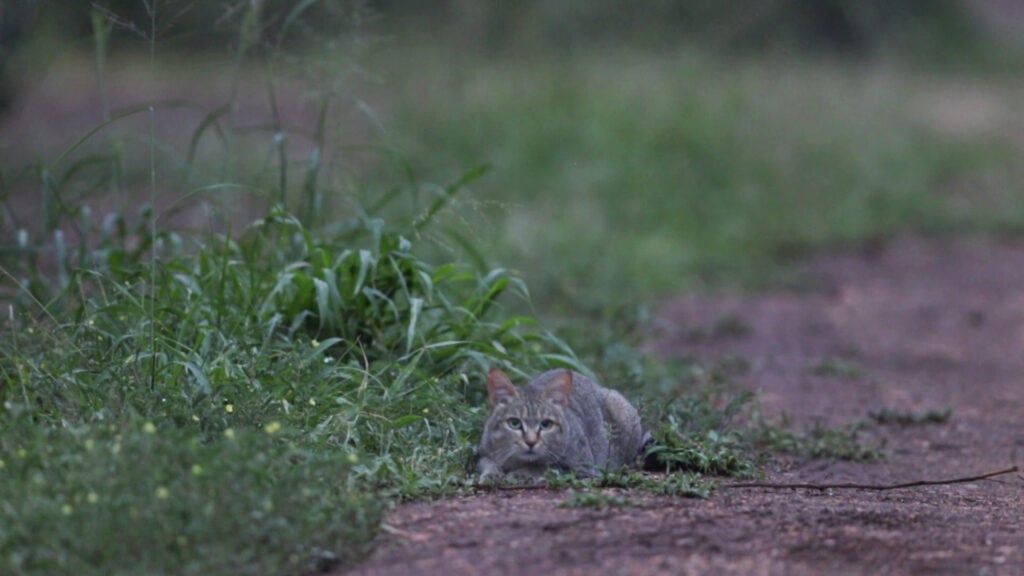
By keeping a low profile near some cover, it hopes to remain undetected by the approaching birds.
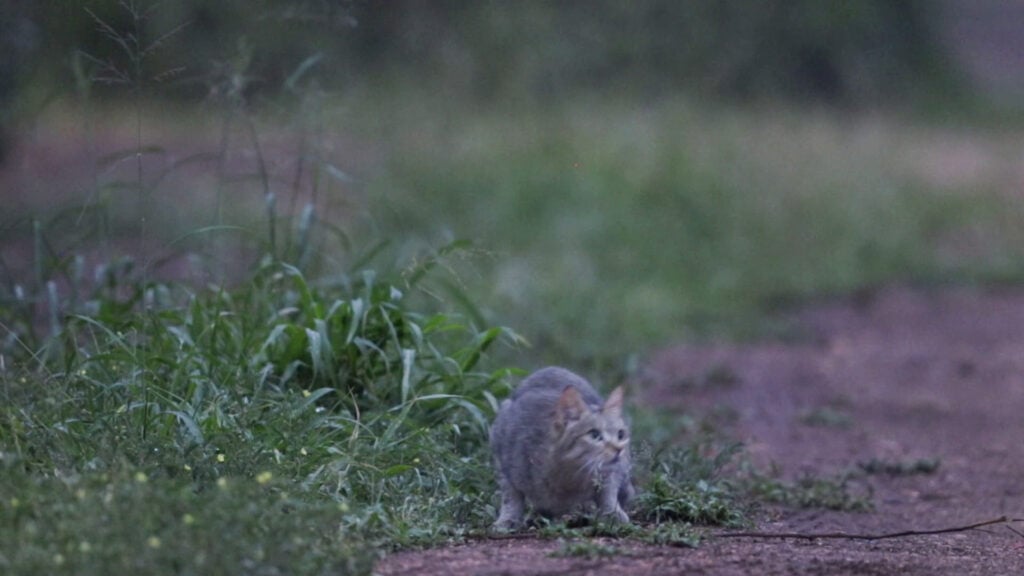
When it spots one on the right trajectory, it tenses its muscles, ready to launch the moment it comes within range.
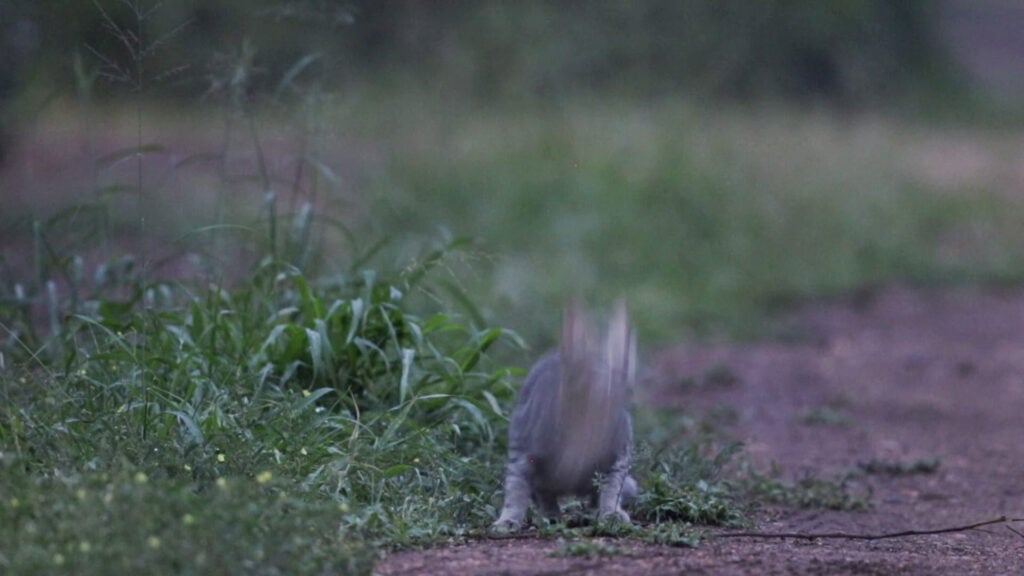
In the low light, its motion is a blur. According to Ernest, he estimates the cat jumped over two metres vertically.
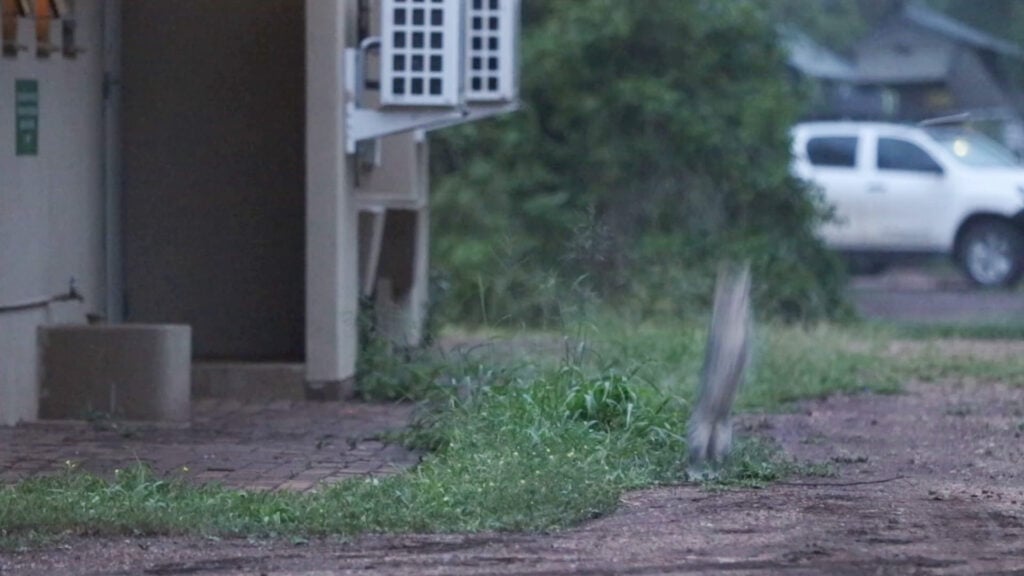
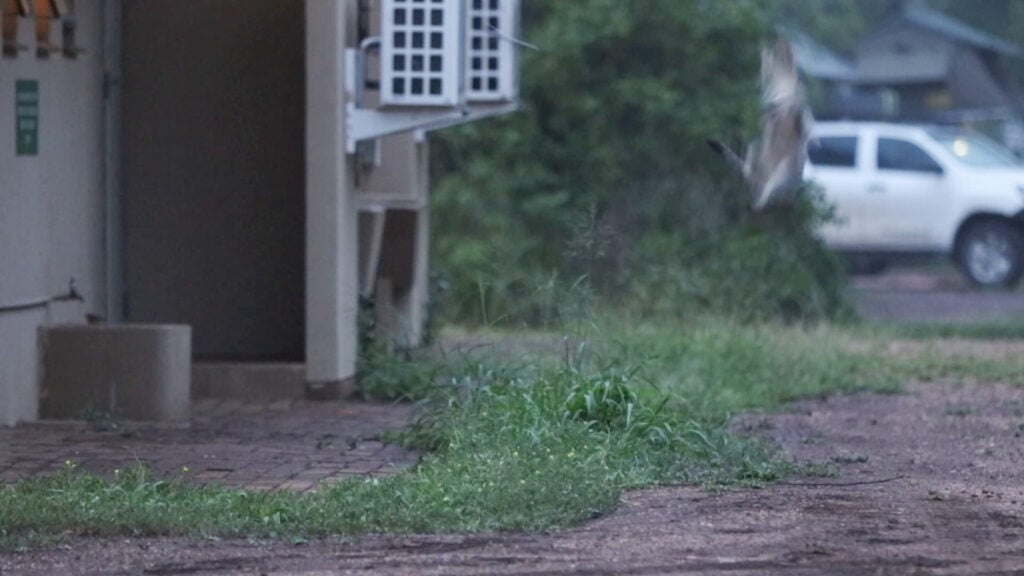
However, it was always going to be a case of hit-and-miss. More misses than hits, as it turned out.
Unfortunately, Ernest’s sighting was interrupted by the arrival of a passerby.
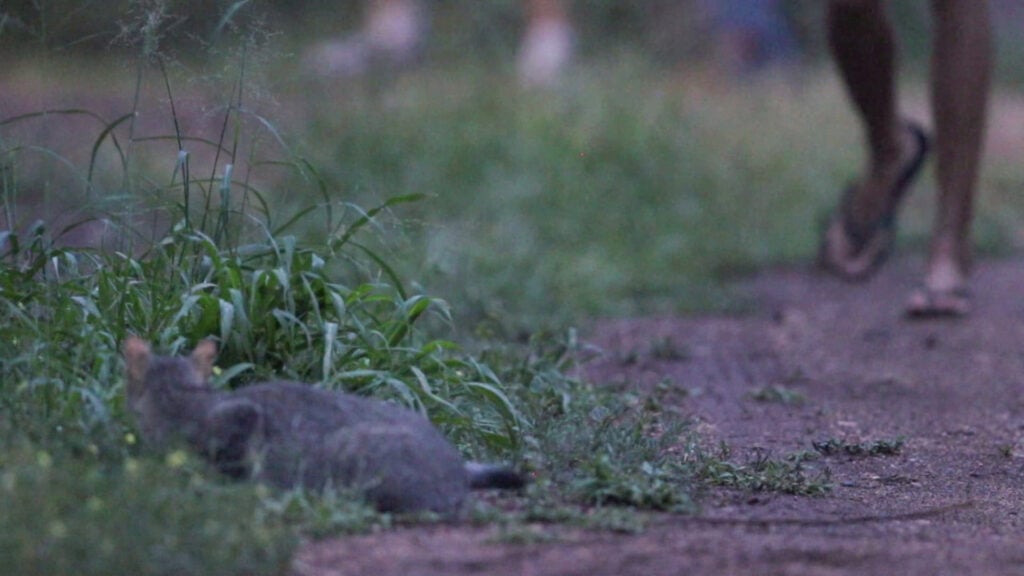
Nevertheless, since this cat is regularly seen at the camp, be sure to look out for it next time you visit Satara. You might be lucky enough to see it succeed in its ambitious hunting strategy.


