

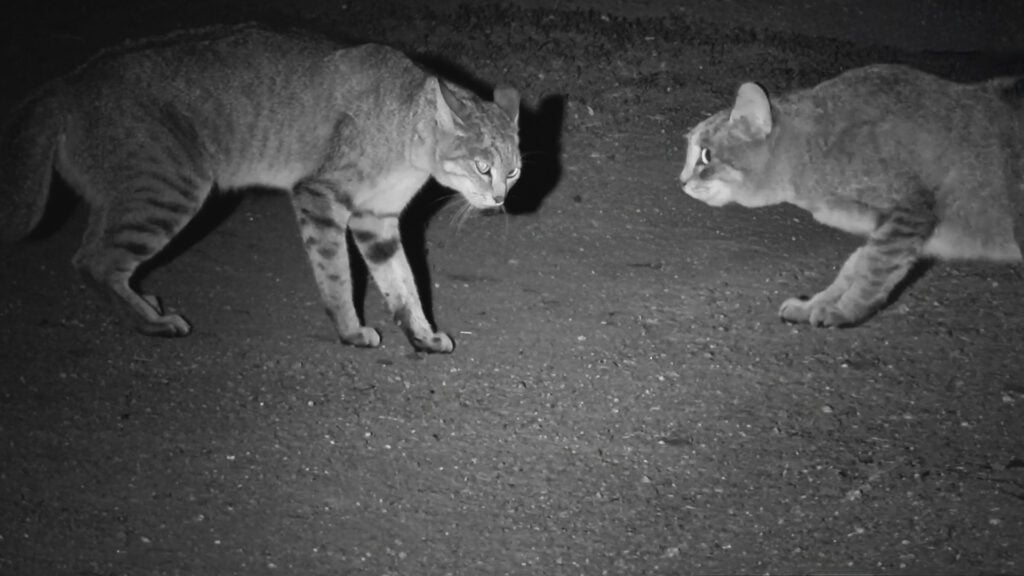
Hayley A Myburgh came across these territorial wildcats near the Satara rest camp in the Kruger National Park. After catching their stand off on camera, she sent the footage into Latest Sightings.
Watch Now:
Not quite the same size as lions or leopards, these wildcats are still dangerous predators in their own right and exhibit many of the same behaviors seen in larger cats, such as fierce territorial contests, and an aversion to physically fighting each other.
Straight Into Action
The first wildcat demonstrated its quick reaction times by moving with lightning speed as soon as it detected a rival in its space. It took less than three seconds for the cat to go from sitting down, to up close and personal with the intruder.
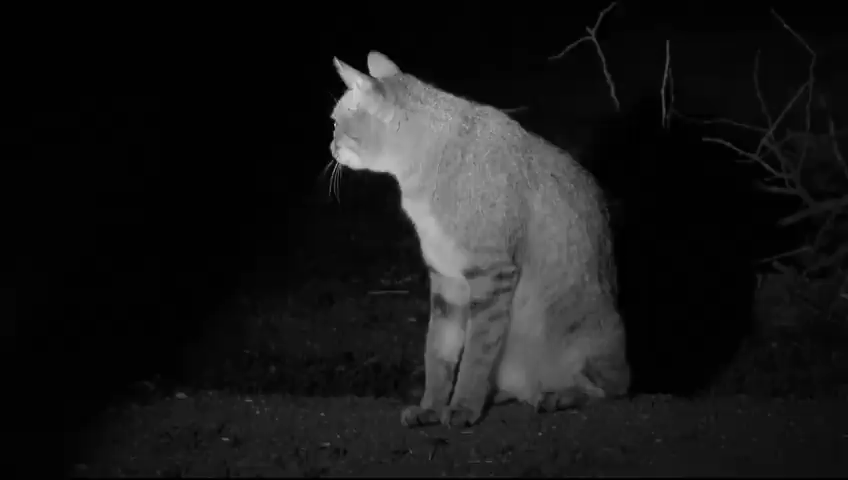
It was almost like this was an automatic response rather than a calculated action, but this cat knew exactly what it was doing. If it showed even the slightest hesitation then it ran the risk of losing the battle for dominance before it even began.
Professionals At Posturing
Although these two might have been far smaller than lions, leopards or cheetahs, all of the same rules still applied. As animals that rely on their own speed and strength to survive, the risk of injury was severe.
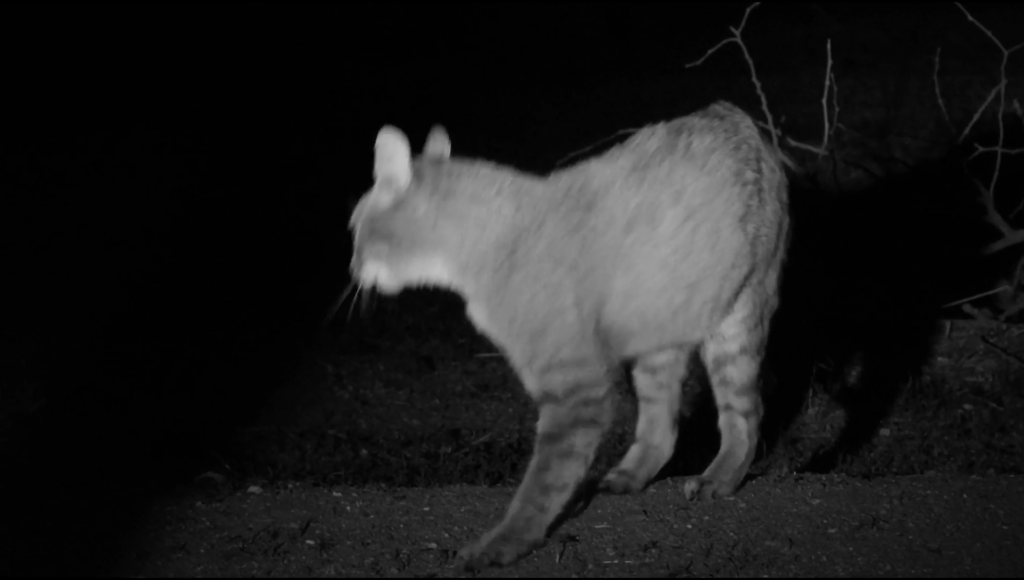
Even a minor wound might result in a slight loss of speed which makes all the difference between catching prey, or going hungry. It would require some seriously antagonistic behavior for this altercation to turn physical.

With ears back firmly in airplane-mode, and body language turned up to the max, this competition was a question of who would be able to intimidate the other into backing down or even running away before claws or teeth would have to get involved.
Uncertainty At The Worst Time
The intruder looked like it was putting up a staunch defense, for the first few moments at least. Unfortunately, this was the first cat to take a step back, and from the moment the contest had been won.
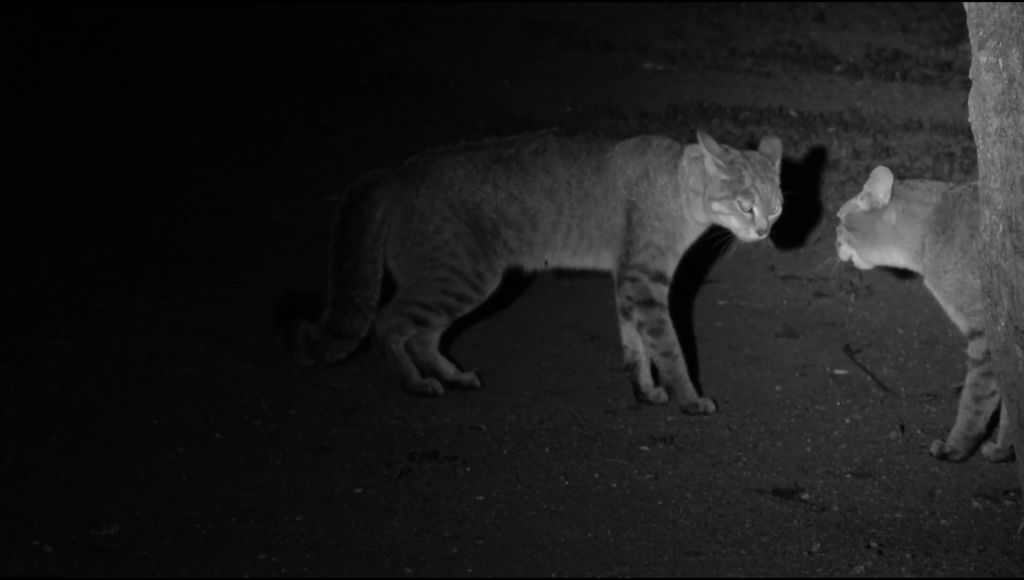
The only question left was whether or not the intruder would be able to save face and effect a retreat without the victorious feline chasing it from the scene.
Rather than pressing its advantage and adding insult to injury, the wild cat that had maintained the borders of its territory seemed content to hunker down and let the loser slowly back away. The absence of a physical fight was the best outcome for both of them.
Get our Best Sightings as they Come in
A Very Wary Retreat
Coming to blows might be the last resort for wild animals, but it’s always on the table as a potential outcome. The retreating cat had to back away slowly, only half turning so that it could be sure it wasn’t showing its back to the enemy.

The other cat made no attempt to follow, but with reaction times as quick as they had, it could have descended on the losing cat in less than a second, meaning that the one in retreat had to make sure it could safely leave the area.

Ultimately, it left without any further incident, disappearing into the night and leaving the victorious cat to guard over its territory. A sighting doesn’t have to be on a grand scale to be full of tension, remember to keep an eye out for the smaller animals too.


