

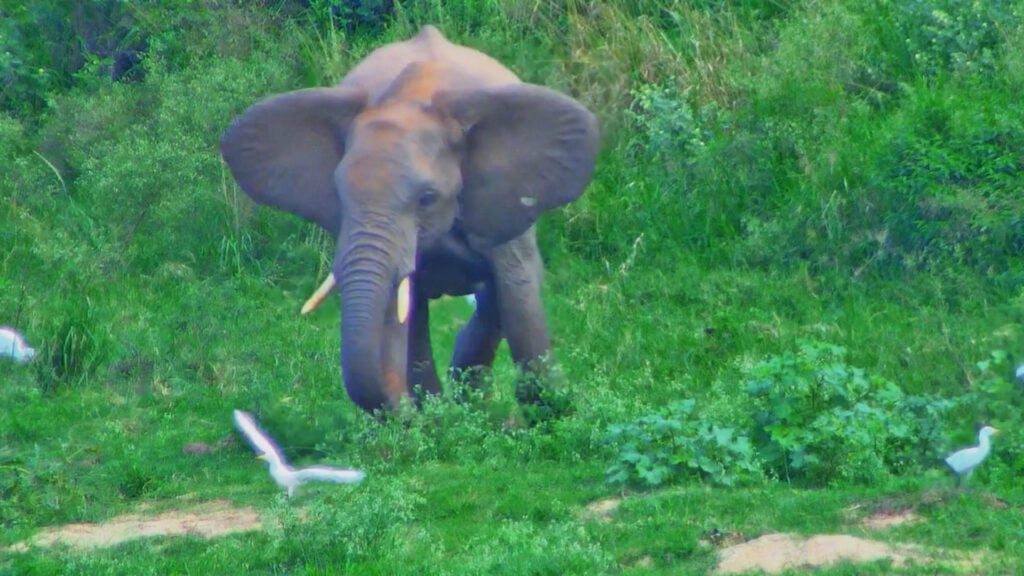
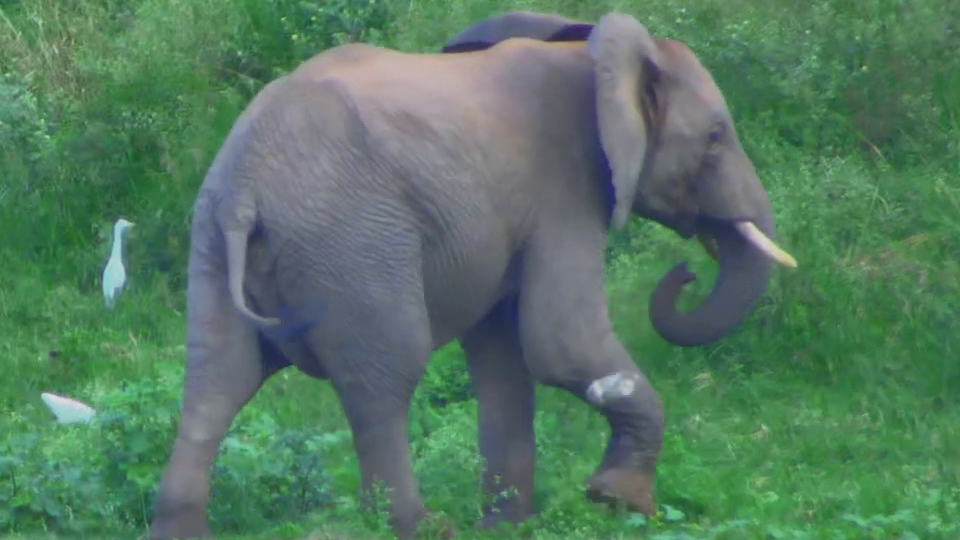
As an elephant grazed along a riverbank, he suddenly took exception to some nearby birds. What followed was a comical display of bushveld bullying
River House Lodge submitted this footage to Latest Sightings. The Ting Vision camera, situated on the banks of the Crocodile River, which forms the southern boundary of South Africa’s Kruger National Park, filmed it.
Watch the video here:
Receive Entertaining Animal Updates
Do not miss out on the next funny safari encounter! We drop all our top viral wildlife videos straight into our private WhatsApp channel the moment they are uploaded. Follow the link to join us and never miss another incredible sighting like this bad tempered elephant throwing a tantrum.
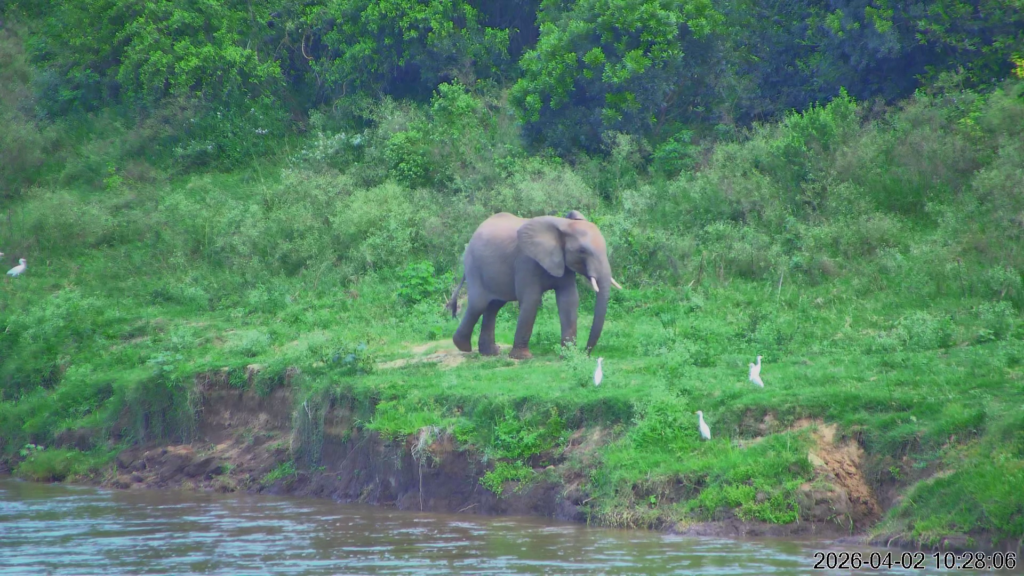
Lone bull grazing
The video begins with a magnificent scene. Against a backdrop of lush riverine vegetation, a lone elephant bull grazes peacefully.
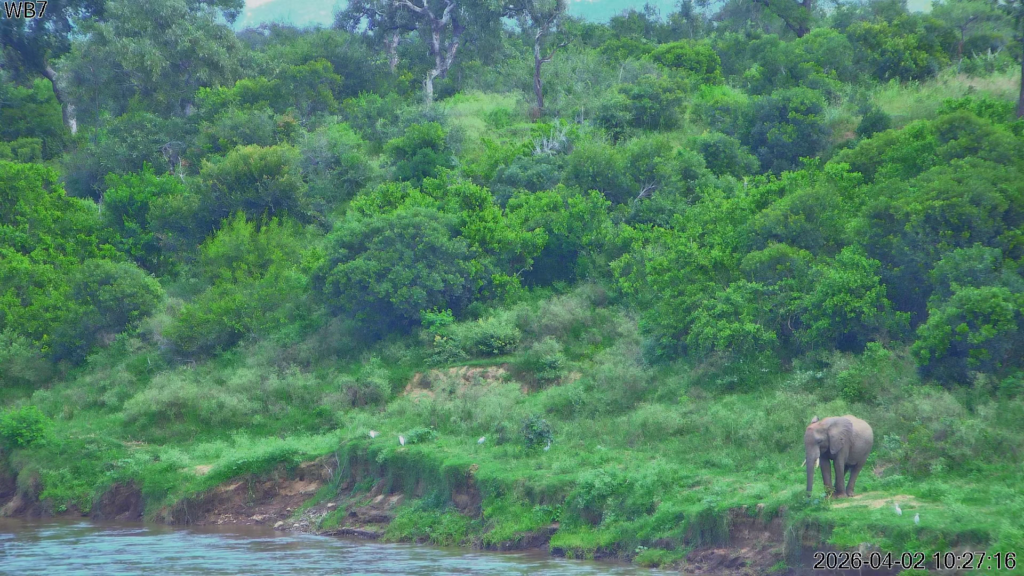
On reaching sexual maturity, male elephants leave their natal herds. As they mature, they often join other males, forming small bachelor herds averaging 15 individuals. However, on this occasion, he seems to be enjoying his own company.
Food obsessed
As the bull moves along the embankment, his trunk sweeps across the ground. He uses his trunk to detect preferred plant species.
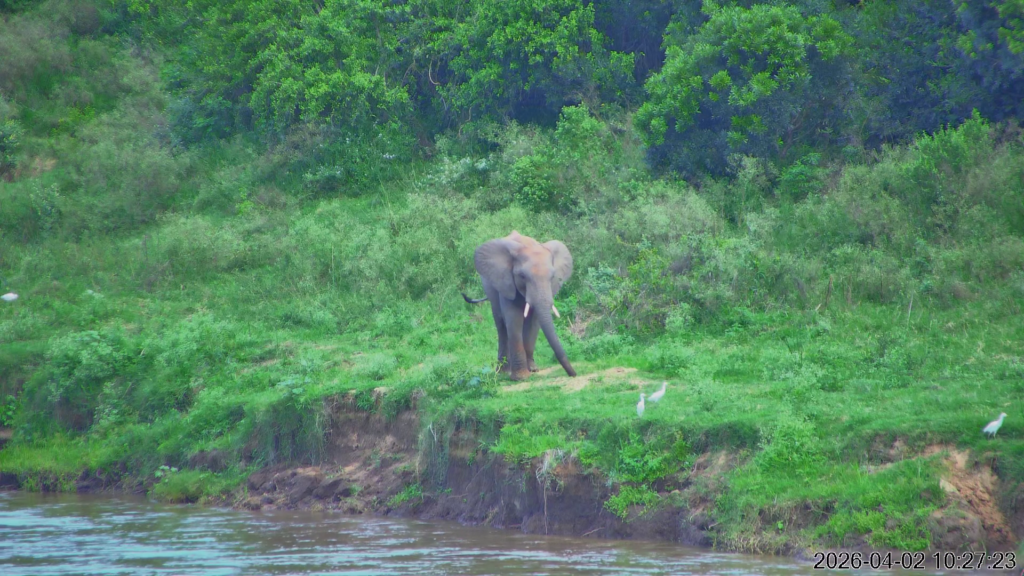
When he does, he deftly wraps his trunk around it, before uprooting it and shaking off any excess soil. Elephants spend up to 80% of their lives feeding, consuming up to 300 kilograms of vegetation per day.
Massive mood swing
As the bull moves along, he spots a few white birds standing nearby. For some reason, he eyes them warily.
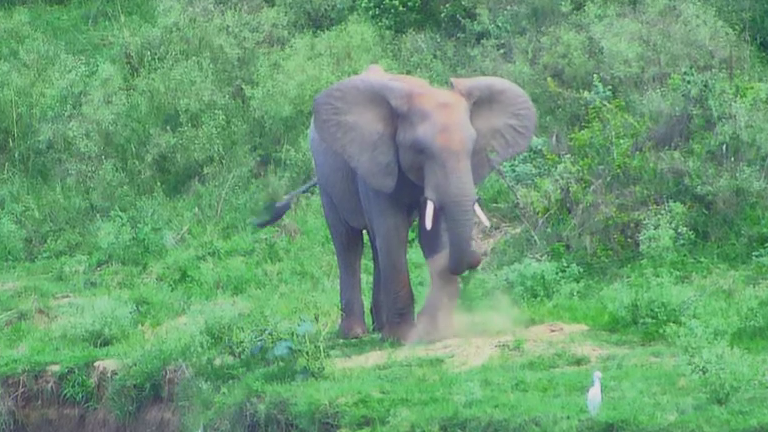
Then, for no apparent reason, he suddenly flares his ears and lunges towards them. This is typical warning behaviour from elephants.
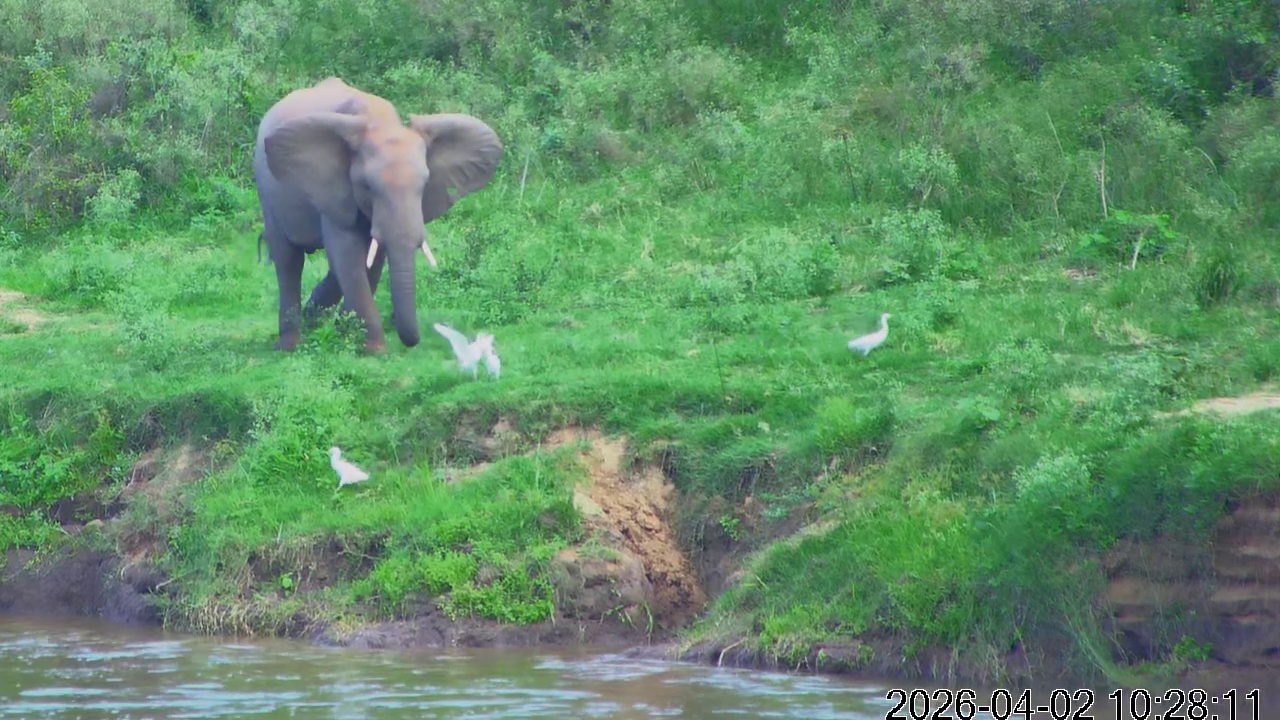
Predictably, the birds take flight, startled by the elephant’s sudden and unprovoked aggression. It is hard to fathom this sudden change in behaviour.
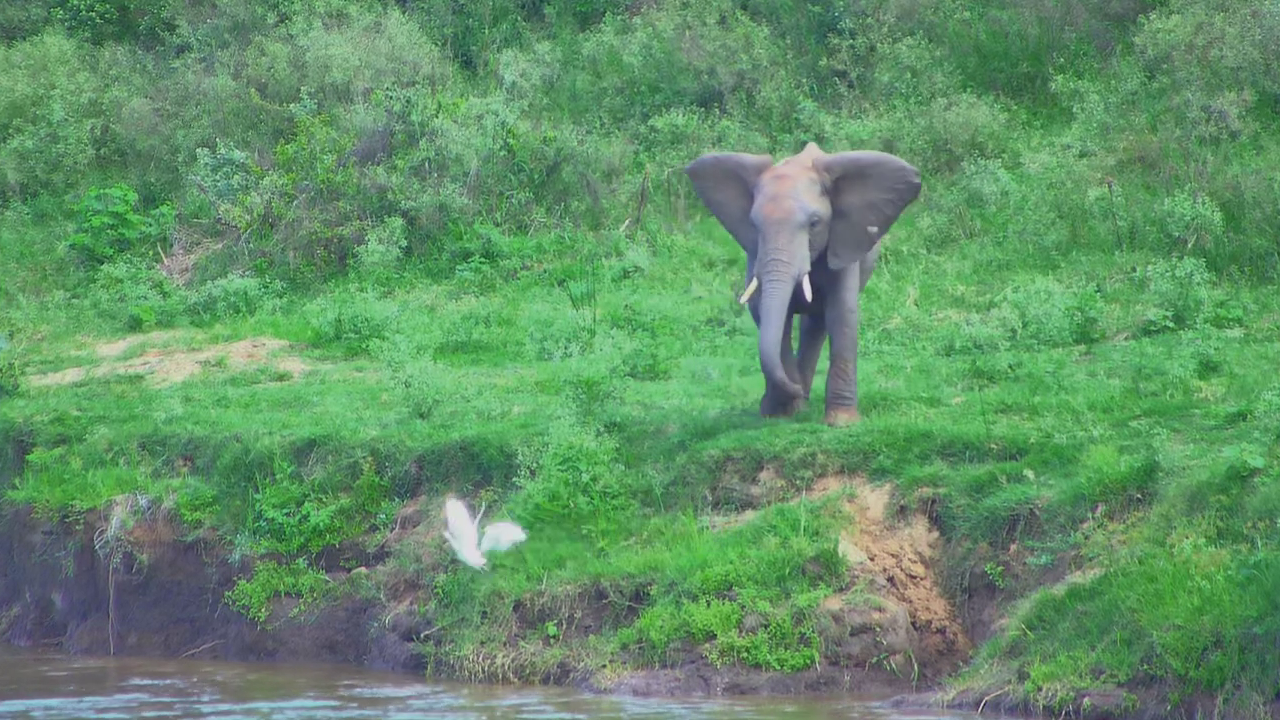
Consequently, we can only speculate that he may have viewed them as competition for food (which they’re not) or simply because they were in his way.
However, male elephants do periodically enter an aggressive breeding phase known as musth. However, there are no physical signs of this, such as dribbling urine or seeping temporal glands.
The bullied birds ID’d
The birds in question are one of the four white egret species that occur in South Africa. Of these, western cattle egrets are most commonly found around wildlife.
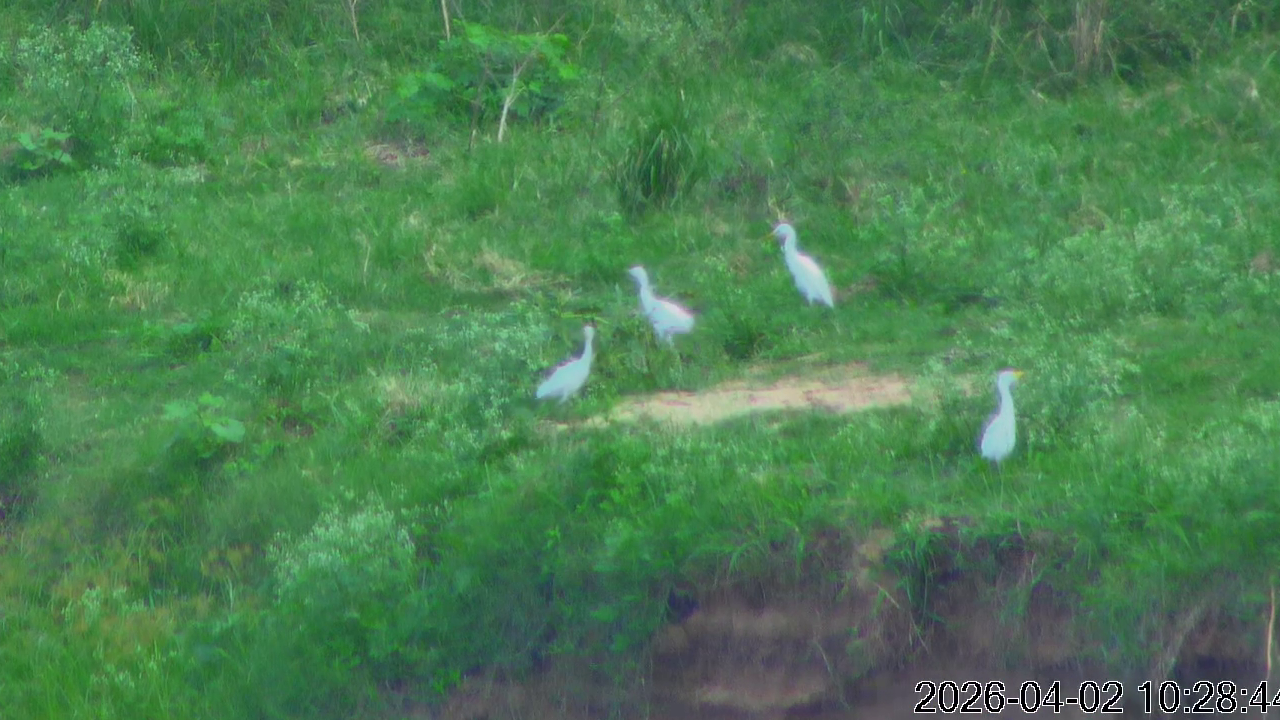
As the animals move nearby, they disturb prey that the birds snap up. Additionally, the birds have acute eyesight, which means they often spot approaching danger before the grazing mammals, alerting them to it.
Accordingly, they have a symbiotic relationship known as mutualism, where both species benefit.
Get our Best Sightings as they Come in
Unpredictable
Subsequently, the bull resumes his feeding. As the birds relax, they all but encircle the now quietly grazing giant.
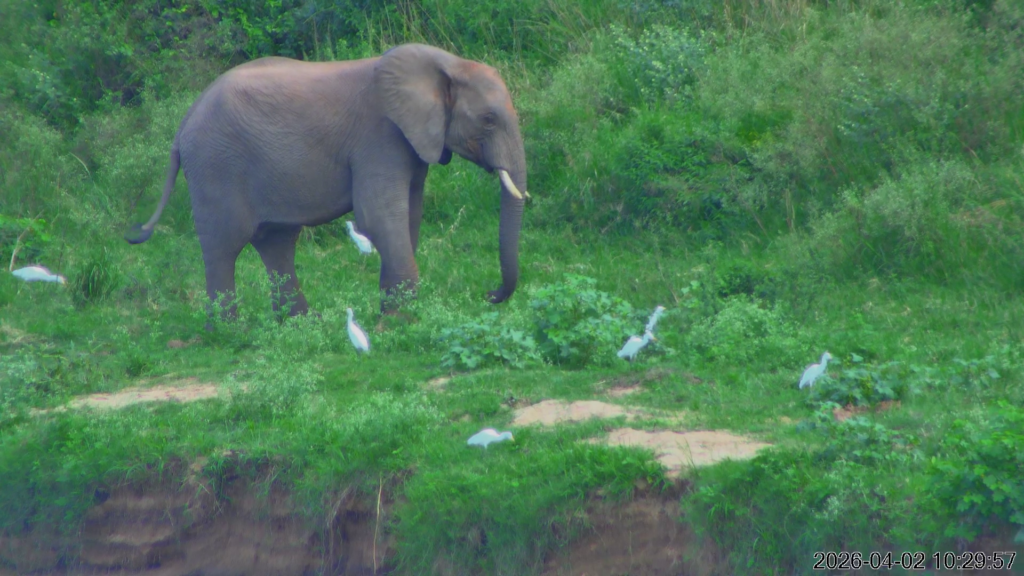
However, just when we think peace has been restored, the bull once again lashes out at the birds with his trunk.
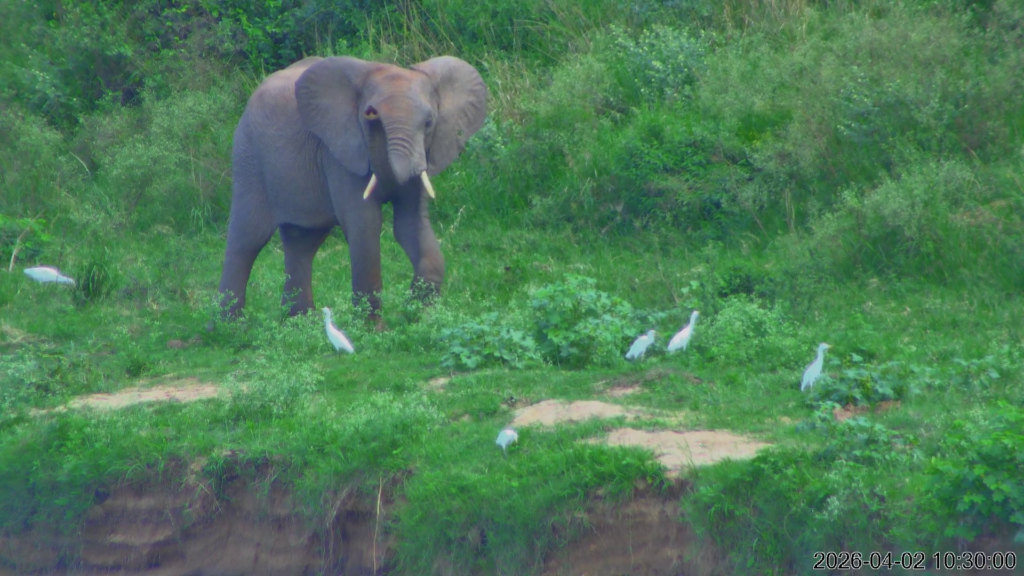
This time around, the birds don’t budge. Consequently, the bull escalates his threat by lunging forward with its ears flared, and the birds scatter.
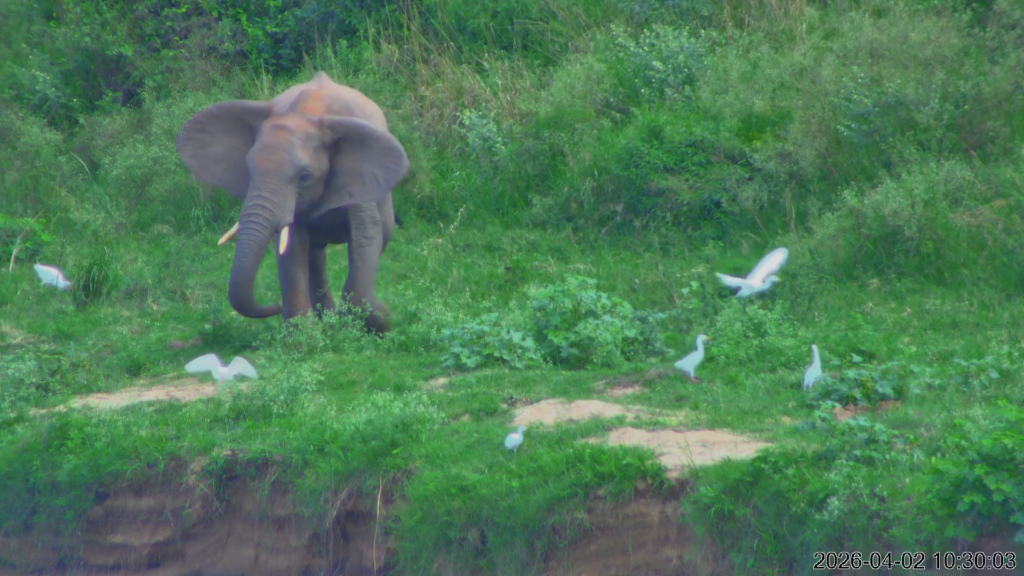
Still, we remain at a loss to explain his behaviour. Since we know they are not competitors and benefit from each other’s presence, it is perplexing.
Leave me alone
The bull’s subsequent behaviour suggests that he might just be in a bad mood. After all, we all have those days.
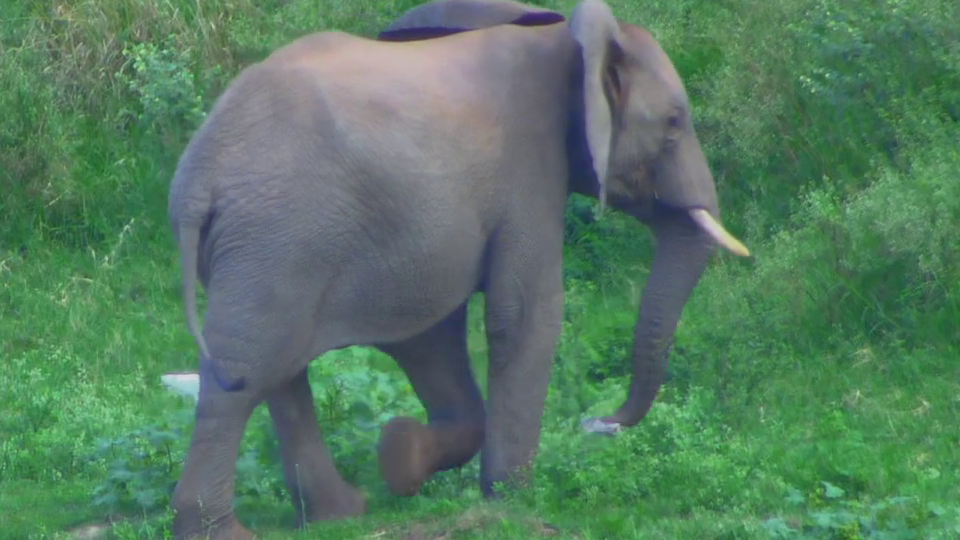
As he moves on, he picks up something lying on the ground. Moments later, he flings it away disdainfully.
As the video concludes, the birds are left in peace. We hope that the belligerent bull got over his bad day, too.


