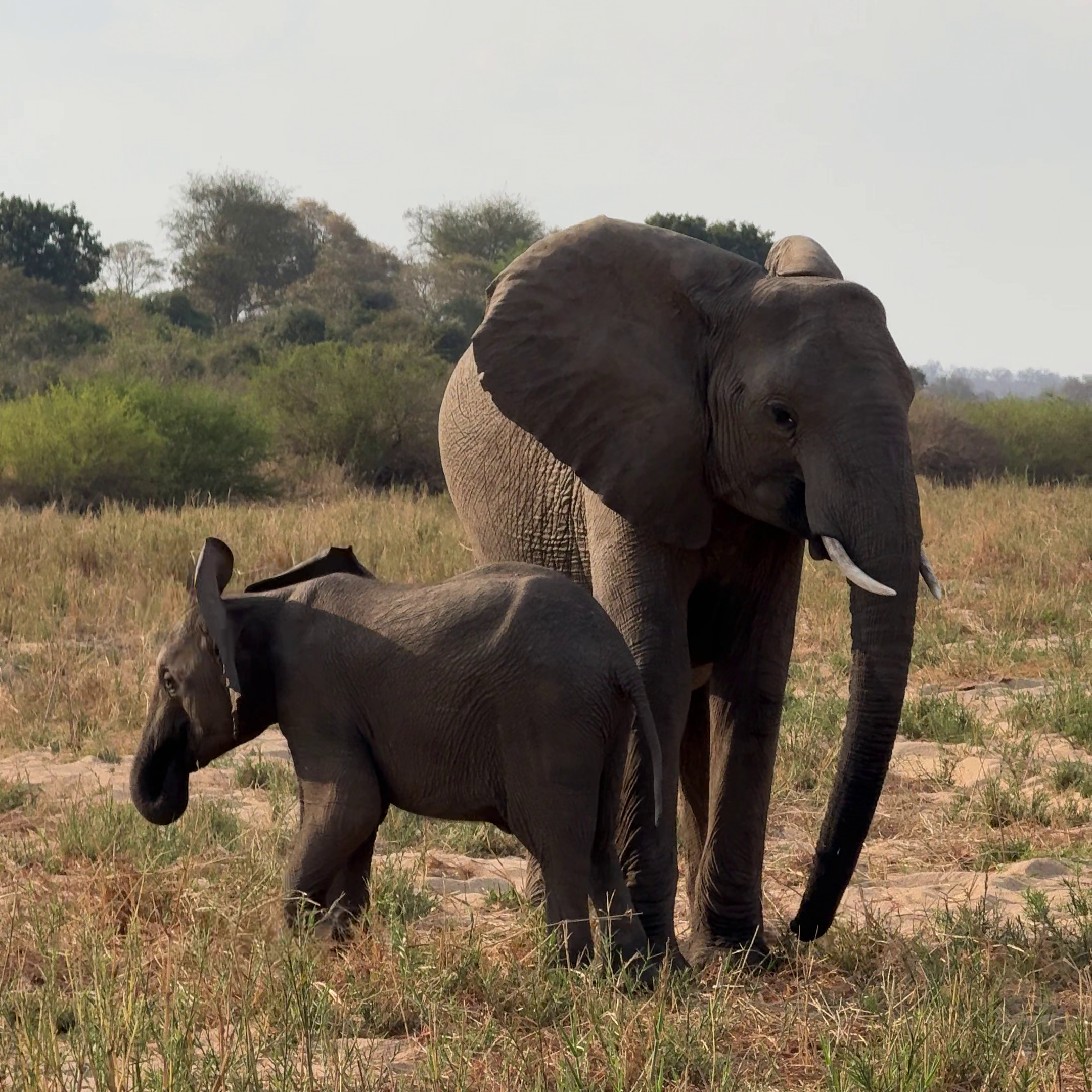

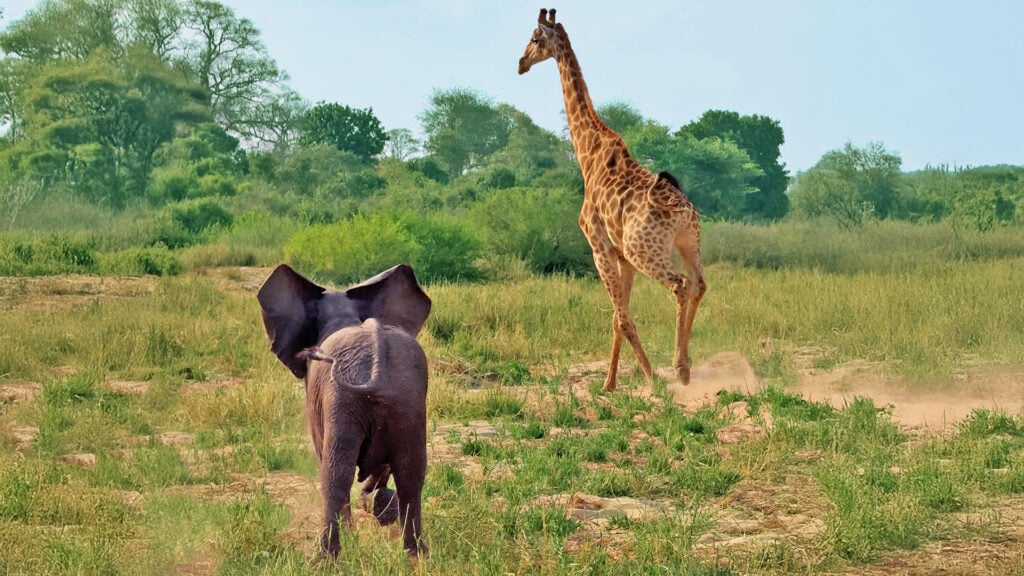
A young elephant’s development relies on a mix of skills learned from its herd and experimenting through play. In this video, a young bull bravely challenges a much bigger adversary.
Deon Kelbrick submitted this footage to Latest Sightings. He filmed it at MalaMala, within South Africa’s Sabi Sand Game Reserve.
Watch the video here:
A stranger appears
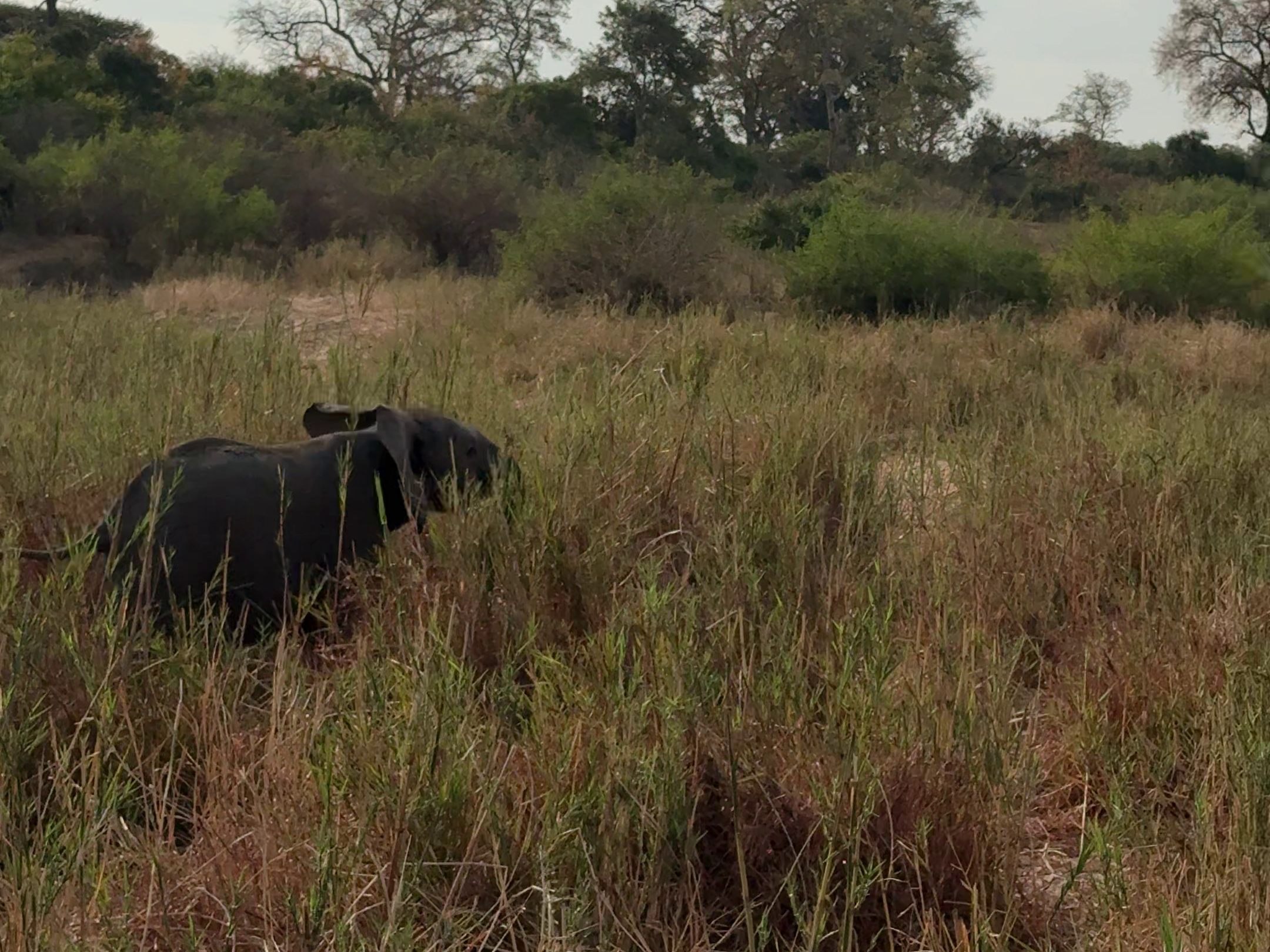
As a young elephant bull explored a riverbed, he looked up and saw a strange creature approaching. Instinctively, his ears flared, signalling his alarm.
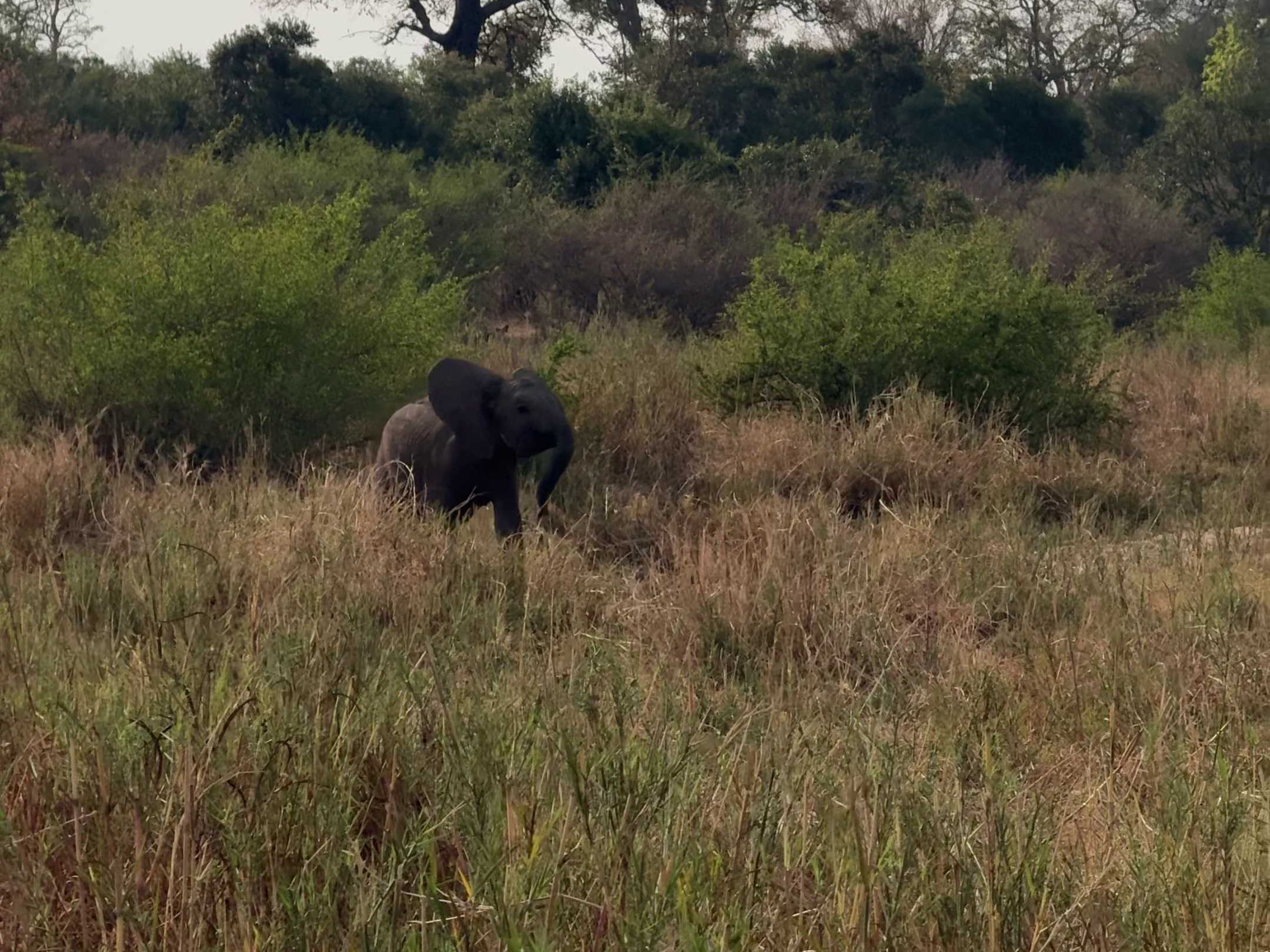
Like many animals, elephants use body language to communicate their emotional state. Simultaneously, by raising their heads and flaring their ears, they aim to make themselves look larger and therefore, more intimidating.
Instinctive reaction
When animals feel threatened, their response varies between freeze, flight, or fight. In this instance, the brave calf chose the latter.
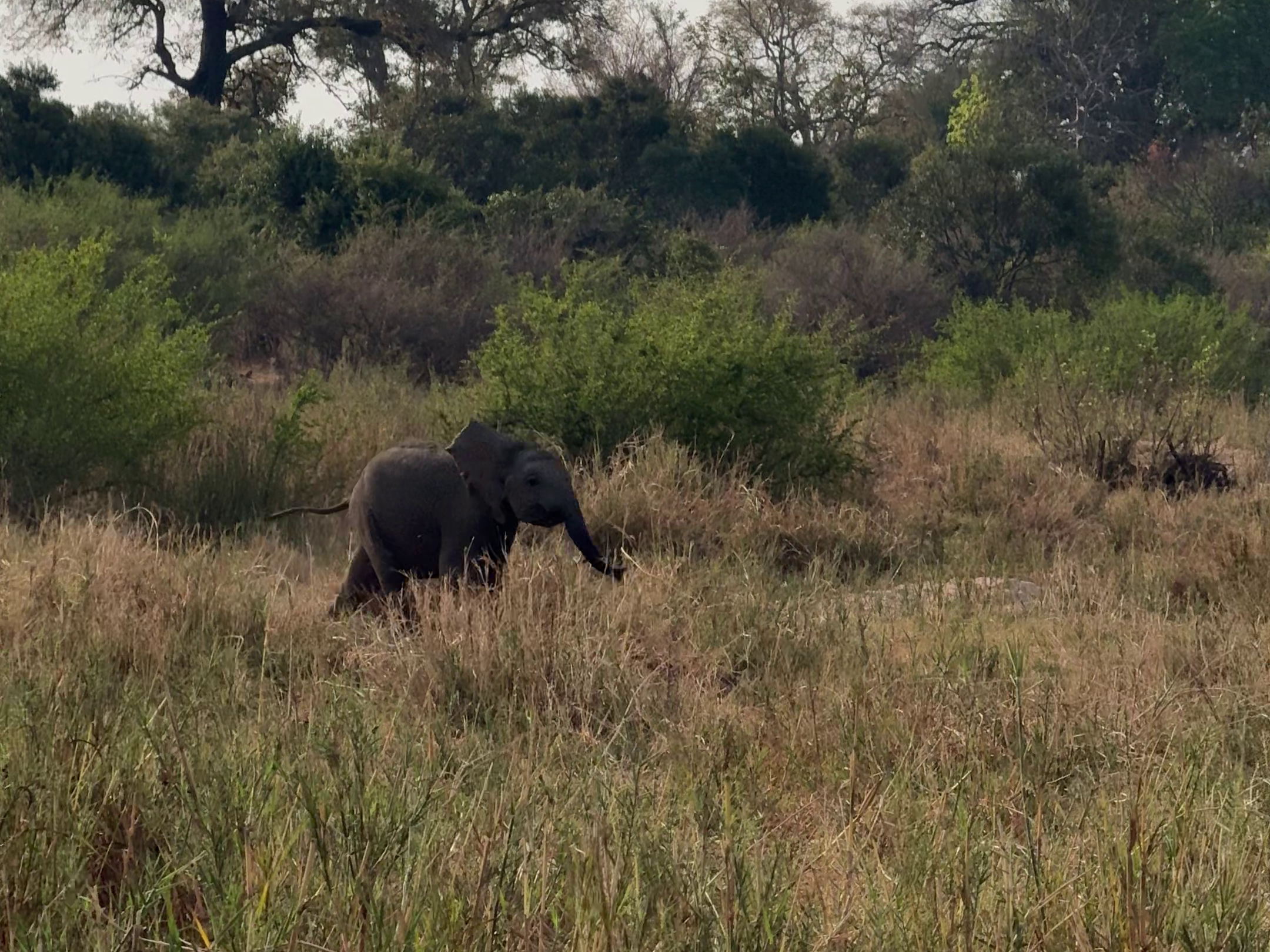
Consequently, with barely a moment’s hesitation, he charged forward, hoping to startle his massive adversary.
Gentle giraffe
Subsequently, Deon pans his camera to reveal the perceived threat. A large giraffe bull was making its way across the riverbed.
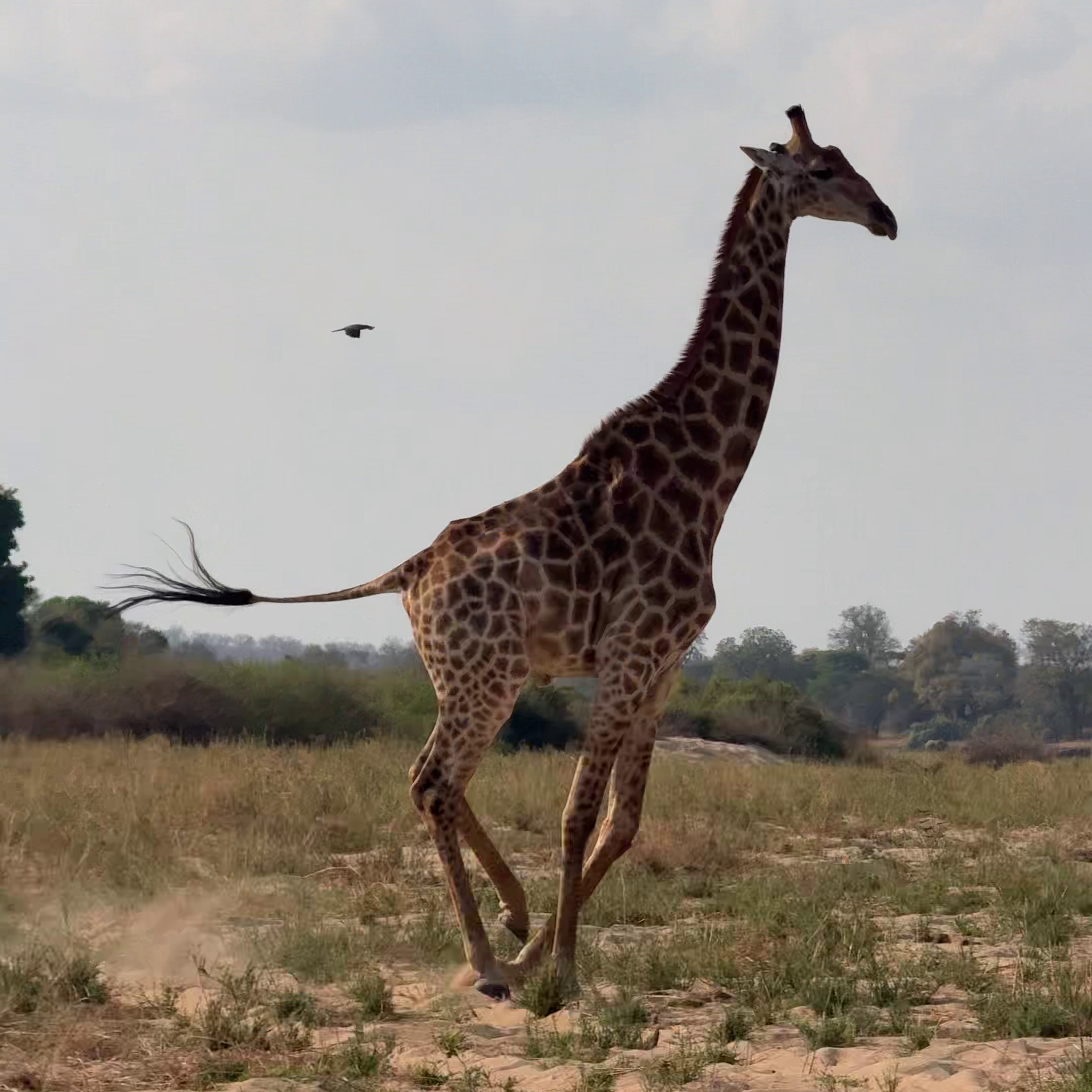
Now, giraffes are, by nature, timid creatures. Nonetheless, you can hardly blame it for turning tail and bolting as the calf suddenly stormed out of the bulrushes. Unlike the elephant that chose to fight when surprised, the giraffe chose flight.
Close family
As the giraffe flees, we see a small group of elephants further down the riverbed. These are the calf’s family group.
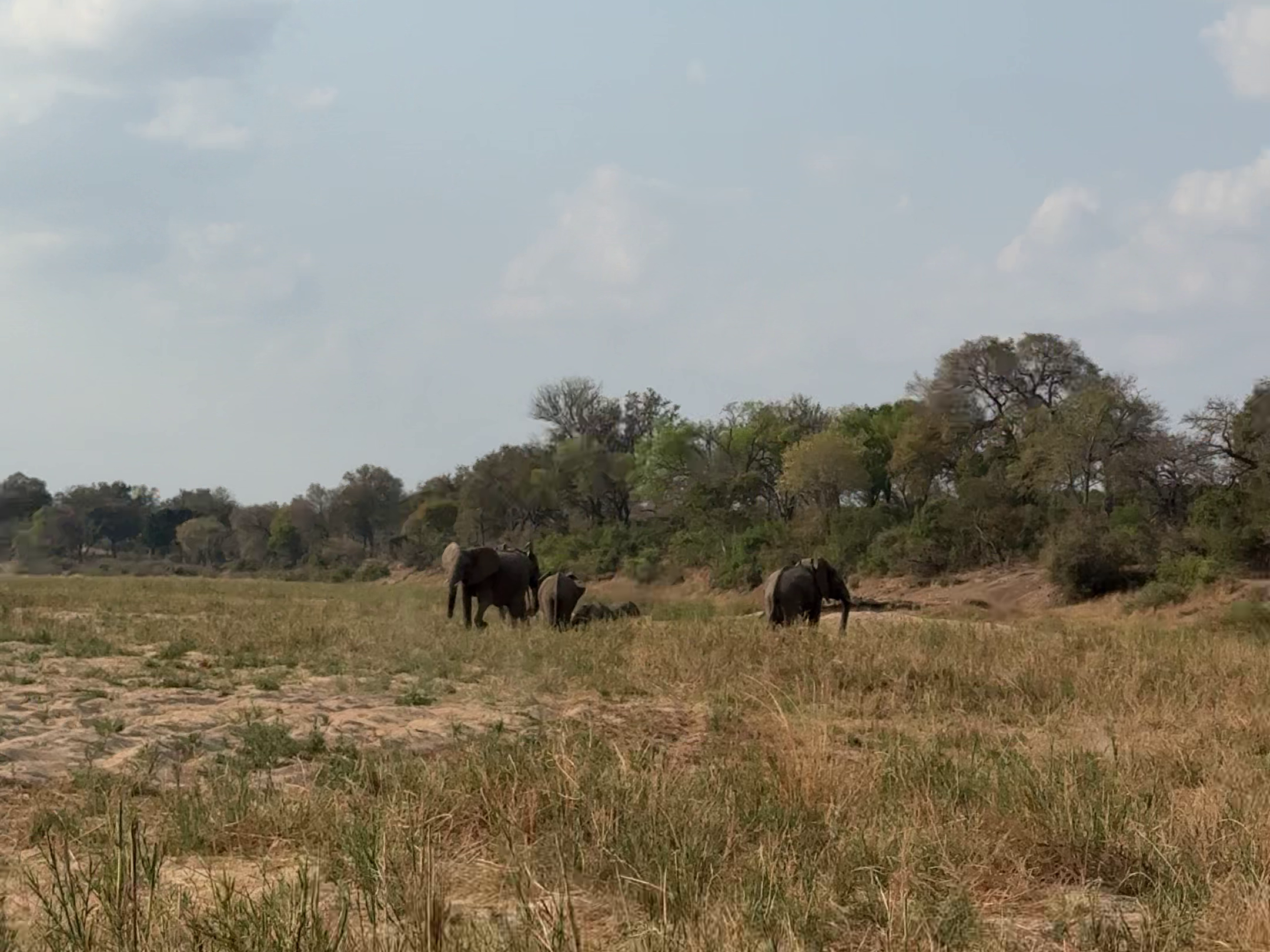
While they’d been drinking, the increasingly independent young bull had wandered off to explore when it spotted the giraffe.
Give me my space
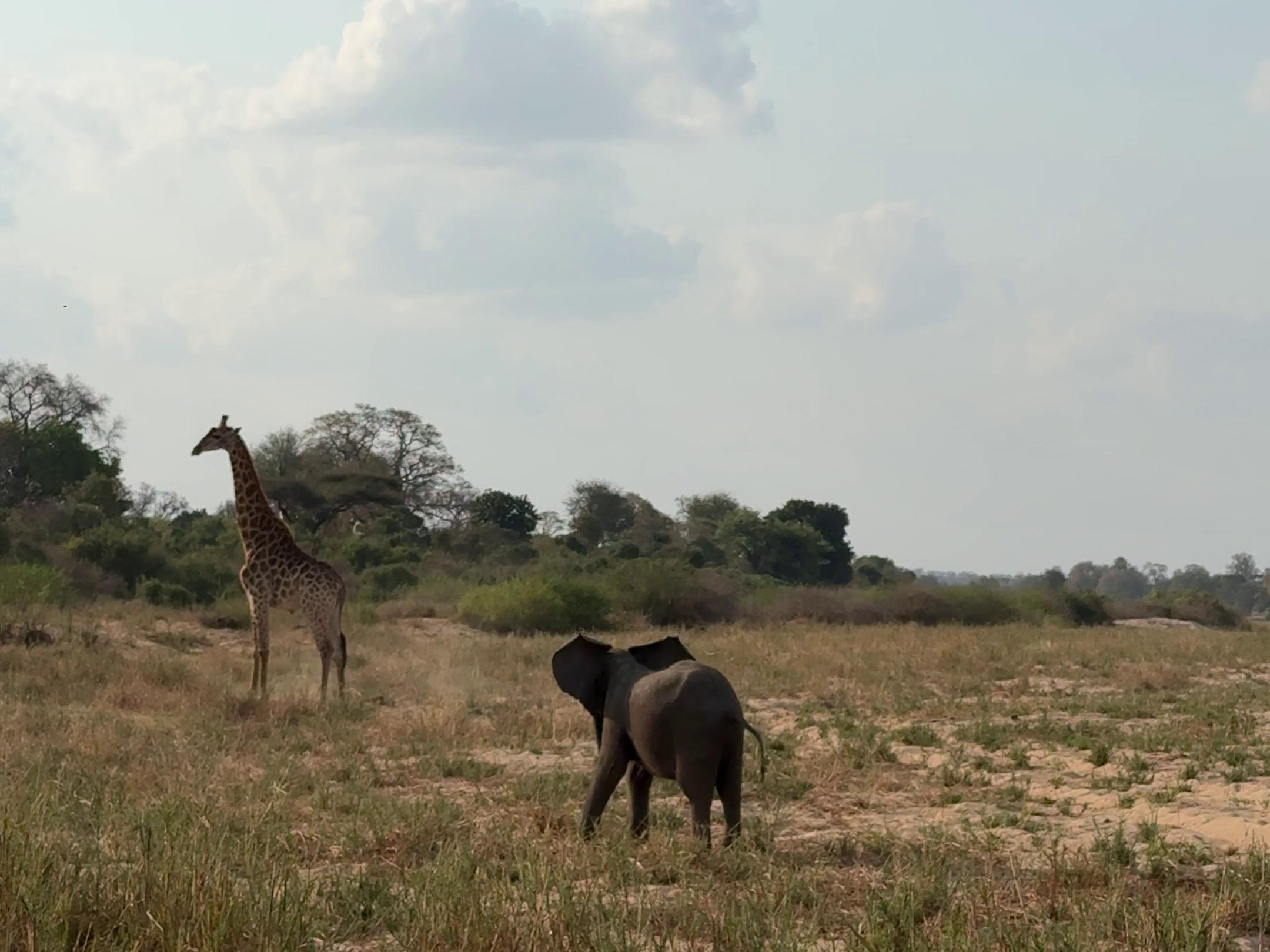
Meanwhile, the giraffe kept on running until it felt safe to stop. Animals are known to use “comfort zones”. These are imaginary circles around them within which they feel safe, depending on the other species they are interacting with.
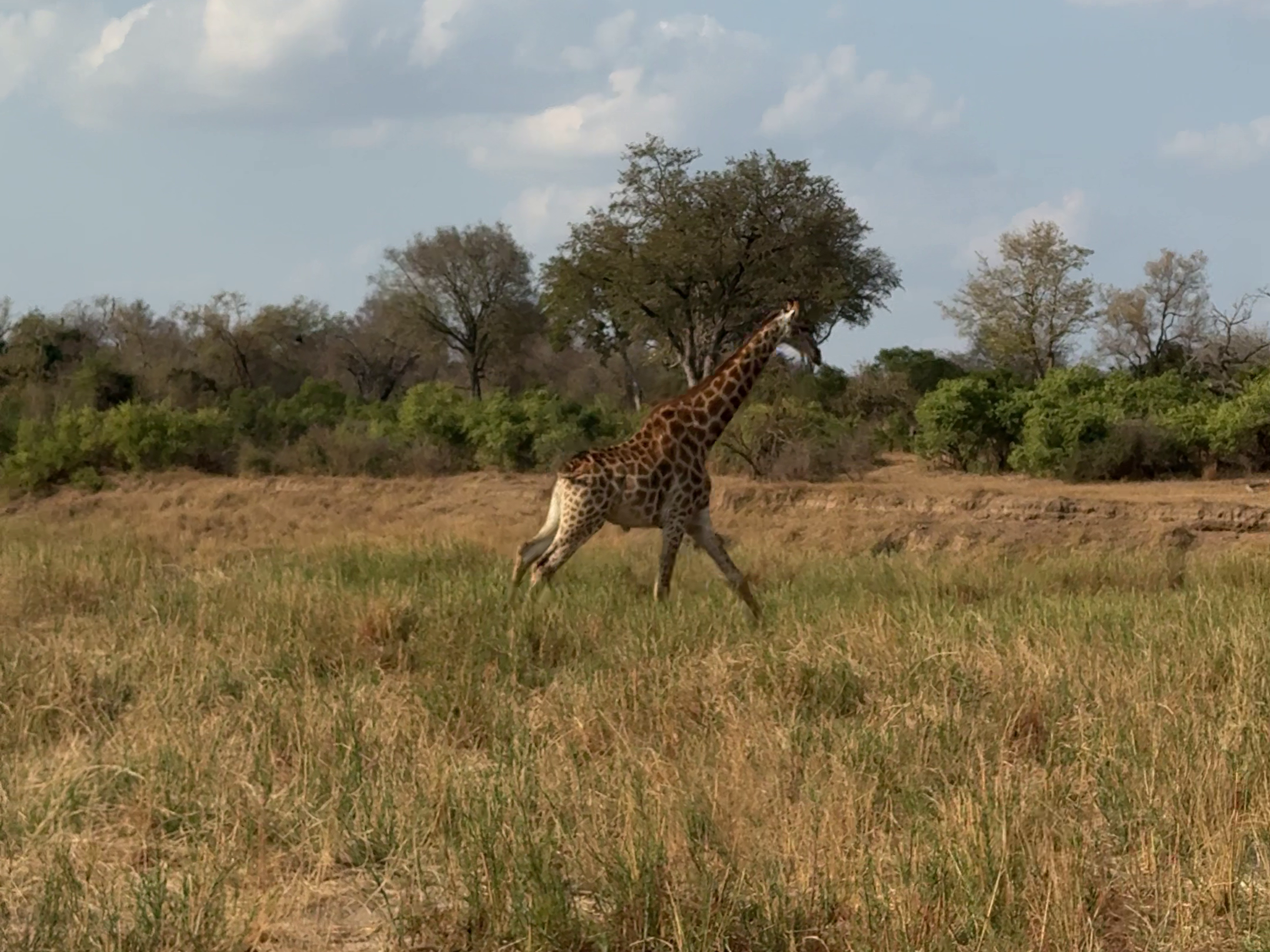
By using these zones, they can both conserve energy and monitor perceived threats. The distance varies depending on the species. For instance, a giraffe will have a much larger comfort zone near a predator than an antelope.
Now, what was I doing?
Having chased off the giraffe, the calf returned to the reeds.
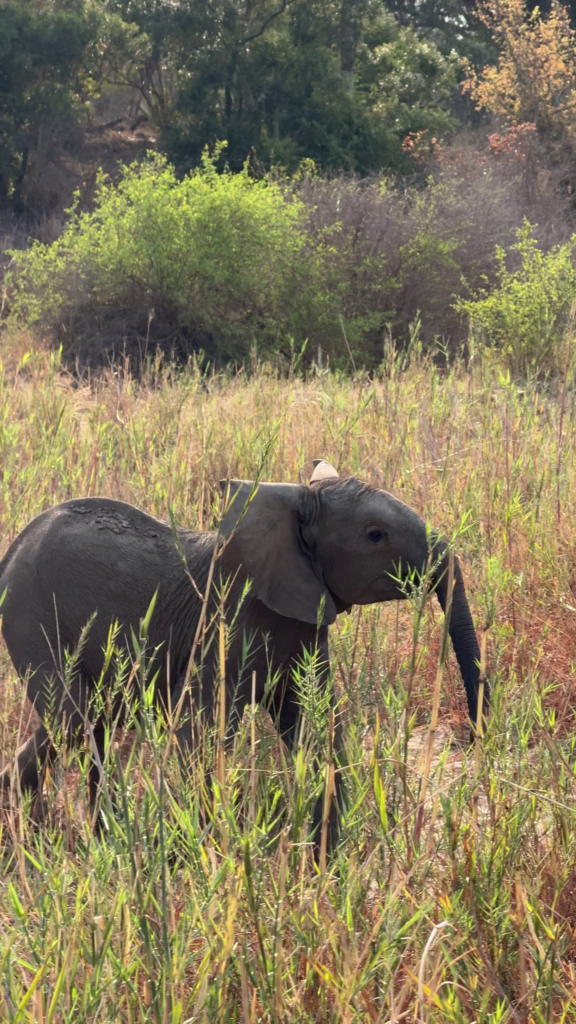
Then, to its utter dismay, it looked up to see the giraffe approaching once again. Presumably, the giraffe had decided the calf wasn’t a threat and meant to resume its journey.
Get our Best Sightings as they Come in
Same action, same reaction
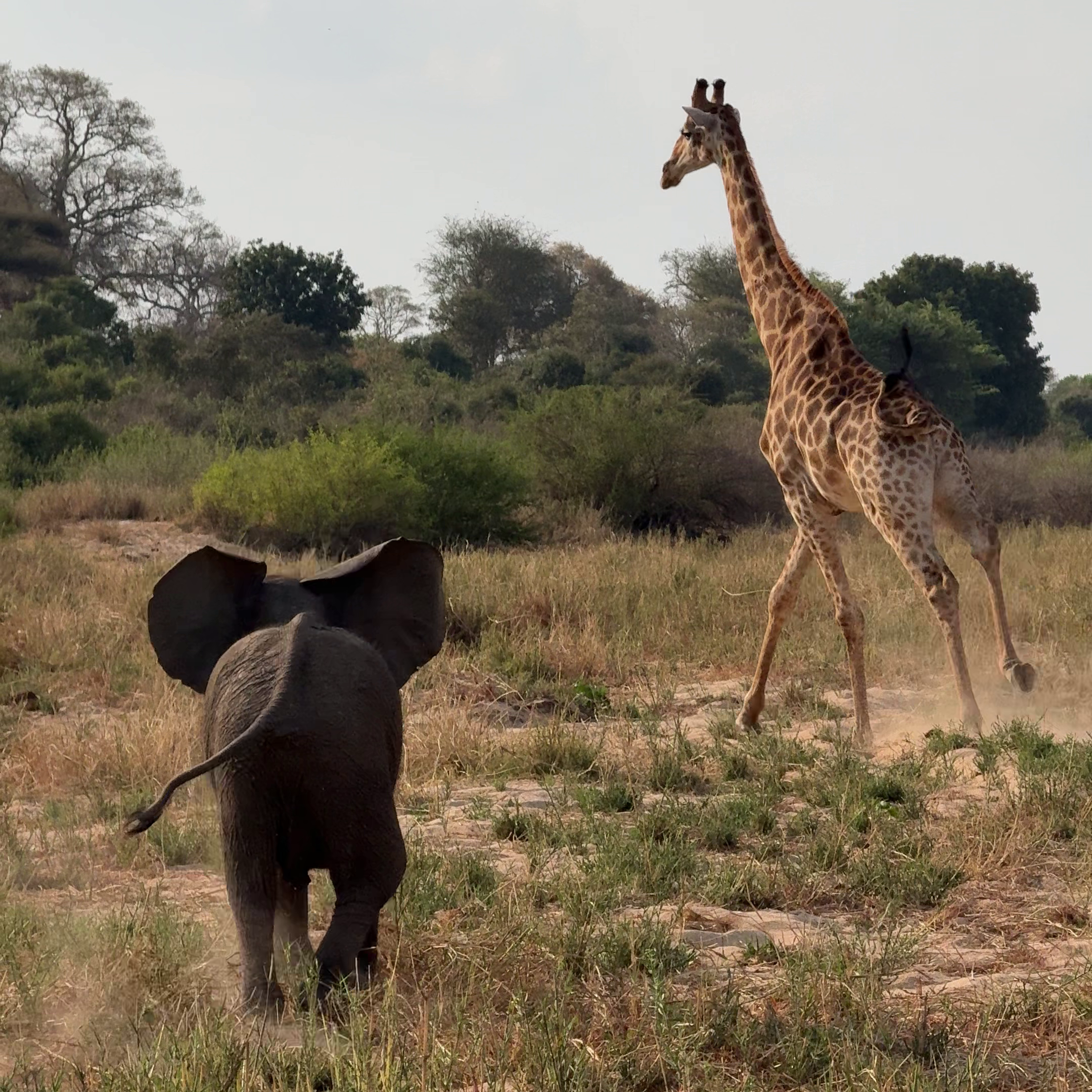
As a result, the calf once again flared his ears and charged, this time trumpeting in alarm.
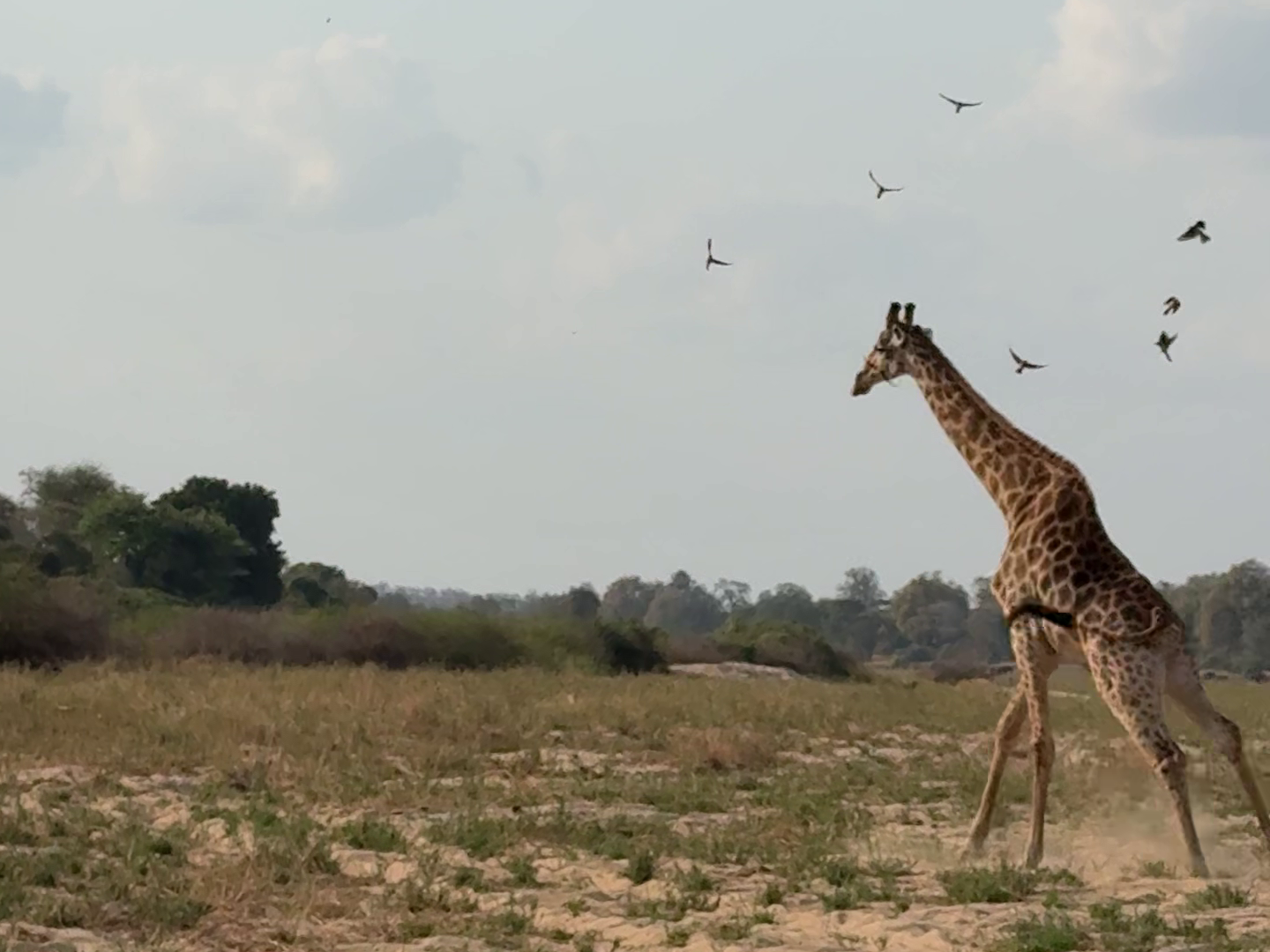
In turn, the giraffe quickly realised he’d made a mistake, and turned to gallop away. In the process, a flock of oxpeckers that had been hitching a ride flew off.
As the calf trumpeted and chased its nemesis, a spectator became concerned.
In the meantime, the calf and the bull resumed their comfort zones, each watching the other closely.
Mom’s coming
As the calf stood his ground, his mother ambled into view. She’d heard the furore and decided to intervene before her baby got into real trouble.
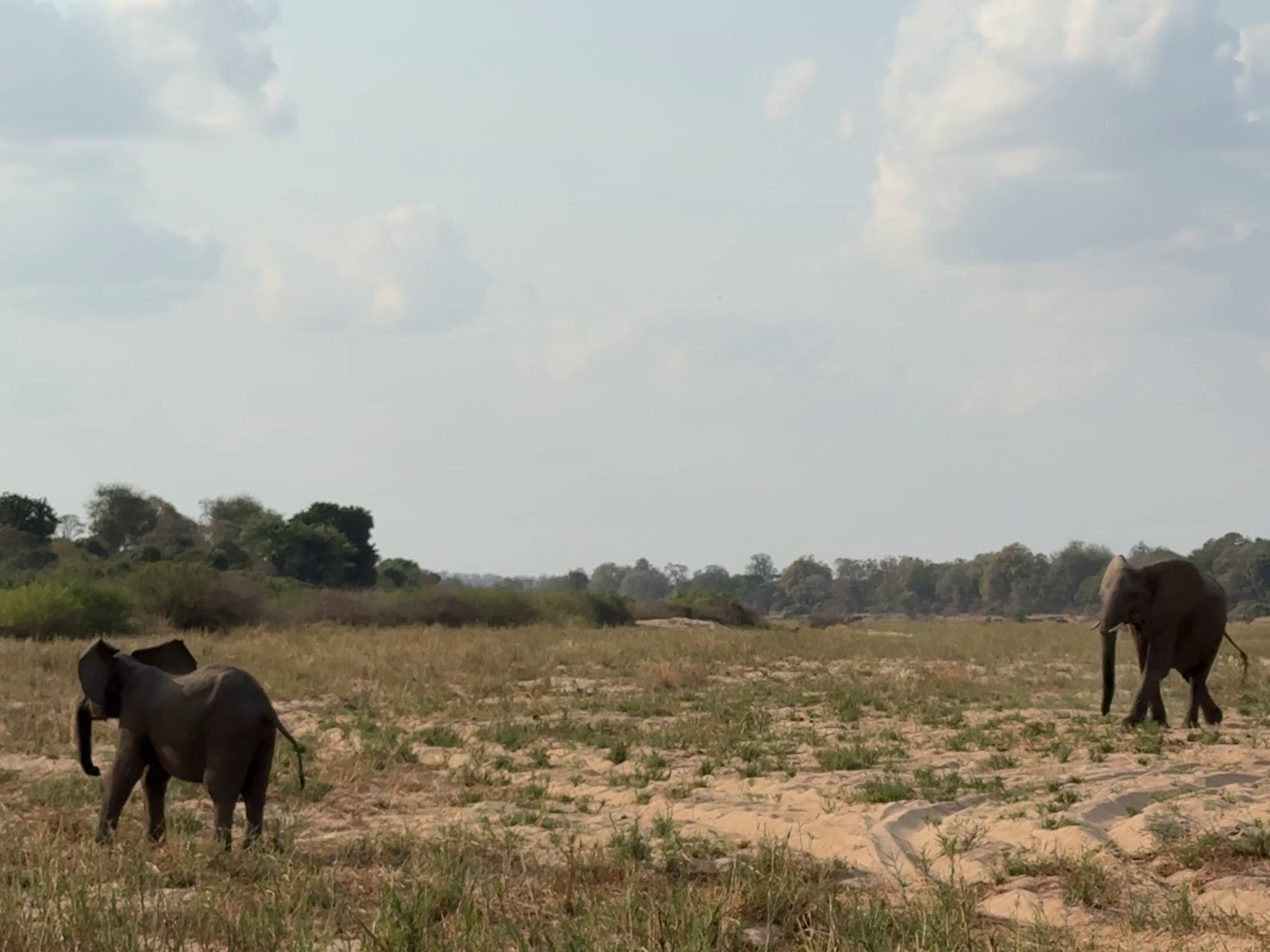
Unlike her calf, she knew the giraffe posed no threat, so she took no action against it. As she got closer, the calf raised his trunk, as if blaming the giraffe for the disturbance.
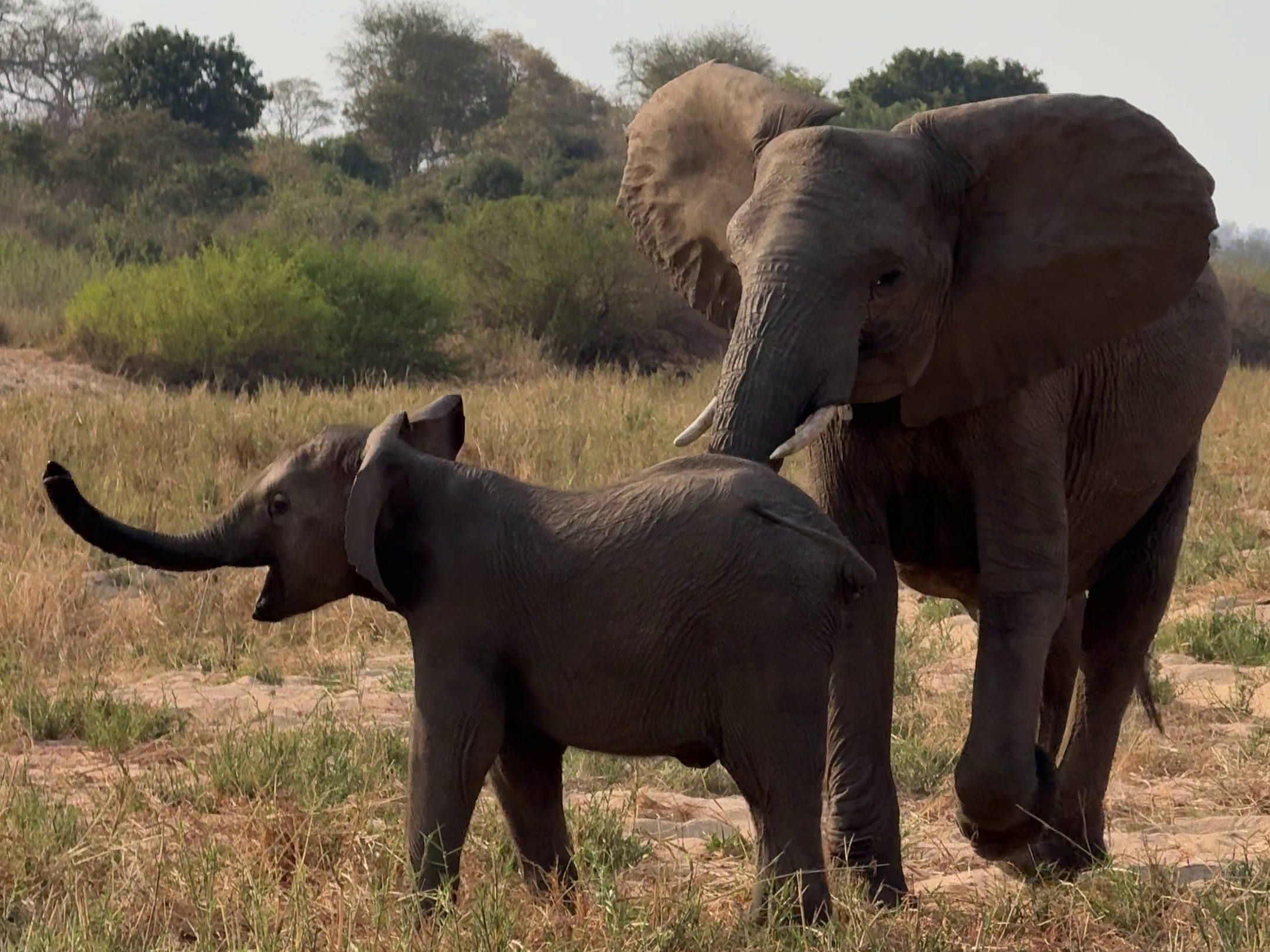
However, Mum knew better and patiently reassured her calf, restoring peace to the neighbourhood.