

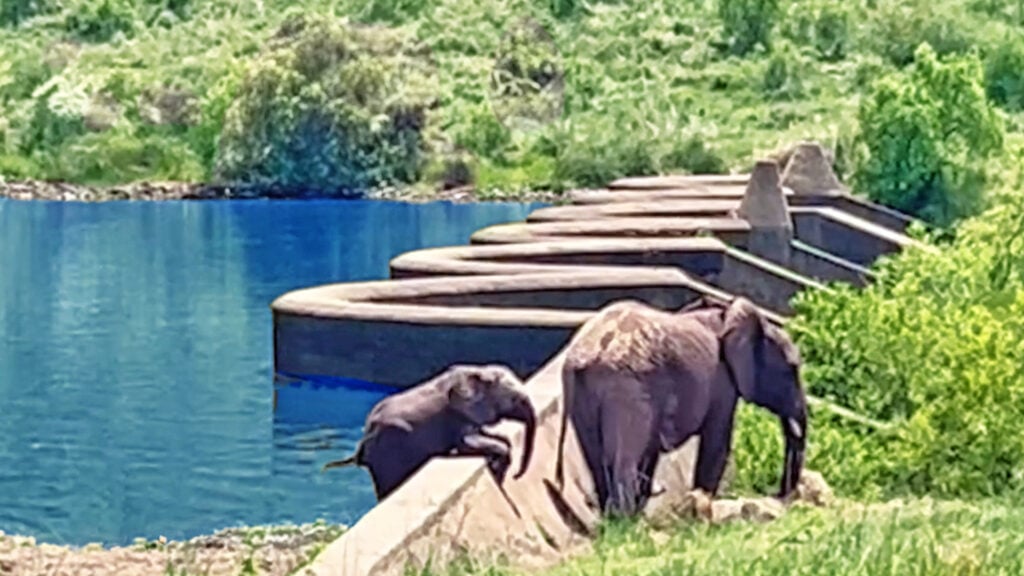
It was a bright day in Pilanesberg National Park when safari-goer Janine McLeish witnessed a moment that had everyone in the vehicle smiling. Two larger elephants had already crossed over a low dam wall, standing patiently on the other side.
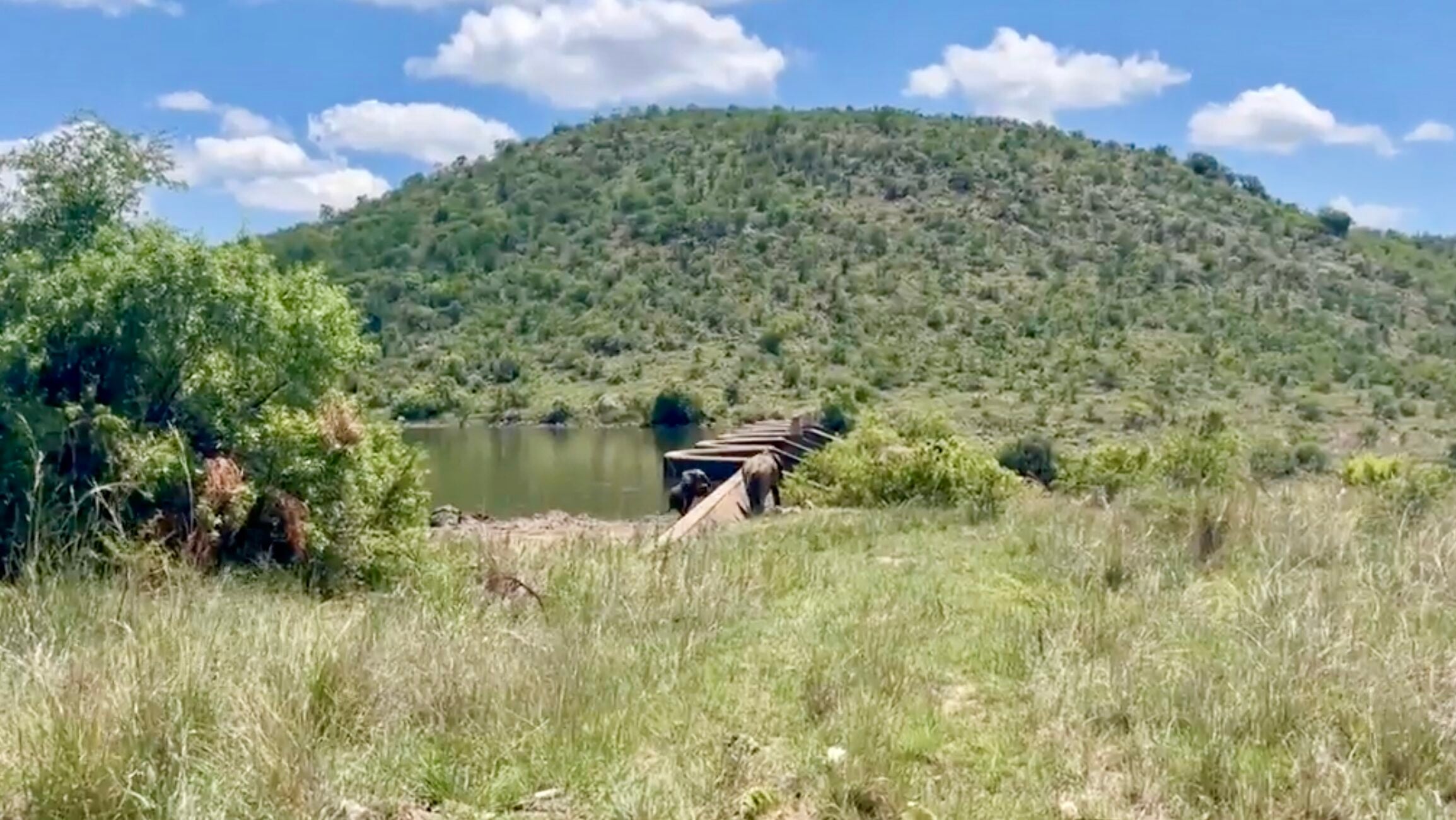
One of them lingered close by, calm but attentive. On the other side of the wall stood the smallest member of the group, gazing up at what must have looked like a serious engineering problem.
Watch the Sighting:
To us humans watching, the wall seems minor, just a short concrete rise separating two levels of ground. But to a young elephant still growing into its oversized feet, it may as well have been a cliff.
Receive Heartwarming Animal Sightings
Do not miss out on the next adorable wildlife encounter! We drop all our top viral videos straight into our WhatsApp community the moment they are uploaded. Follow the link to join us and never miss another incredible moment of nature like this triumphant little calf.
Step One: Commit
The calf didn’t waste much time overthinking it. It hoisted its front legs up onto the wall, planting them firmly against the concrete. For a moment, it looked quite confident.
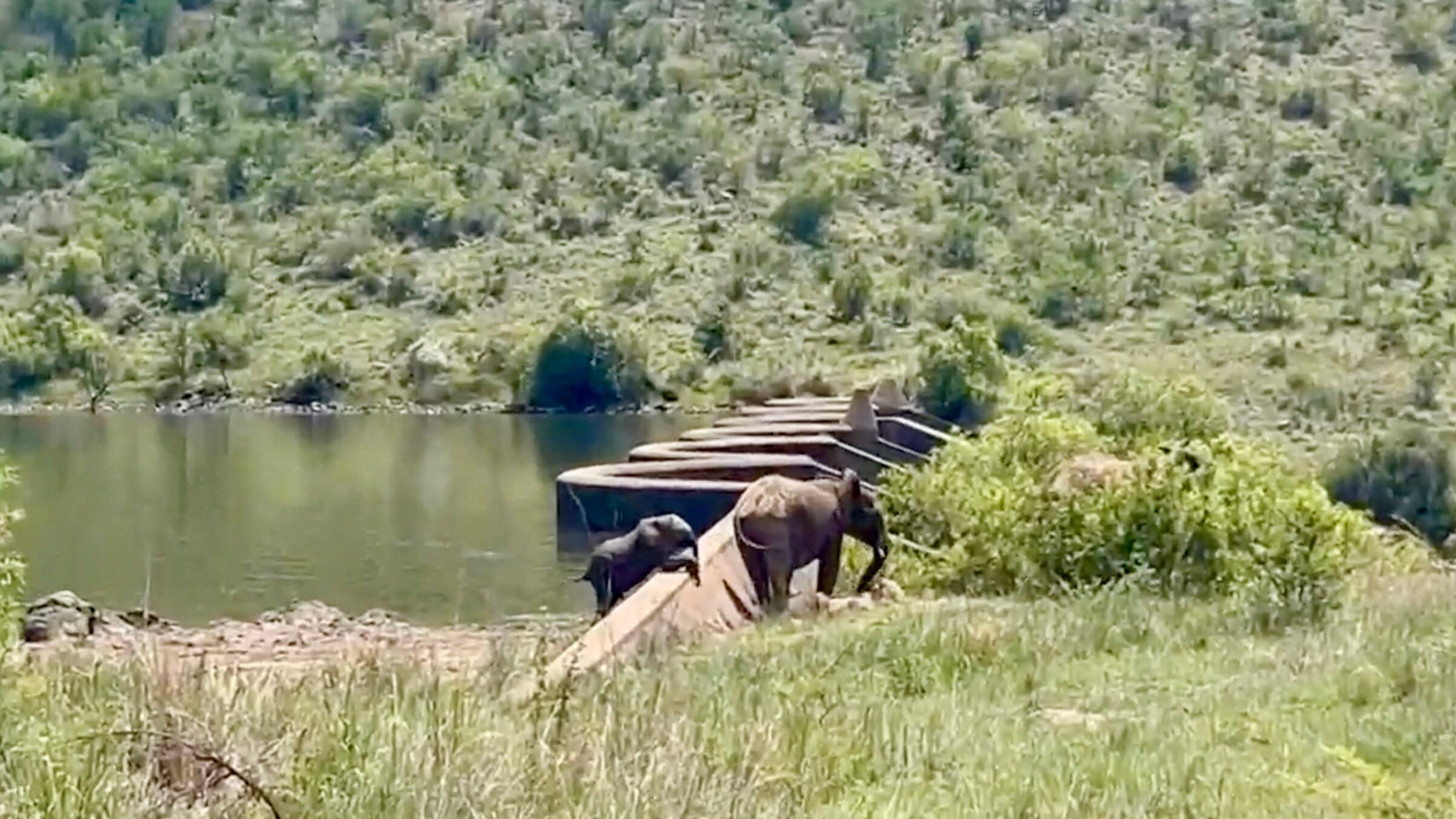
But then came the tricky part: the back legs. They scrambled awkwardly against the base of the wall, searching for any form of traction.
The calf shifted its weight, trying to angle its body forward, shuffling its little feet. Inside the vehicle, you could hear quiet chuckles.
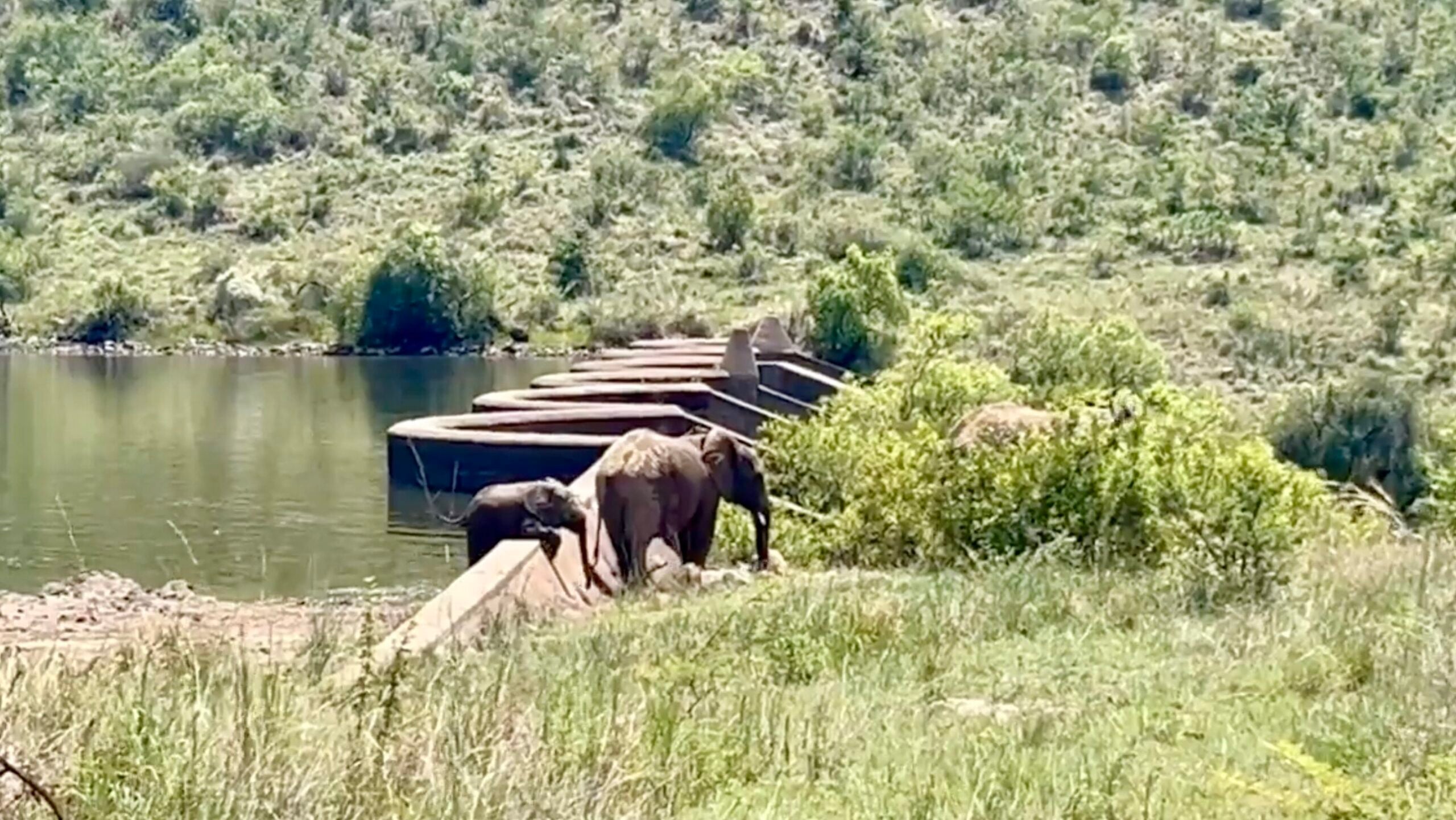
It was impossible not to root for the tiny climber.
The Moment of Truth
After a few seconds of wobbling, the calf finally found the right angle. Its body tipped just far enough forward to use gravity to its advantage. Suddenly, momentum took over.
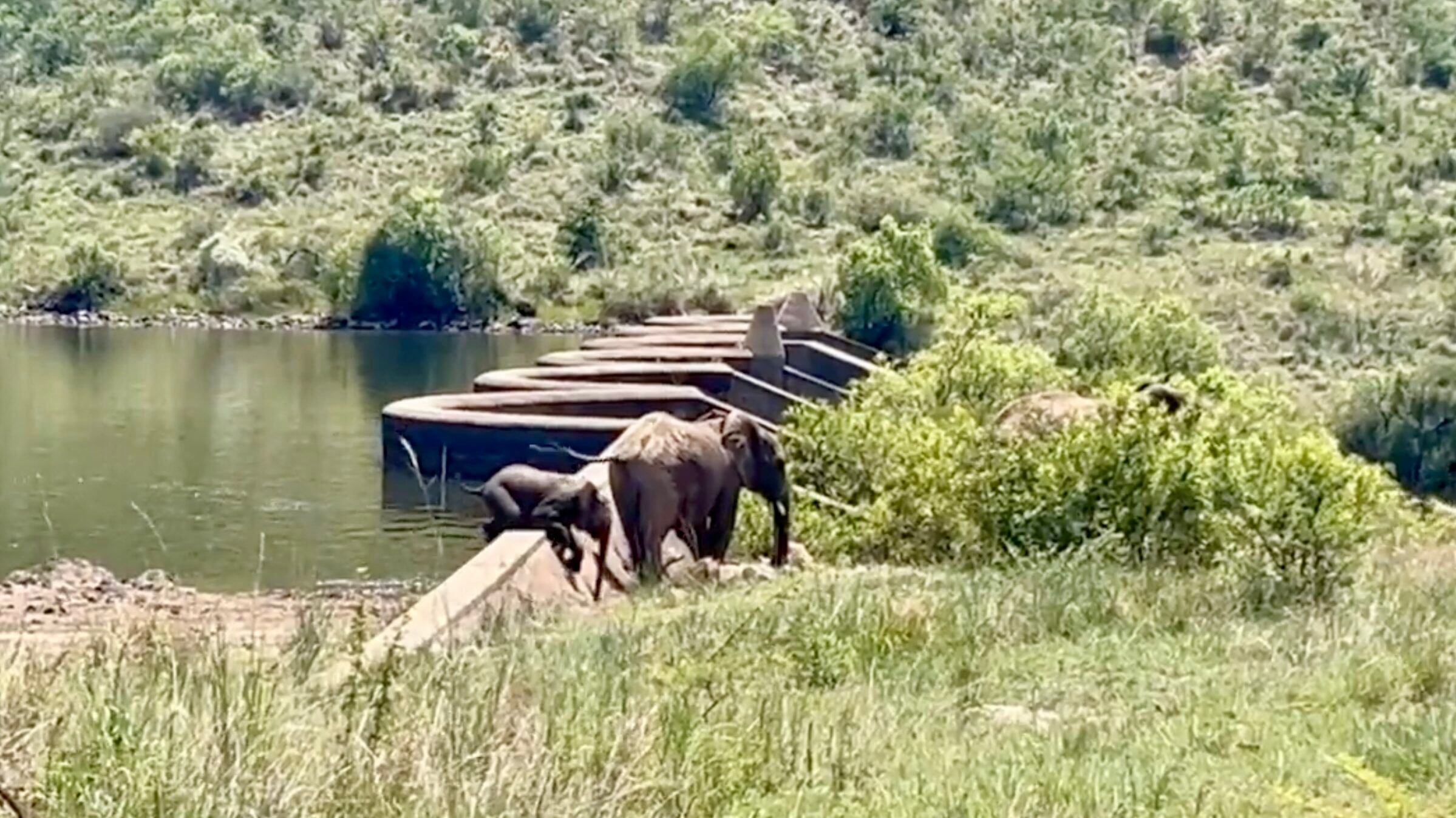
Its back legs kicked upward in a burst of effort, and its body rolled forward onto the wall. For a brief second, it paused at an awkward tilt, front legs sliding slightly down the far side while the back legs were still perched above.
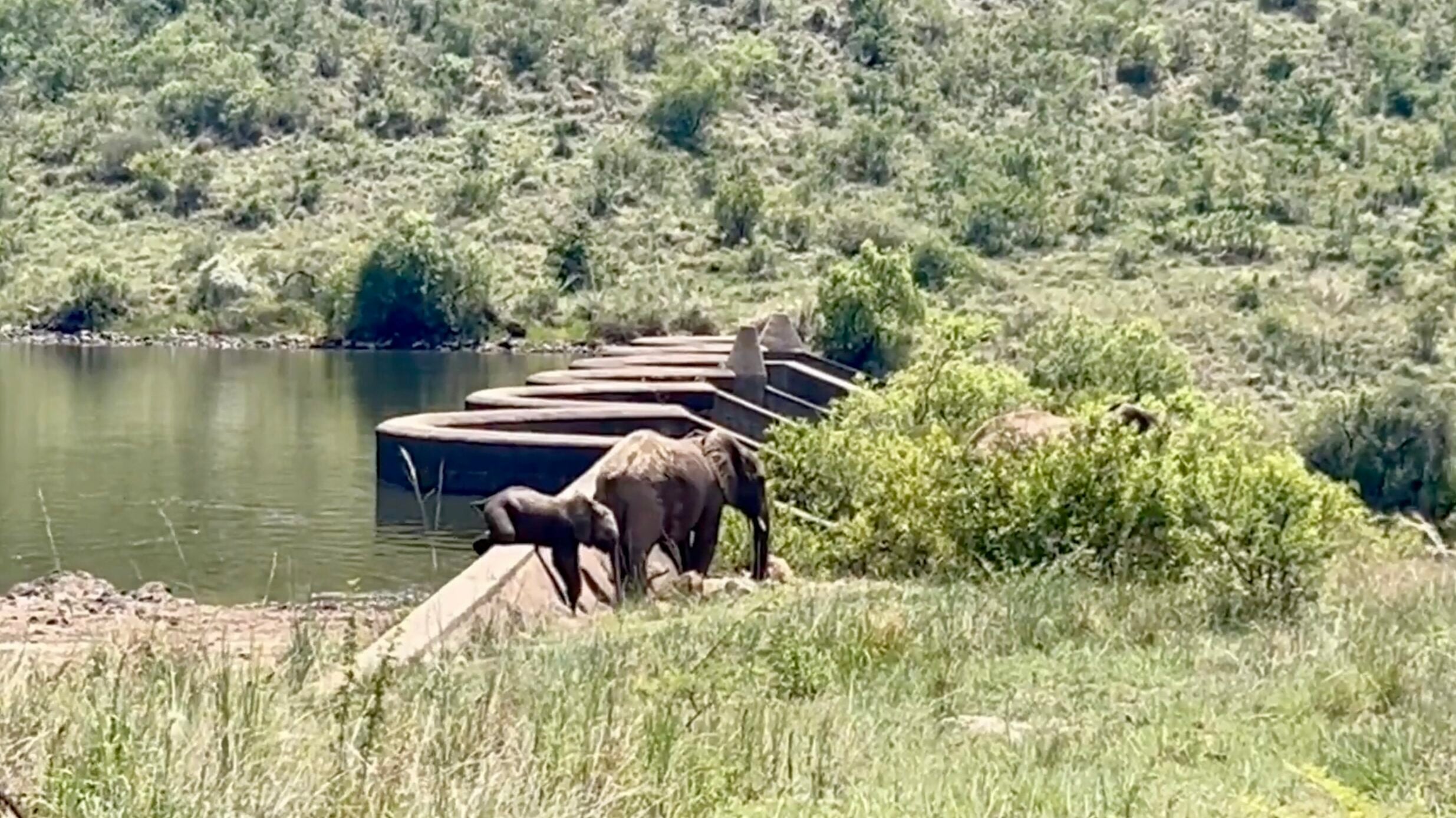
The hesitation drew a collective chuckle from the onlookers, then success. The calf slid its back legs down the other side and landed safely, steadying itself as if to pretend it had meant to do it that way all along.
From inside the vehicle came an enthusiastic, “Ehhhh, well done, boy!”
The Importance of Overcoming Obstacles
While this moment felt playful and lighthearted, it was also part of something much bigger. Young elephants are constantly learning how to navigate their environment, from uneven terrain to riverbanks, fallen trees, and yes, even man-made structures like dam walls.
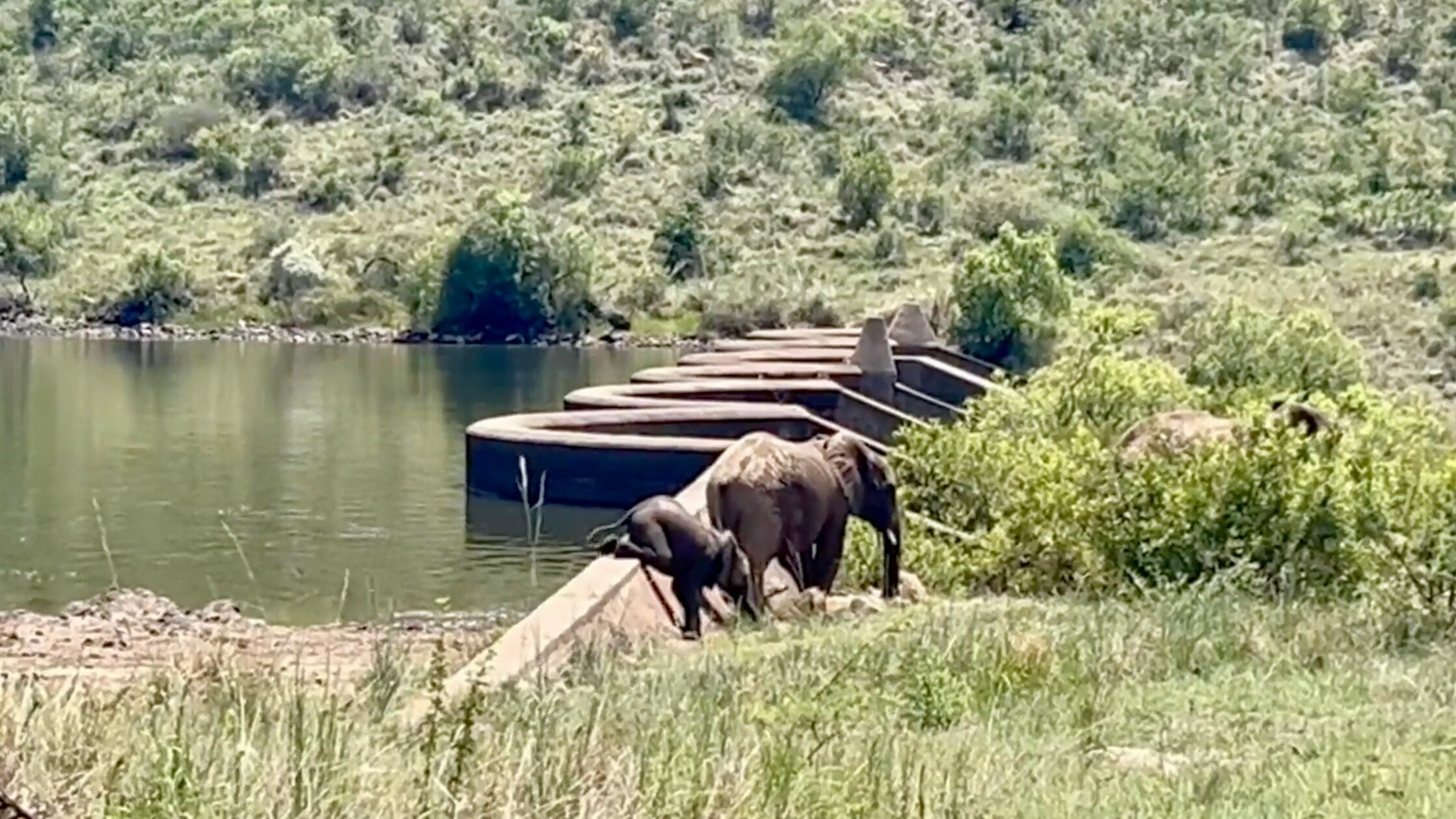
Calves develop coordination and muscle strength through trial and error. Climbing, scrambling, and figuring out spatial awareness are all crucial skills that will later help them cross rivers, escape danger, and keep up with the herd during long migrations.
What looked like a simple climb turned out to be a lesson in balance, persistence, and confidence.
Family Waiting on the Other Side
Throughout the entire ordeal, the two larger elephants waited patiently. Elephants are deeply social animals, and adults often stay close to ensure that younger members can safely navigate obstacles.
The mother’s calm presence likely provided reassurance and gave the calf a boost of confidence. There was no rushing, no pushing, just quiet observation until the calf joined them.
Get our Best Sightings as they Come in
Once reunited on the other side, the trio moved on together, the dam wall now nothing more than a conquered challenge.
A Small Victory in a Big World
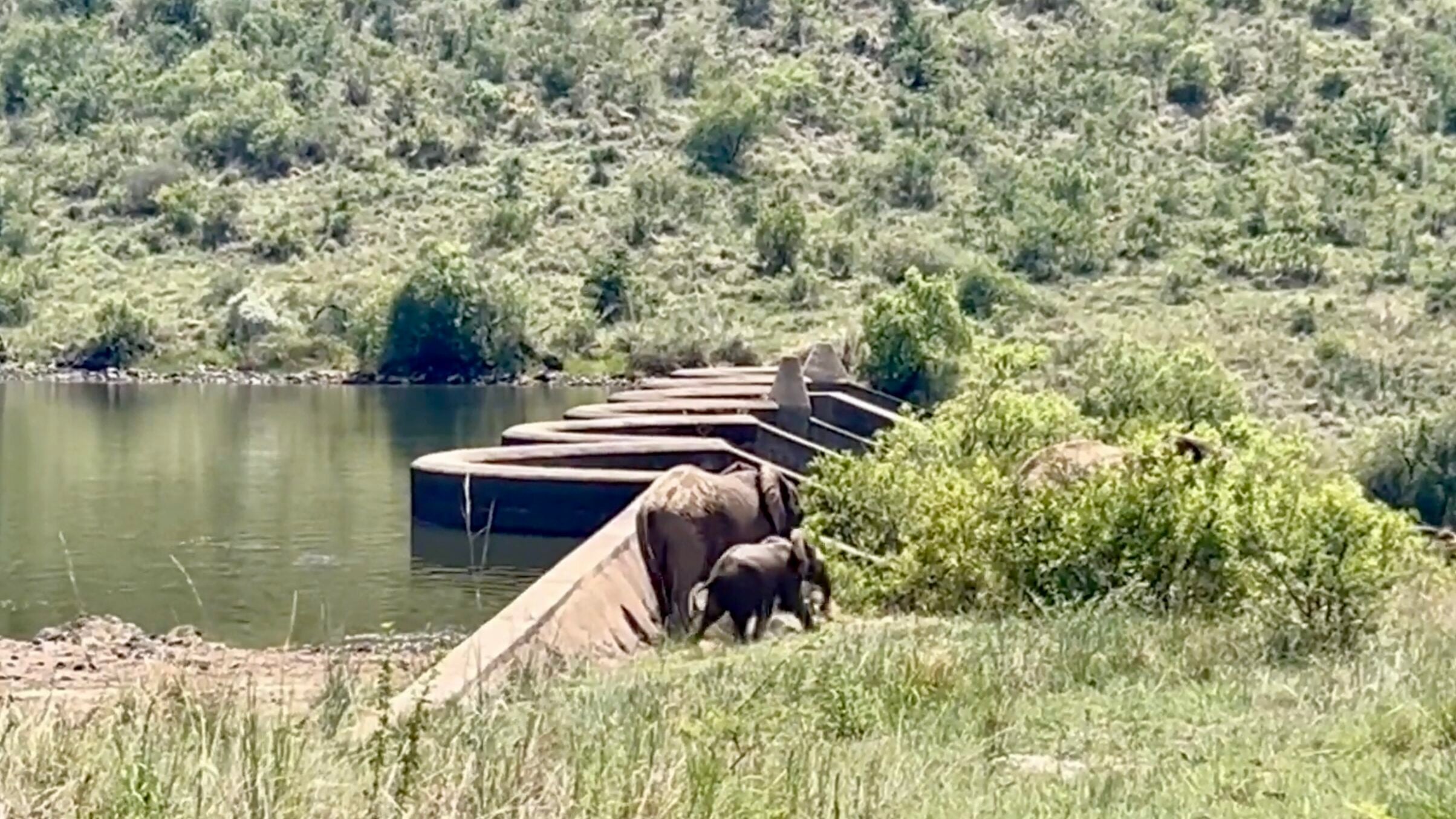
In the vast landscapes of Pilanesberg, a low wall is hardly noteworthy. But for one baby elephant, it was a mountain scaled and a moment earned.
Sometimes the most memorable sightings aren’t about danger or drama. They’re about growth and the quiet triumph of a calf discovering it’s stronger than it thought.


