

The black mamba is one of Africa’s largest and most venomous snakes. In this video submitted by Brendon Dredge at MalaMala Game Reserve, there is little that these birds can do to stop one from raiding their nest.
Catch the latest viral videos
Our WhatsApp Groups are filled with some of the coolest viral wildlife sightings shared daily. Click the button below to join our groups and never miss another viral wild life video!
Sinister sight
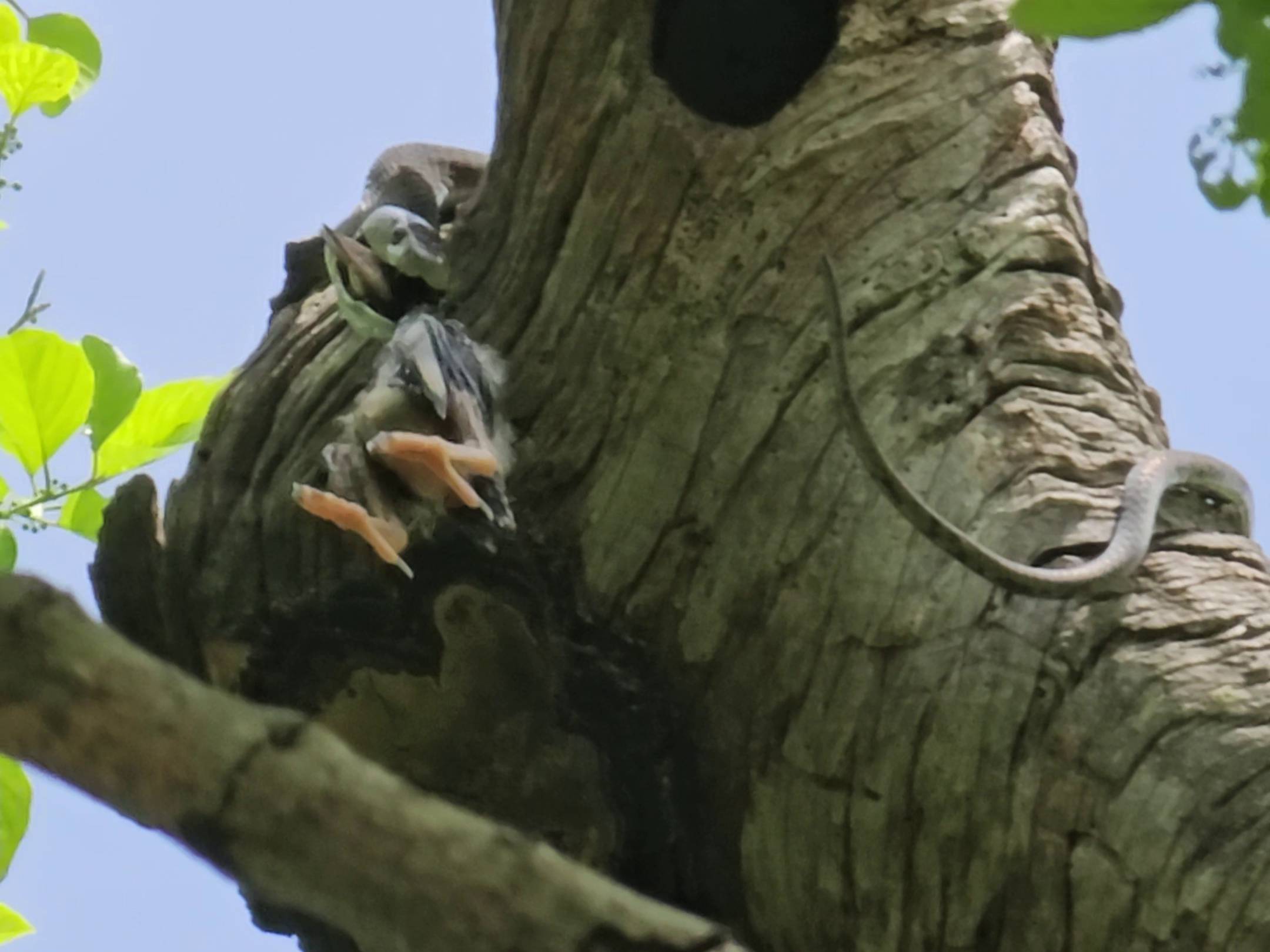
A sinister sight greets us as this video begins. High in the canopy of a tree, we see Africa’s largest venomous snake.
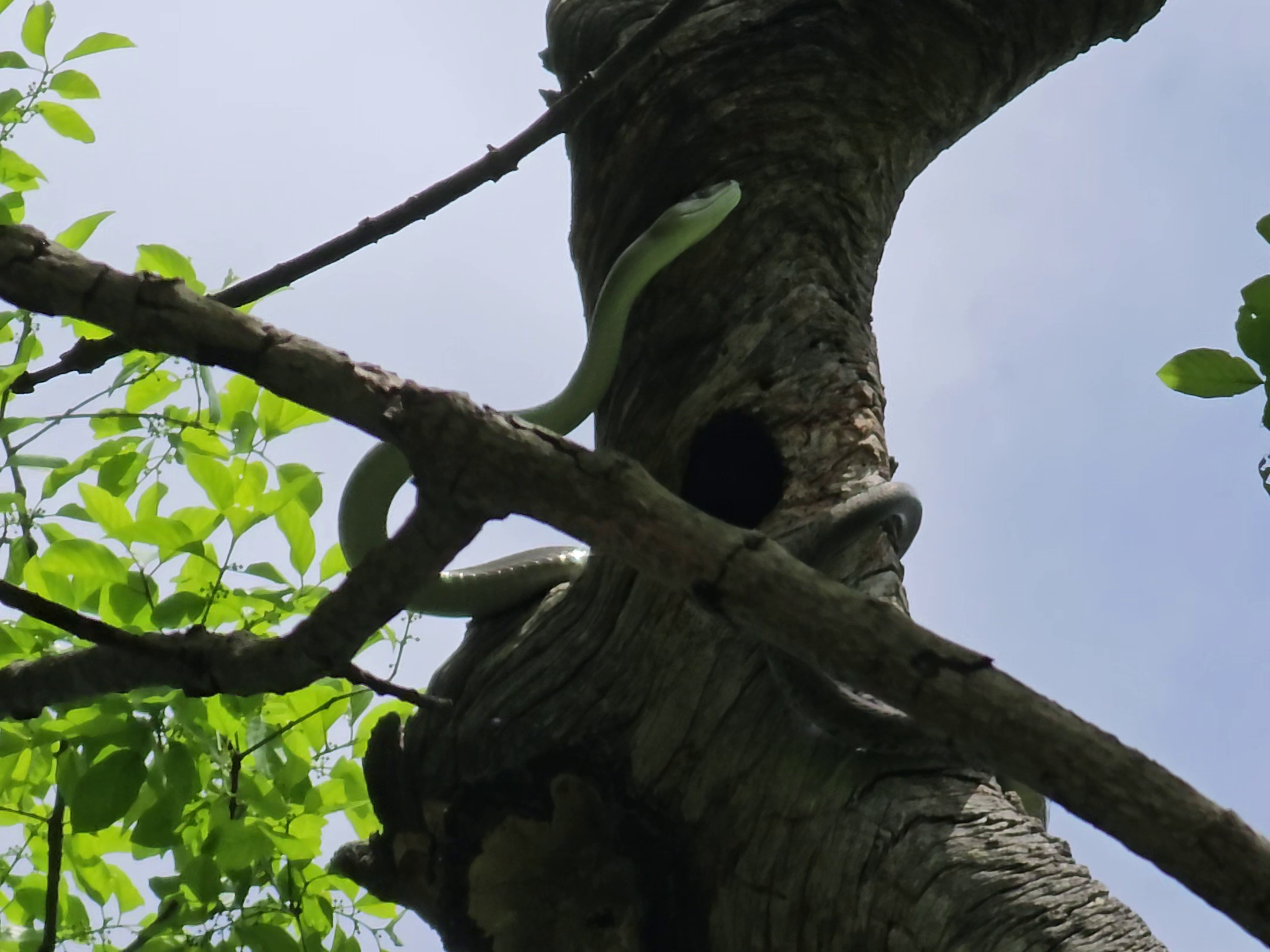
The snake in question is a black mamba, known to reach lengths of over 4 metres. Highly venomous, they are a fast-moving species that actively hunts for prey.
Nest at risk
As the snake approaches a circular hole in the branch, a frantic bird flies by. It is a green wood hoopoe, and by its constant alarm calls, we realise that it is trying to defend its nest from the deadly predator.
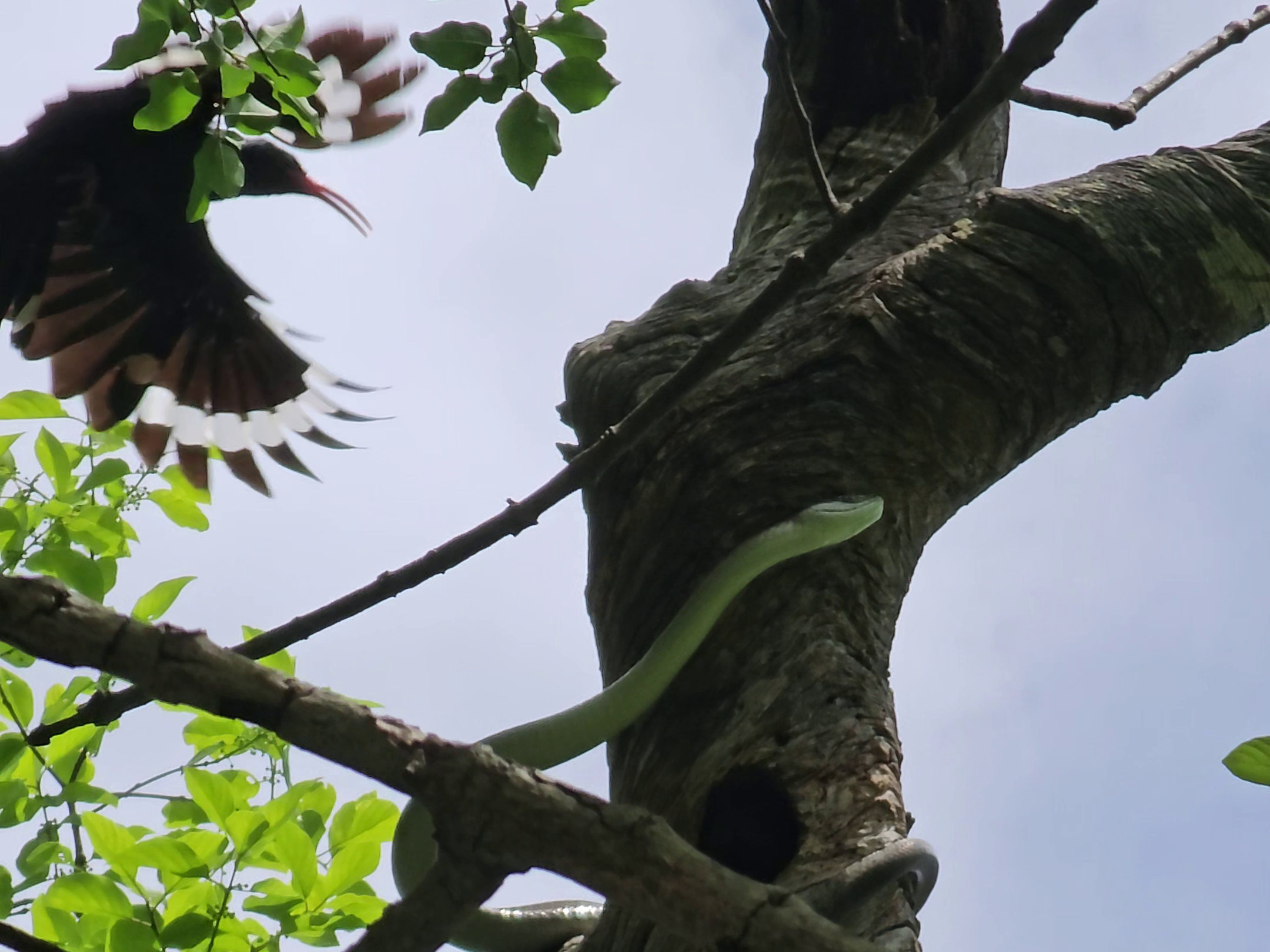
Once called red-billed wood hoopoes, these birds live in groups of up to 15 individuals. They are cooperative breeders with all members helping to raise the chicks.
Futile defence
Despite a reputation for putting up a fierce resistance in defence of their nests, it is futile. In the meantime, we hear the calls of other birds that have joined their mobbing protest of the snake’s presence.
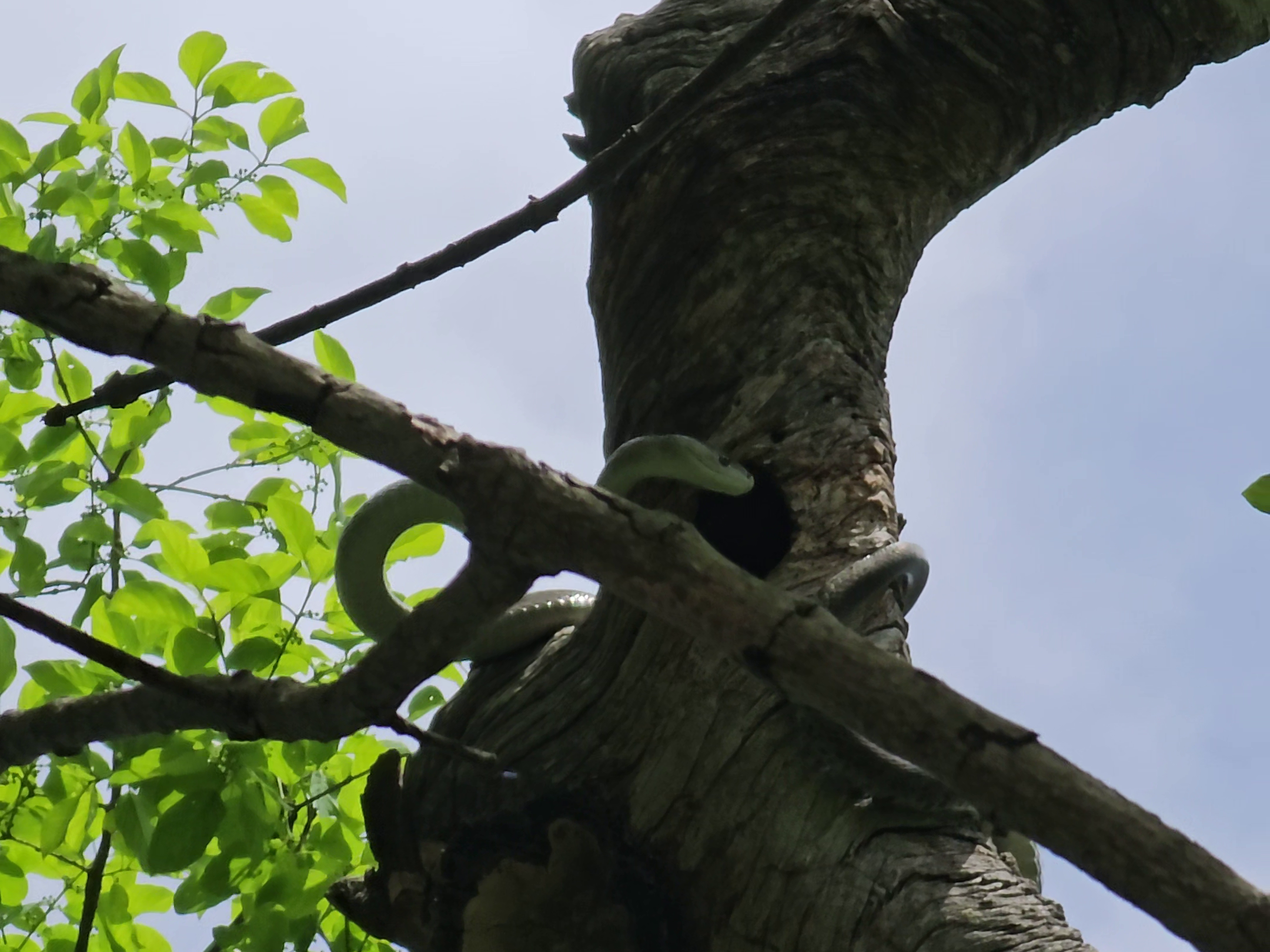
Subsequently, the cold-blooded killer ignores them completely, getting ever closer to the nest’s entrance. Snakes detect prey by “tasting” the air with their flickering, forked tongues.
Going in
Inevitably, the snake’s senses guide it to the nest’s entrance. Subsequently, with a sense of dread, we watch as its head disappears into the hole.
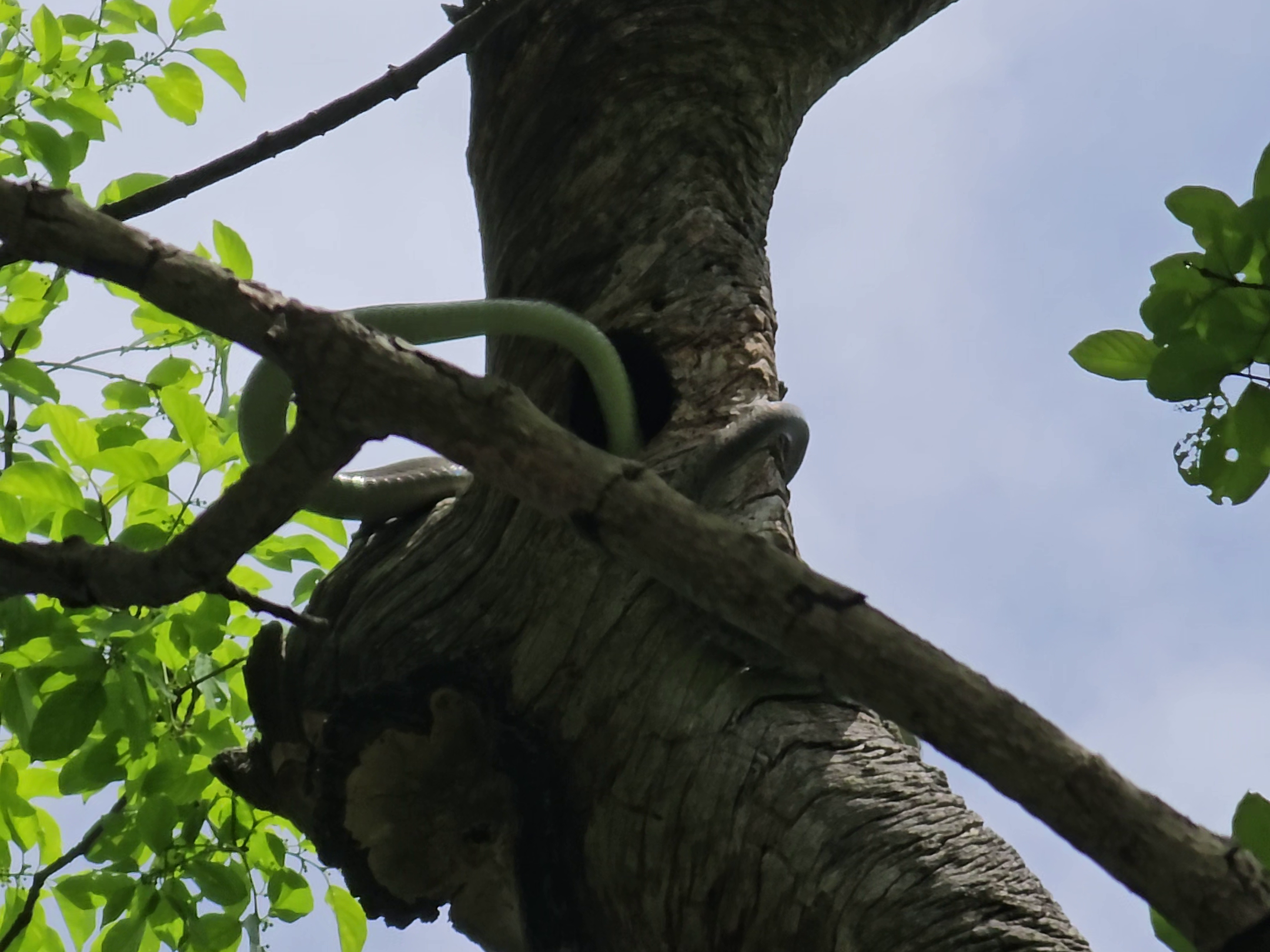
Mambas are said to prefer warm-blooded prey, like birds and small mammals. However, they will feed on reptiles and amphibians when the opportunity arises.
Get our Best Sightings as they Come in
Lethal venom
Consequently, it comes as no surprise when the mamba withdraws its head, holding something in its jaws. Given the commotion, it is not hard to guess what it has caught.
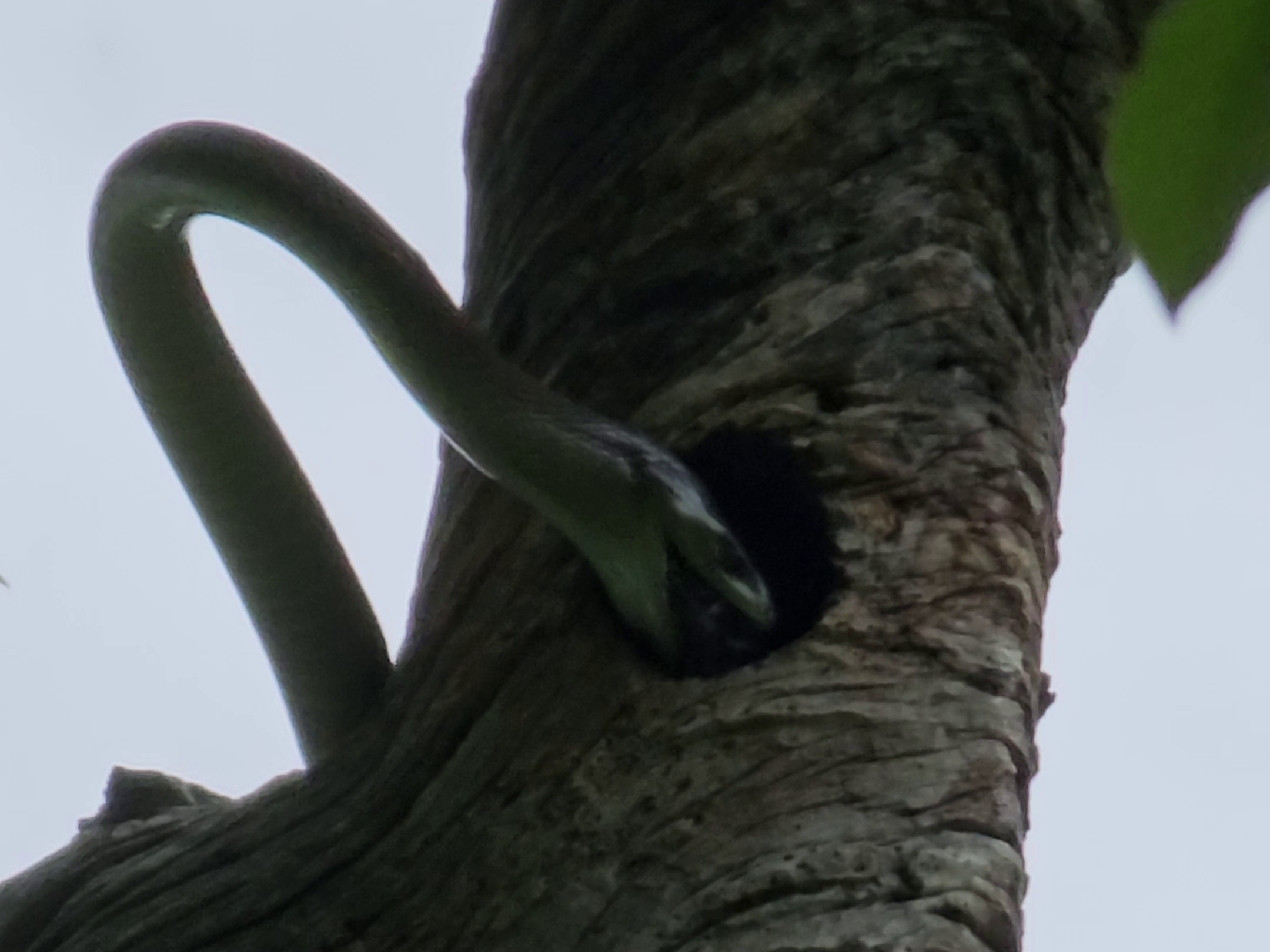
Black mambas have neurotoxic venom that attacks their victim’s nervous system. Within minutes, small prey first experience paralysis before dying of cardiac arrest.
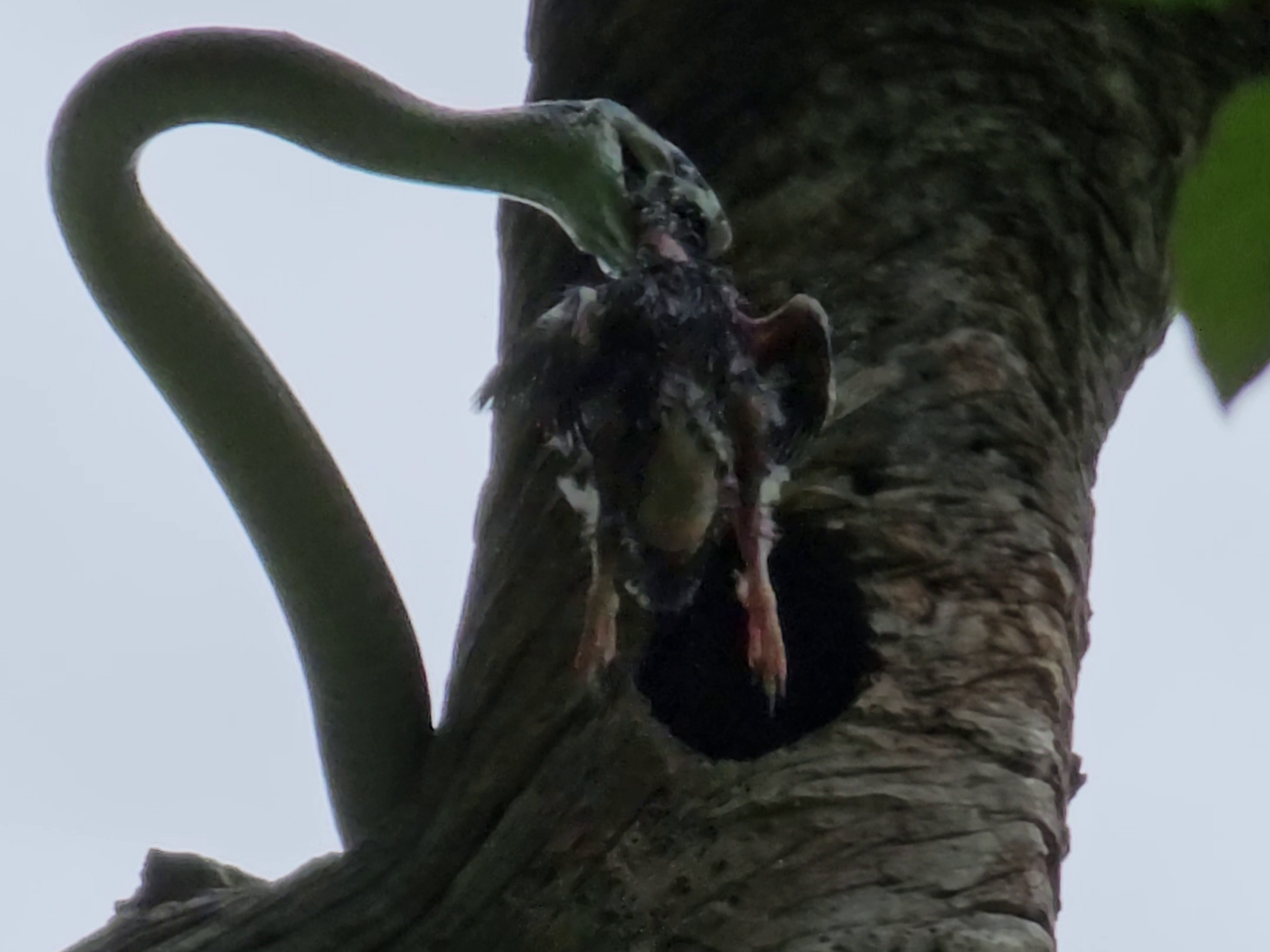
After a brief struggle, the snake pulls a young bird from the hole, presumably a wood hoopoe chick. Although it’s unclear whether the chick is still alive, the chances of it escaping the snake’s fangs are minimal at best.
Muscle vs gravity
Subsequently, the snake uses its muscular body to pull its prey clear of the hole. Mambas are renowned for being able to lift two-thirds of their bodies from the ground, a feat few other snakes can achieve.
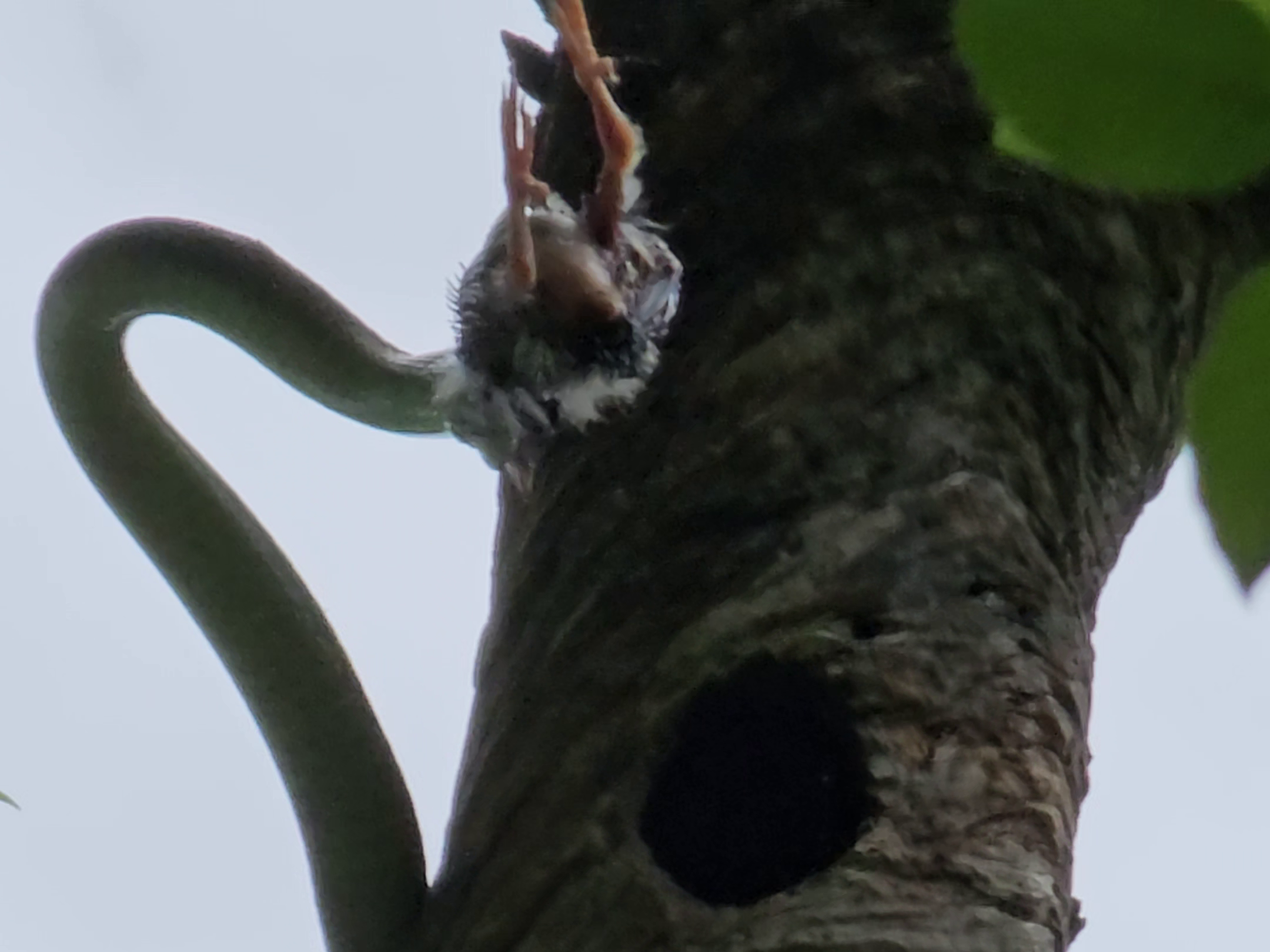
Additionally, mambas can swallow prey four times the size of their heads, using highly flexible jaw ligaments capable of independent movement. Consequently, the snake’s body writhes in the air as it battles to manoeuvre its prey into position for swallowing.
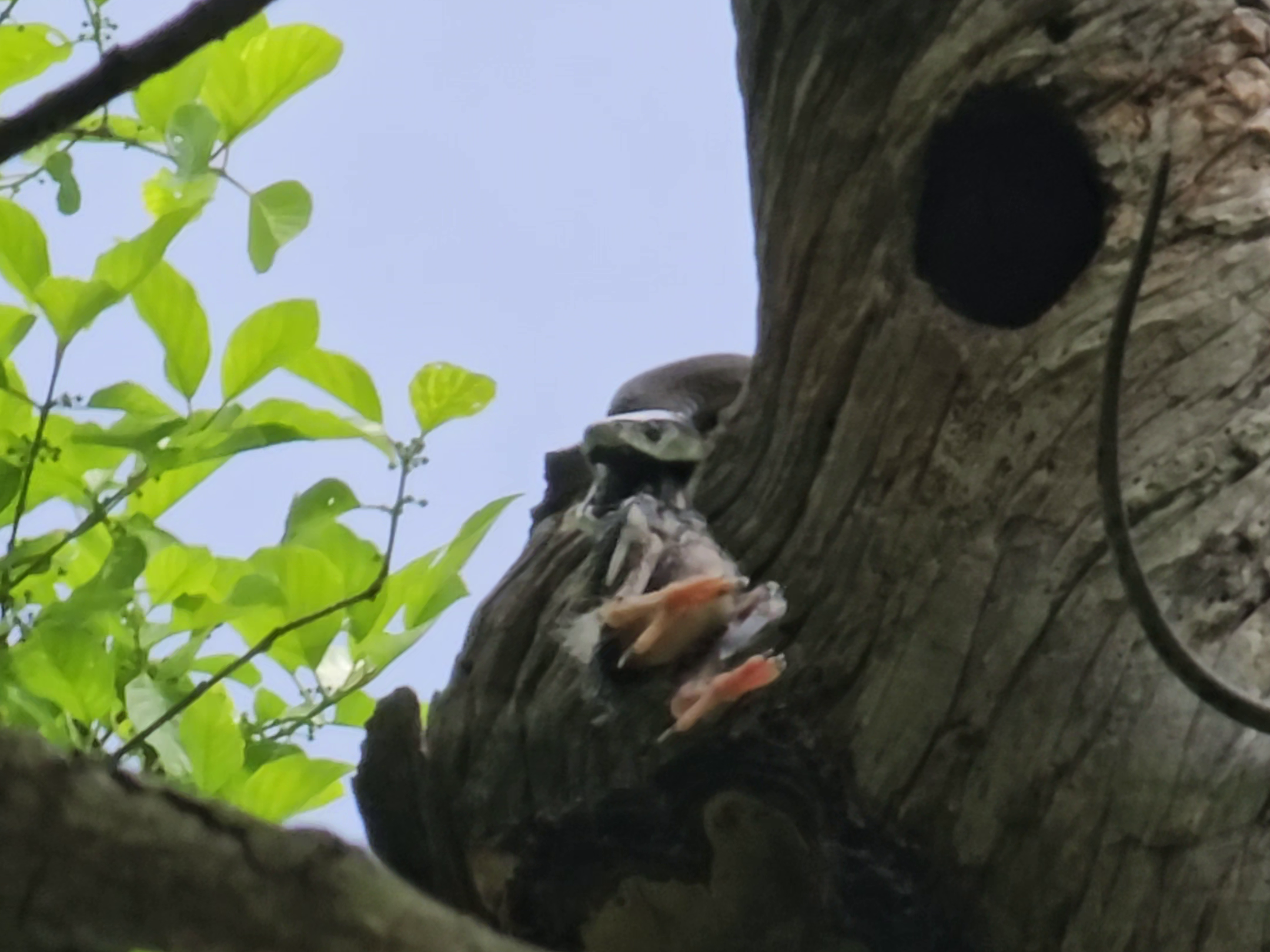
Meanwhile, the wood hoopoes and their allies keep up their noisy, mobbing calls. Unfortunately, it continues to have no impact on the snake as it methodically works the chick deeper and deeper into its black-lined mouth.
Depending on the size of the meal, mambas feed once or twice weekly. After this meal, it will retreat to a permanent lair until such time as it needs to feed again. For the bird’s sake, let’s hope any remaining chicks have left the nest by then.


