

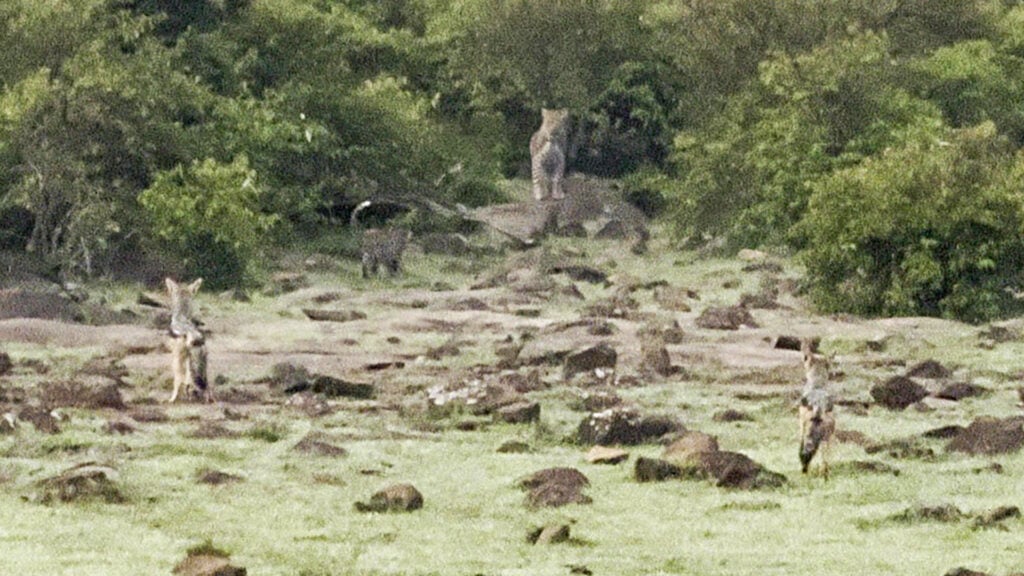
Tensions are often high when predators collide in the wild. Many animals hunt from the same sources of prey which can make them direct competitors to each other for valuable resources.
Often, in these cases, they don’t look kindly upon the presence of one another, which makes perfect sense when the existence of the other can become an existential threat.
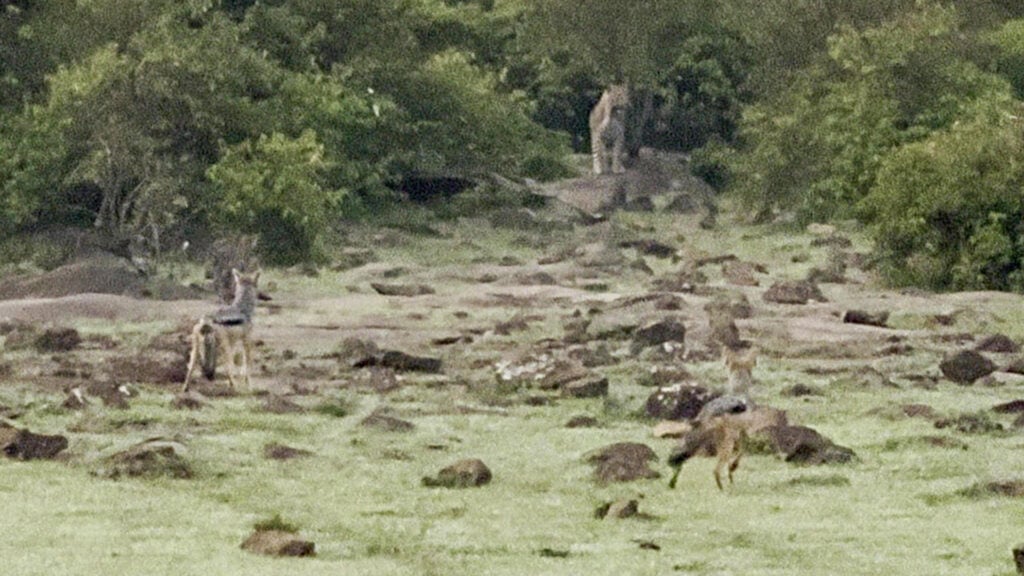
Noise, intimidation and chasing are the main tactics that predators use to scare others away and reduce the chances of something else stealing their food, but coming to physical blows is often a last resort they’ll avoid where possible.
A Chance Meeting
Neither party in this encounter appeared to be out hunting. The jackals were likely patrolling their territory on the lookout for intruders, while the leopards may have just been trying to move from one place to another.
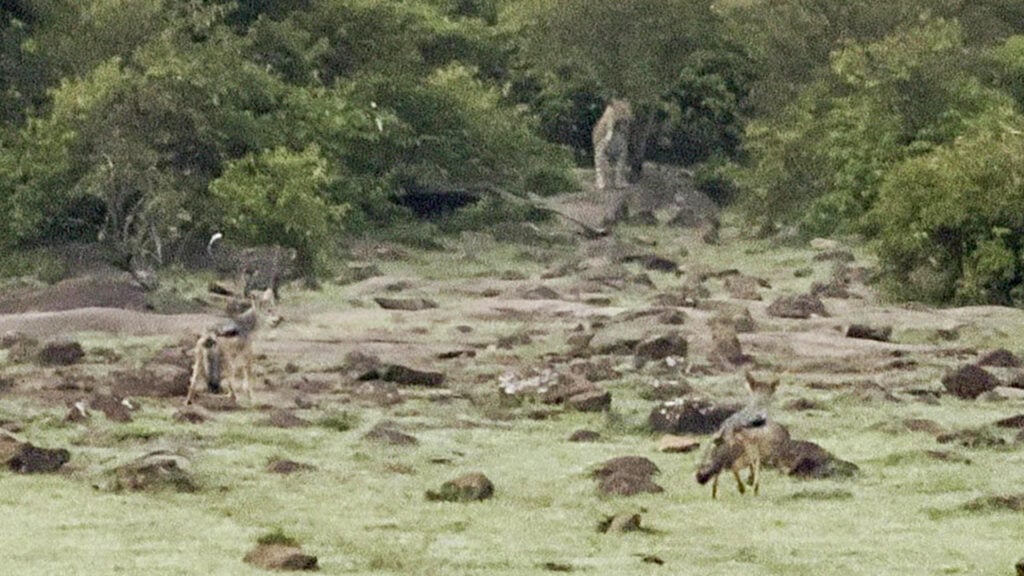
Usually leopards would trust to their stealth to help them evade potential threats like these, but they’d clearly let their guard down enough for the jackals to detect them, putting themselves at risk.
Because they’ve developed to rely on this natural stealthiness, leopards lack the desire to viciously defend themselves from threats, although they will still do so when necessary, and prefer to flee to a safe vantage point.
Teamwork Makes The Dreamwork
Although black-backed jackals live in social groups, they tend to travel in pairs when patrolling and marking their territory, making this a two against two encounter.
While the adult leopard was larger and stronger than a single jackal, it had its cub to worry about, and it couldn’t defend from two angles at the same time. The jackals would have been able to back each other up in their aggression, while the leopard would have had to fight alone.
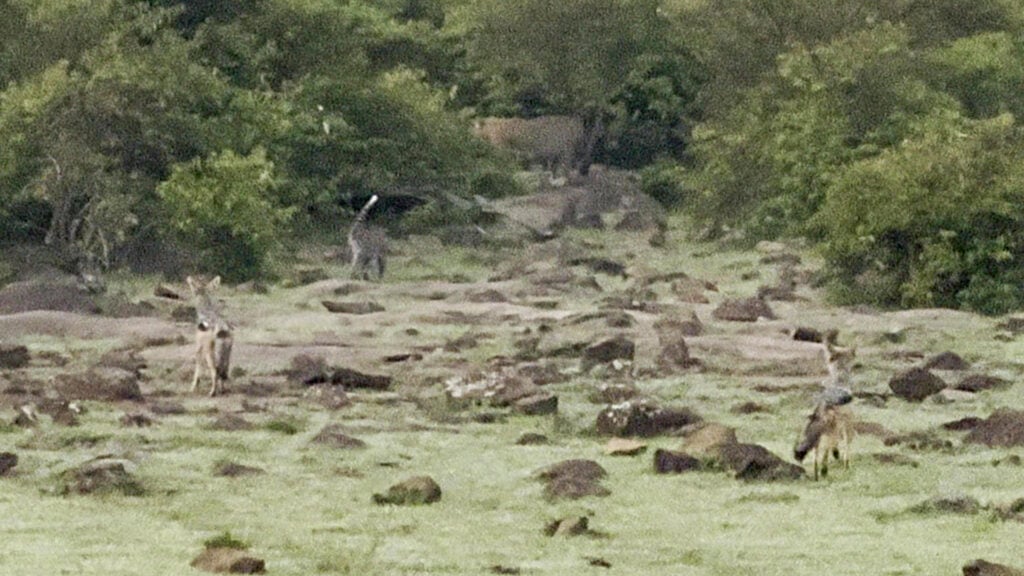
Travelling in pairs meant that the jackals were more than capable of responding to an incursion like this, as well as any of a similar size. Together, they could make enough noise to intimidate other animals away without ever needing to fight.
Choosing The Right Battles
Without having a pack, pride, or clan to fall back on, the leopard would not have been able to hunt, or teach its cub to hunt effectively if it had suffered a grievous enough wound, making this a worthless fight.
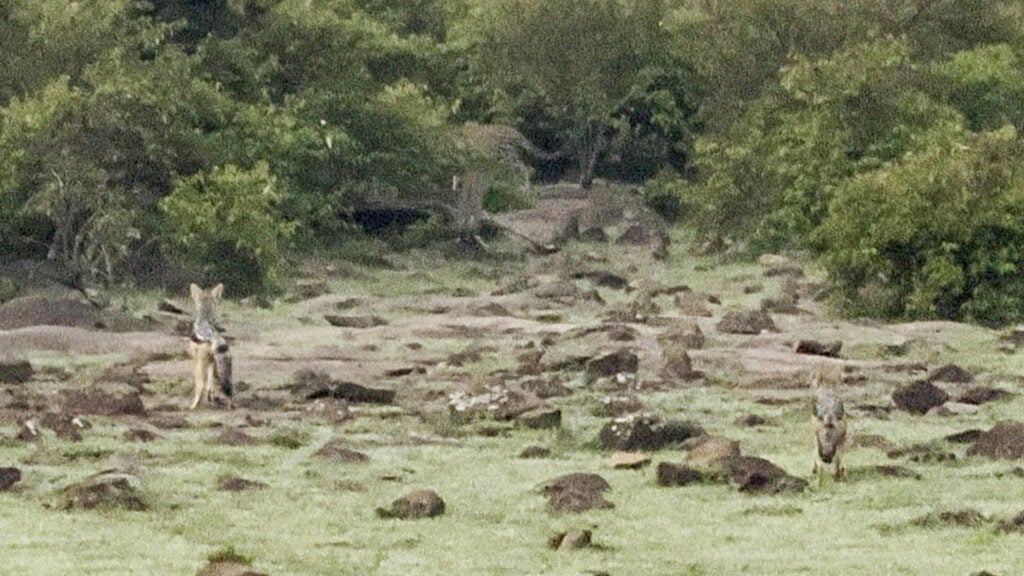
Unless its very existence was imminently threatened, it was clearly a better choice to retreat without risking future complications. This ensured the safety of the inexperienced cub, as well as the adult itself.
Get our Best Sightings as they Come in
Making The Right Choices
The two of them slunk away into the large bushes nearby where the jackals would not follow, and so they lived to hunt another day. It’s tense situations like these that might not seem as dramatic as a hunt, but are no less pivotal to the lives of these animals.
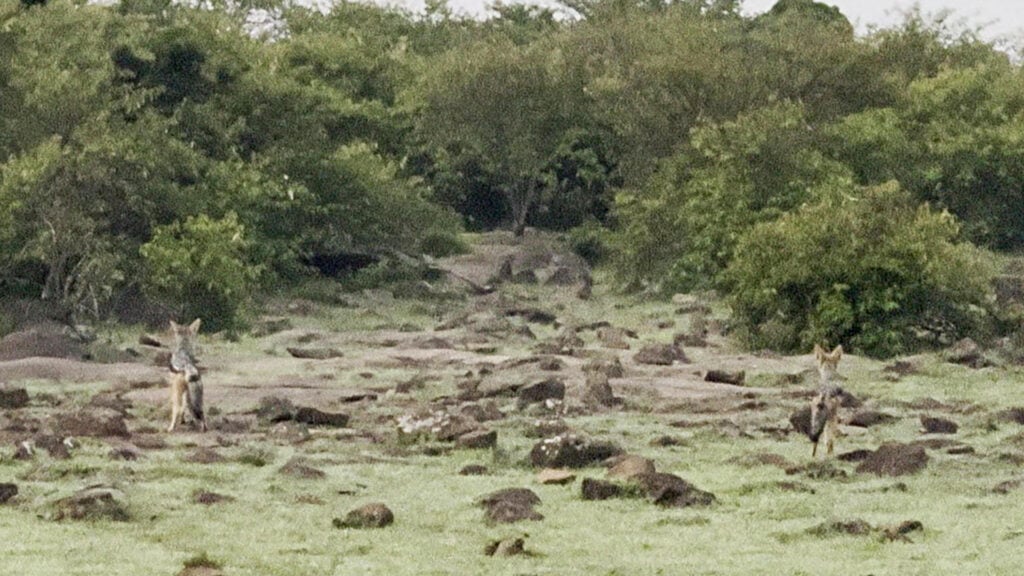
Black-backed jackals are not a species of concern for the International Union for Conservation of Nature, being but leopards are considered vulnerable with a population in decline, so it’s good to see these two escape the encounter unscathed.


