

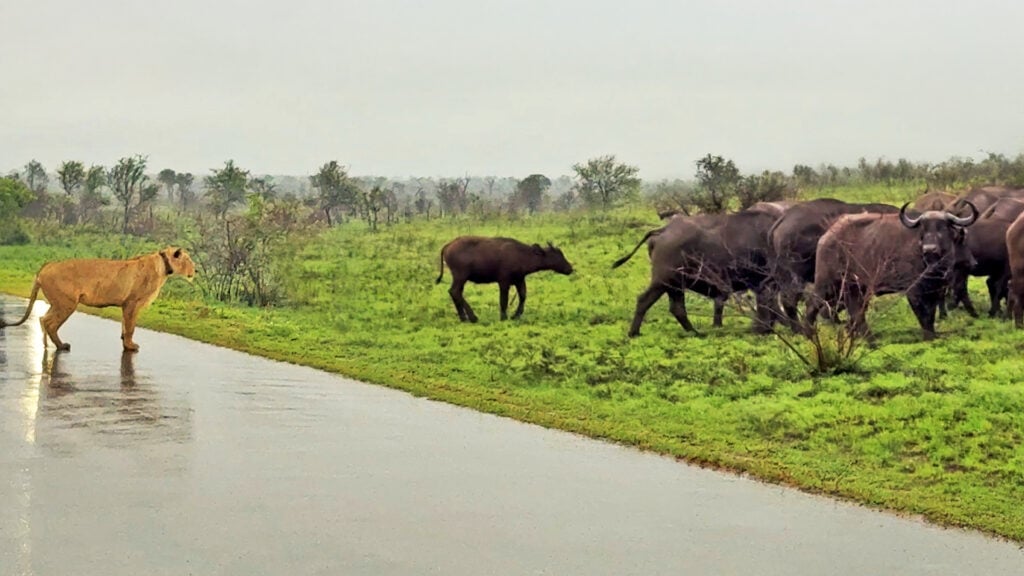
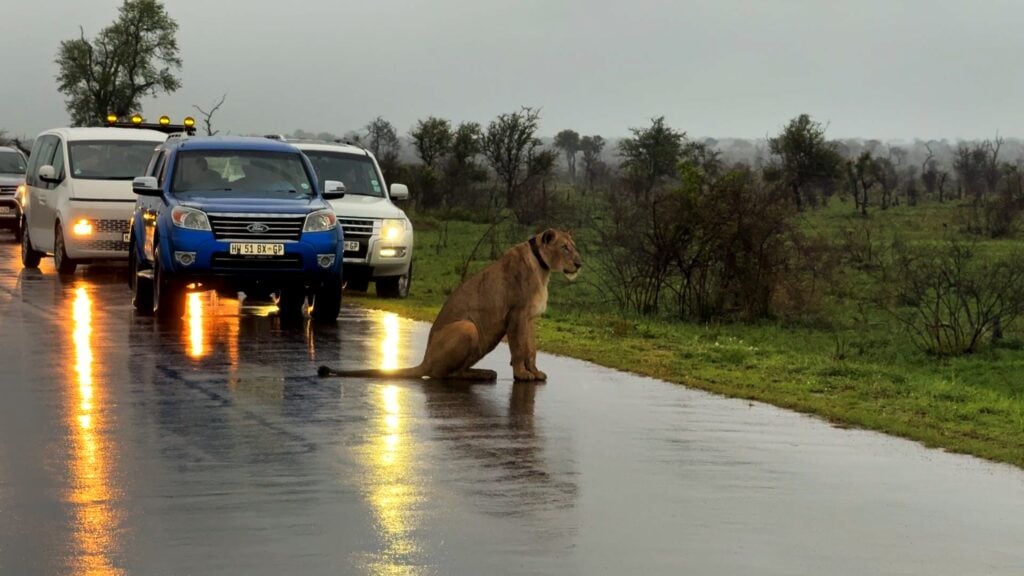
On a rainy late Sunday afternoon near Satara, safari-goer Lizaan Schlesinger found herself in the middle of a scene that laid bare both the beauty and brutality of life in the wild. “We arrived at 18:00, and the hunt started at 18:06,” Lizaan shared. “It was a matter of being at the right place at the right time.”
A lioness stood on the road ahead, calm, focused, and staring unwaveringly at a slowly advancing buffalo herd. Something about the scene felt off, however.
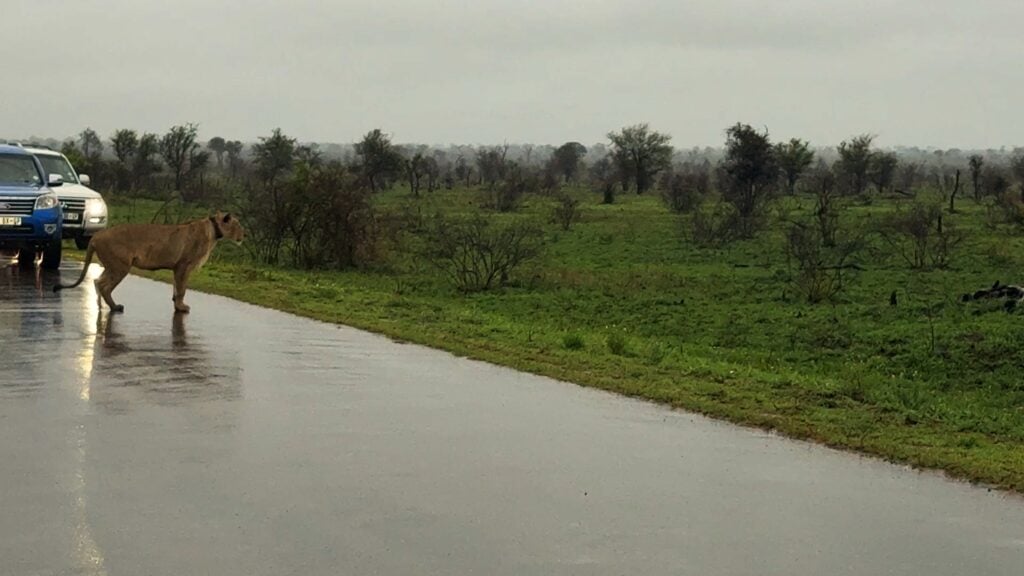
The herd was moving as a cohesive unit, yet their posture held tension; they clearly sensed the danger but were unwilling to break formation. Then the truth revealed itself: one small calf limped behind the others, struggling to place weight on a badly injured leg.
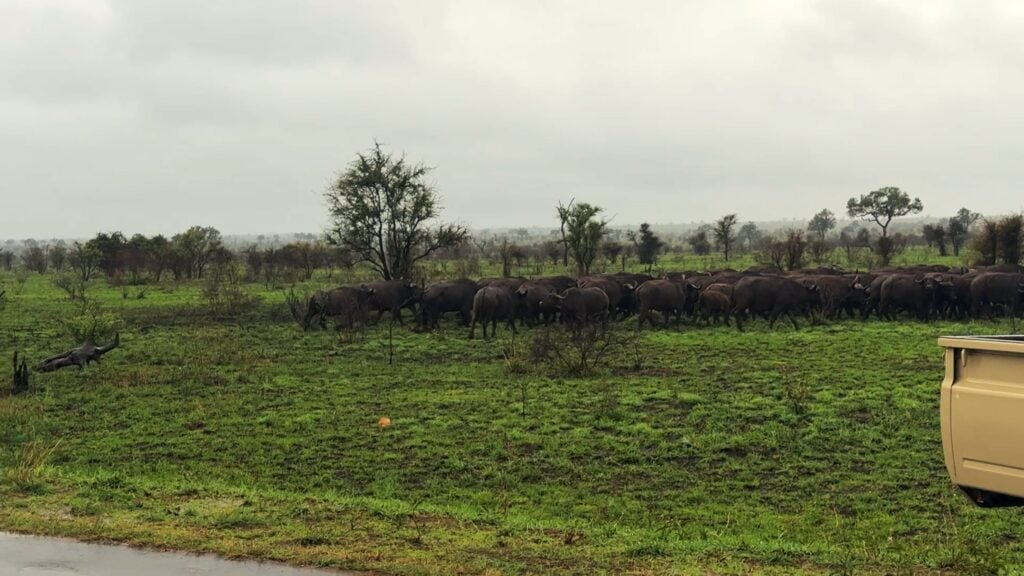
Its attempts to keep up were heartbreaking. Each limped step was a reminder of how vulnerable young animals are in the harsh elements of the wild.
The Calf With No Protection
African buffalo are famously protective of their young. They will vocalize their warnings, form defensive units, and will fearlessly confront lions, even chasing them down!
Unfortunately, survival pressures shift with every situation, and in this case, it was clear the herd had made a grim calculation. As the limping calf lagged farther and farther behind, a gap began to widen so quickly that it became impossible to ignore.
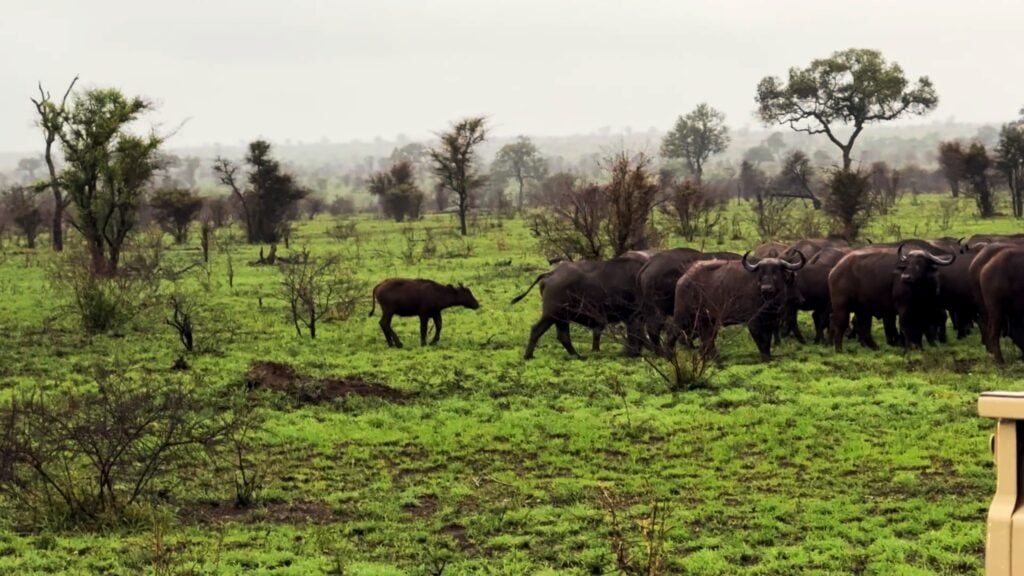
Instead of circling back or slowing down, the herd continued moving. Whether the decision was instinctive or based on a recognition that the calf was already doomed, they left it exposed, a scenario that rarely plays out so starkly in front of human witnesses.

For Lizaan and others watching from their vehicle, the emotional weight was heavy. The helplessness of the calf and the resignation of the herd were overwhelming.
The Lioness Makes Her Move
Meanwhile, the lioness had been waiting patiently. Her eyes kept shifting between the herd and the struggling calf, showing extraordinary restraint as she refused to move too soon and risk alerting the healthier adults.
Once the herd pulled too far ahead, her moment arrived. She broke into a determined stride, then a sprint. Within seconds, she reached the calf, bringing it down with precision.
Audible sobs came from inside the safari vehicle as the reality of the moment sank in. Predation is a natural part of life in the bush, but watching a baby animal face its fate alone is never easy.
A Moment of Hesitation
Interestingly, after the lioness completed the kill, she didn’t immediately begin feeding. Instead, she lifted her head repeatedly, scanning her surroundings.
“Once she caught the buffalo calf, it appeared as if she was hesitant to start eating and kept on searching for something,” Lizaan recalled. Everyone speculated that she could have been looking for the male and female lion she was spotted with over the previous couple of days.
Get our Best Sightings as they Come in
This behaviour aligns with lion social dynamics: lionesses will share their kills, and sometimes even delay feeding until pride mates arrive. It could have been that she expected her companions, or she was intimidated by the surrounding vehicles.
A Lesson in the Harsh Balance of Nature
Although painful to witness, this sighting offers a powerful example of how predator-prey dynamics unfold in real time. Both lions and buffalo rely on complex decision-making: buffalo must keep the majority of their group safe, while lions must use every opportunity to secure food.
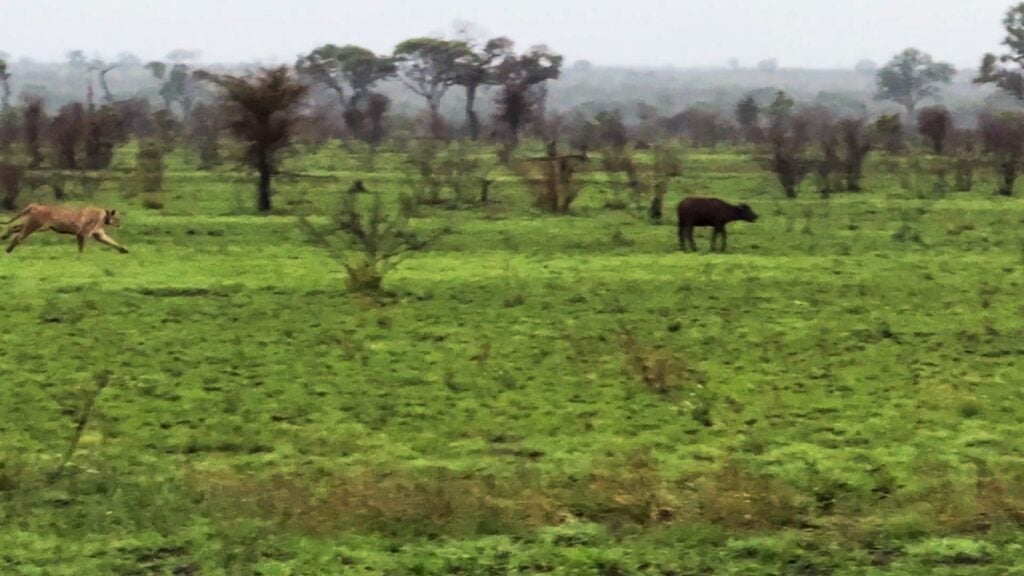
In this case, fate had already stacked the odds against the calf, and the lioness simply followed the instinct that keeps her species thriving.
Lizaan’s group eventually had to leave the sighting to return to Satara before gate closing time, but the scene they witnessed will no doubt stay with them forever. It was a reminder of the unforgiving choices wild animals face every day.


