

The rare sighting was captured by Darryl Sheedy who had been driving with his girlfriend in the Marula Loop of the Kruger National Park at the time.
Darryl explained to Latest Sightings how it all began: “My girlfriend spotted a chameleon in a sickle bush and after some inspection we saw blood!”
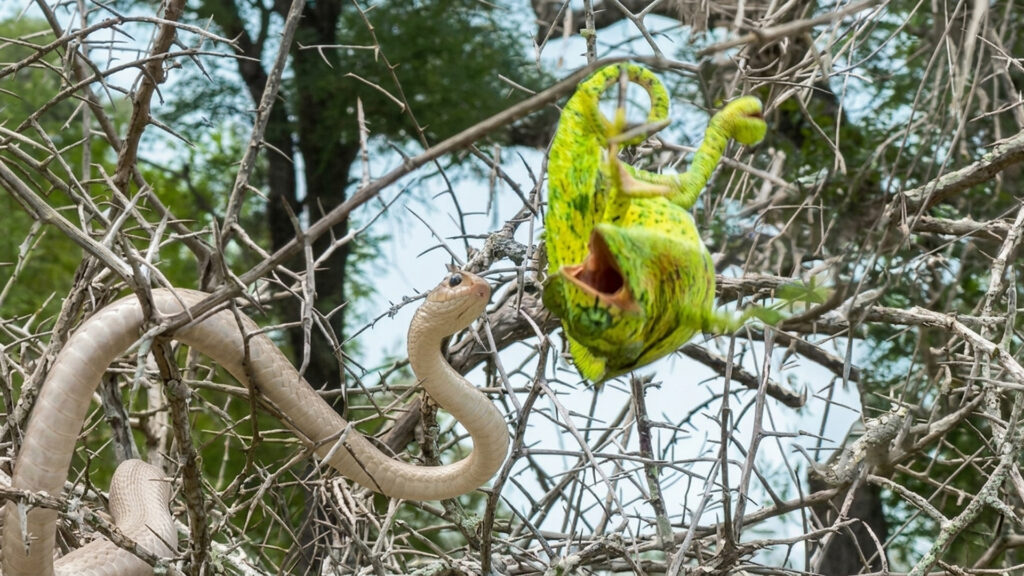
However, it wasn’t just the blood which caught their attention.
Boomslang makes threatening appearance
On closer inspection, they noticed a second species in the thorny bush where the chameleon was. It was a boomslang!
Darryl explained: “We noticed a female boomslang approaching the chameleon for what looked like a second round!”
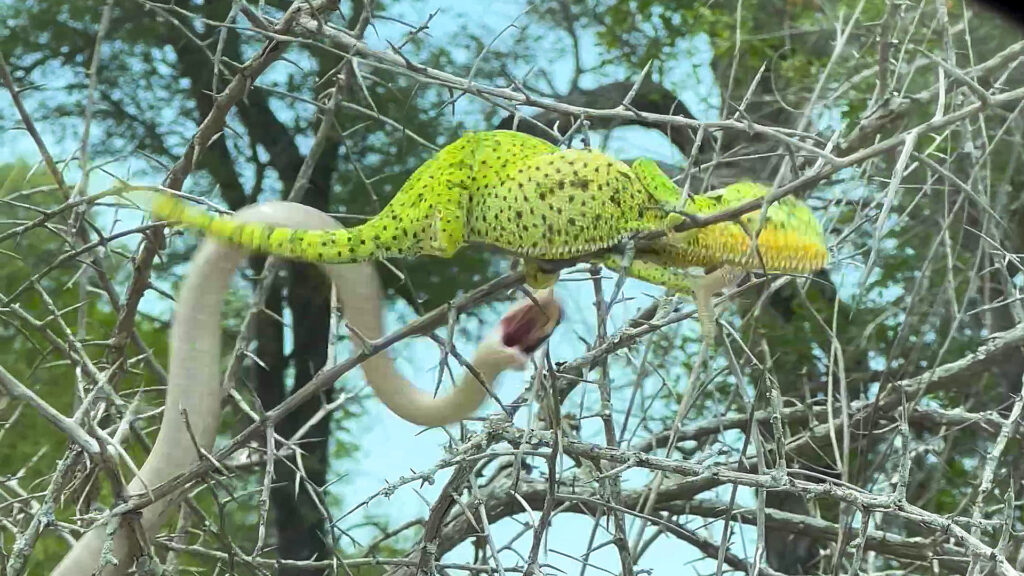
What followed was some riveting snake-lizard interaction.
Get our Best Sightings as they Come in
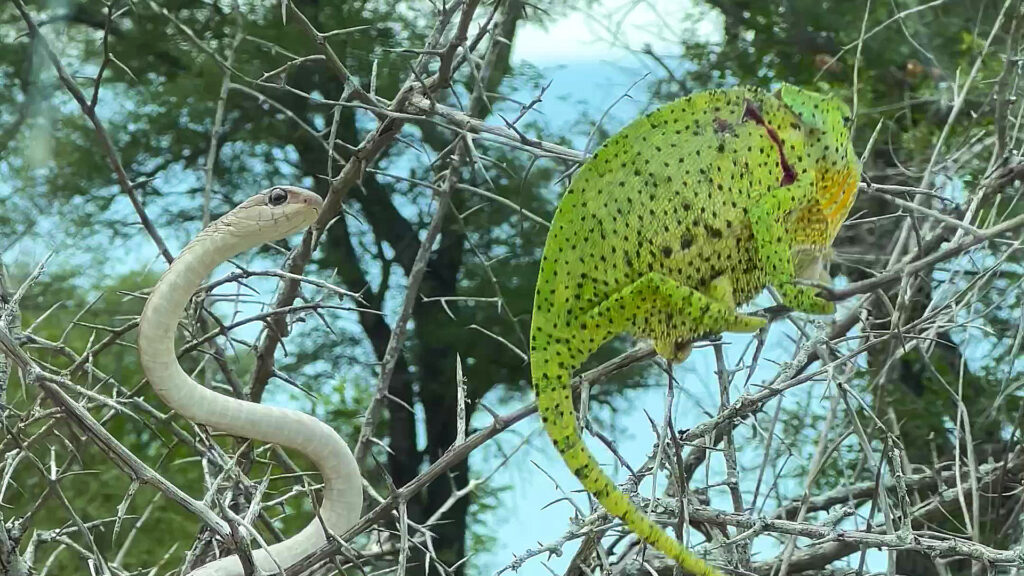
The boomslang is primarily an arboreal snake. This means that it spends much of its time in trees and shrubs. Its slender body and large eyes are adaptations for life above the ground, where it hunts among branches and foliage.
Despite its reputation as a highly venomous snake, the species of snake is generally shy and avoids confrontation with humans.
Its venom is primarily used to subdue prey rather than for attacking larger animals.
When hunting, a boomslang can move slowly and deliberately through vegetation before striking when it gets within range. This snake possibly watched the chameleon before striking the unsuspecting lizard.
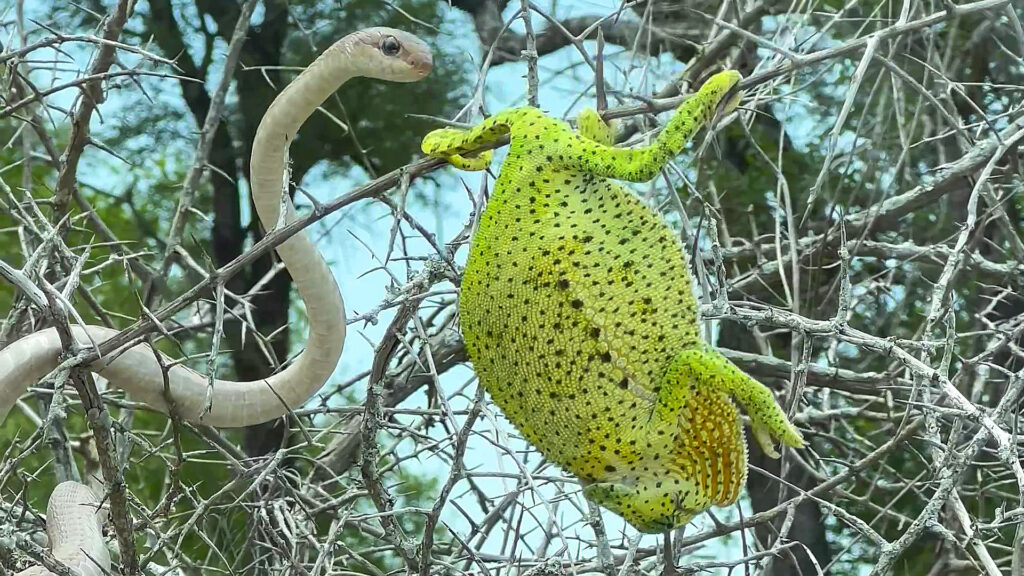
Snake strikes out at chameleon
The snake struck out at the chameleon with great force and speed. It sunk its teeth into the side of the chameleon and the poor lizard was pulled from its resting place on the thorny branches.
Boomslangs are opportunistic predators and often feed on chameleons and lizards. They also eat frogs, birds and their eggs, depending on availability.
This thorny bush would have provided both animals with plenty of cover.
For the boomslang, dense vegetation can be an advantage because its slender body allows it to move through branches while remaining difficult for prey to detect.
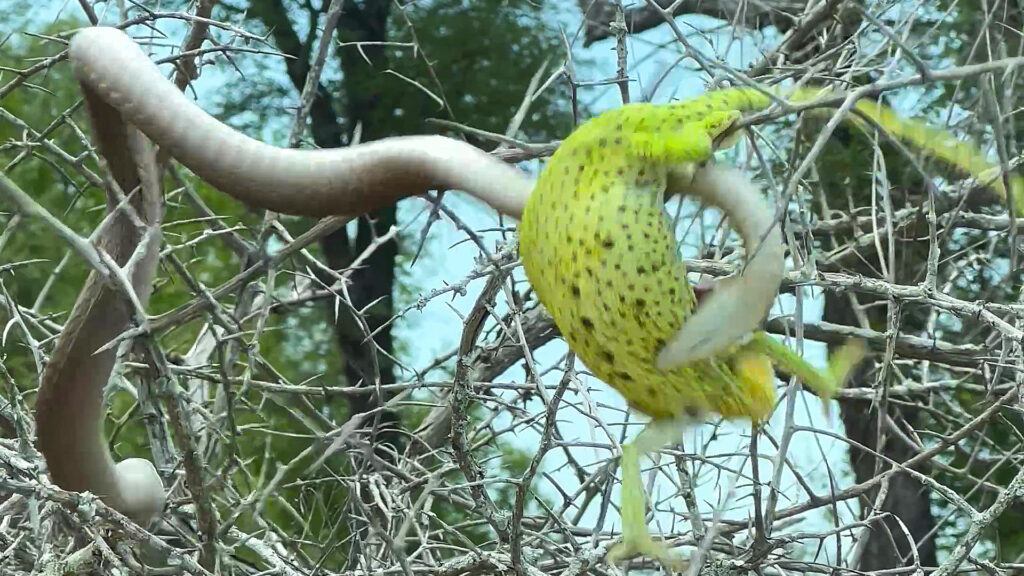
The chameleon seemed suspended in the aair as the snake held onto it, teeth in its abdominal region.
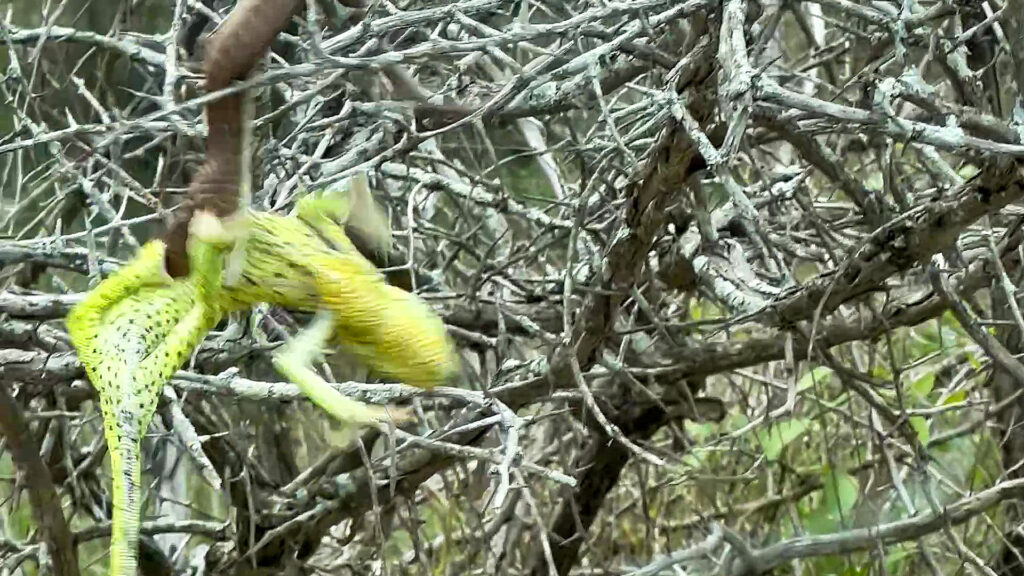
The chameleon’s body appeared to go limp for a moment, but it was soon seen back on the branch, looking surprisingly strong
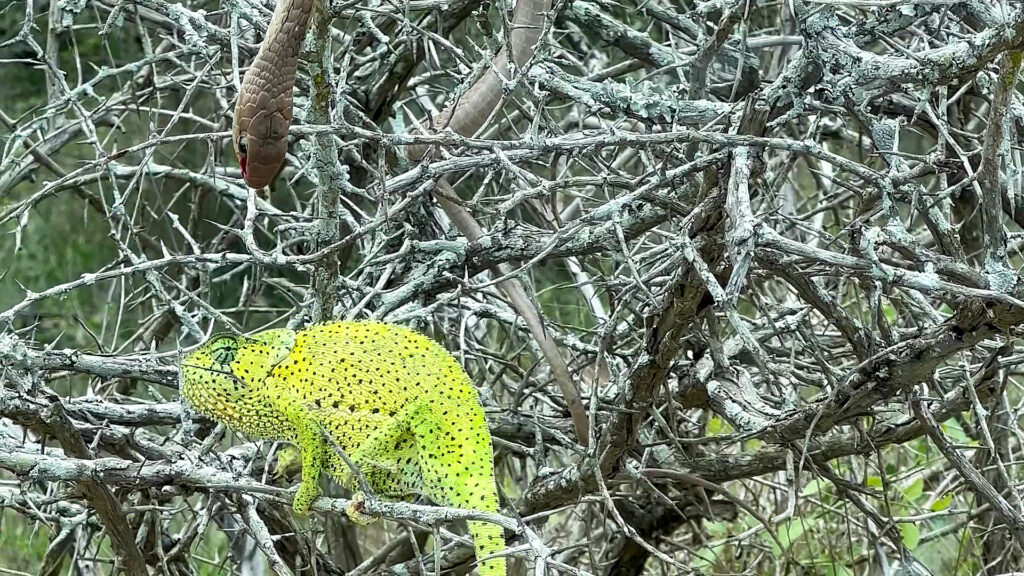
Chameleon regains composure on branch
However, things aren’t always as they appear.
Since the poor lizard had been bitten by the snake, it was only a matter of time before the snake’s venom started to take effect.
This chameleon’s fate depended on how much venom had been delivered and where the bite occurred.
A boomslang’s venom is haemotoxic, meaning it interferes with the blood-clotting system.
The venom takes effect progressively, disrupting normal clotting and causing weakness and loss of coordination.
More than likely, this chameleon would be unable to defend itself effectively, and the boomslang would consume it.
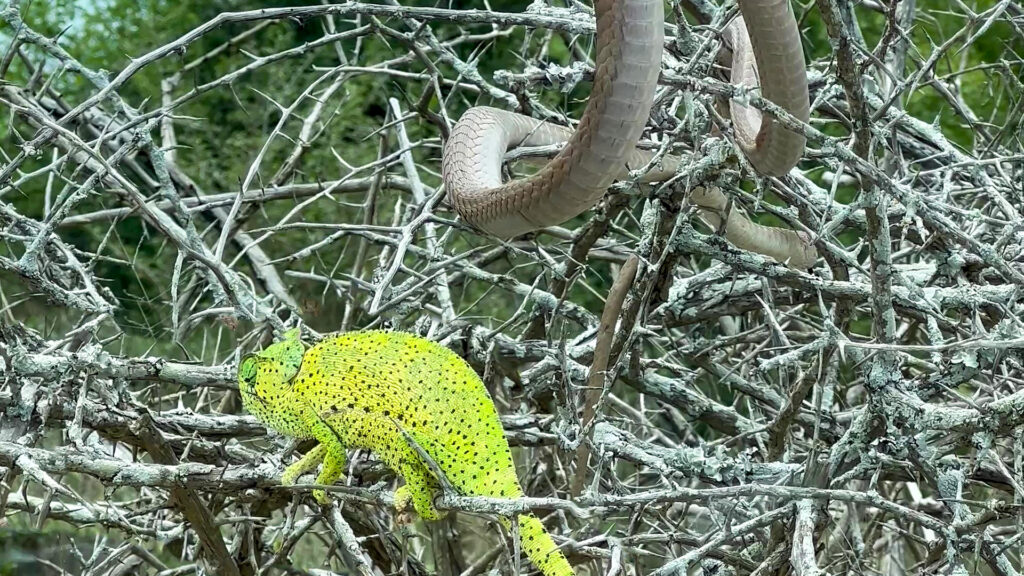
Sadly for this chameleon, Boomslangs don’t necessarily kill prey instantly. Their hunting strategy is often to bite and hold or release the prey, then wait for the venom to take effect.
Dramatic wildlife encounters at your fingertips
The bushveld never fails to surprise. If you enjoy watching the dynamic interaction between species then you will want to join our sightings updates Whatsapp group. Click here to join.


