

Watch sighting:
Daryl Bell submitted this video to Latest Sightings. He filmed it at andBeyond Phinda, in South Africa.
On the lookout
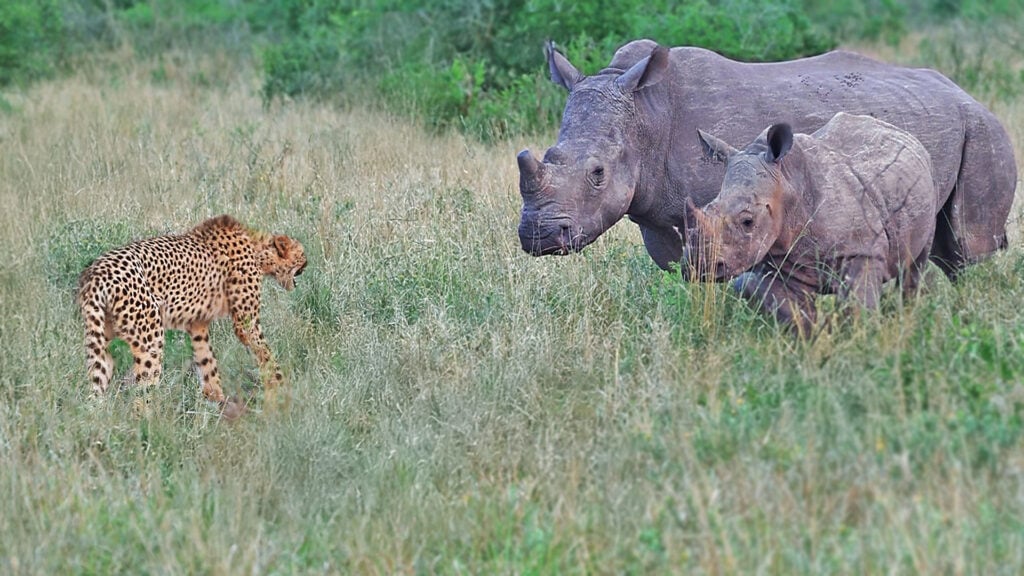
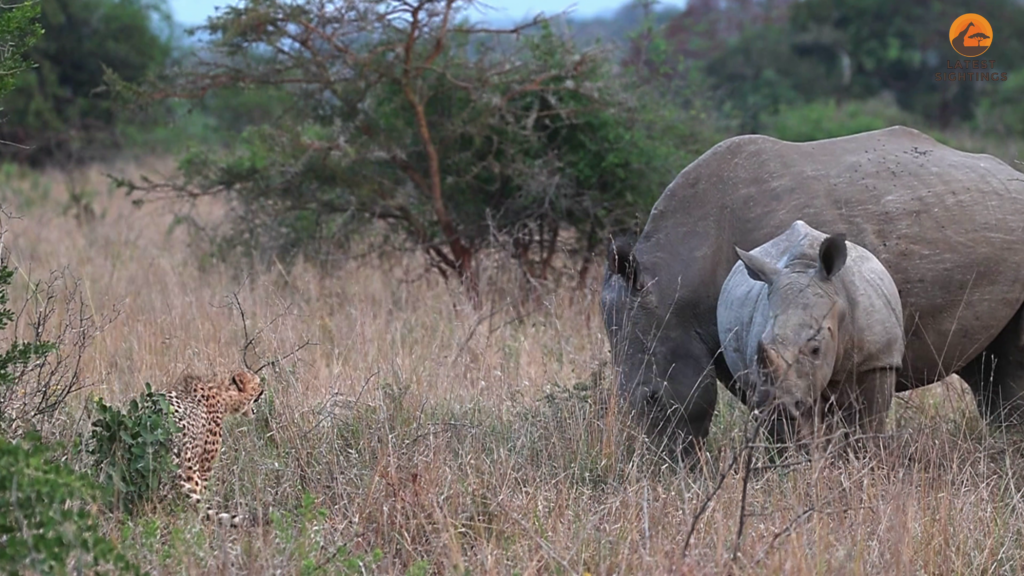
As Daryl’s video starts, we see two species coming face-to-face in the bush. Keeping a lookout from a small termite mound, a young female cheetah watches as a white rhino mother and calf approach.
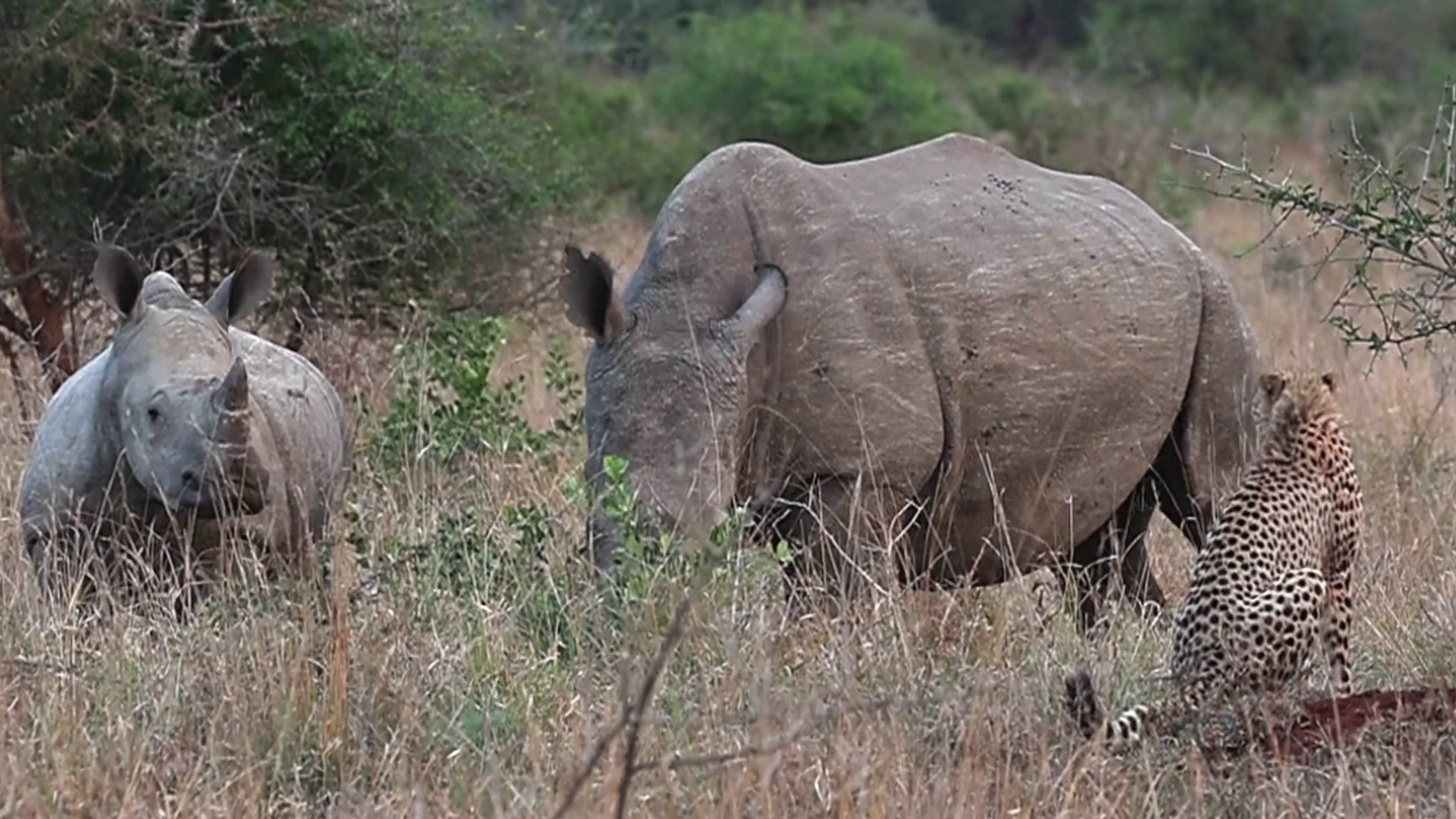
As the rhinos get closer, the short-sighted calf sees the spotted cat. Curious, it turns its ears towards the cheetah while trying to catch its scent.
In itself, the sighting is remarkable, as both white rhinos and cheetahs are scarce; rhinos are classified as Near Threatened, while cheetahs are Vulnerable.
Curiosity & concern
As the rhino mother continues to graze, her calf continues to keep an eye on the strange creature before it. As for the cheetah, it, in turn, is keeping a close watch on the approaching giants.
Both are relatively timid creatures. For rhinos, their poor eyesight is a contributing factor, while for cheetahs, their slight frames mean they must tread carefully to avoid injury.
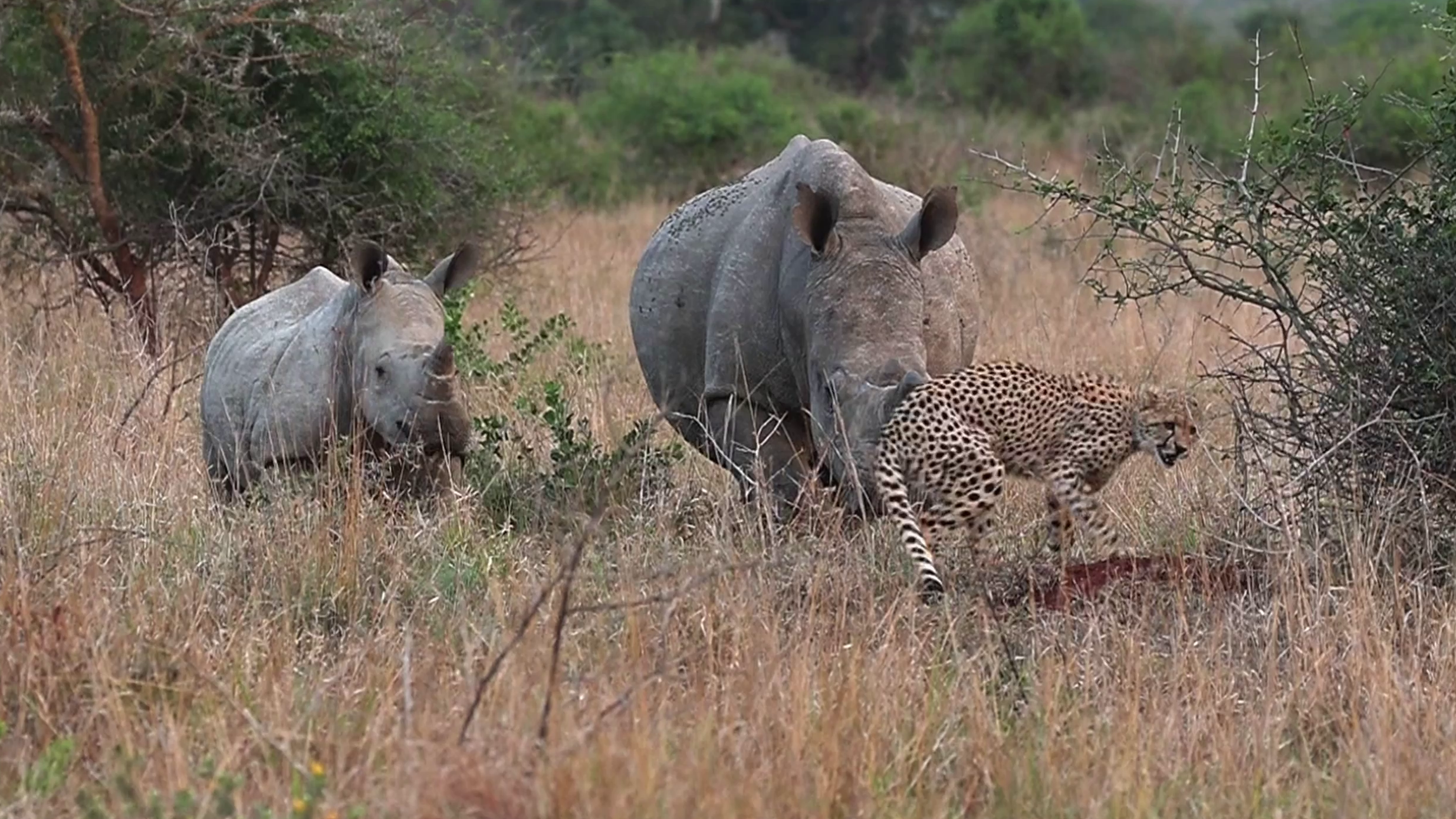
Consequently, when the rhinos suddenly move closer, the cheetah quickly gives way. As the cat turns, we also note that the mother rhino remains completely unfazed by the presence of the predator. It is safe to assume that the chances of the cheetah attacking are incredibly remote.
Stay out of my comfort zone
Subsequently, the cheetah turns to face the mother and calf, instead of fleeing outright. What we’ve witnessed here is an animal maintaining a comfort zone.
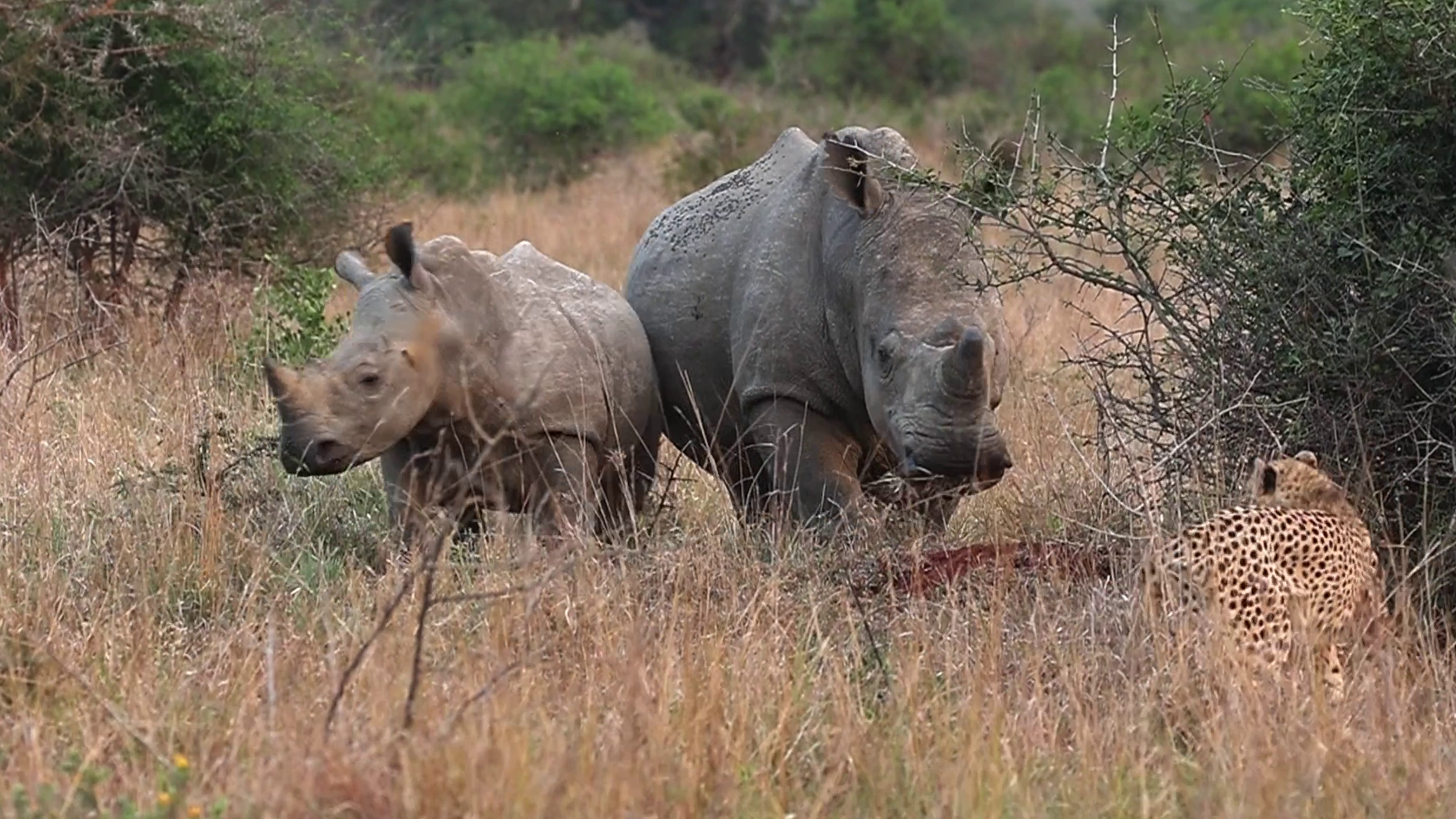
Comfort zones are imaginary rings around individual animals that they use to feel safe. Should another animal encroach within this zone, the animal will move to re-establish the perimeter.
This allows them to keep an eye on the other while conserving energy. It is a precursor strategy to the fight-or-flight instinct, both of which have high energy demands.
Change of strategy
As the rhinos continue on their path, the cat keeps a close eye on them. However, as they get closer, the cheetah modifies its strategy by moving perpendicular to their path.
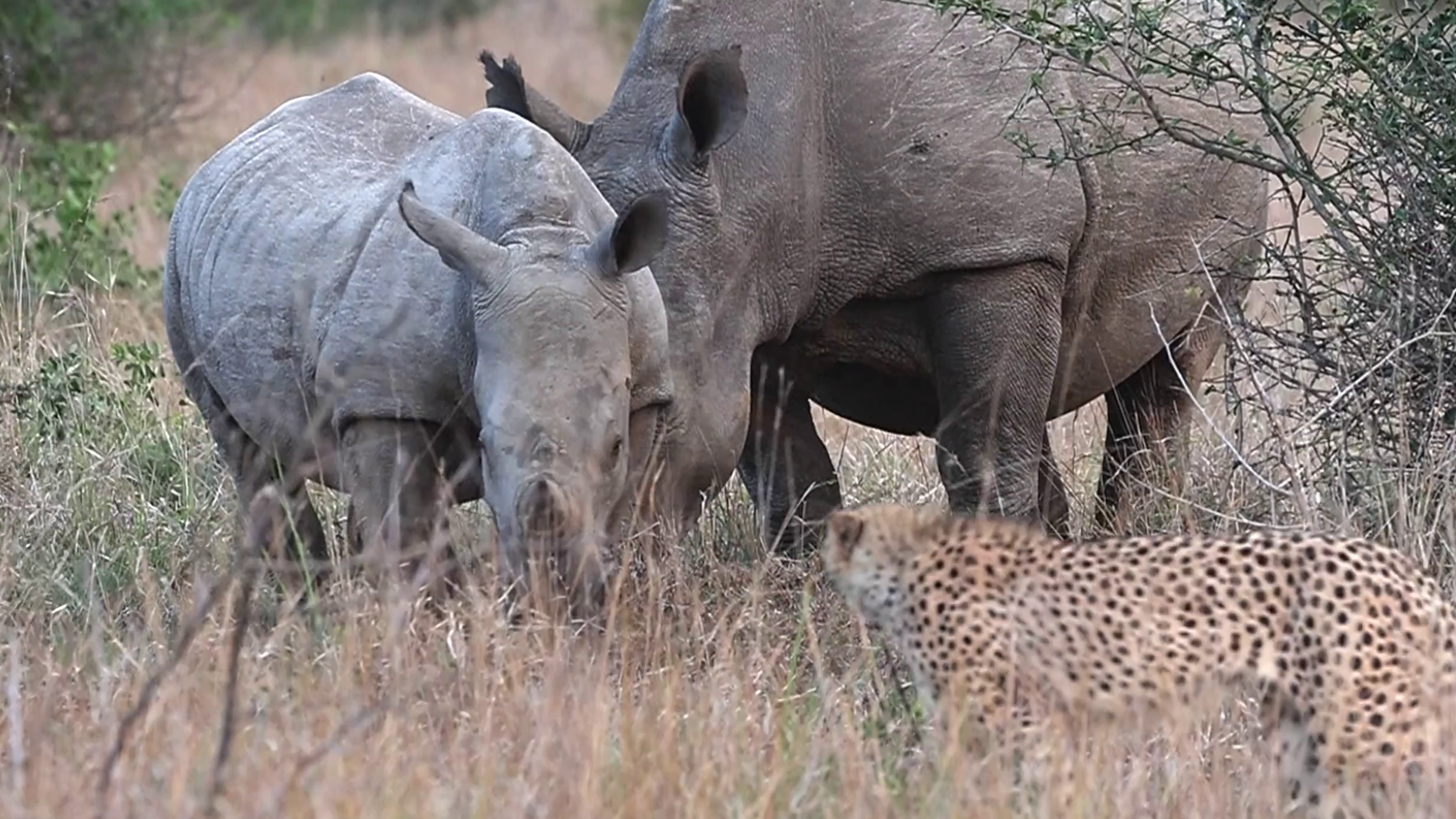
By doing so, she can determine whether they are ‘chasing’ her, or simply passing by. Nevertheless, skittish as she is, she seems to be bothered by the calf’s constant attention on her.
Get our Best Sightings as they Come in
Escalation
As a result, the cat escalates her message to the rhinos by hissing and snarling at them. At one point, she even slaps her forepaws against the ground, warning them not to come closer.
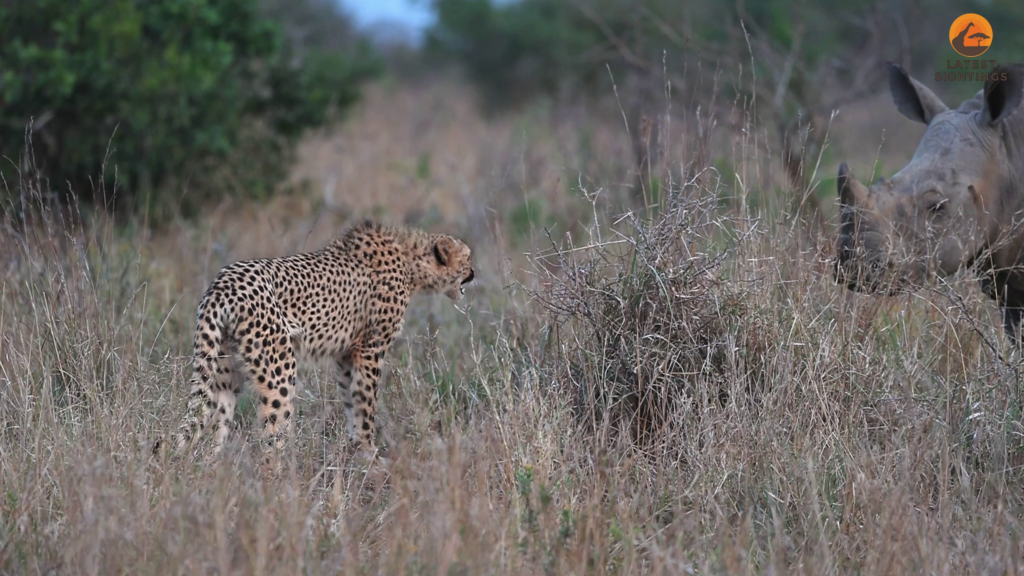
However, this has little impact on the decidedly docile rhinos, while the cheetah doesn’t realise that the calf is just being curious.
Fine, I’ll go
Having failed to warn off the larger rhinos and unwilling to escalate her threats to a full-blown attack, the cheetah soon realises she is better off retreating entirely.
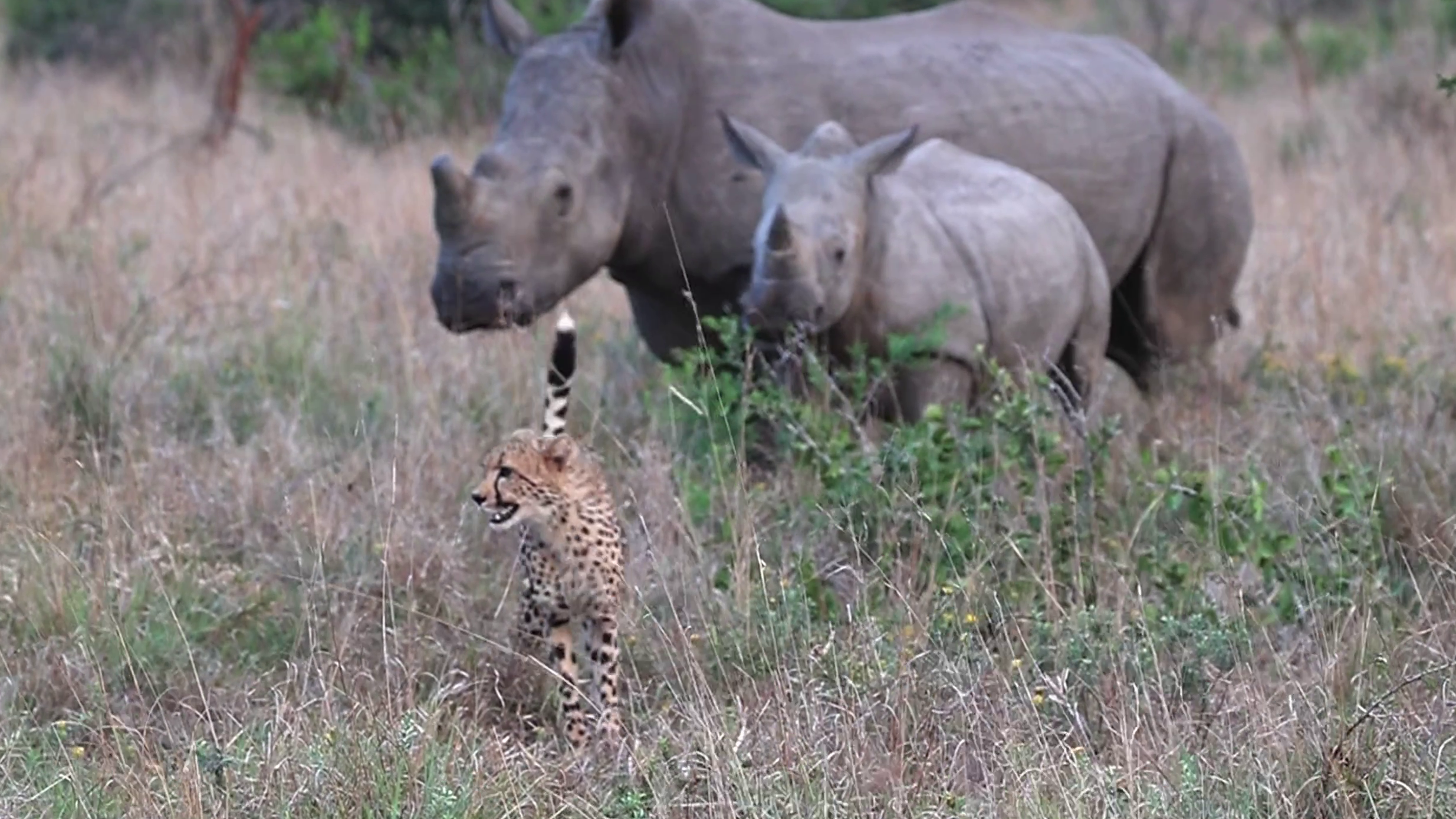
As she does, she flicks her tail upward. Although we can’t see, it is possible that as she did so, she sprayed urine.
If so, it is almost as if she is signalling that although she is retreating, she considers this her territory too.
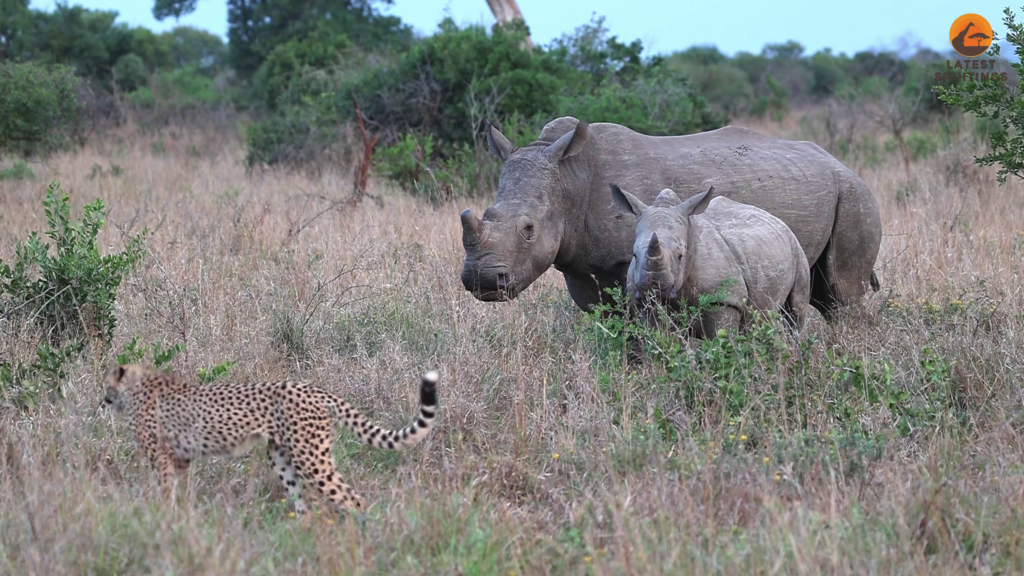
As Daryl’s video reaches its conclusion, the cheetah is seen moving off, this time watched by both the mother and her calf.
This video is a great example of animals using body language to avoid conflict and establish boundaries. For humans, understanding these behaviours is a great way to elevate one’s understanding and appreciation of wildlife.


