

Watch Now:
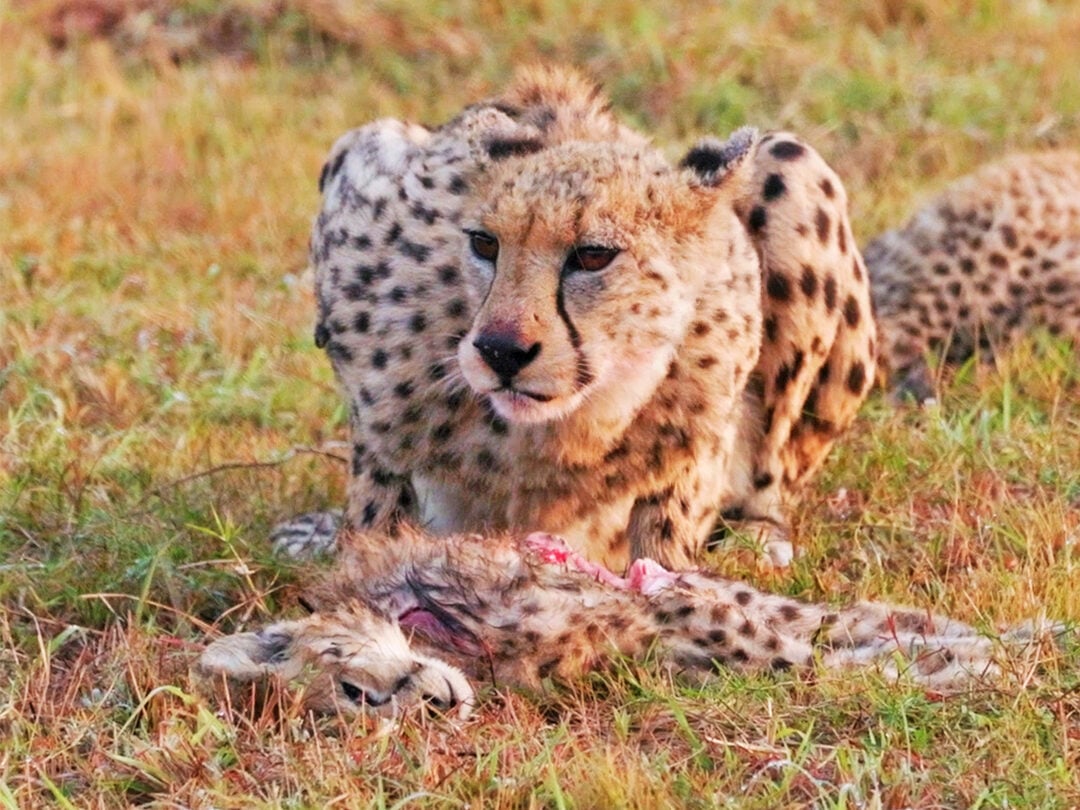
Mother Nature, as they say, is a cruel mistress, and much of what we observe may defy explanation. When this mother cheetah’s cub died, her reaction was just one such example.
Nick Wright of Wright Wildlife Films submitted this challenging footage to Latest Sightings. He filmed it at Phinda Private Game Reserve in South Africa.
WARNING: This article contains images and descriptions of natural cannibalistic behaviour. Discretion is advised.
An endangered predator
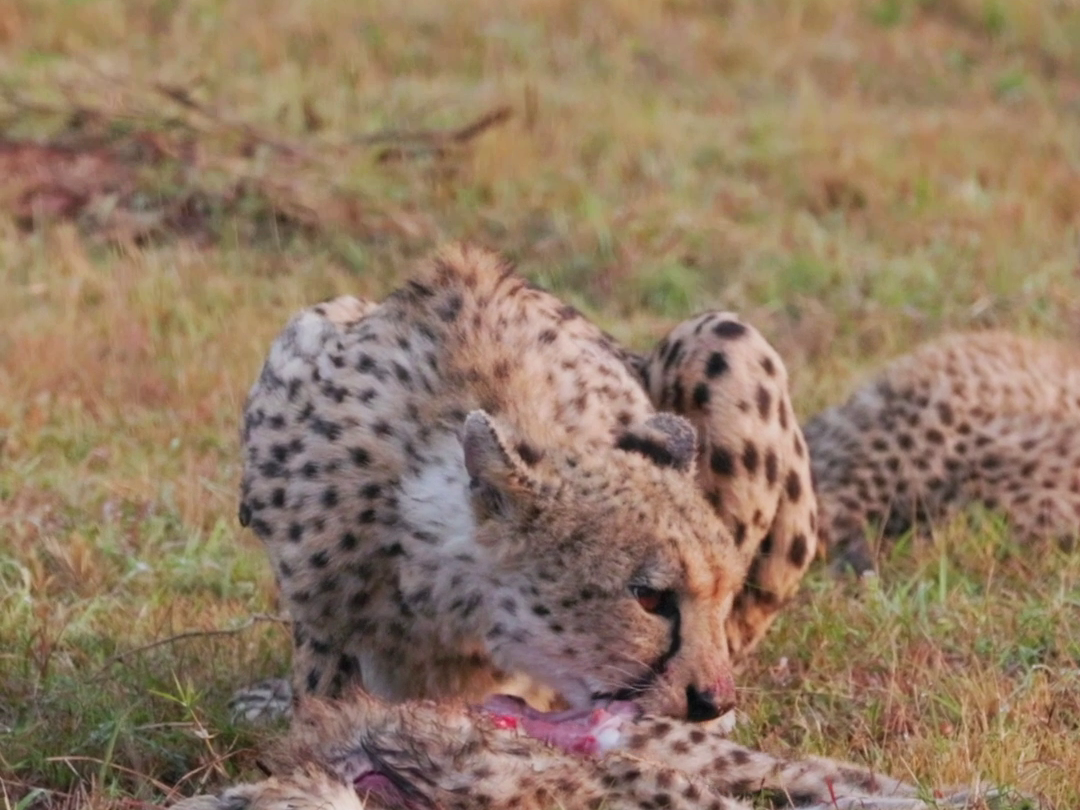
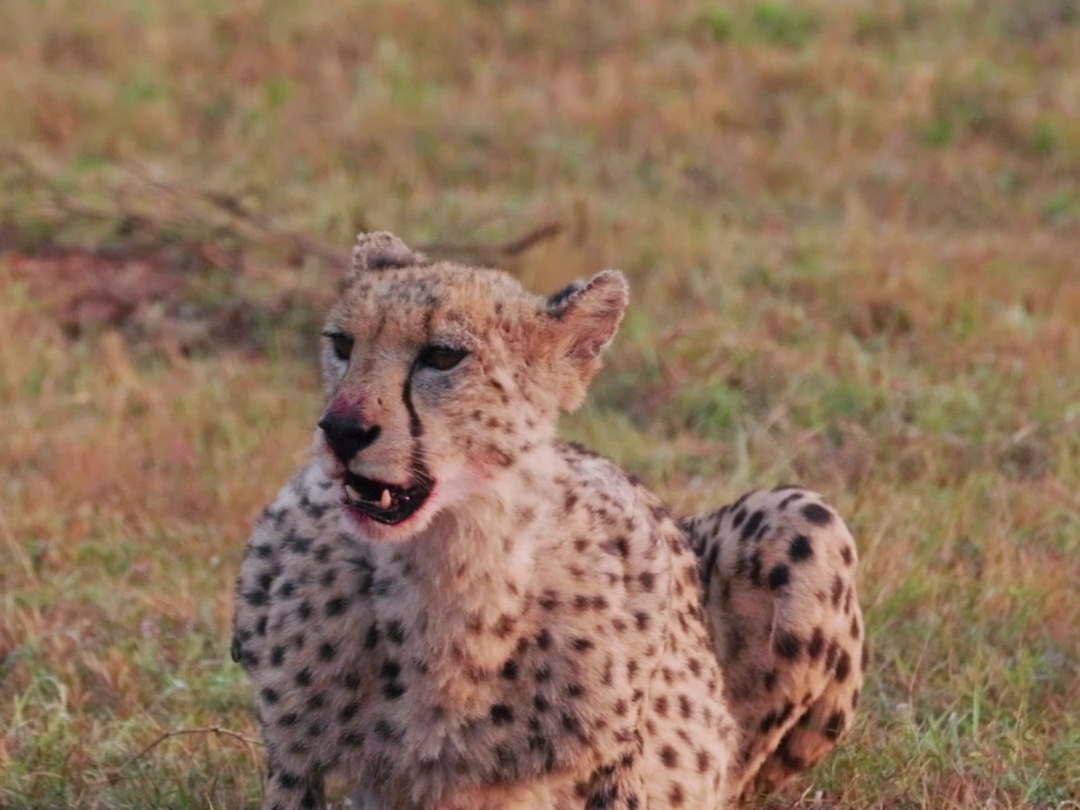
As Nick’s video rolls, we see a female cheetah crouched on the ground. The blood of her meal has tinged her muzzle pink.
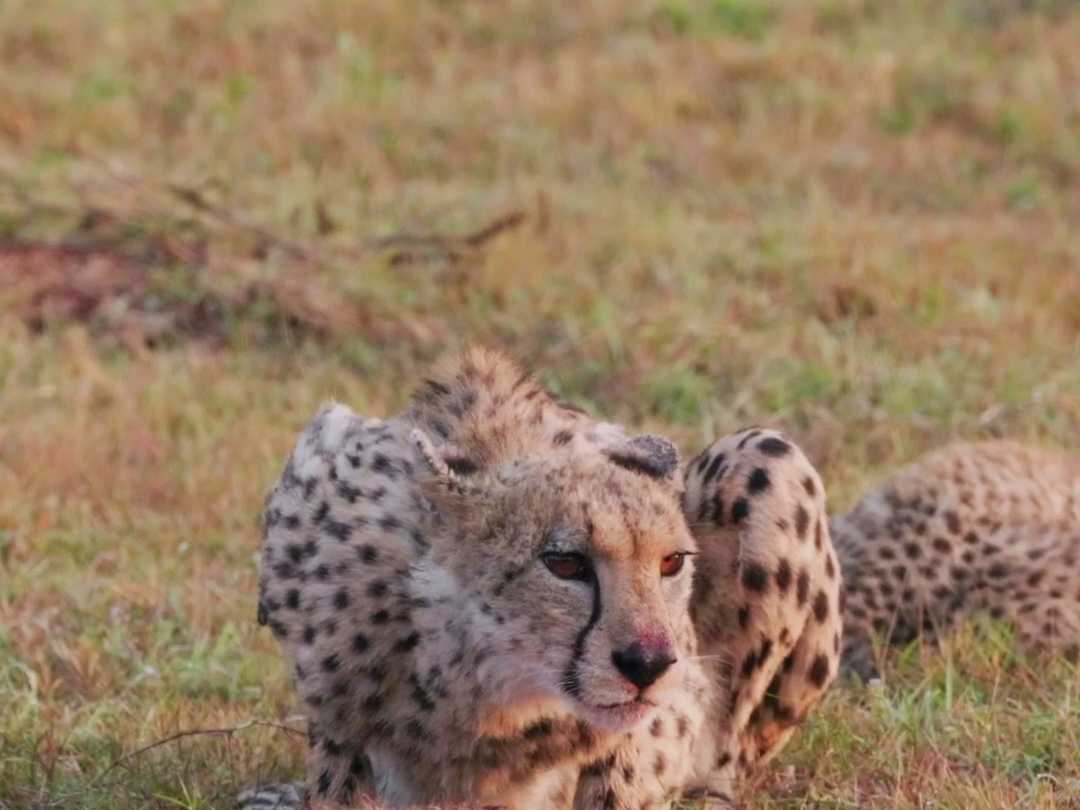
Cheetahs are the world’s fastest land mammals. Their blinding speed enables them to catch a variety of medium-sized prey.
Atypical meal
Subsequently, as we zoom out, we realise with sadness what she is eating. The partially consumed remains of her own cub lay before her.
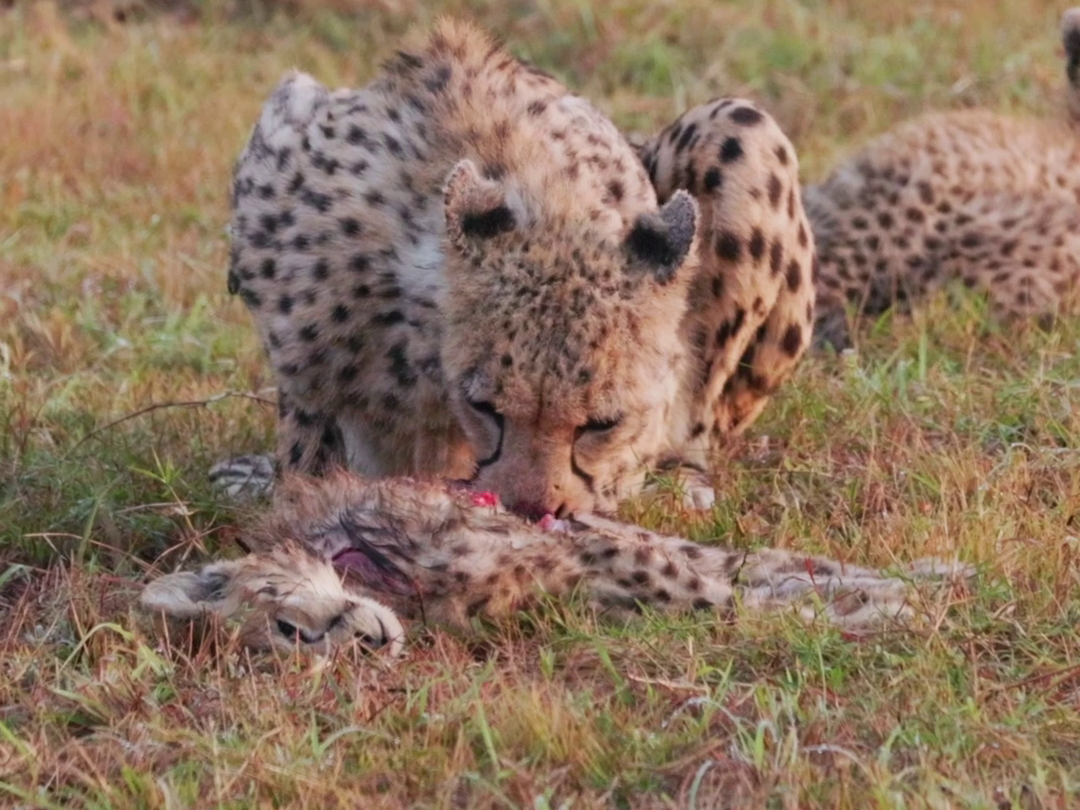
As gruesome a spectacle as this is, it is far from the norm. There are no known records of cheetahs cannibalising their own kind.
Never Miss A Viral Safari Video
Unexpected wildlife interactions, are popular with our members. To be among the first to see our latest sighting videos, join our exclusive alert list. Click the button below to join the WhatsApp chat right now and never miss another thrilling moment.
Suspected cause of death
According to Nick, he had seen the mother with two cubs the previous day. At the time, one of the cubs was limping badly and kept collapsing.
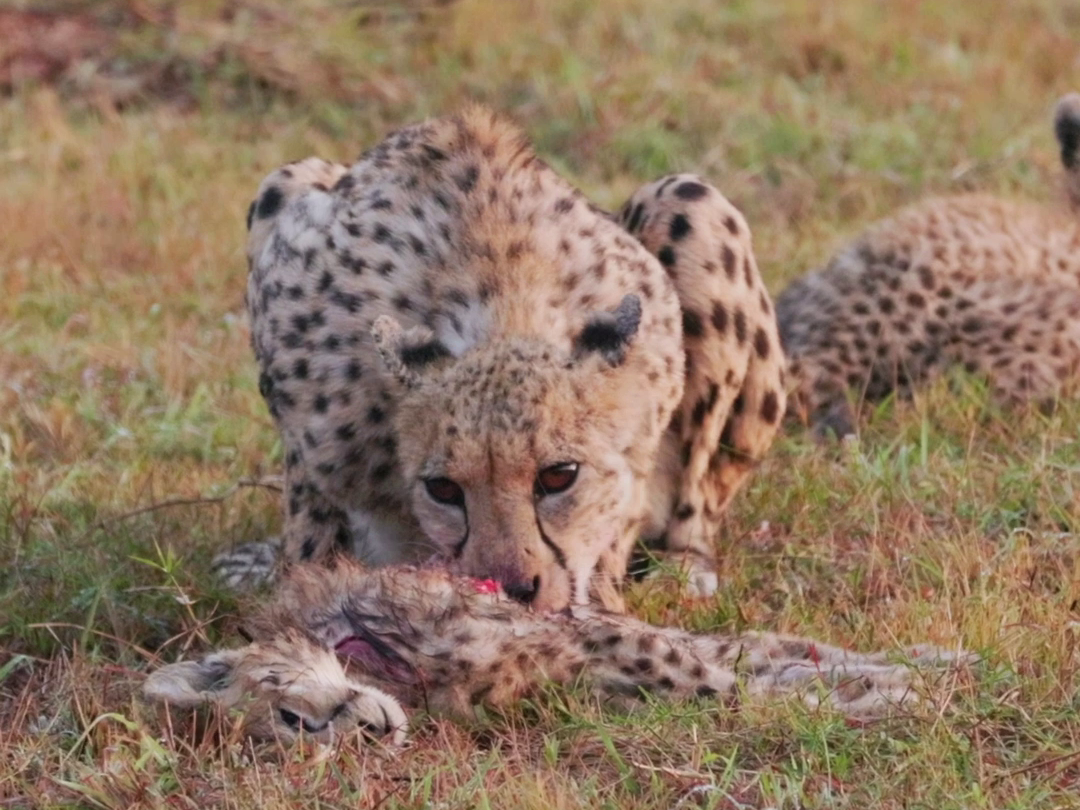
Unfortunately, the cub did not survive the night. Nick suspects that a snakebite killed the cub, not the mother. Incidentally, Nick told Latest Sightings that this was the second cub of a litter of three to die.
Cannibalism in cats
Furthermore, while researchers have never recorded cannibalism among cheetahs, they have documented lions, leopards, and tigers feeding on their own kind.
However, in these instances, experts attribute cannibalism to eliminating rivals, gaining a reproductive advantage, or an extreme scarcity of food. Since none of these apply here, her actions remain a mystery, although Nick told us that she only ate a small portion.
Large litters
Notwithstanding that she is eating her own offspring, it is also disturbing to note that her other cub is seen resting behind her.
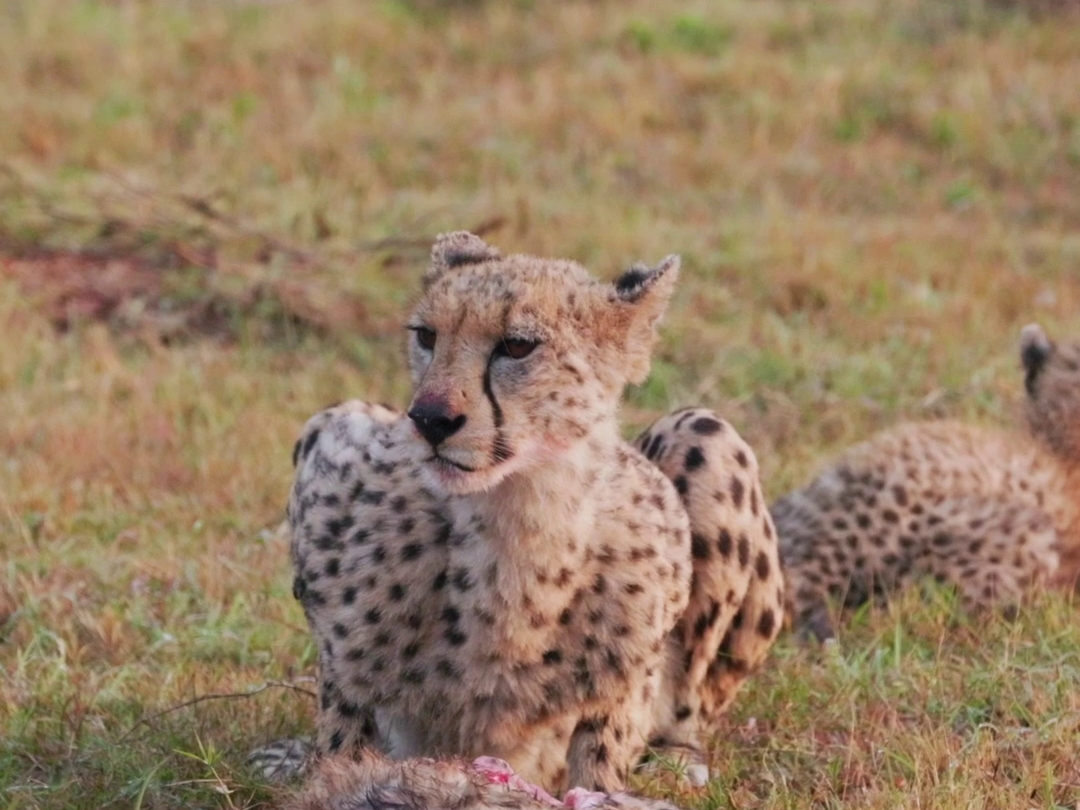
Cheetahs typically give birth to large litters of up to eight cubs. Some speculate that this is to compensate for the high infant mortality rate.
Get our Best Sightings as they Come in
Death is a fact of life
Subsequently, it is heartbreaking to see the mother look forlornly at her cub as she takes a break from feeding.
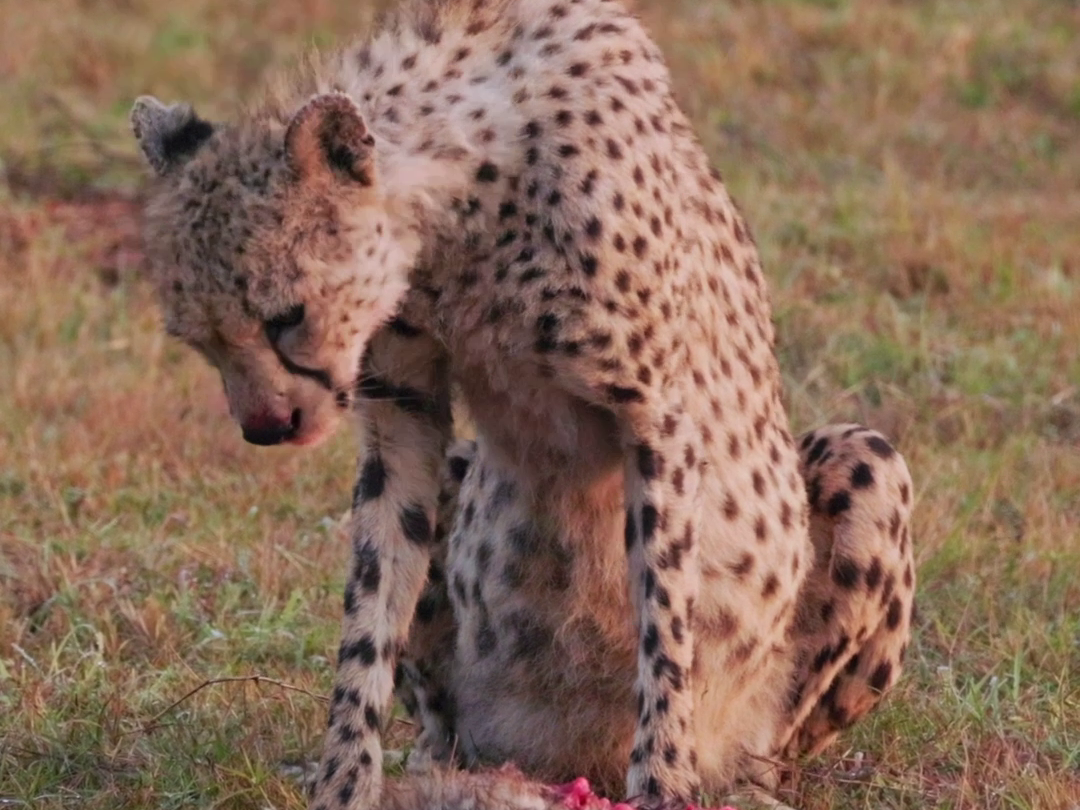
Sadly, for cheetah mothers, this is something they will likely endure several times over the course of their lives. Only 5% of cubs survive to adulthood, lost to predators, illness, and starvation.
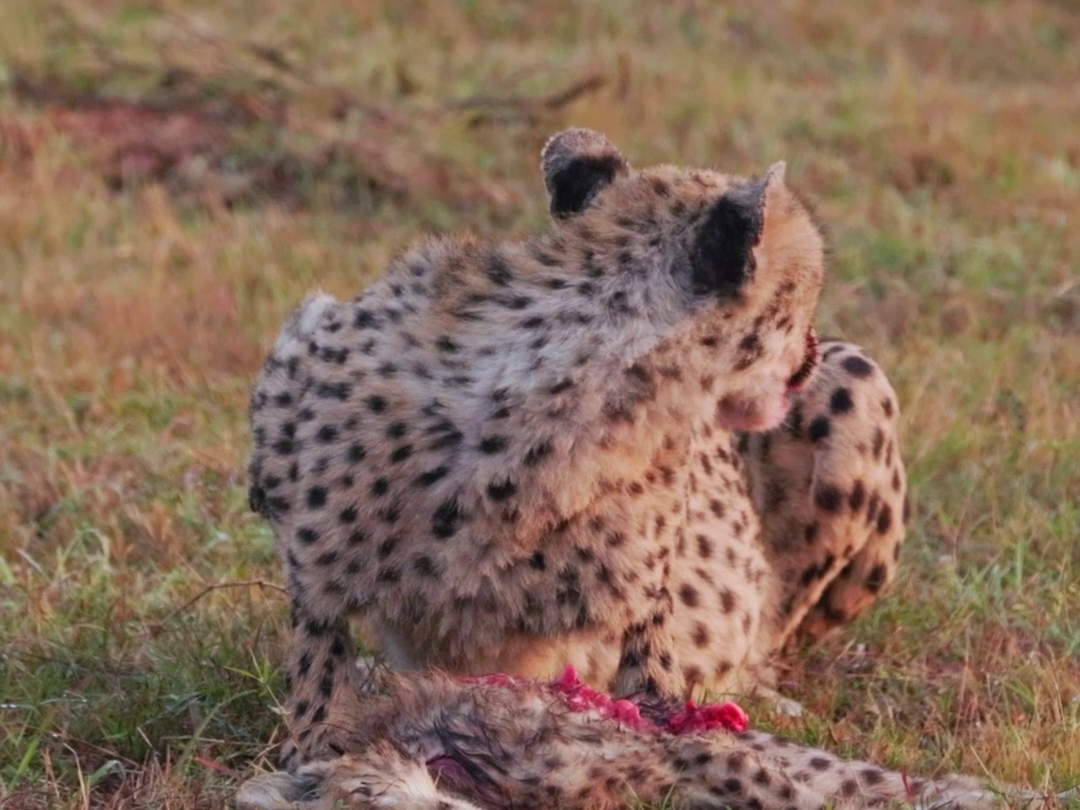
While this may seem callous, one must remember that conservation means preserving entire ecosystems. As difficult as it is to palate, this cub’s carcass will add to the ecosystem’s overall health.
Ironically, the cub’s death improves the chances of its siblings’ survival. Her grisly meal abandoned, the mother will now devote all her attention to raising the last survivor. It may be a dim silver lining in the moment, but Nature, left to her own devices, goes on.


