

The wildebeest stood its ground in the presence of the lone cheetah, hardly flinching as the agile predator skulked past it and proceeded to settle in the grass at its feet to catch a nap!
This stunning sighting was filmed at Black Rhino Game Reserve.
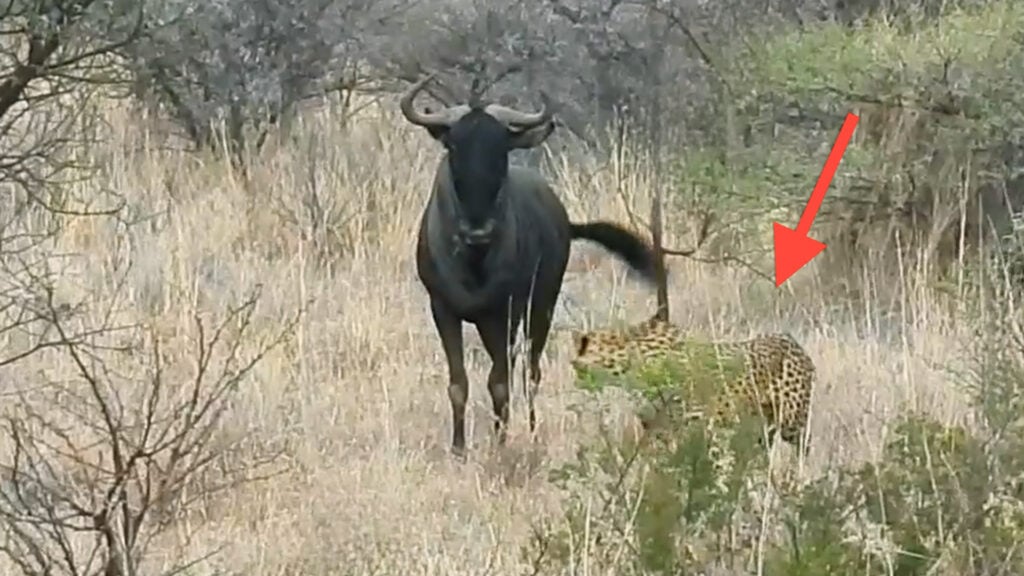
Cheetah makes appearance right next to wildebeest
Seeing a cheetah is always a special occasion in the bushveld. This one sauntered into view, right in front of the wildebeest, which was without its herd.
Cheetahs will often rest after a hunt attempt or a long patrol. This is to conserve their energy, especially during the hotter hours of the day.
Their slender bodies and incredible sprinting abilities come at a cost and they overheat quickly. Hence, they must lie down to cool off.
In such moments of rest, a cheetah may appear surprisingly relaxed, even in the presence of potential prey. This one showed no desire to hunt. It’s only mission seemed to be to find a good place to rest.

Wildebeest, on the other hand, are highly alert grazers with strong survival instincts.
This one remained steadfast but kept a watchful eye on the cheetah. The cheetah walked past it and inspected the territory before finding a suitable spot to settle down.
It then lowered its body, close to where the wildebeest stood.
Get our Best Sightings as they Come in
Wildebeest rely on sharp senses and the security of the herd. While this wildebeest was without a herd, he didn’t appear too worried about the cheetah’s presence.
Since cheetahs rely on short bursts of speed rather than ambush tactics, a wildebeest standing or prepared such as this one is usually safe, especially if it’s an adult. This creates a temporary and almost peaceful confrontation. One animal conserving precious energy, while the other maintains vigilance.
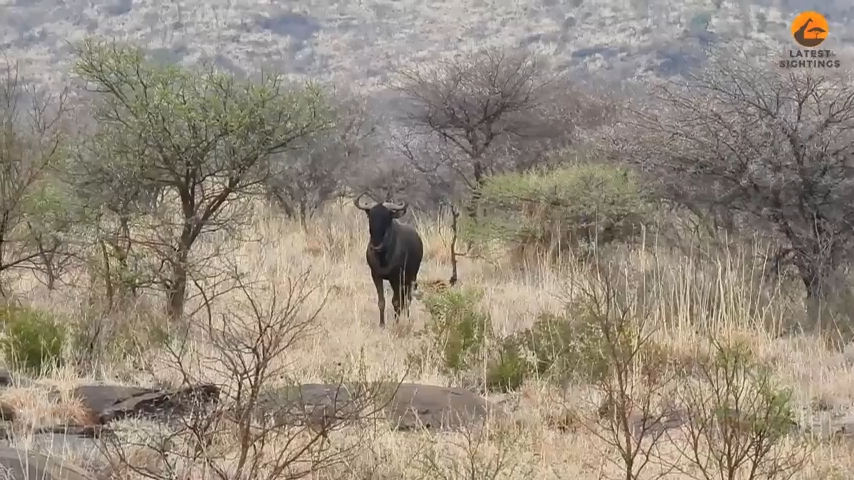
Cheetah settles into long grass
The cheetah watched the wildebeest as it lay down, but seemed quite happy to assume a submissive posture in front of the ‘prey’.
It is actually quite rare for a cheetah to hunt an adult wildebeest. Cheetahs mainly target smaller and medium-sized antelope, such as impala, springbok, gazelles and young kudu. This is because these animals are easier to bring down and don’t pose much danger.
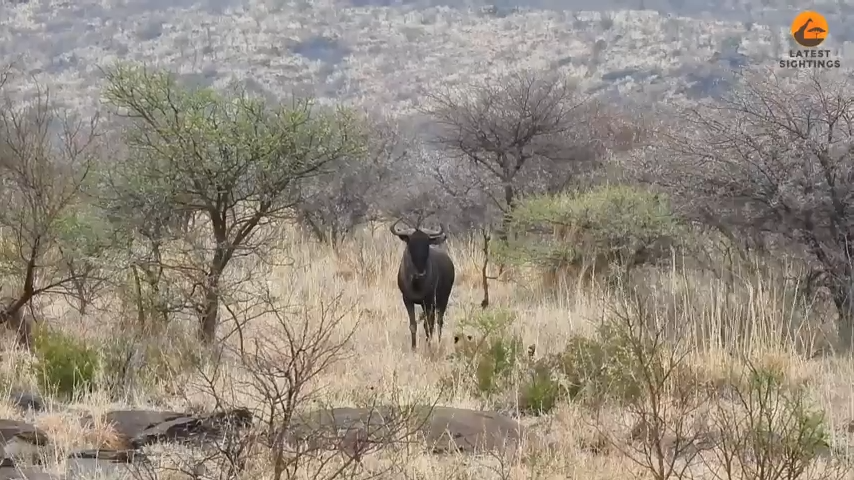
When they do hunt wildebeest, it is mainly young wildebeest calves. Newborn calves are small, uncoordinated and can’t outrun a cheetah, making them ideal prey. A single adult cheetah can easily catch a calf within seconds.
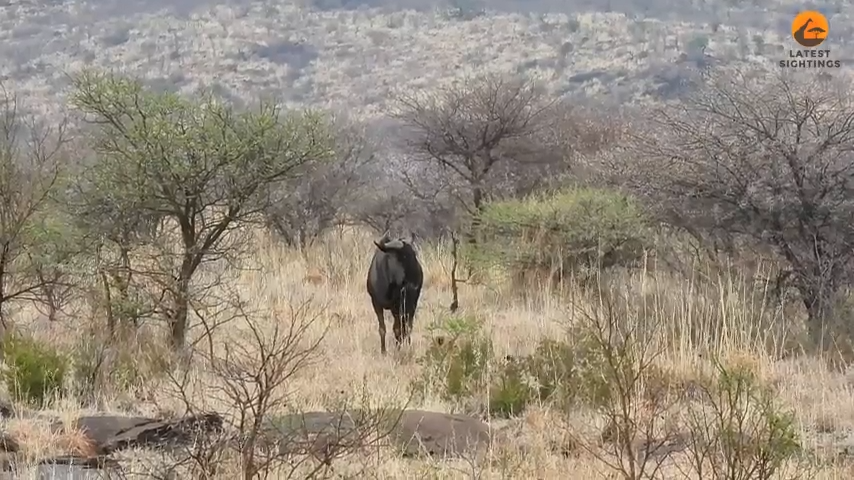
Wildebeest remains steadfast with cheetah close by
Adult wildebeest are large, often 180 to 250kg, and are far heavier than what a cheetah can safely take down.
This large fellow stood quite confidently, and didn’t even flicker his tail to signal danger. Still, he kept a watchful eye of the cheetah, just metres away from him.
Scenes like this remind us that in the wild, interactions aren’t always about chase and kill. Sometimes predator and prey are able to co-exist quite happily for a moment.
The cheetah lowered its head to drift off to sleep and the wildebeest continued to stand, unshaken.


