

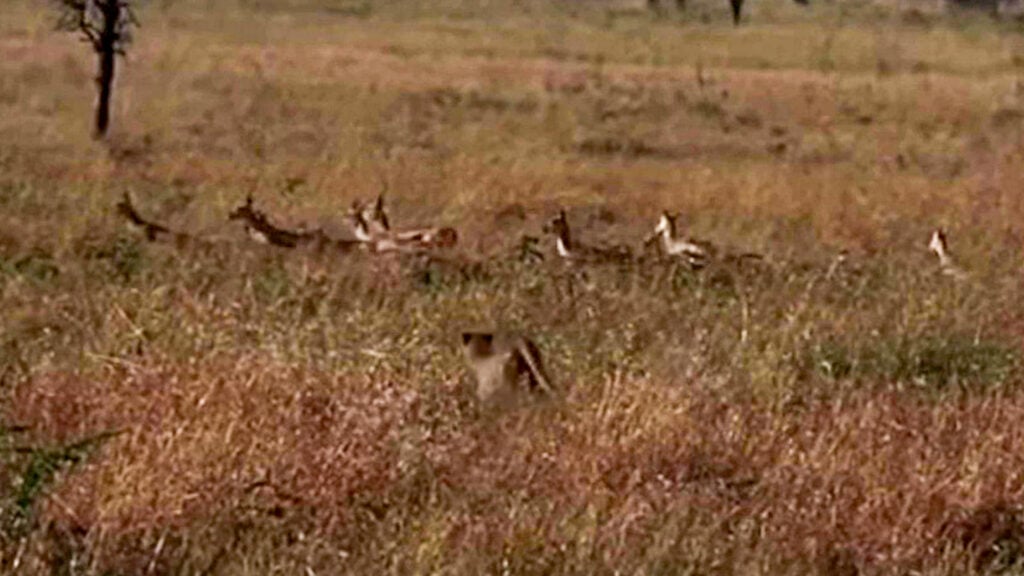
As the world’s fastest land predator, cheetahs are capable of speeds over 100 km/h. To counter this, their prey needs a combination of evasive skills and luck. As this video shows, sometimes even those are not enough.
Thijs Van de Ven sent this footage to Latest Sightings. He filmed it while visiting Tanzania’s Serengeti National Park.
Grazing gazelles
In the video, which Thijs shot from a considerable distance, grazing gazelles first greet us. Unfortunately, at this distance, it is hard to determine the species.
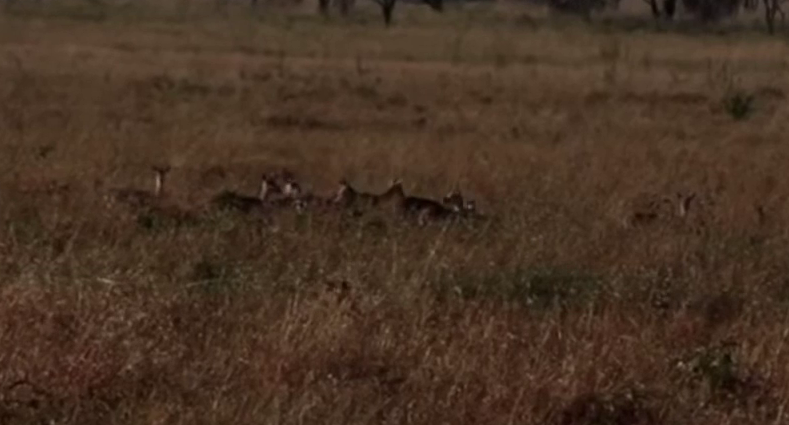
Serengeti is home to two species, namely Thomson’s and Grant’s gazelle. They are a favoured prey of many predators, one of which is stalking closer through the long grass.
From time to time, the gazelles lift their heads from grazing, but fail to see the approaching threat. Experienced predators move only when prey cannot see them.
Bursting from cover
Suddenly, a lithe figure bursts from cover, rapidly accelerating towards the herd. Startled, the antelopes turn to flee.
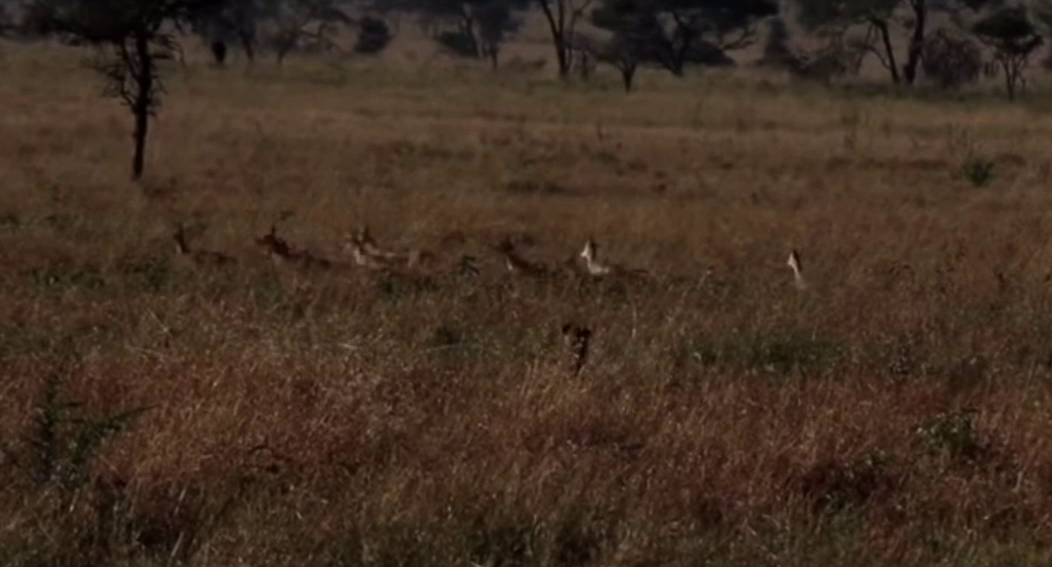
We soon realise that the predator is a cheetah. These slender cats can accelerate to a top speed in excess of 100 km/h in a matter of seconds.
Defensive counter-measures
Gazelle are by no means slow, able to reach speeds of over 90 km/h. But will it be enough to evade the speedy predator. To improve their individual chances of survival, the herd splits into smaller groups.
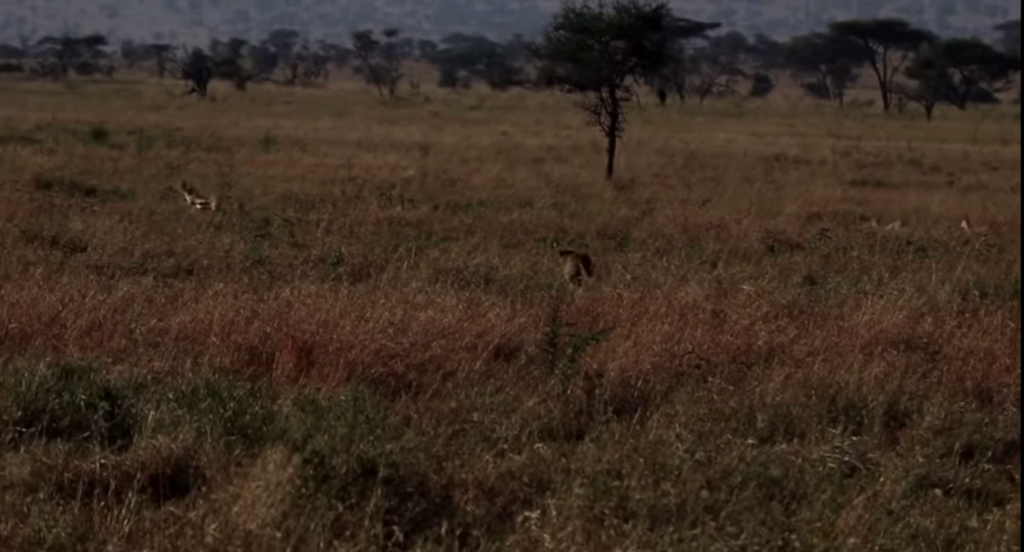
However, the cheetah is not easily fooled and selects its target. Like a meat-seeking missile, it streaks across the grassy plains, gradually shrinking the distance between it and its prey.
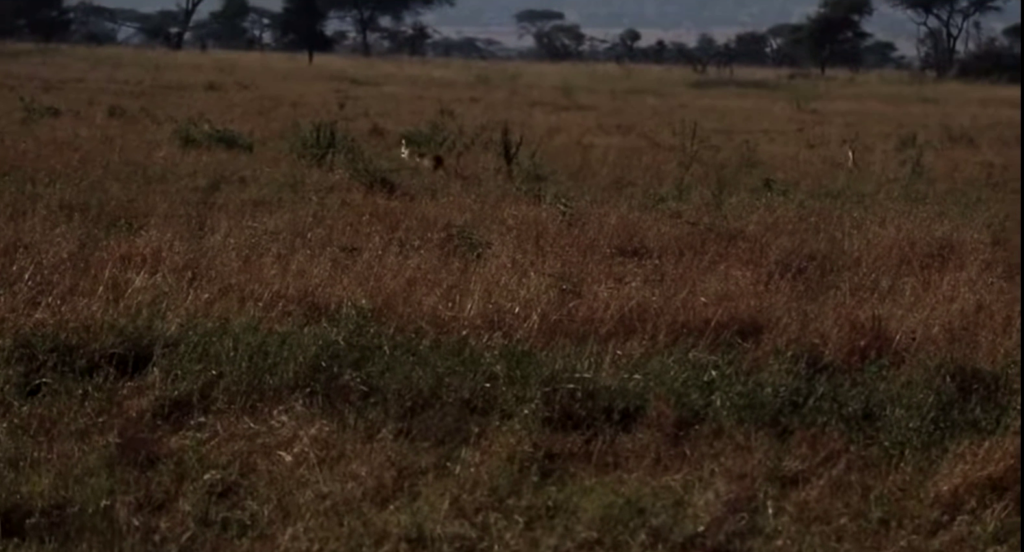
Meanwhile, as they get further away from Thijs, it is hard to see the cheetah. At times, only the occasional sight of its white-tipped tail gives it away.
Agile acrobatics
Sensing that its pursuer is closing in, the gazelle turns to its agility in its effort to evade capture. In an instant, it changes direction, temporarily increasing the gap.
However, the cheetah is up to the challenge. Its long, heavy tail acts as a counterweight during high-speed manoeuvres. Combined with a rigid paw and long, semi-retractable claws, the cheetah’s entire physique is made for moments such as this.
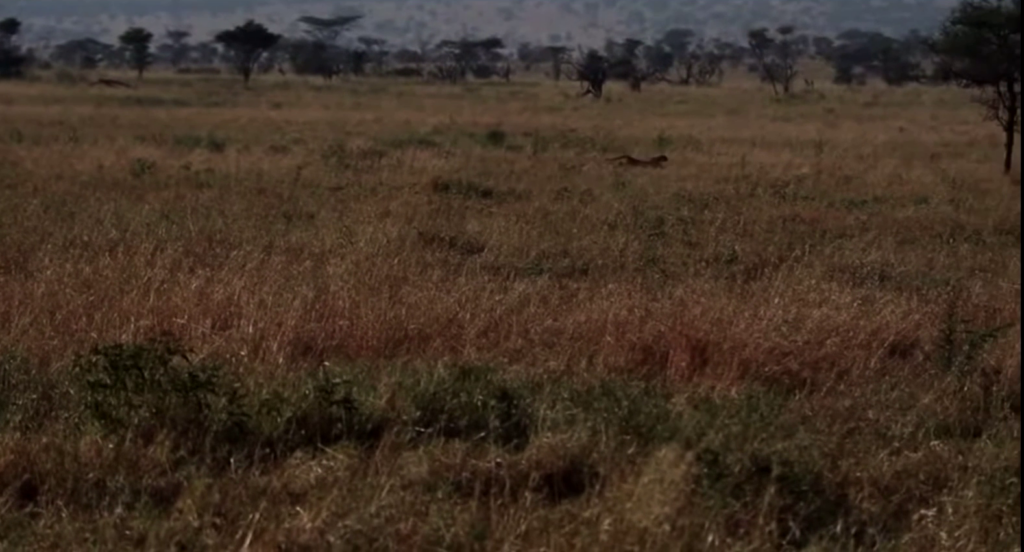
Additionally, its spine is highly flexible, enabling it to cover 6 to 7 meters (20 to 23 feet) in a single stride, powered by long, muscular legs.
Get our Best Sightings as they Come in
Countdown to a kill
Time and again, the gazelle changes direction, only for the cheetah to match it, while gaining on it with every step. Even so, cheetahs cannot keep up this speed indefinitely. If it doesn’t bring its prey down within 30 seconds, it will have to give up, exhausted.
At this point, the success of the hunt hangs in the balance. The chase has been going on for 25 seconds, so it is now or never. Meanwhile, Thijs and his companions hold their breath, anxious for an outcome.
Catch your breath
However, the gazelle is tiring too, and resorts to zig-zagging to shake the cat off. But the cheetah is determined, and as the timer edges past thirty seconds, it finally tackles the hapless antelope.
With the action over, both the cheetah and Thijs can finally catch their breath. For the cheetah, a meal is secured. For Thijs, it is a memory he will never forget.


