

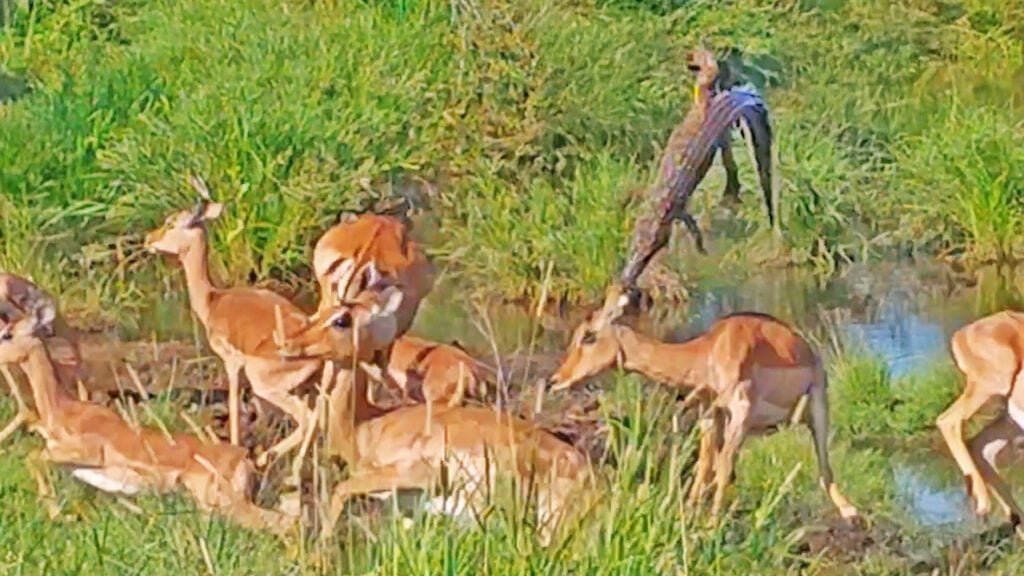
For impalas, visits to the waterhole are integral to their survival. In this video, one antelope has a lucky escape when a predator’s eyes are bigger than its stomach.
Carel van Rooyen submitted this amazing footage to Latest Sightings. He filmed it while visiting South Africa’s Kruger National Park.
A vital visit
Our story begins with a peaceful bushveld scene. A small herd of impala is visiting a waterhole.
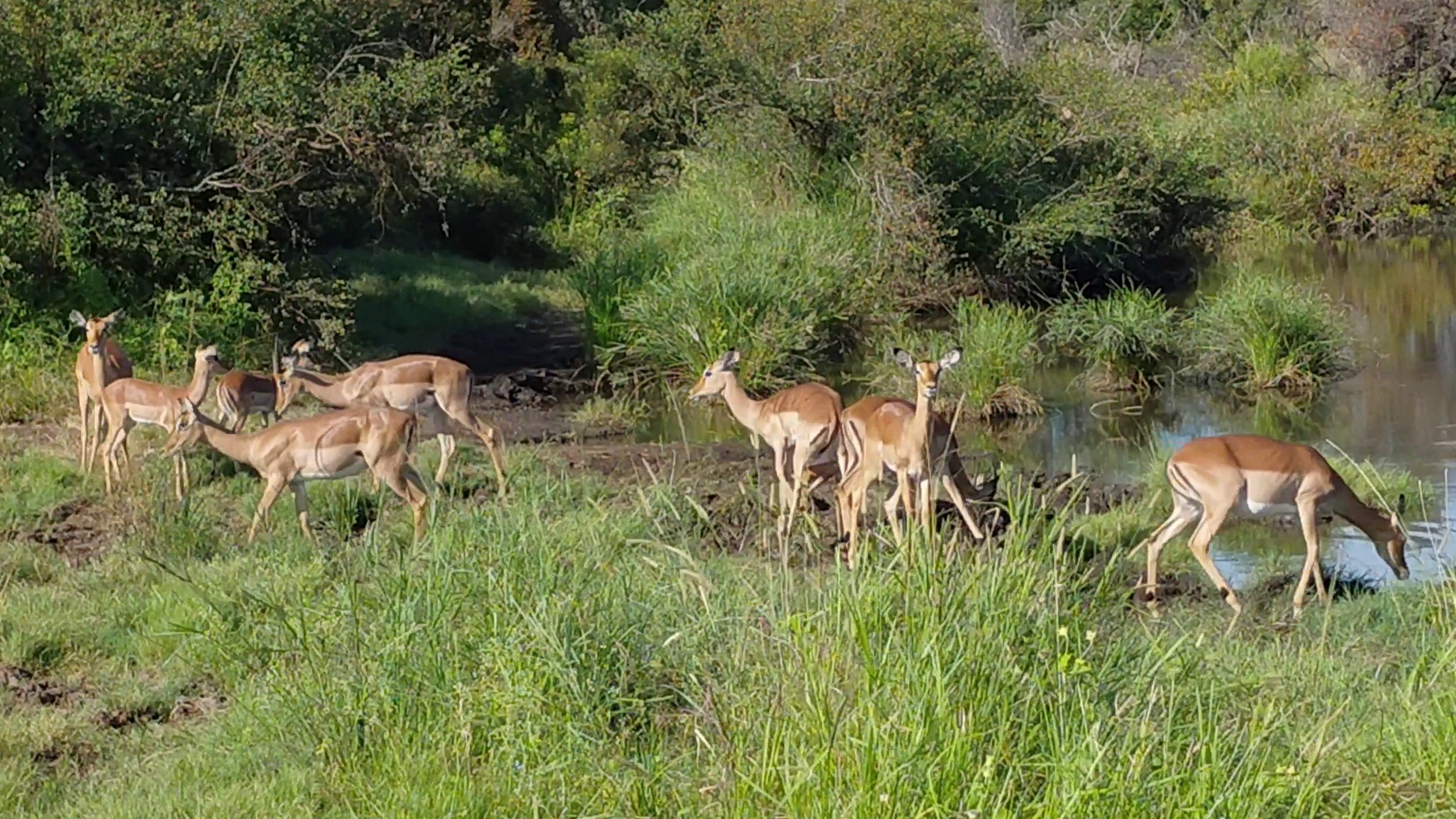
Impalas are highly dependent on water and must drink daily. They are typically found within 5 kilometres of reliable water sources.
Watch the video now:
Deceptive tranquillity
However, this dependence comes with a catch. Predators are aware of this dependence, and often set up ambushes nearby.
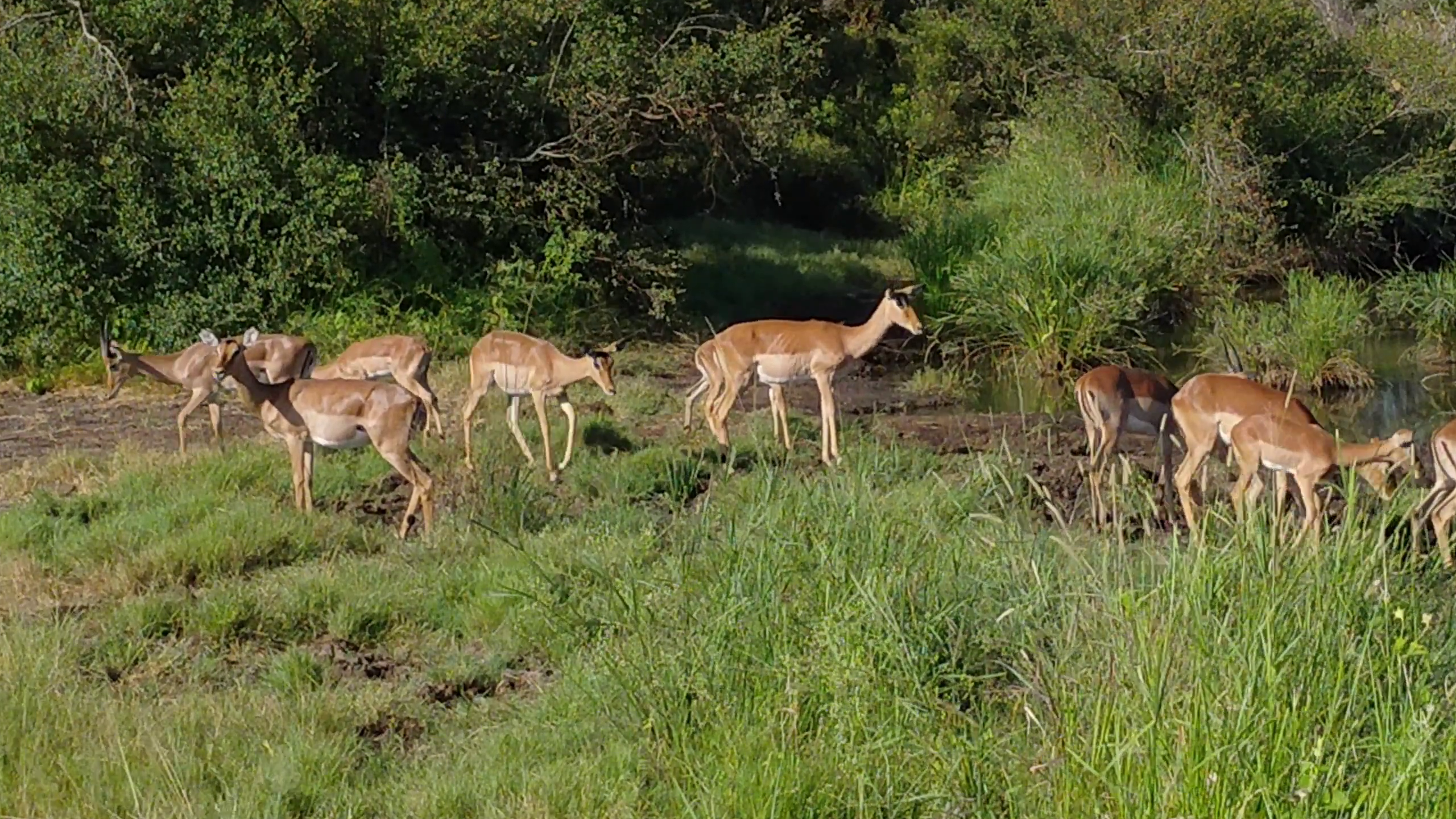
As such, each visit to the waterhole is potentially fraught with danger. Accordingly, we see that the antelopes are quite skittish. Rather than confidently head to the water’s edge, they approach very cautiously.
They are particularly vulnerable when drinking, as their peripheral vision is restricted when they lower their heads. To compensate, while some drink, other herd members keep a lookout. Any sudden noise, scent, or movement can trigger their flight response.
Something’s amiss
Subsequently, we note that even as the impalas bow to drink, they look uncertain about something. However, from our vantage point, no obvious threat is apparent.
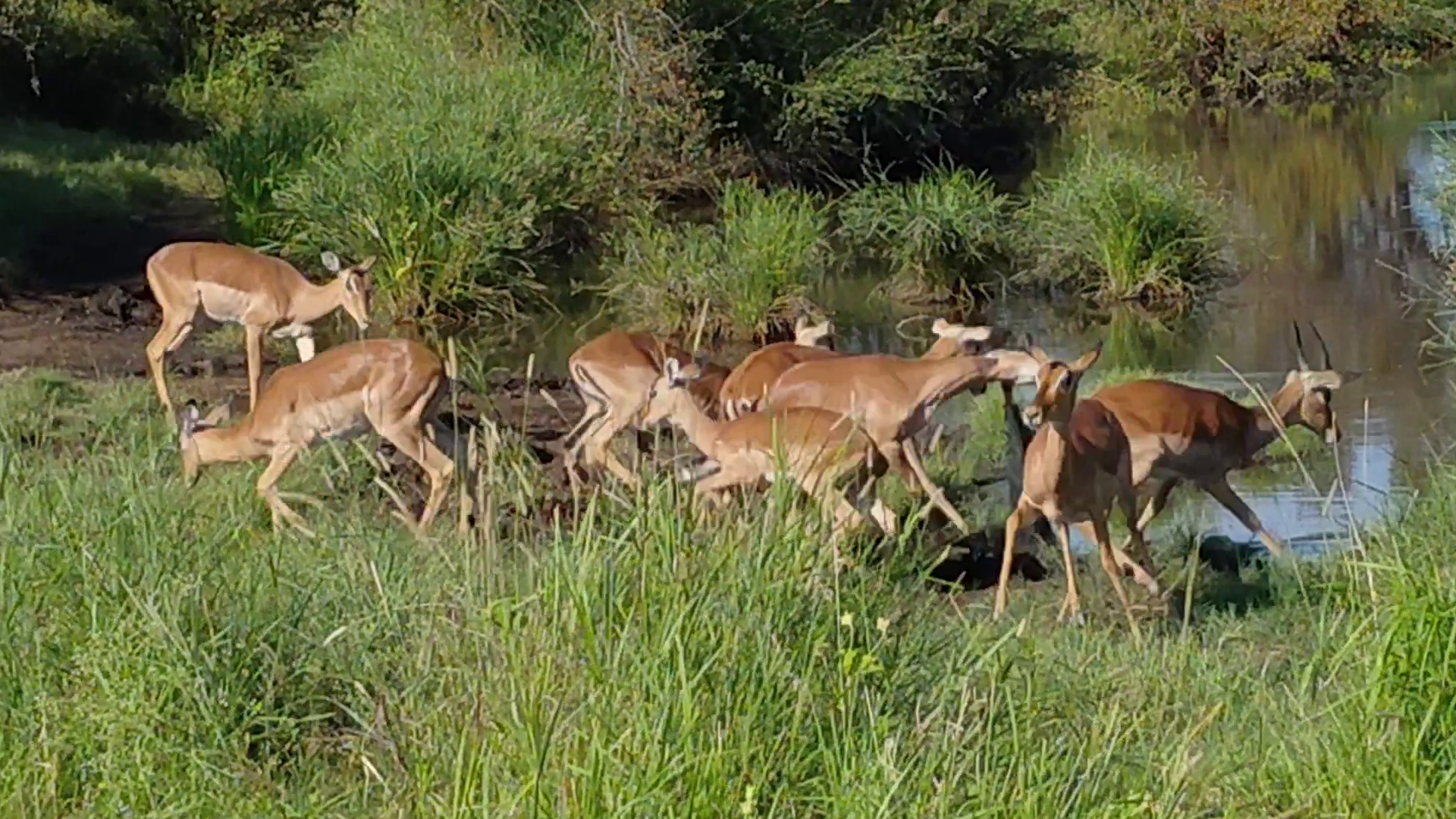
Eventually, thirst compels them to drink. No sooner do they start than panic ripples through the herd. Instinctively, their taut muscles explode as they withdraw from the water.
Held back
While most of the herd easily get clear of the water, one of the ewes jumps up, twisting its neck strangely as it does. At this point, we cannot see what is holding it back.
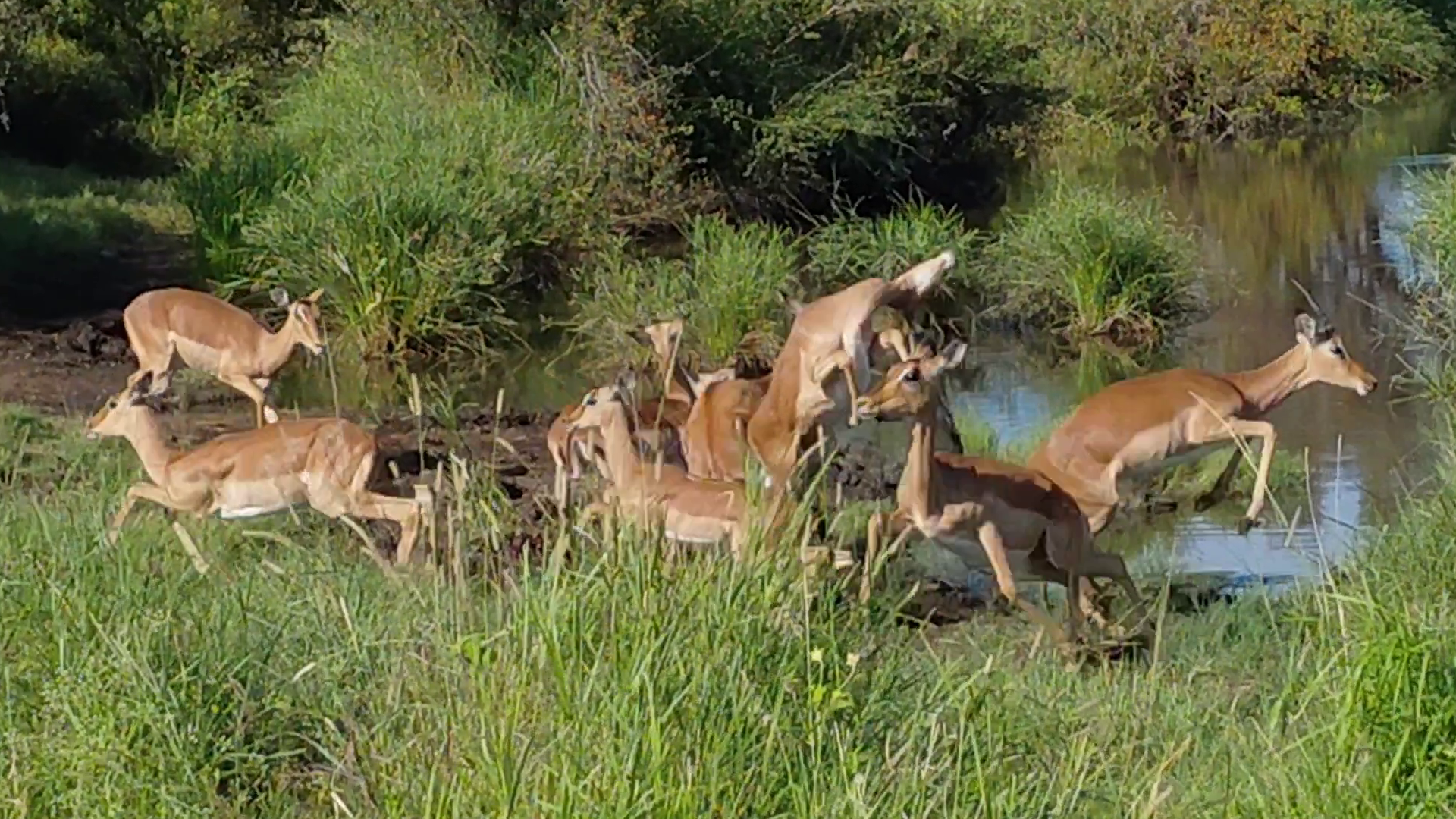
It is only when it whips its neck forward that we understand what has happened. A small crocodile has grabbed it by the ear.
Get our Best Sightings as they Come in
Flying crocodile, flying impala
Unfortunately for the crocodile, however, its eyes were way bigger than its stomach. Consequently, we’re met with the near comical sight of seeing the croc being flung through the air, still holding on grimly to the impala.
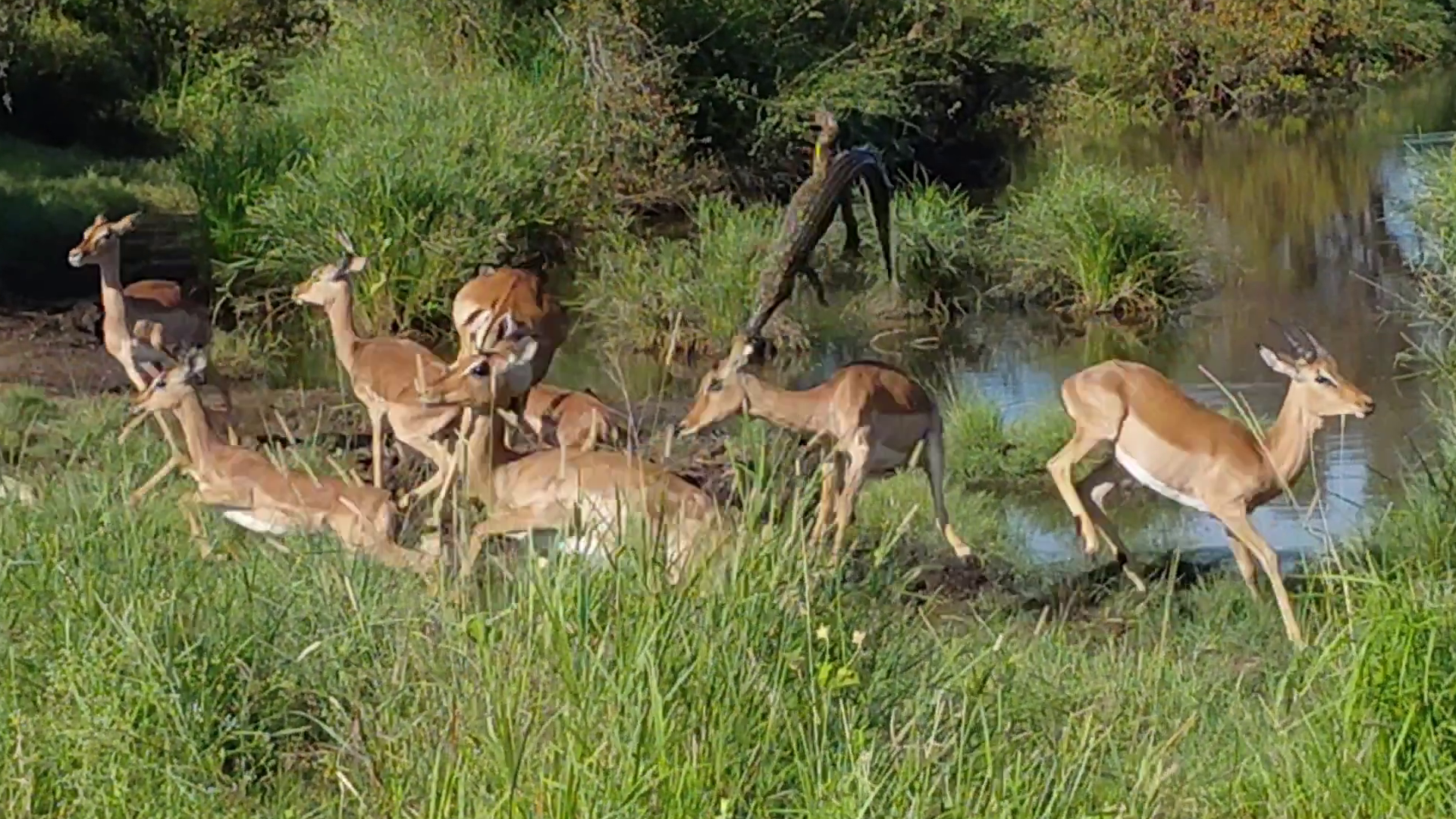
Subsequently, its momentum sees it flipped upside down, exposing its pale belly skin.
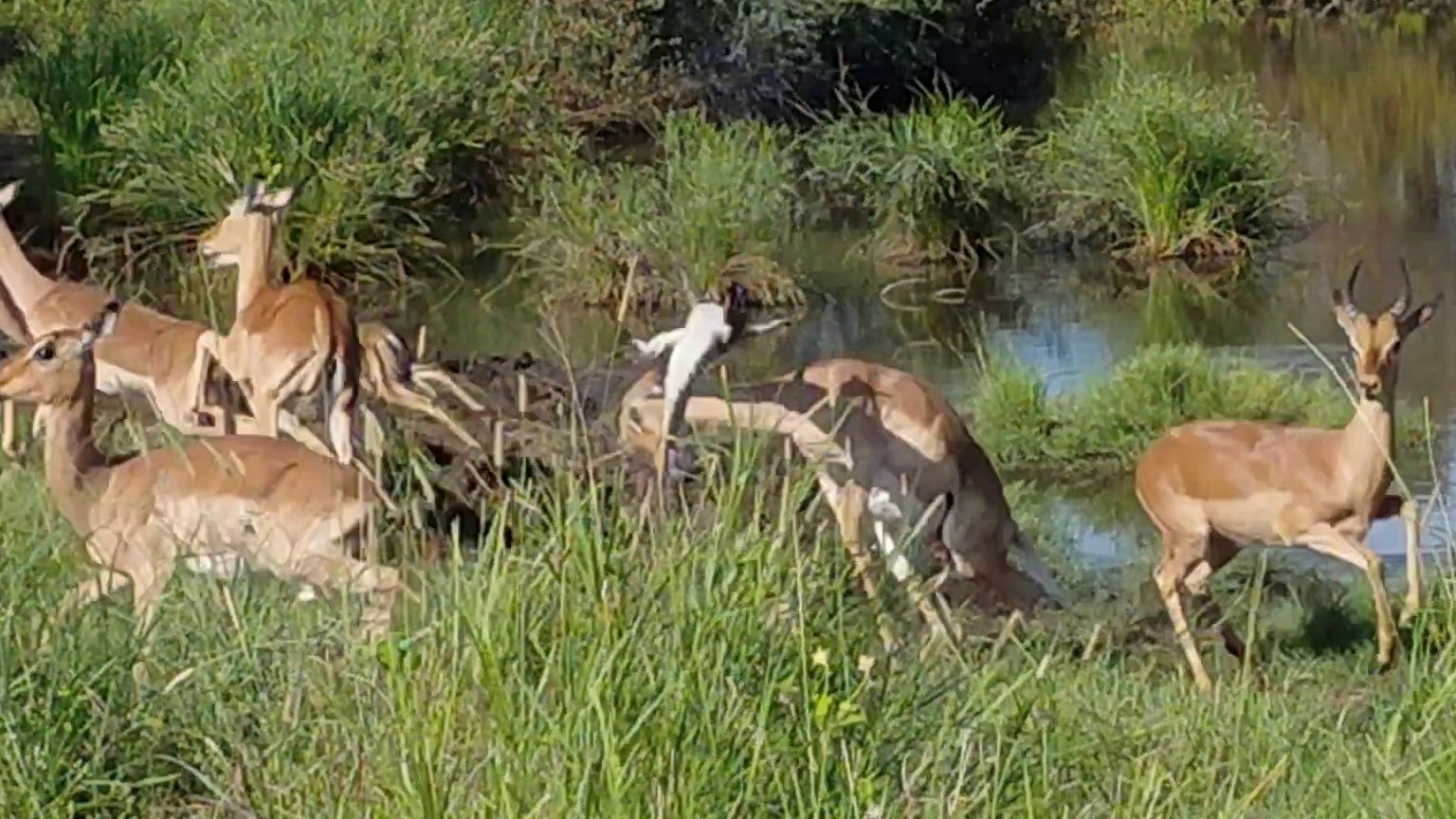
As for the impala, its alarm is obvious as it shakes the pesky predator loose. As the croc slams into the ground, the antelope launches itself skyward, desperate to get away from the reptile.
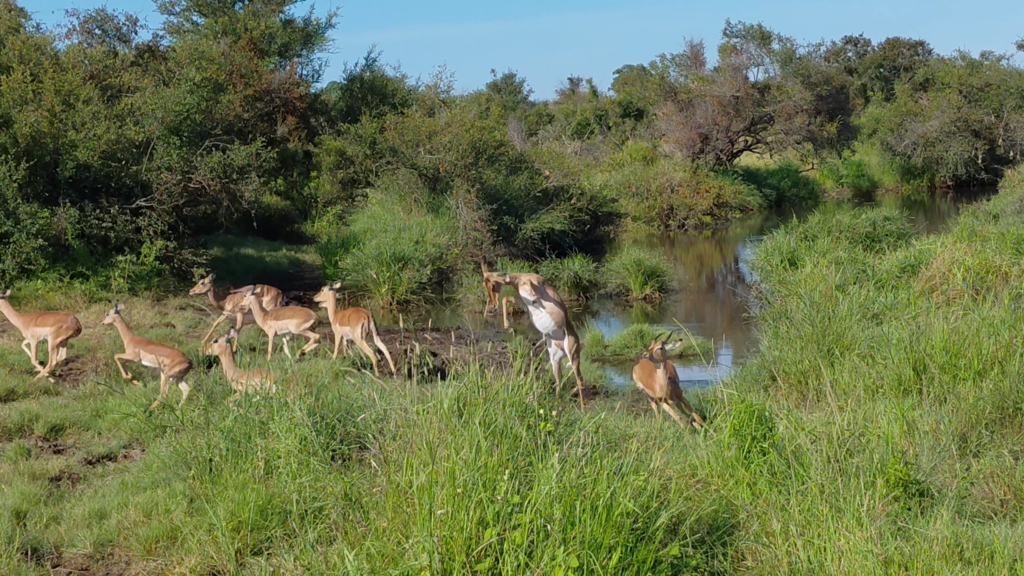
Its leap is nothing short of spectacular. Impalas can jump over three metres high from a standing start.
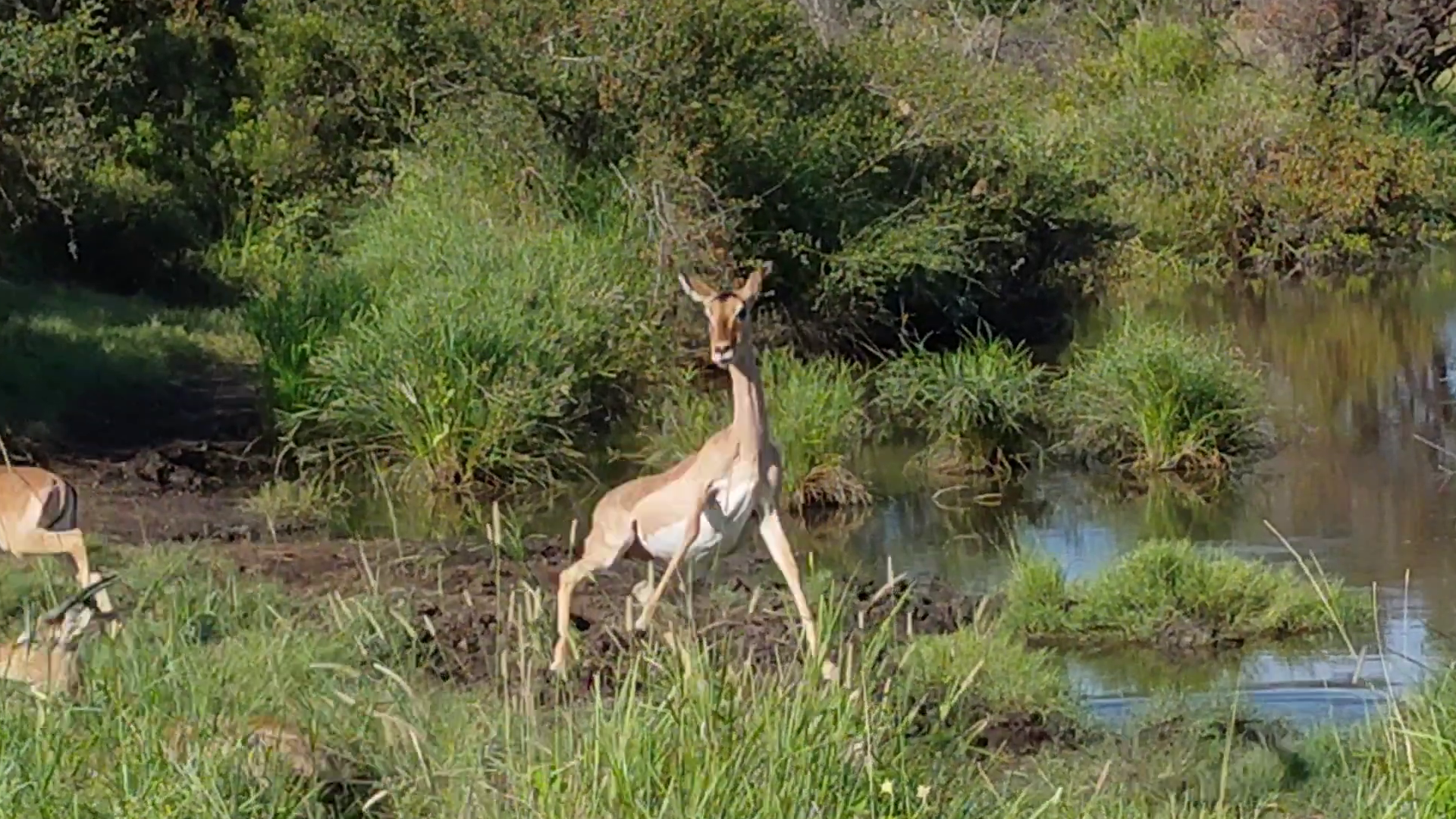
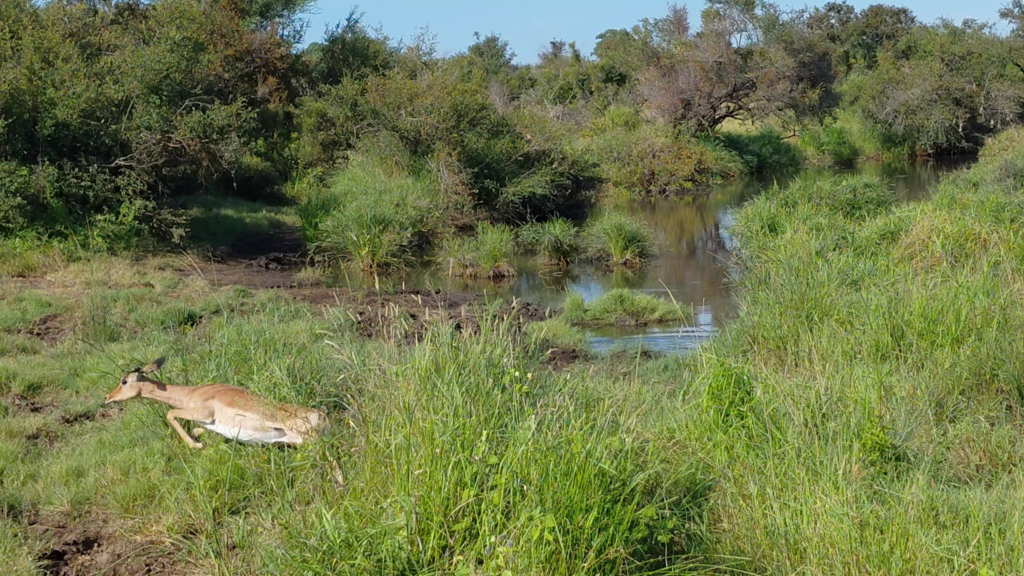
Moments later, it lands and wastes no time in sprinting from the scene of its lucky escape. It might be some time before she feels comfortable visiting the waterhole again.
McDonald’s of the bush
Guides often joke that impalas are the McDonald’s of the bush. They are extremely common, seemingly found around every bend.
In fact, if you look at their rump, you’ll note they have a near-perfect “M-shaped” black marking on their hindquarters.
Their chief defence against predators lies in finding safety in numbers. With many alert eyes, ears, and twitching noses at work, it is difficult for predators to get close without triggering their distinctive snorting alarm calls.


