

An Afternoon at the Water’s Edge
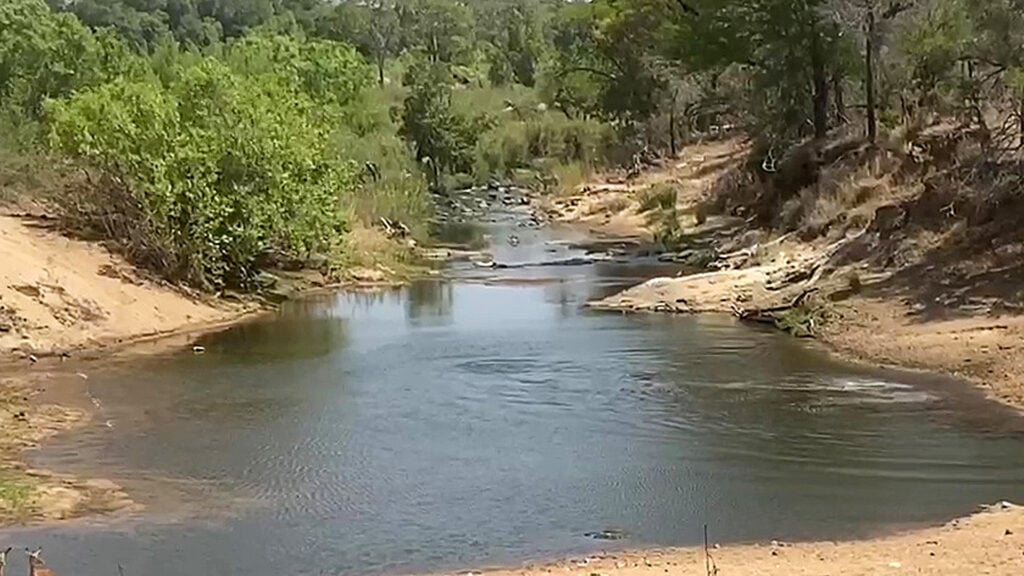
Jenny Louw’s footage opens on a scene of deceptive tranquility. Two herds, impala and sable antelope, have gathered at the river’s edge for an afternoon drink.
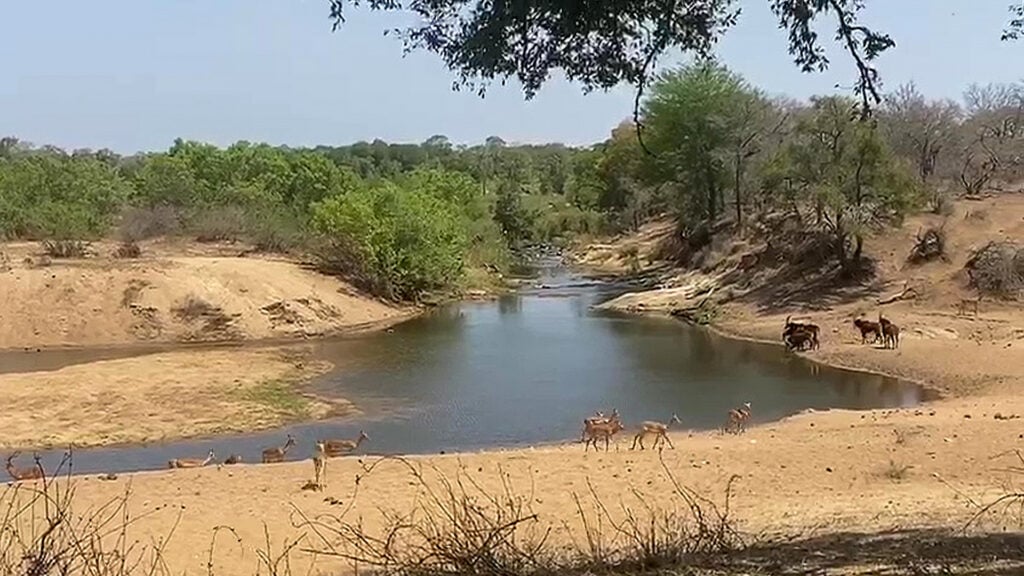
The light is warm, the air is still, and there is no tension in the atmosphere, not a flicked ear or a raised head to suggest that anything is wrong. The sable antelope are further away from the camera, pressed tightly together as they drink, their distinctive curved horns catching the light.
Join Our Wildlife Alert Group
The African bush is full of intense survival moments like this ancient crocodile executing the perfect surprise attack on a drinking herd. Be the absolute first to see our newest nature footage by joining our exclusive alert list. Click the link to jump into the chat right now and never miss out.
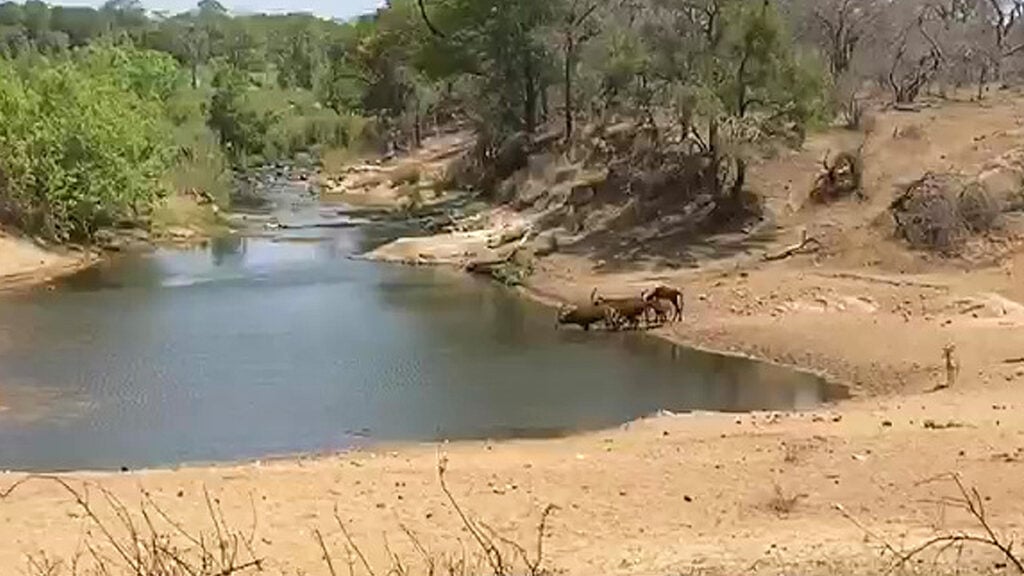
A few of the bolder individuals wade in slightly deeper, hooves breaking the surface as they reach for the water. It is the kind of quiet, golden sighting that lulls everyone into a sense of ease, but that ease was shattered in an instant.
An Explosive Surprise
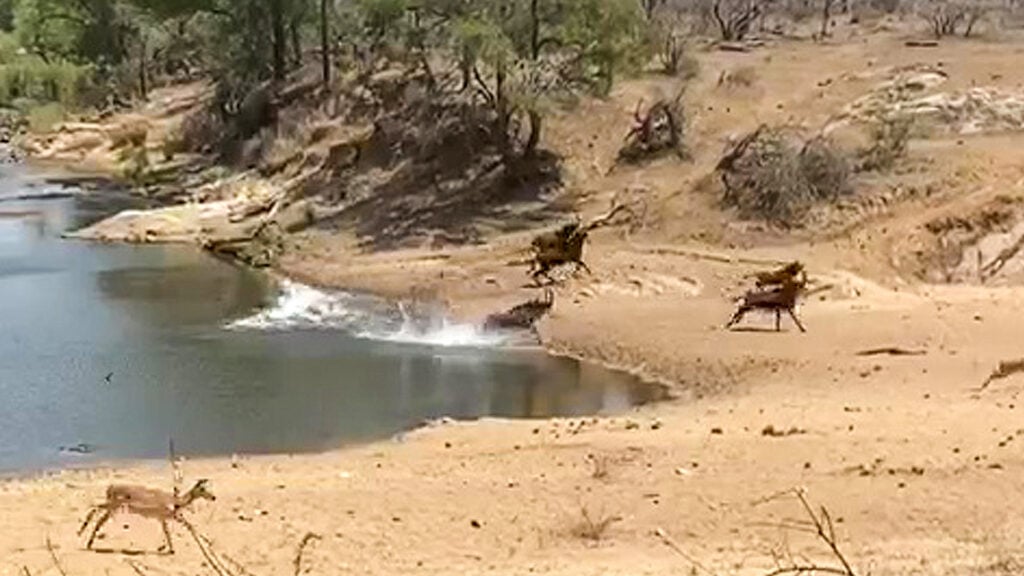
Without any warning, a massive crocodile erupts from the water. The explosion of movement is so sudden, so violent, that audible gasps ring out from the vehicle.
In roughly one second, the crocodile has locked onto a sable antelope, clamped down, and hauled it back beneath the surface. There is no extended struggle visible, no dramatic splashing.
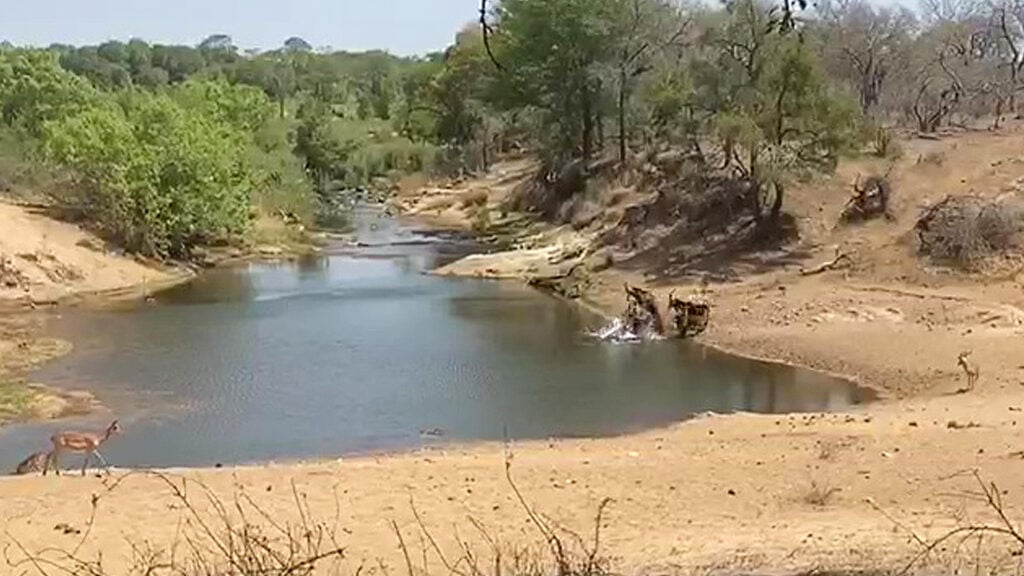
Just a brief, terrible disturbance on the water where the antelope had been standing moments before. Small ripples and the faintest churning are the only signs that a life is being lost beneath the surface.
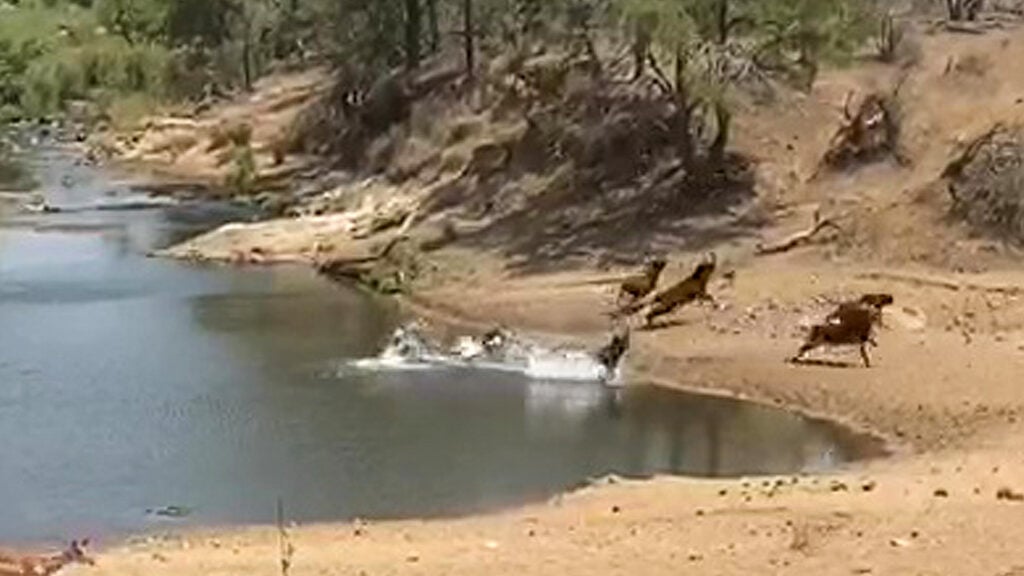
The crocodile’s ambush was so efficient, so perfectly executed, that it almost defies comprehension. The remaining animals scatter immediately, hooves thundering as both herds abandon the water in a wave of blind panic.
Built for This Moment
What Jenny’s footage captures is not luck on the crocodile’s part. It is the result of extraordinary biological engineering refined over hundreds of millions of years. Crocodiles are ambush predators of the highest order, capable of remaining motionless beneath the surface for extended periods while their body temperature and heart rate drop to conserve energy.
Get our Best Sightings as they Come in
Their eyes and nostrils sit at the very top of their skull, allowing them to monitor the surface while their body remains hidden below. When prey steps into range, a crocodile can launch itself with explosive force using its powerful tail, covering the distance between predator and prey before the target has any chance to react.
The tight huddle of the sable antelope at the water’s edge, while an instinct driven by safety in numbers, likely worked against them in this case. Crowding near the water reduced the space available to retreat and brought multiple animals within striking range.
The Weight of the Waterhole
Waterholes across Africa are not simply places to drink. They are arenas where survival is negotiated every single day, and where the line between life and death is as thin as the water’s surface.
Prey animals must drink, and predators know this. For a crocodile, the waterhole requires almost no effort beyond patience.
Sightings like this one are difficult to watch but impossible to look away from. They strip away any romantic notions of the bush and reveal it for what it truly is: a place governed by hunger, timing, and instinct.
Jenny’s footage is a sobering reminder that for every peaceful afternoon at the water’s edge, something ancient and patient may already be watching.


