

Night Drive Discovery
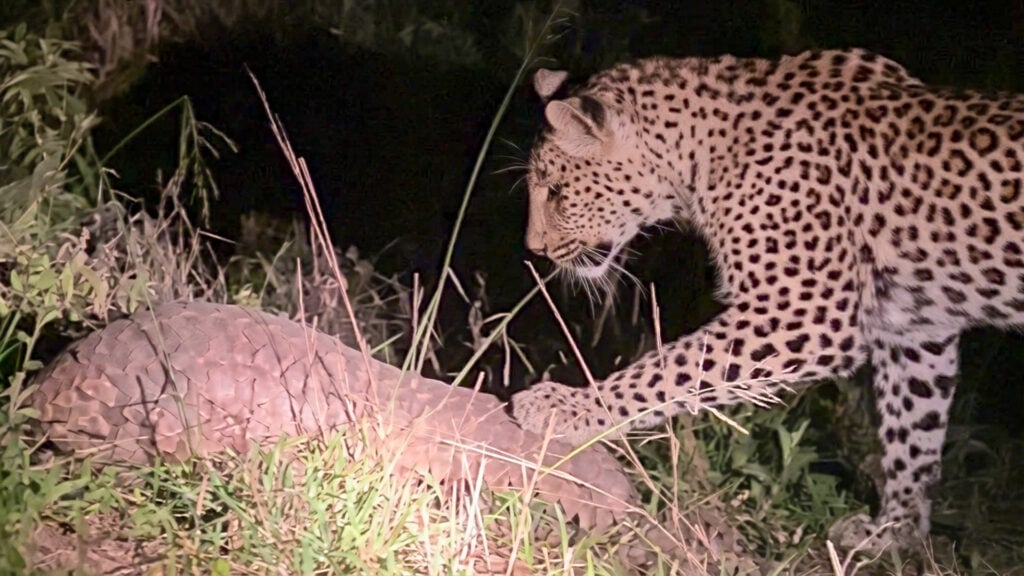
“We happened to stumble upon a pangolin whilst following a young leopard. After a few moments of the leopard smelling the area, he found the pangolin, and what happened next was unbelievable,” recounted guide Jan-Harm Burger from Umkumbe River Lodge in Sabi Sands Game Reserve.
During the night drive, flashlights pierced the darkness, illuminating the leopard’s cautious stalk. The young cat, inexperienced but bold, closed in on the slow-moving pangolin foraging for ants and termites in the leaf litter.
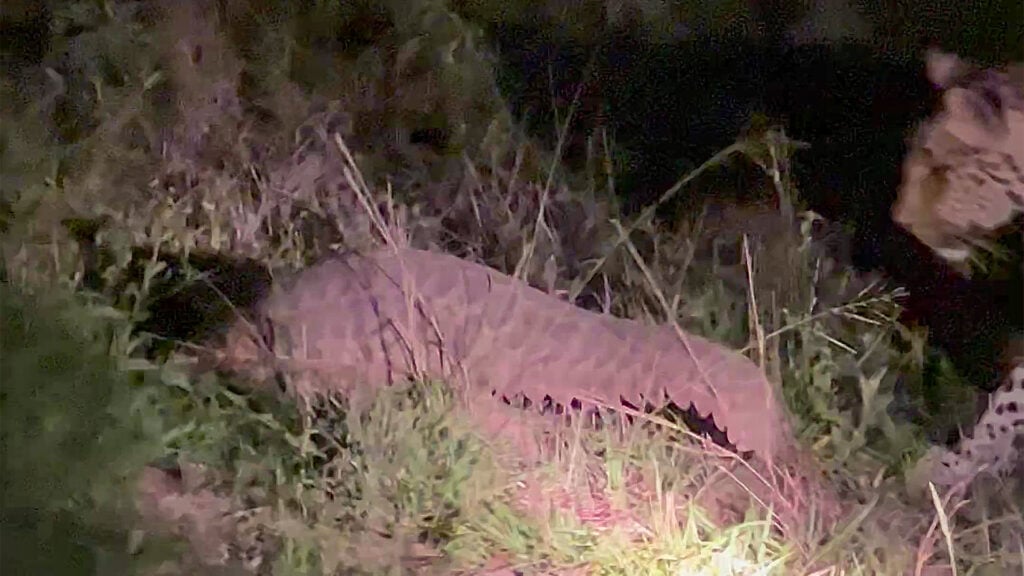
In southern Africa, where poaching claims thousands of pangolins yearly for scales and meat, survivors like this one highlight the resilience of the species. But as this encounter will show, they face threats from more than just humans.
Watch the Sighting:
A Tentative Touch Turns to Attack
The leopard paused, extending one paw hesitantly onto the pangolin’s back as if testing an unfamiliar texture. It sniffed intently for a few seconds, its whiskers twitching, weighing the risk against the reward.
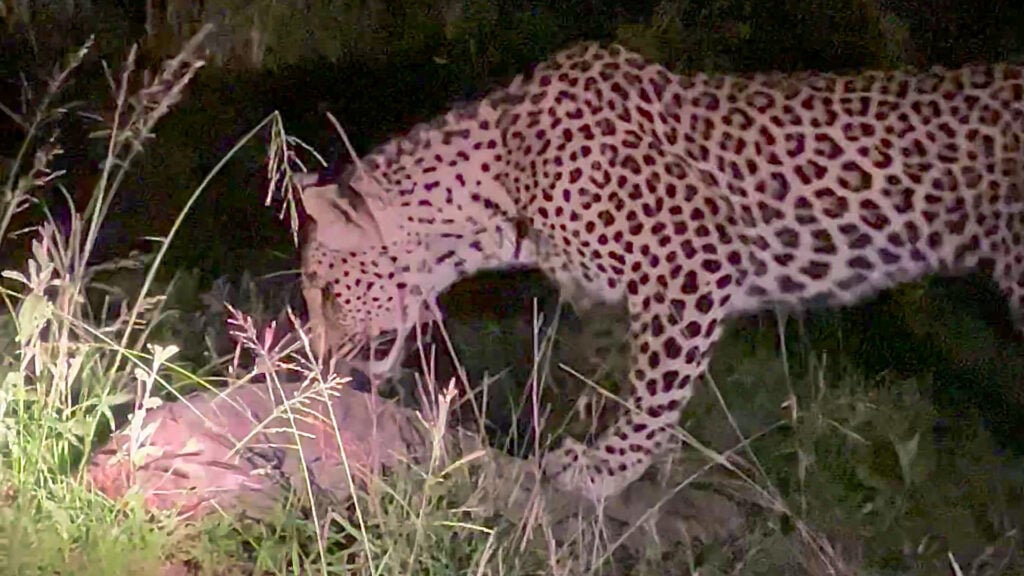
Then…explosion! The leopard launched itself at full force, pouncing atop its prey with claws extended and jaws snapping.
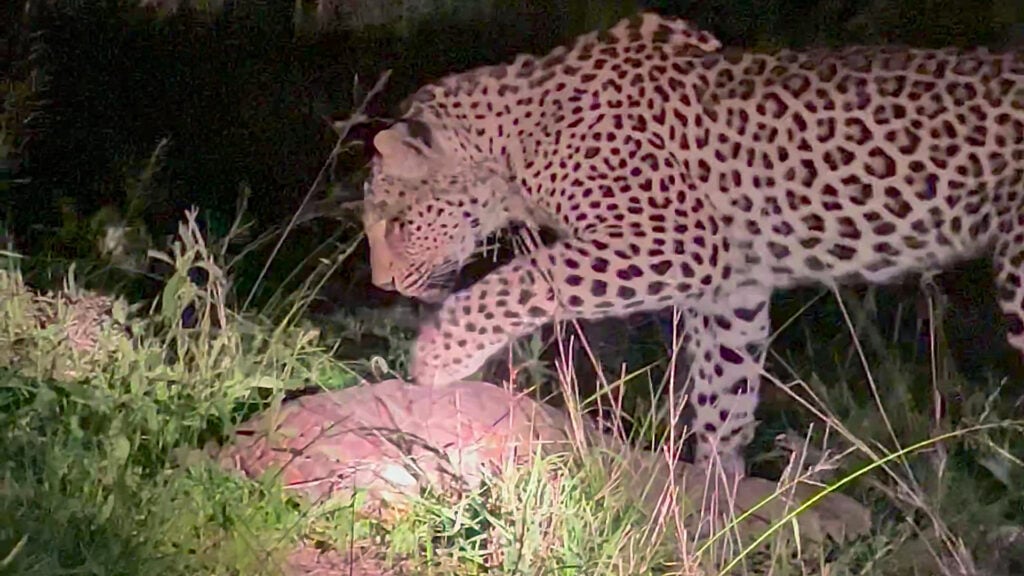
Simultaneously, the pangolin executed its signature defence: curling into a near-impenetrable ball of overlapping keratin scales. It tucked its head tight and exposed only thick armour.
Scales vs Claws Standoff
Pangolins are built like living pinecones. Their scales, made of the same keratin as human fingernails, interlock to form a fortress that deters most bites.
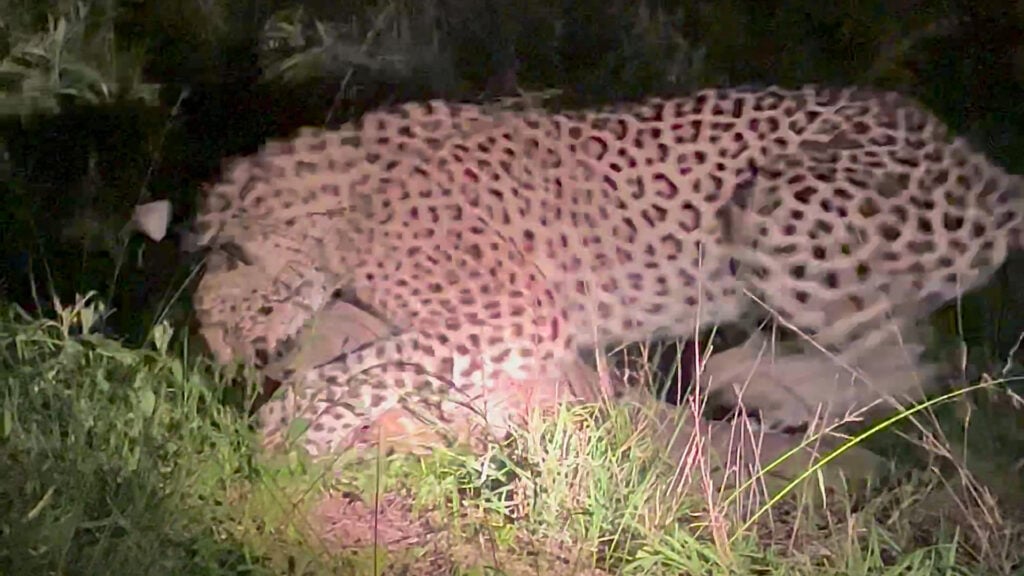
But those scales aren’t just a defence; they also deter insects too, letting pangolins bulldoze ant nests with their sticky tongues. The defensive ball they form often confuses predators, as it offers no limbs or soft tissue to grip, while the animal inside holds its breath to play dead.
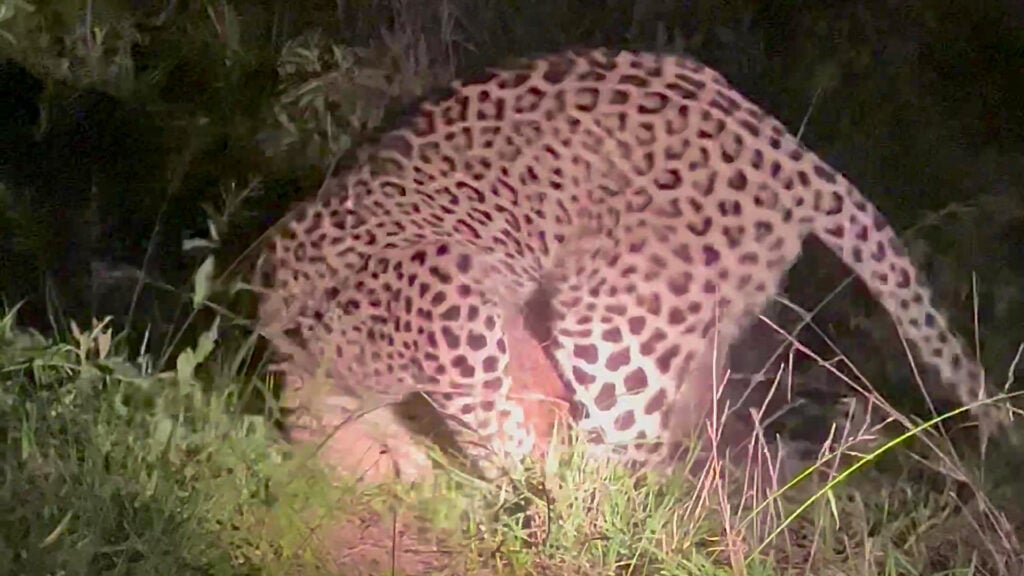
This leopard seemed undeterred, however, and gnawed at the edges of the shield, targeting the head and scale gaps with persistent bites. The youth of this leopard really shows here because experienced cats often abandon such tough hunts, but this one kept pressing on, grabbing the ball like a housecoat with its toy.
Predator Experimentation
As nocturnal masters of the bush, leopards tend to tackle diverse prey from impala to monitor lizards, but pangolins pose unique puzzles. Juveniles learn which prey to take on through trial and error.
Get our Best Sightings as they Come in
A failed hunt costs little when easier meals are aplenty. Pangolins manage to survive many of such encounters by outlasting attackers, whose energy budgets tend to favour quicker kills.
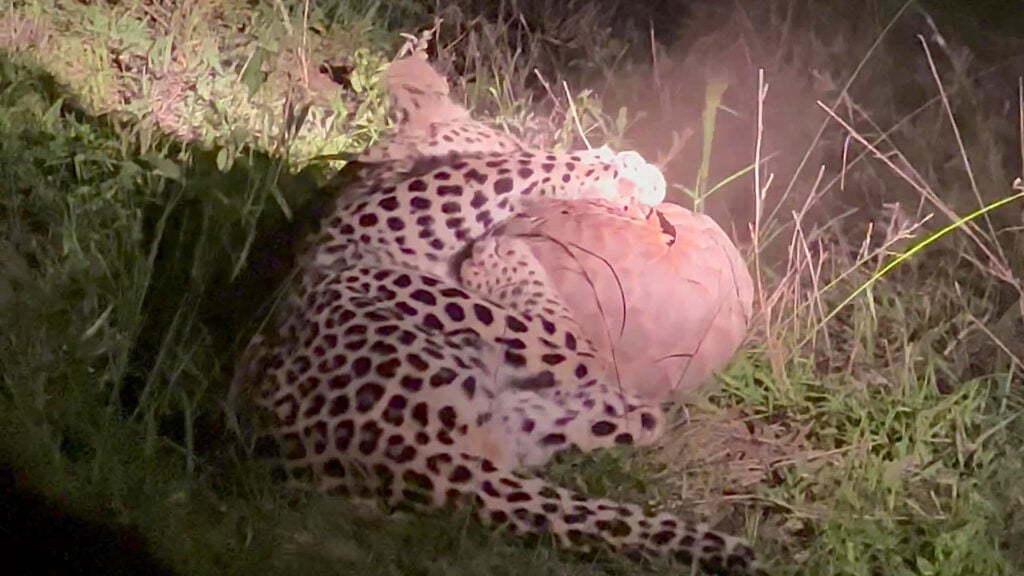
Night drives reveal these clashes, when both species peak: leopards hunting and pangolins feeding. Unfortunately, the footage cuts before revealing an outcome, leaving us all guessing: did curiosity win, or did armour prevail?
Sabi Sands Nighttime Drama
At Umkumbe River Lodge, riverine forests host these rare matchups, and flashlight beams unlock the secrets of the bush. For Jan-Harm’s guests, it was a masterclass in predator-prey chess: one probes while the other endures.
Whether or not the leopard dined or departed hungry, the clip highlights the resilience of pangolins, nature’s tank in a world of opportunists.


