

Nature can seem incredibly cruel at times, as was evidenced when Johan van Zyl form Wild Eye witnessed the juvenile leopard snatch up a genet carcass and hoist it into the branches of a dead tree, before flinging it about like a toy.
While a leopard playing with a dead genet may look strange or even cruel to human eyes, in the wild it is a completely natural behaviour which reveals much about how these powerful predators learn and develop.
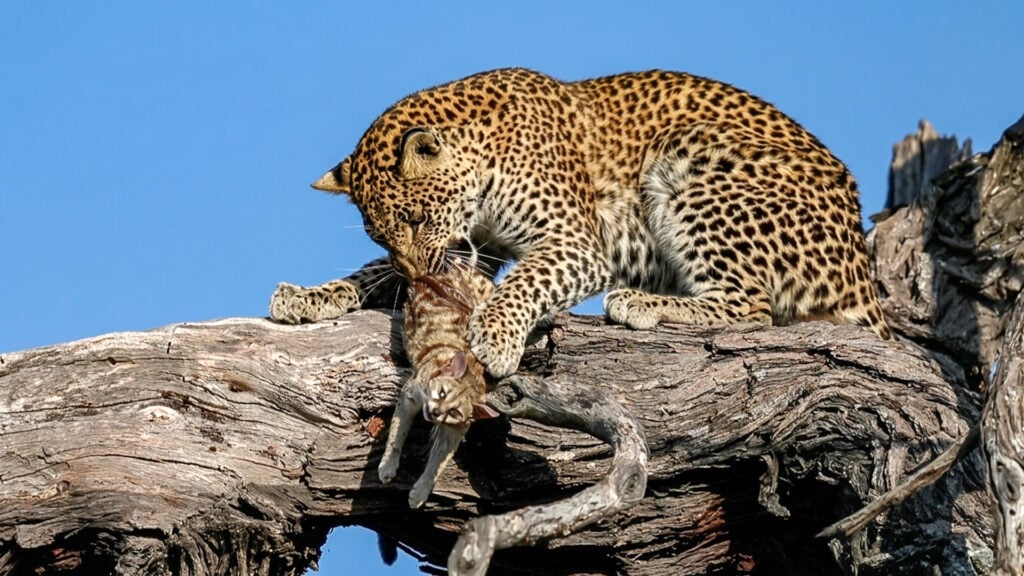
A learning experence
Leopards are highly intelligent and curious animals, and when they are young, they often treat prey almost like toys as they practice the skills they will need to survive.
Johan managed to film the incredible sighting, which showcased both the leopard’s strength and playfulness in a rare moment which few are privileged to witness.
Get our Best Sightings as they Come in
Leopard hoists dead genet into the branches of a tree
He explained to Latest Sightings that they had seen a young female leopard make a genet kill on the ground. “A young male then approached her and stole the kill from her before hoisting it up a nearby dead tree.”
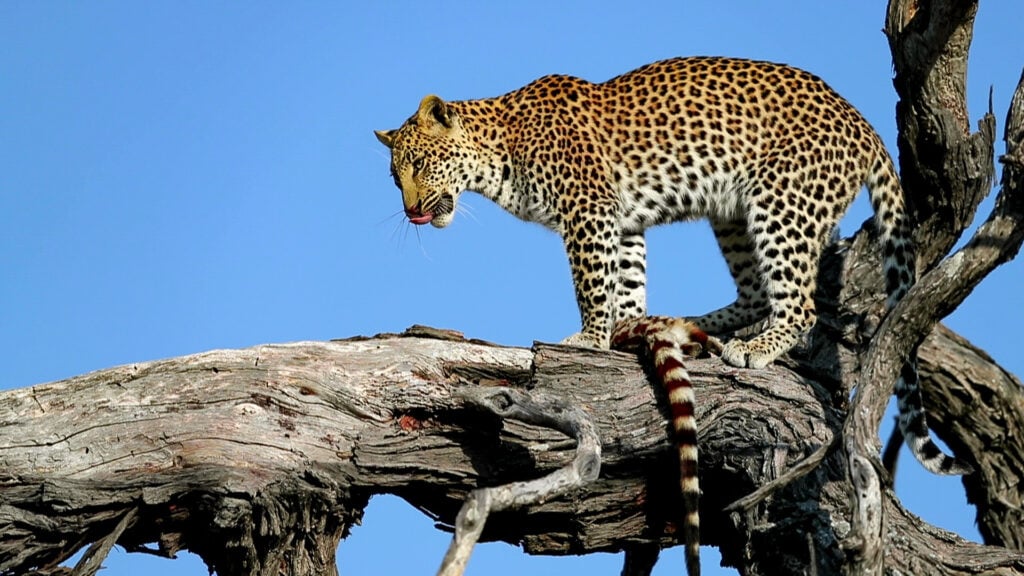
“Clearly being fascinated by the kill, he played with it, dropping it out of the tree several times only to hoist it back up and play with it again,” said Johan.
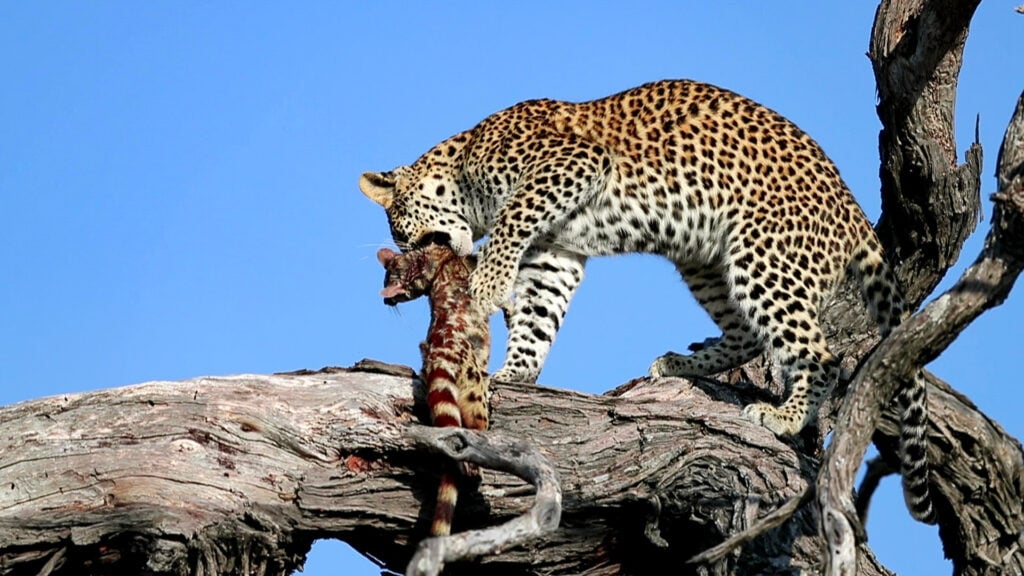
The African leopard is one of the most adaptable big cats in the world. It survives in environments ranging from dense forests to open savannas and even mountains.
It is also a solitary hunter and relies heavily on stealth, patience and explosive strength to catch prey. Because these skills take time to master, young leopards spend many months learning through practice.
Genets on the other hand, are slender, cat-like animals with long ringed tails and spotted coats. They are mostly nocturnal and are excellent climbers, feeding on insects, birds, rodents and fruit. Despite their agility, they can still fall prey to larger predators such as leopards, owls and pythons.
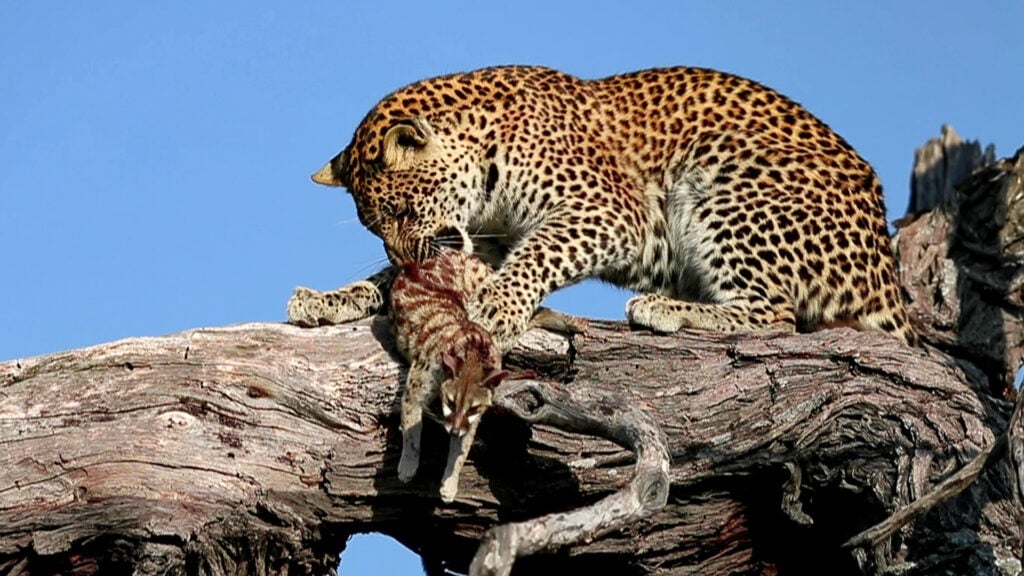
Raw emotions stirred as leopard playfully turns genet carcass
The genet clearly held the leopard’s focus and it was a heartbreaking scene to watch. However, for the leopard, this was a skill-building moment and it took the opportunity to put in its best efforts.
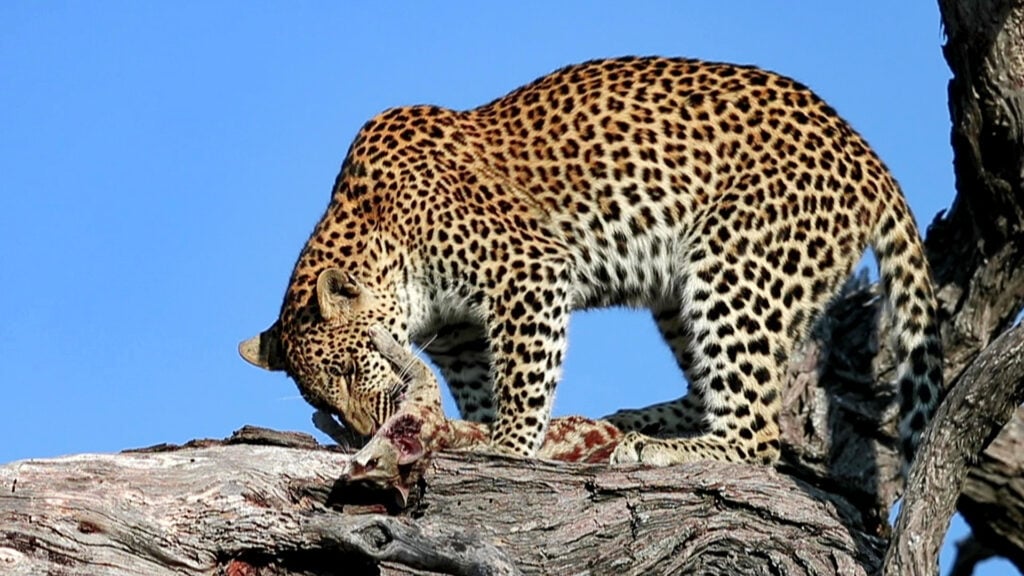
Paw strength and bite control strengthened by playful interactions
When a young leopard encounters prey that is already dead, or when it has just made a kill, it may bat, toss or drag the carcass around. This behaviour resembles play but it actually serves an important learning purpose.
Cubs and sub-adults develop their coordination, paw strength and bite control by manipulating objects. In the bushveld, these ‘games’ are rehearsals for the complex movements required to subdue live prey.

Leopard loses interest in genet
The leopard eventually dropped the genet, but this time did not go down to pick it up so that it could resume its activities. According to Johan, the juvenile animal lost interest in the dead animal and turned his focus elsewhere.
However painful it was to watch the interaction, a wealth of understanding about leopard behaviour was gained and captured on film.


