

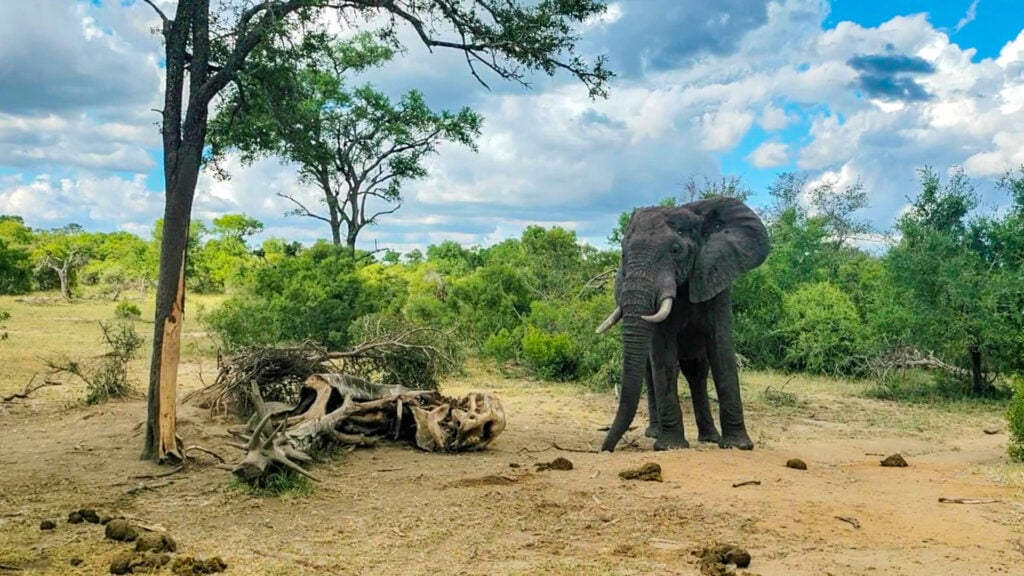
A lone elephant stood alongside the remains of one of its friends, and provided for some heartrending viewing.
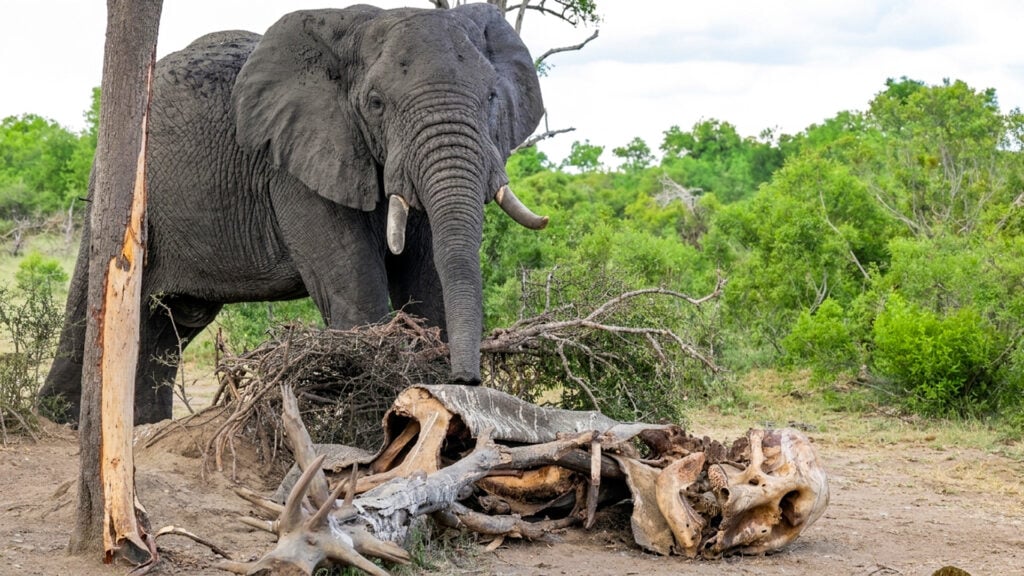
Elephants are widely recognised for their complex social structures and strong emotional bonds, and one of the most well-documented behaviours in the species is their response to death.
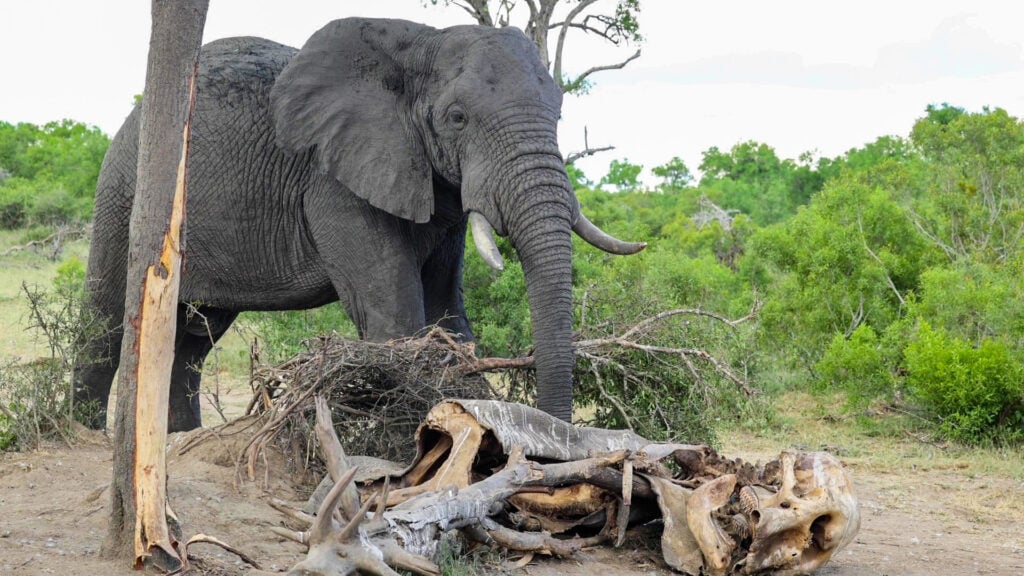
This elephant’s behaviour alongside the carcass of a deceased elephant was typical of the species.
Get our Best Sightings as they Come in
A species with strong social bonds
Elephants live in tightly bonded family groups led by a matriarch. These groups are typically composed of related females and their offspring, and individuals may remain together for decades.
Because of these long-term associations, elephants form strong social attachments, and the loss of a group member can have a noticeable impact on their behaviour.
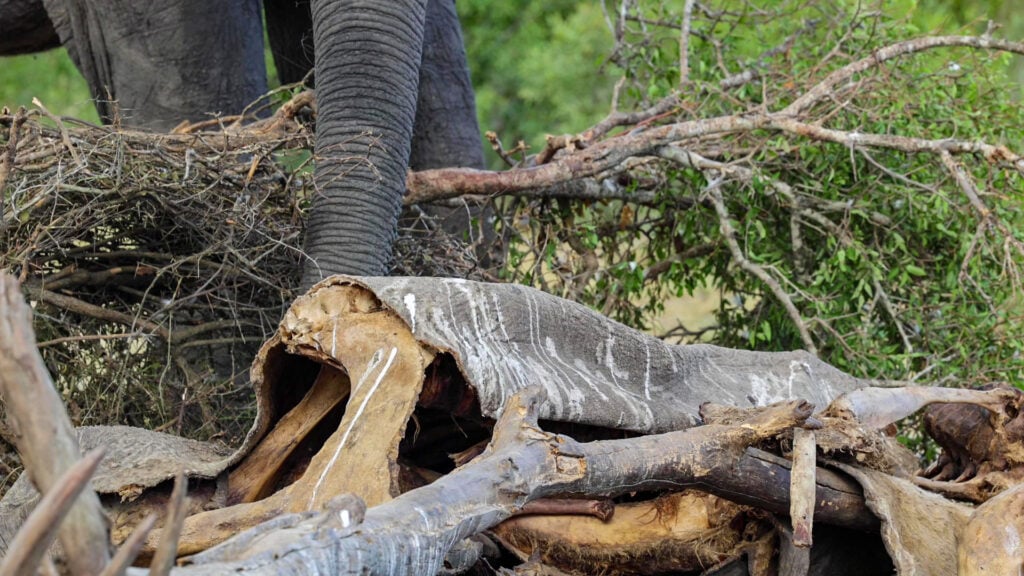
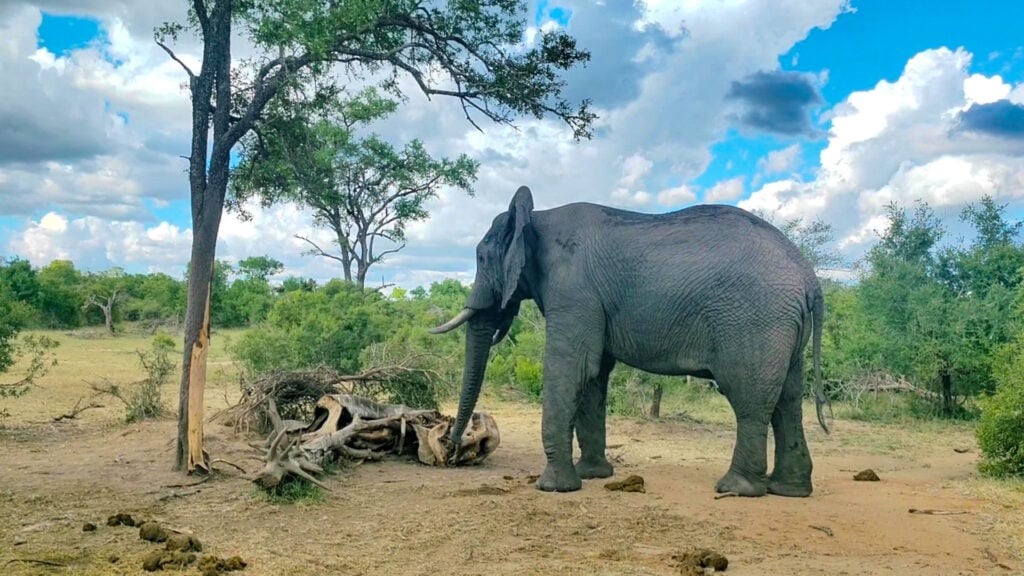
Elephant uses trunk to investigate carcass
When an elephant dies, other elephants in the group often respond in a specific way, as demonstrated by the behaviour of this elephant.
The elephant approached the body cautiously and spent some time investigating it. Most of the investigating was done using its trunk. Elephant trunks are highly sensitive and capable of both tactile and olfactory perception.
When a herd member dies, elephants may touch the face, tusks, and mouth of the deceased individual, often repeatedly. This behaviour suggests recognition and an attempt to gather information about the condition of the body.
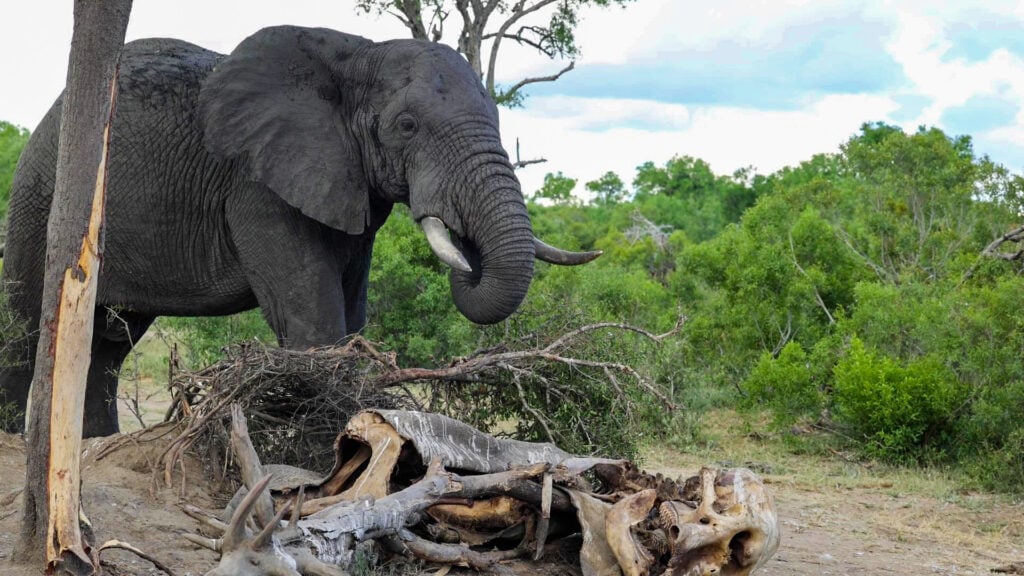
Elephant lingers alongside deceased friend
The elephant lingered around its friends carcass, which is also typical behaviour shown by elephants in the event of death.
In many cases, elephants will remain near the dead individual for hours or even days. They may stand quietly beside the body, sometimes with lowered heads and minimal movement.
This stillness is notable because elephants are typically active animals, especially in the context of foraging and social interaction. The reduction in normal activity indicates a shift in behaviour which aligns with what researchers interpret as a response to death.
Somber mood colours sighting experience
The somber mood of the elephant in this sighting was palpable. While the elephant would eventually move on, it would more than likely return to the same site in due course.
Elephants will often return to the site where an elephant has died. Even after the body has decomposed or been scavenged, elephants have been recorded revisiting the area and interacting with the remains, particularly bones and tusks.
They may even pick up bones with their trunks and carry them for short distances.
‘Grief-like’ behaviour typical of elephant species
This sighting provided an exquisite glimpse into the complex behaviour of elephants.
Scientific studies in the field of animal behavior and cognition, particularly within ethology, have examined whether these responses can be classified as mourning.
While researchers are cautious about directly equating animal behaviour with human emotional experiences, there is broad agreement that elephants display a form of grief-like behaviour. This includes recognition of death, altered social interaction, and prolonged attention to deceased individuals.
This sentimental, poignant behaviour is one of the many reasons we love elephants and why they are so interesting to watch.


