

For many, the ultimate thrill while on safari is getting up-close-and-personal with Africa’s iconic wildlife. Social media is awash with videos of people getting very close to potentially dangerous species.
Likewise, you’ll find many examples of things going wrong when people take unnecessary risks out of ignorance or bravado. These incidents happen at both public and private reserves.
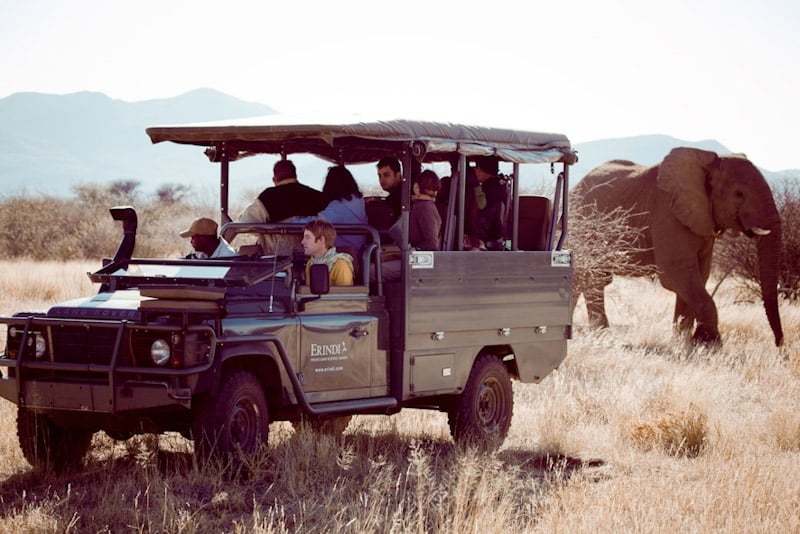
However, these videos often lack context or information about whether the person who filmed the sighting undertook it ethically.
Planning your safari trip?
We are the safari experts! Contact us for any tips or advice to make your safari trip as sightings-filled as possible!
Email us at contact@latestsightings.com
A privilege, not a right
Before we dive deeper, it is important to acknowledge that viewing wildlife is not a right, but a privilege. These are living, sentient beings on whose lives we are intruding by our mere presence. As such, maybe the question should be, “How far is close enough?”
After all, since both public and private reserves generally forbid contact with wildlife, we have to ask if extremely close encounters provide a tangible benefit to visitors beyond a thrill. The short answer is no. And almost certainly not for the animal concerned.
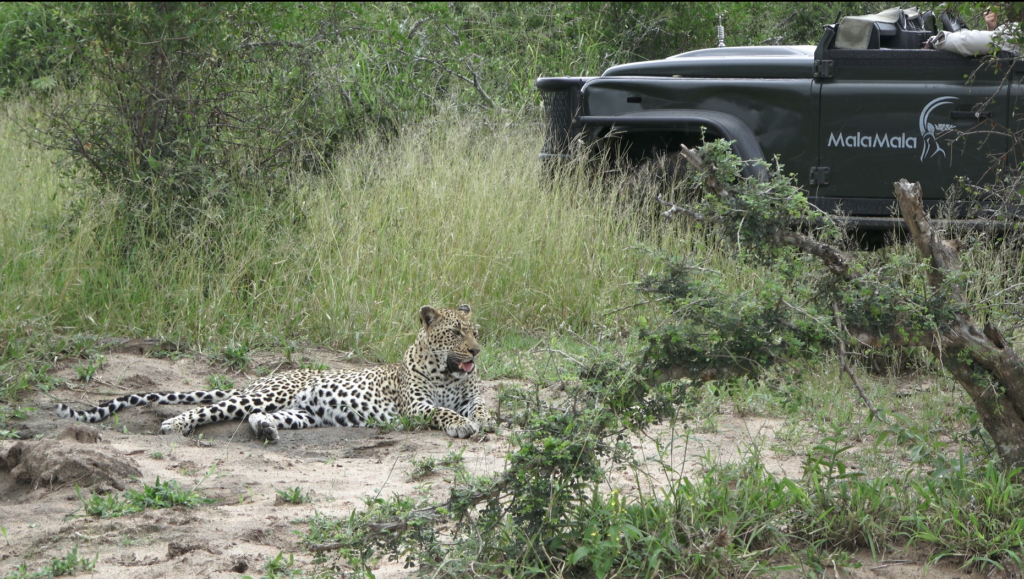
By definition, ethical wildlife viewing occurs when a wild animal behaves as it would if you were not there.
Put simply, if their behaviour changes significantly when you arrive, you’ve made them feel uncomfortable and should back off as soon as possible.
What the law says
In the interests of animal welfare and public safety, the South African government has strict guidelines for sighting distances. They are as follows:
- General game – 20 metres +
- Elephants & buffalo – 25 metres +
- Lions – 100 metres +
However, as you’d expect, since most sightings occur in remote areas, these rules are near-impossible to enforce proactively. Instead, individual compliance, whether from a professional or a layperson, determines adherence to the rules.
According to officials, these are not arbitrary distances. They exist to prevent stress in animals and reduce the likelihood of dangerous encounters. It is worth noting that when humans are injured or killed, the “offending” animal is often destroyed too.
Sightings in public vs. private reserves
Ostensibly, officials enforce rules more strictly in public reserves, such as the Kruger National Park.
Here, visitors must stay in their vehicles on a designated road network. Accordingly, it is up to the animals to decide how close they want to be to these marginal areas.
That said, with thousands of vehicles passing daily, many species become habituated. As a result, one can experience sightings at a very close proximity.
A key difference in private reserves, such as the Sabi Sand and Timbavati, is that professional guides manage sightings.
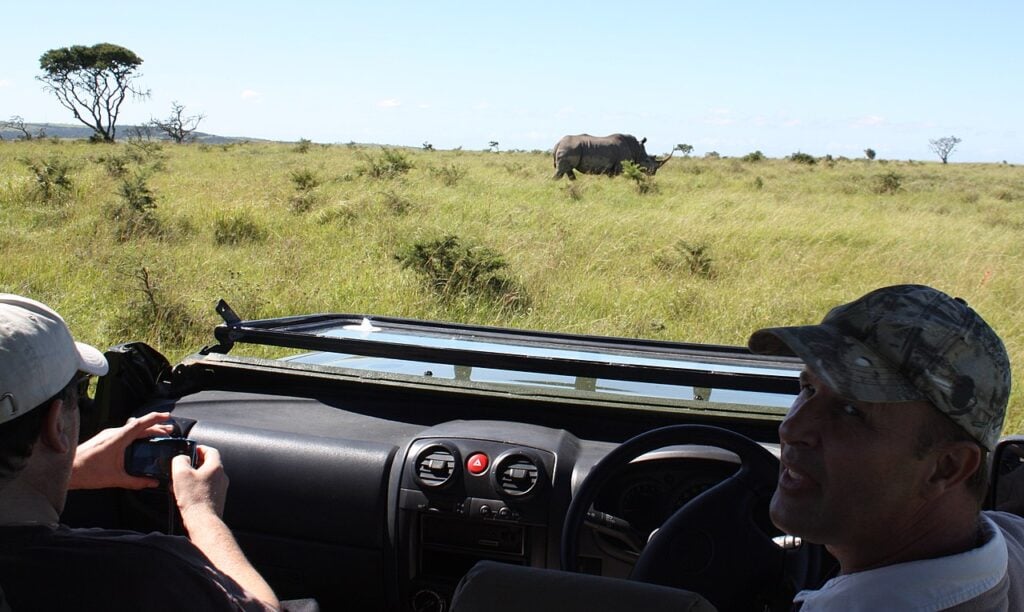
Here, they operate under the guidelines of their employer or the landowner. Generally, this means they have more flexibility, including off-road driving.
This means that guides can approach wildlife in hard-to-reach places, ideally using their training and discretion to maintain animal welfare standards.
In theory, the lower traffic volume at sightings leads to more relaxed animals, allowing for more personalized, intimate viewing opportunities.
Get our Best Sightings as they Come in
Factors affecting wildlife proximity
Several variables determine how close you’ll get to animals.
Key amongst these is what is known as a comfort zone. This is an imaginary zone around an animal within which it feels safe from or threatened by other animals.
For instance, an impala may tolerate a zebra being a few feet away, while it will feel unsafe if a predator were at an equal distance.
When threats encroach on this zone, the freeze/fight/flight instincts take over. Depending on the level of habituation, therefore, wildlife will apply similar principles to their interactions with humans and vehicles.
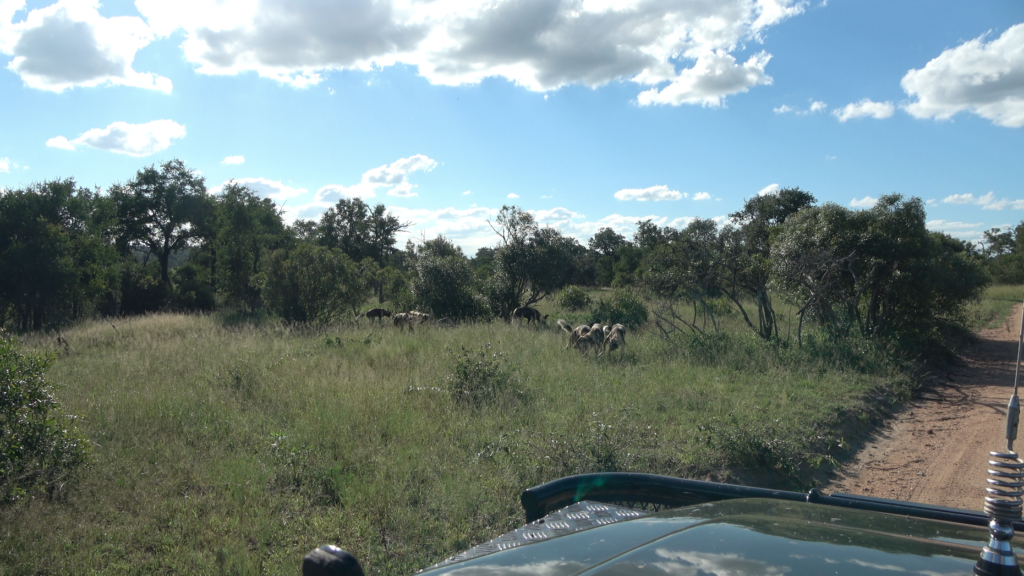
Additionally, animal behaviour will vary throughout the day and in relation to the vegetation type and weather.
For example, a wildebeest in an open clearing on a still day will be more relaxed than when it is in a thicket on a blustery night.
Additional factors may include existing human-wildlife conflict (hunting and poaching), the presence of young animals, and how the animal is approached.
Tips for optimal wildlife viewing
Since individual species are part of a greater ecosystem, to observe their natural behaviour, it is better done at a reasonable distance.
Having the patience to allow an animal to decide what it wants to do will ensure a more authentic encounter. Wildlife should never be harassed or coerced in any way.
Professional guides read animal behaviour to predict movement, then position themselves to witness the outcome in such a way that they do not block or otherwise interfere. This is especially important when watching a hunt in progress.
It is also recommended that loud noises and sudden movements be avoided to avoid startling the wildlife.
Where possible, approach wildlife slowly and at an angle. Direct and/or rapid approaches normally cause animals to flee.
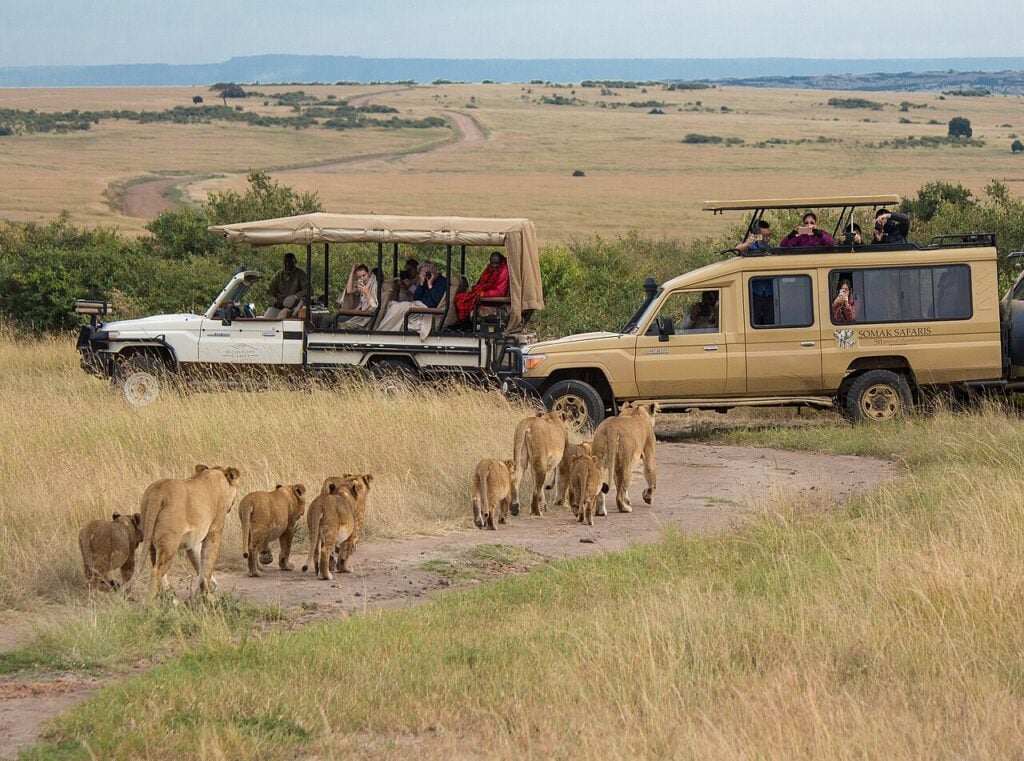
If the animal displays erratic or aggressive behaviour, move away slowly until it settles again to re-establish the comfort zone.
Most importantly, never compromise on safety for the sake of a selfie or “perfect” photograph. Also, refrain from pushing your guide to break the rules.
At the end of the day, the magic of safari lies in experiencing a genuine connection with Nature. Would you rather watch a leopard groom her cub at 25 metres or see the tip of its tail disappear into a thicket at 5 metres?
Perhaps the best thing you can do to ensure game viewing satisfaction is to educate yourself about animal behaviour, follow the regulations in place, and respect both the animals and people sharing the encounter with you.


