

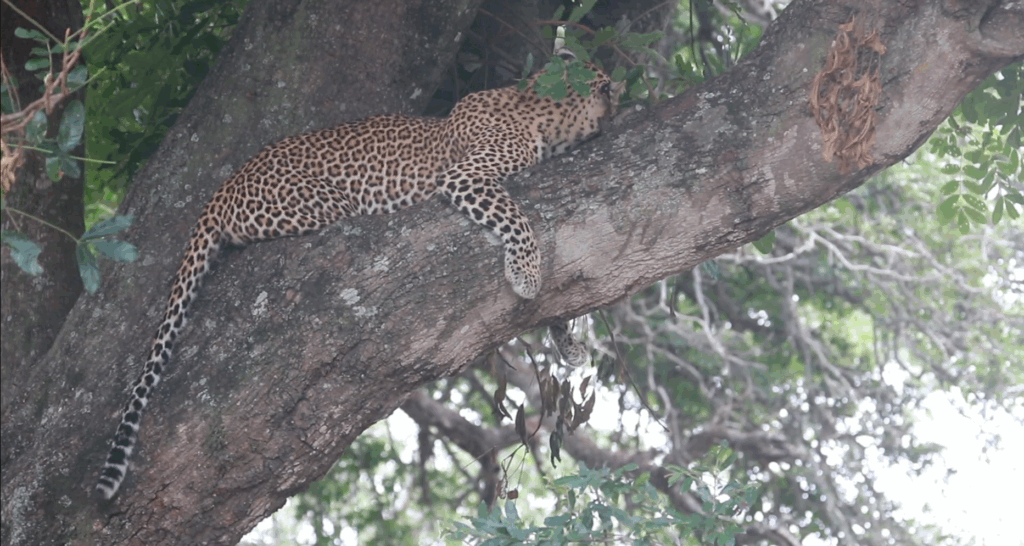
Arguably the most sought-after member of the Big Five, leopards are also the most difficult to find. For the most part, they live solitary lives, during which they are most active at night.
Furthermore, their spotted coats provide near-perfect camouflage, especially in the denser habitats that they prefer.
Even so, they are the most widespread of Africa’s large carnivores, found in a variety of habitats across sub-Saharan Africa and parts of North Africa.
In this article, we’ll share tips about how to go about finding these enigmatic predators in South Africa’s Kruger National Park.
Latest Sightings app
Before we do, though, remember that one can get real-time updates of animal sightings in the park by using the Latest Sightings app.
But if you prefer to do things the old way, read on.
Kruger leopard population
Between 1,000 and 1,500 leopards live in the Kruger National Park, with an estimated density of 7.7 per square kilometre. Considering that the park covers 19,485 km², the chances of finding one seem disproportionately slim.
Nevertheless, Kruger and its neighbouring private reserves rank among the finest places to see them. So, by simply being there, you are on the right track.
Prime habitat
Kruger is blessed with vast stretches of prime leopard habitat along its rivers. Accordingly, you’d do well to start your search by travelling along any of the roads that run adjacent to them.
In southern Kruger, most sightings occur along the H4-1, between Lower Sabie and Skukuza.
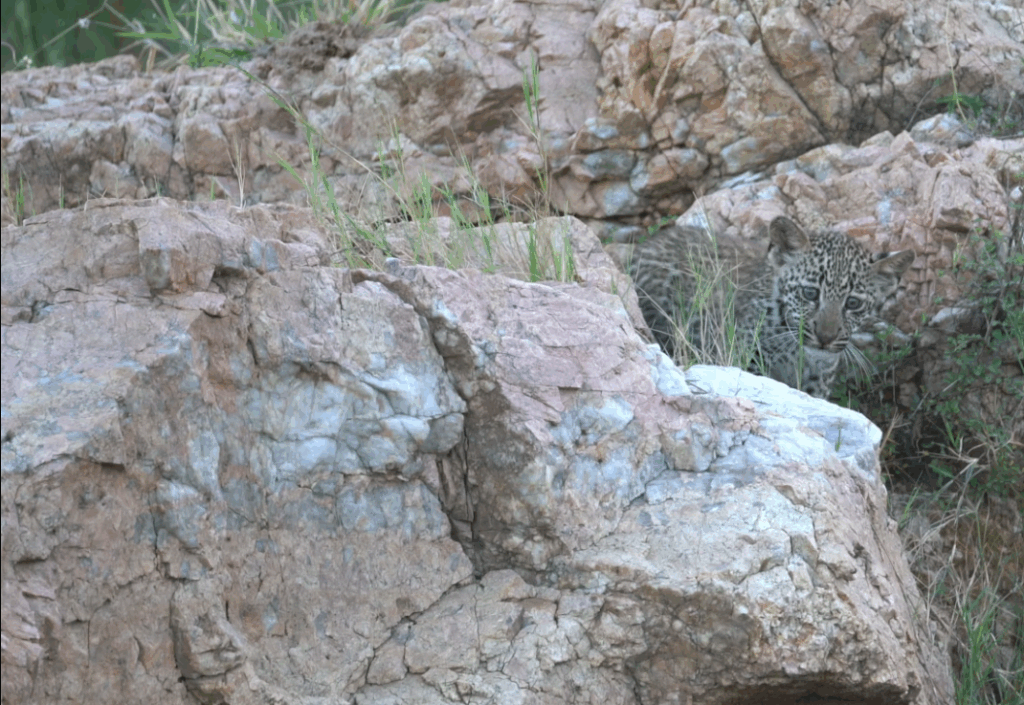
Good sightings are also recorded between Pretoriuskop and Berg-en-dal, particularly on the granite outcrops common in the area.
In the central grasslands, they are often seen in the large trees near Tshokwane Picnic Site. Regular sightings are also reported along the S100 between Satara and Nwanetsi.
Further north, the river roads near Olifants and Letaba can be productive. The S50 and S56 near Shingwedzi also yield good results.
While the above areas mostly reflect riverine habitats, bear in mind that leopards don’t confine themselves to specific habitats. You might spot one up a tree in the middle of an open grassland.
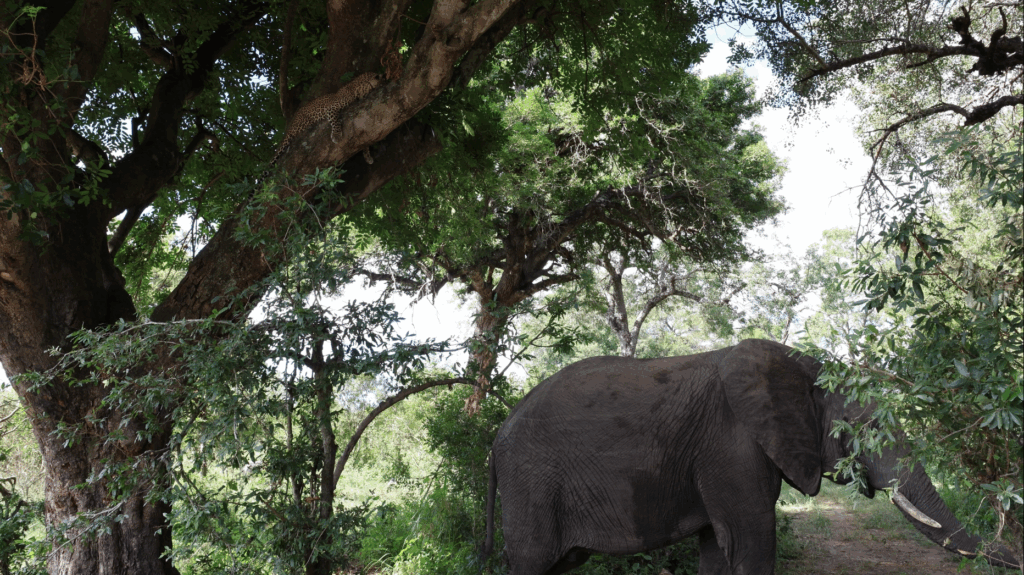
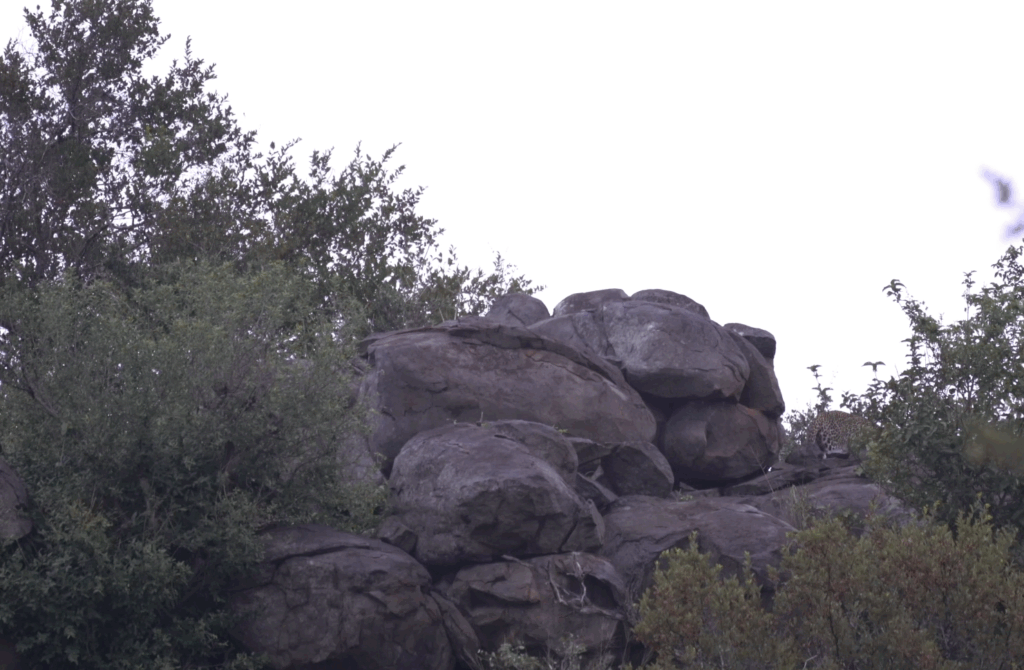
Leopards often climb rock outcrops, trees, and termite mounds, which they use as vantage points to spot prey. So, be sure to scan these as you proceed.
Get our Best Sightings as they Come in
Food and water
As predators, it is safe to assume that where prey is plentiful, your chances of seeing a leopard increase. This is especially the case during winter when game tends to concentrate near available water. A careful scan of the surrounding cover could well be worth the effort.
Also, take note of any alarm calls. Prey species, including birds and mammals, love nothing more than to announce the presence of predators.
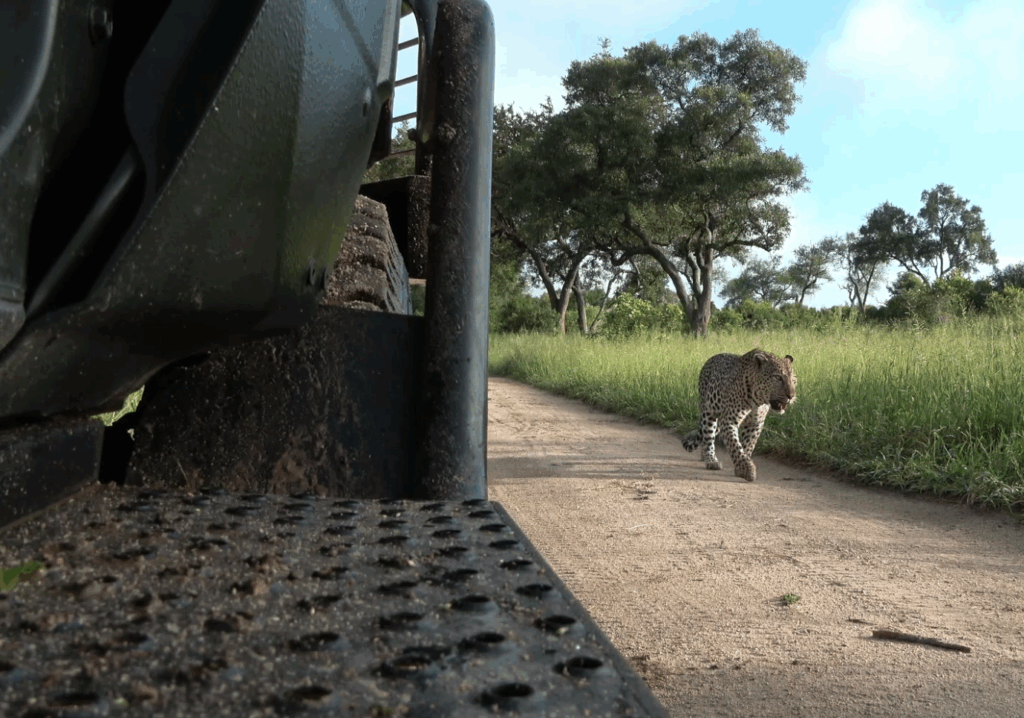
The more strident these calls are, the higher the likelihood is that the predator is on the move. So, where possible, try to locate the whistle-blower, and you might see the cause of the ruckus.
Also, familiarise yourself with the sounds leopards make. These could prove a vital clue in your search.
Leopards are most active from dusk to dawn, so consider booking a guided night game drive. Or, make sure you are among the first to leave camp in the morning.
Don’t be discouraged if the weather is inclement. Leopards love cool, windy weather for hunting.
A large part of leopards’ hunting success comes down to their patience. So, take a leaf from their book and take your time.
At worst, you might see some other interesting things. At best, you’ll be rewarded with an intimate encounter.
And, if all else fails, you could do worse than go back and try again.


