

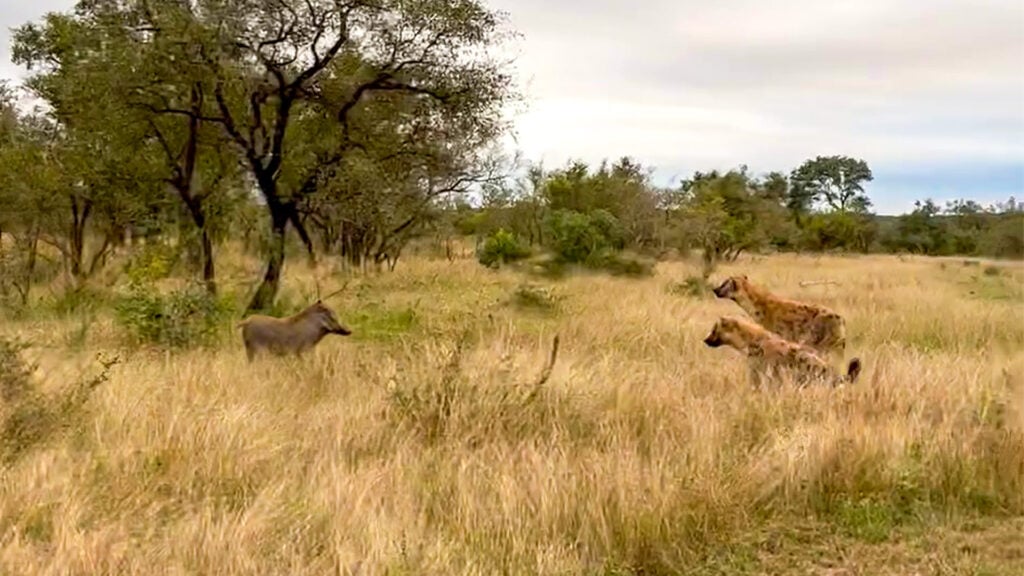
Along the H4-2, close to Numbi Gate in Kruger National Park, Marine Kruger and fellow safari-goers found themselves watching what felt like the calm before a storm. Two hyenas stood partially concealed in tall grass, their ears upright and their eyes fixed on a lone warthog.
Nothing dramatic had happened yet, no charge nor chase, but the tension was undeniable. Every muscle in the hyenas’ bodies seemed tuned toward the pig standing just meters away.
Watch the Sighting:
The warthog was fully aware of the hyena’s presence; it stood alert and ready to flee at a moment’s notice.
Closing the Distance
In a matter of seconds, one of the hyenas broke formation. It trotted forward a few strides, not a full sprint, but enough to test the warthog’s reaction.
When the warthog didn’t run away immediately, the hyena slowed into a deliberate walk. It took several steps forward with a confidence that felt calculated rather than reckless.
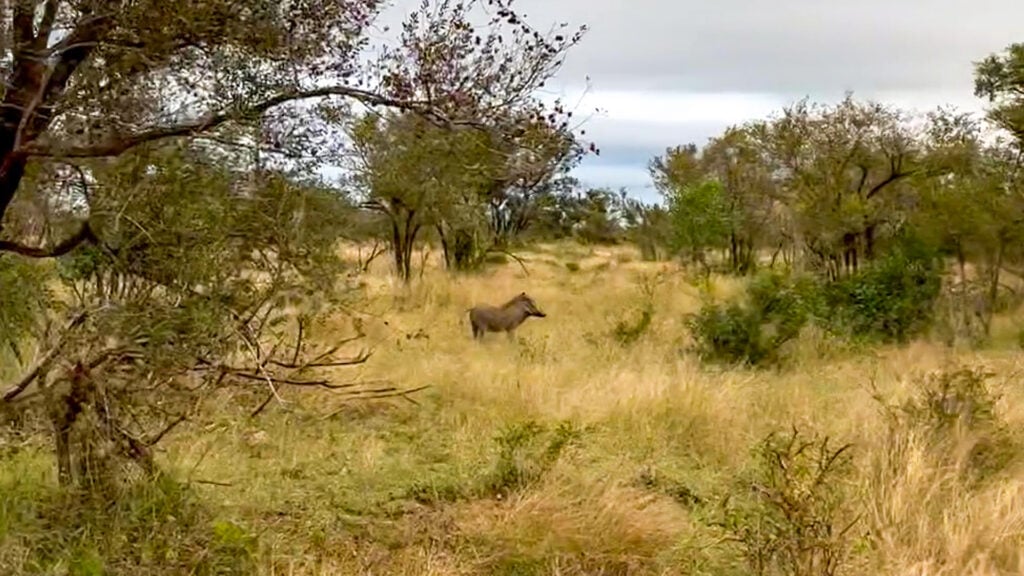
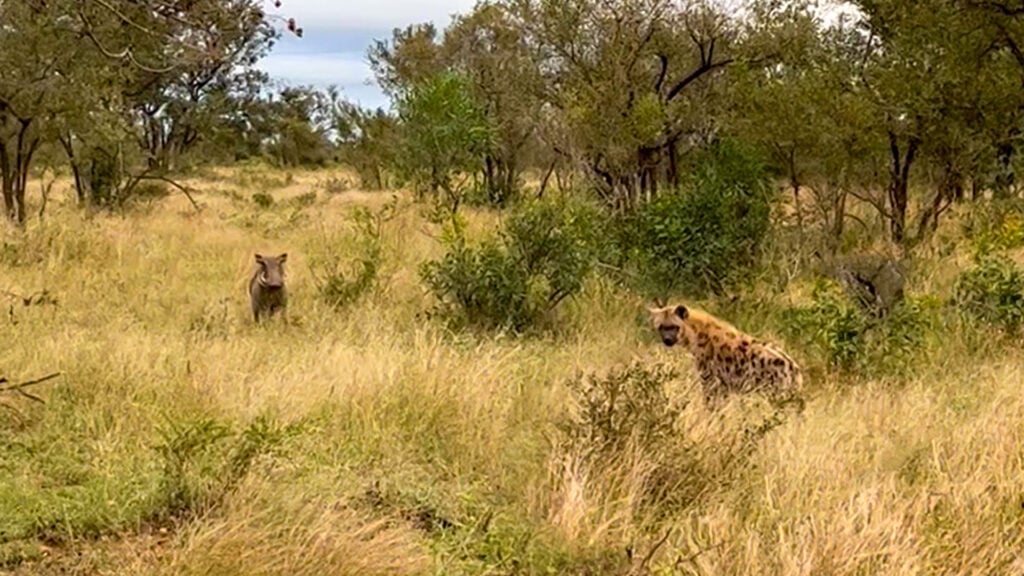
Step by step, the gap was reduced, and soon, predator and prey were standing no more than five meters apart. The warthog shifted its weight and turned fully toward the hyena.
Their bodies were squared and held in a tense standoff for several moments. Occasionally, both animals flicked their gaze toward the nearby vehicle, clearly aware of its presence.
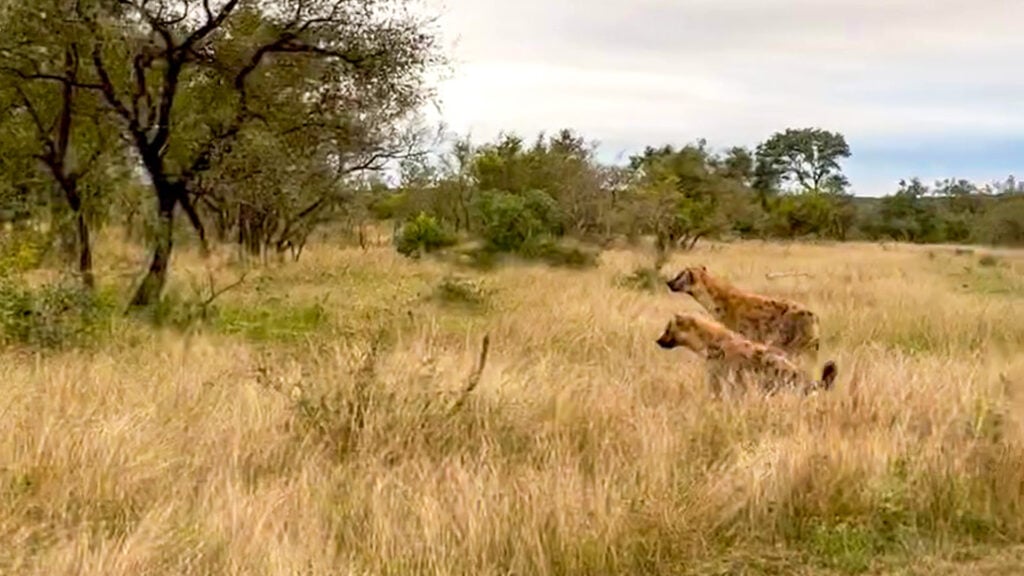
Sensing how delicate the moment was, the vehicle’s occupants switched off the engine to respect the animals.
Why This Wasn’t an Easy Meal
Warthogs are not as defenceless as they might appear. While smaller piglets are vulnerable, adult warthogs are equipped with formidable upward-curving tusks that can inflict serious damage.
Their lower tusks are sharpened constantly through friction and are capable of slashing wounds deep enough to cripple a predator. Hyenas, for all their strength and reputation, are strategic hunters.
Their bite force is immense, capable of crushing bone, but their long-term survival depends on avoiding unnecessary injury. A fracture or deep gash can quickly lead to death.
Predators constantly calculate risk versus reward, and this warthog was a large adult, alert and standing its ground.
The Psychology of the Standoff
Interestingly, many predator attacks are triggered by the movement of their prey. Prey that flee activate pursuit instincts. When prey remain still and confrontational, it can interrupt that sequence.
Get our Best Sightings as they Come in
In this encounter, the warthog held its ground and maintained eye contact. For roughly thirty seconds, the two animals remained locked in a silent negotiation.
The hyena’s posture suggested readiness, but not commitment. The warthog’s stance communicated preparedness rather than panic.
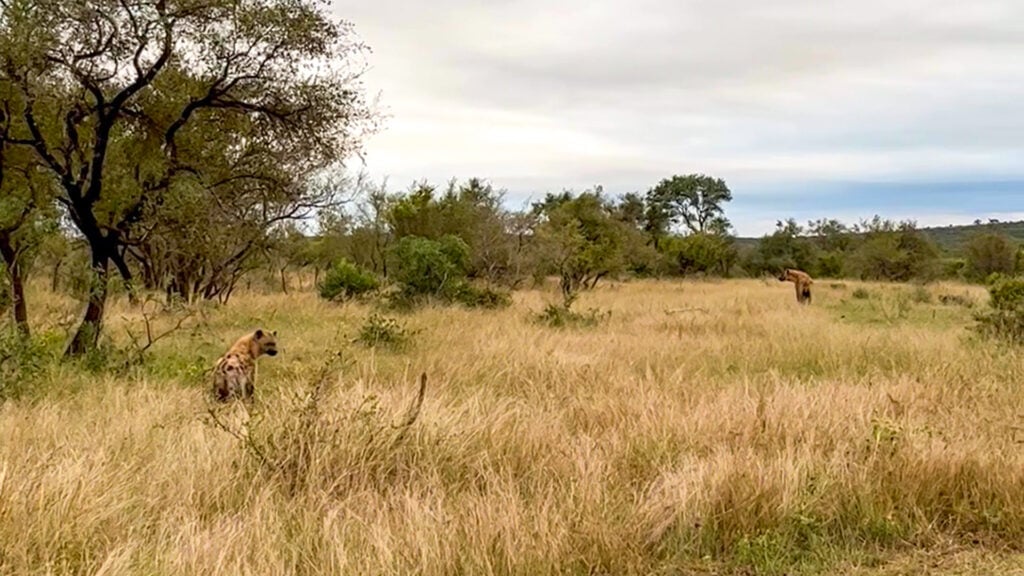
Behind them, the second hyena had already made its decision. It drifted backwards into the grass, subtly disengaging from the potential hunt.
The Decision
Eventually, the lead hyena seemed to reach the same conclusion. Without dramatic flair, it simply turned away.
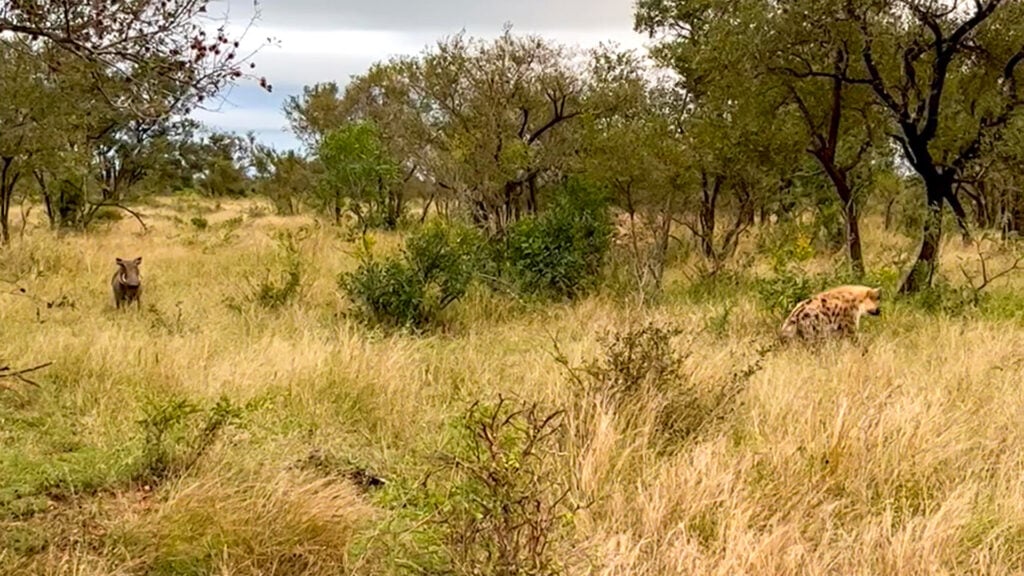
There was no bluff charge or last-second test. Just a quiet pivot and a slow retreat into the grass.
As the camera followed, it became clear that its companion was already well ahead, the hunt abandoned before it had truly begun.
Strength in Restraint
Not every predator encounter ends in violence; in fact, many do not. Energy conservation is critical in the wild, and failed hunts are costly.
Experienced predators like these hyenas understand that not every opportunity is worth the gamble. This sighting serves as a reminder that sometimes, survival belongs not to the boldest animal, but to the smartest one.


