

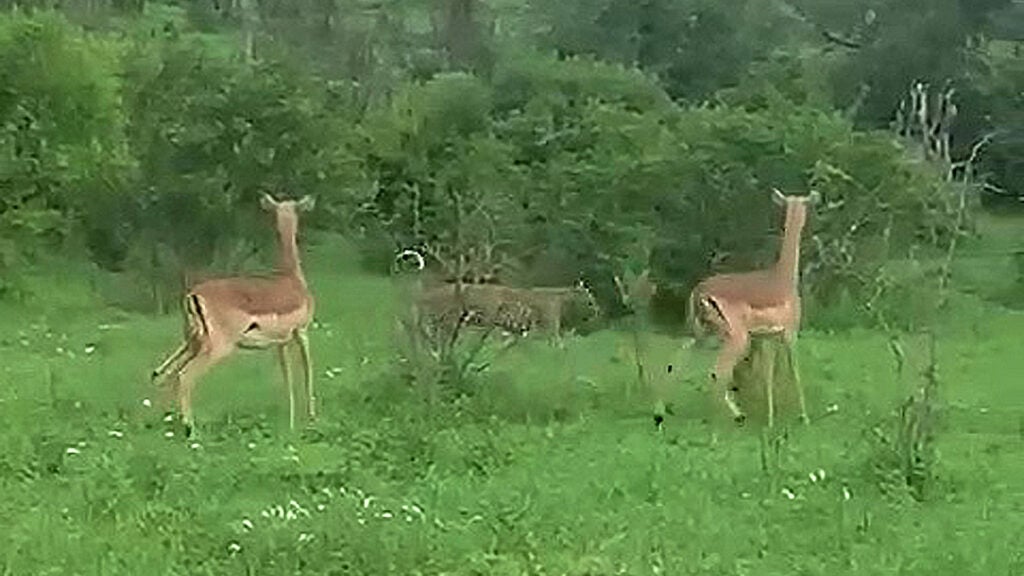
Leopards are one of the world’s most efficient ambush predators. However, as this video shows, even when they do all the right things leading up to an attack, success is never guaranteed.
Daniel Van Der Berg submitted this dramatic footage to Latest Sightings. He filmed it near Afsaal Picnic Site, in South Africa’s Kruger National Park.
No cause for alarm
Daniel’s video begins with a scene bursting with life. A pair of impalas makes their way across a lush green landscape.
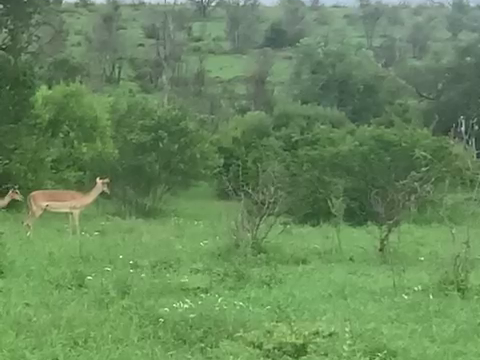
Suddenly, they stop, with one focusing its attention on a nearby bush. Try as we might, we cannot see what it is looking at.
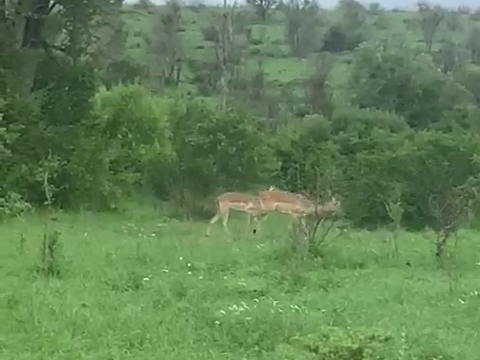
Subsequently, the pair proceeds, oblivious to the fact that amid this abundance of life, the threat of death lurks nearby.
Super-abundant, impalas feature in the diet of most large African predators. As such, they have every reason to be alert to any possible threats.
Watch this video and more like it in our Hunts Compilation:
Jolt of fear
Moments later, one of the impalas veers toward the bush mentioned earlier. Suddenly, its front legs seem to buckle, and its body tenses in fear.
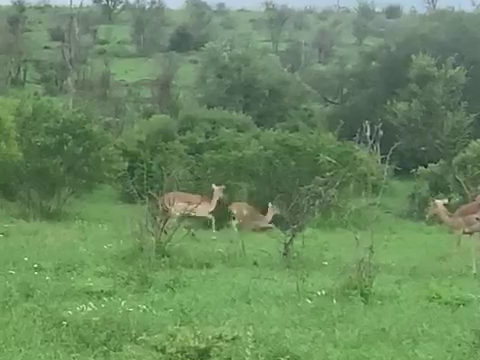
However, we still see no reason for the sudden alarm. The only thing we know is that the impala has spotted something it fears.
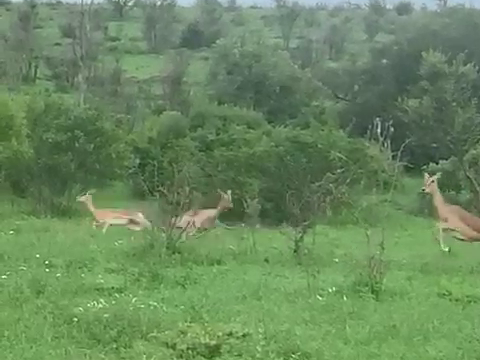
Meanwhile, the second impala and others nearby instinctively respond to the first impala’s sudden flight. Throwing caution to the wind, they flee the as-yet-unseen threat.
Bursting from cover
It is only when they separate that we see the cause of their flight. Previously all but invisible, a leopard bursts from its hiding place under the bush.
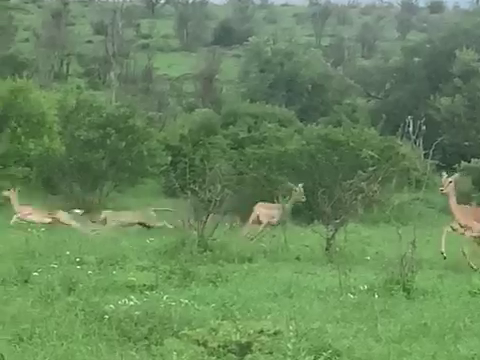
Leopards rely on a combination of a beautifully camouflaged coat and extreme stealth to ambush their prey. It’s not hard to imagine that it may have been waiting under the bush until, what it thought was, the exact moment to strike.
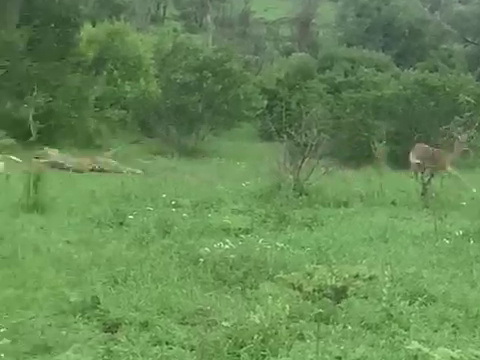
Although capable of running at speeds of 56–60 km/h (35–37 mph) in short bursts, they cannot sustain that speed for long. Accordingly, they rely on surprise to gain the upper hand over their prey.
Of course, impalas are no slouches, capable of reaching 90 km/h (56 mph) to escape predators. And it is precisely this factor that determines the outcome of the hunt.
Get our Best Sightings as they Come in
Lost cause
Despite the leopard’s best efforts, the impala widens the gap between itself and its pursuer. Meanwhile, other impalas scatter, making sure that they too get well clear of the predator.
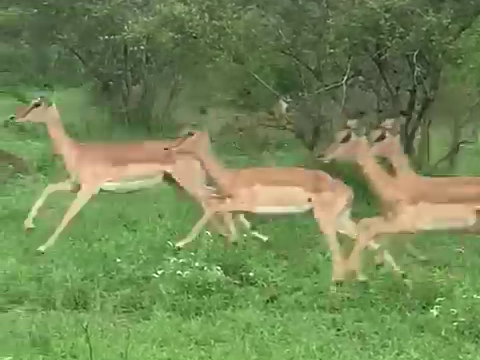
Meanwhile, in the background, we glimpse the white tail-tip of the leopard as it gives up the chase as a lost cause. A leopard’s hunting success varies between 14% to 38%, depending on various factors.
“Walk of shame”
Its best-laid plans in tatters, the leopard turns away frustrated. Exposed in the open, it commences a long “walk of shame”, even as the impala continue to flee.
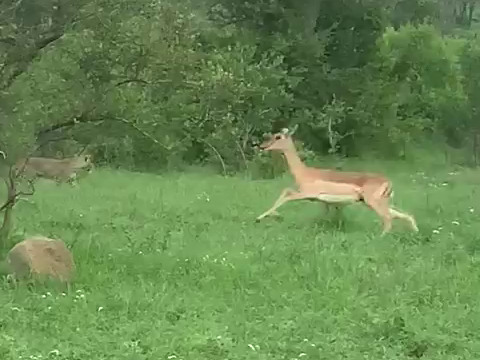
The cat knows that it has lost its advantage. Accordingly, its best course of action is to disappear. Only then can it contemplate a renewed hunting effort.
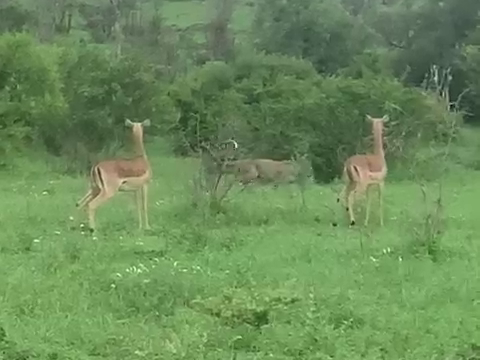
As for the impalas, who have now stopped running, they seem determined to mock the predator as it retreats.
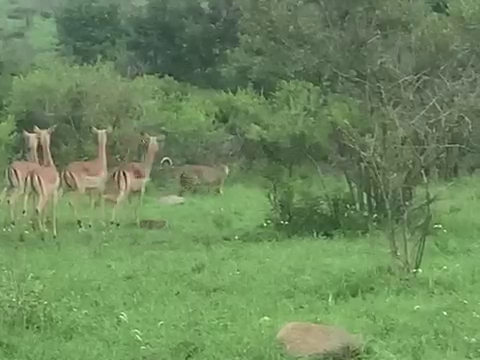
Consequently, while being careful to maintain a safe distance from the predator, they follow its progress as it heads towards dense vegetation. All the while, their snorting alarm calls announce to all within earshot that a predator is at large.


