

You’ve heard the expression: “If looks could kill”. In this special sighting, a small herd of impalas knew best to freeze and stare, stopping an approaching leopard in his tracks.
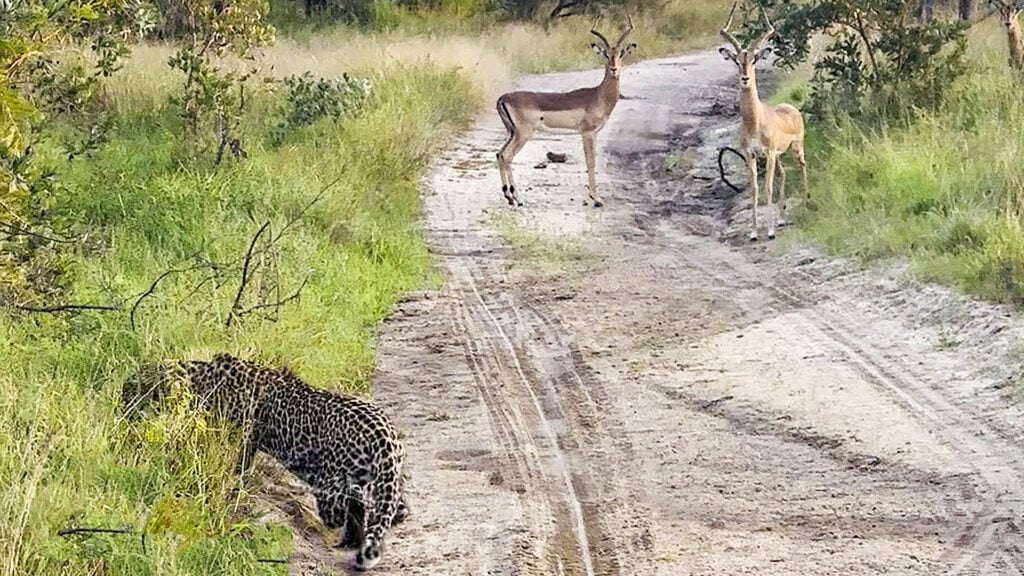
Sneaky leopard prepares to ambush impalas
The impalas had been grazing at the side of the road. This was a bachelor herd of impalas, with each member being a male, or ram.
A little further down the road, in clear view of the game vehicle, a leopard watched them; preparing to make his move.
Get our Best Sightings as they Come in
A leopard is an ambush predator. It relies on stealth, cover, and the element of surprise to hunt animals like impalas.
If a stalking leopard is clearly seen, whether by one impala or the whole herd, the hunt is usually over. This is because being viewed in plain sight, the leopard can lose its advantage.
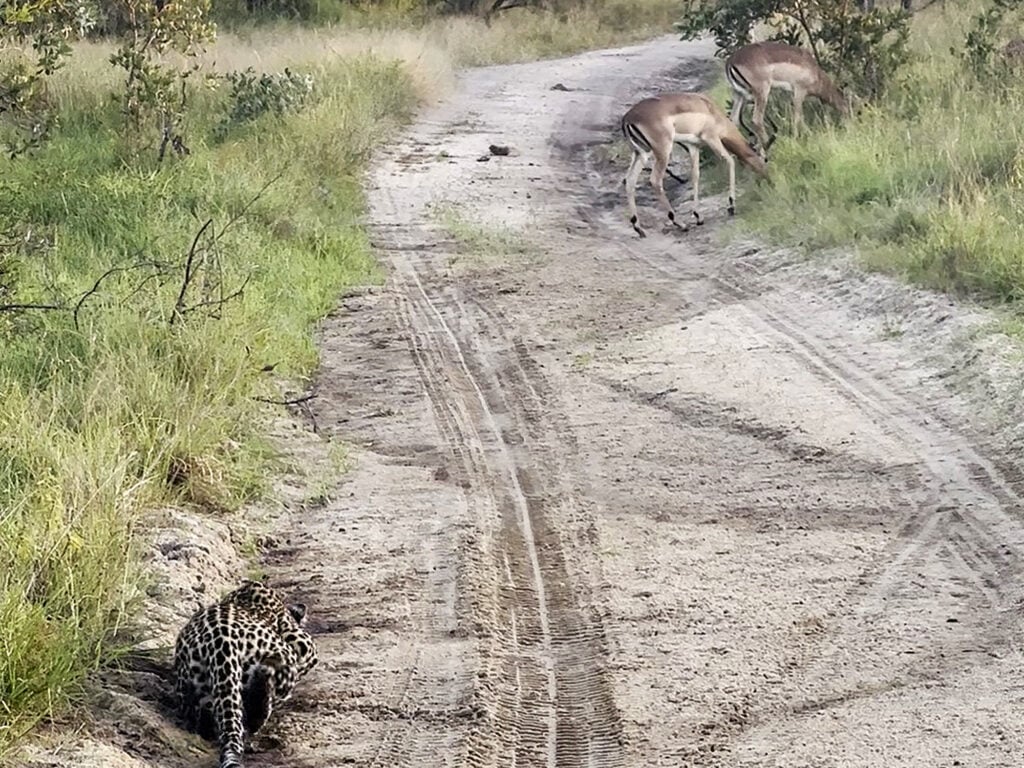
Impala rams become aware that something is wrong
This is exactly what happened here. The rams first sensed something was amiss. They lifted their heads to attention and grew still.
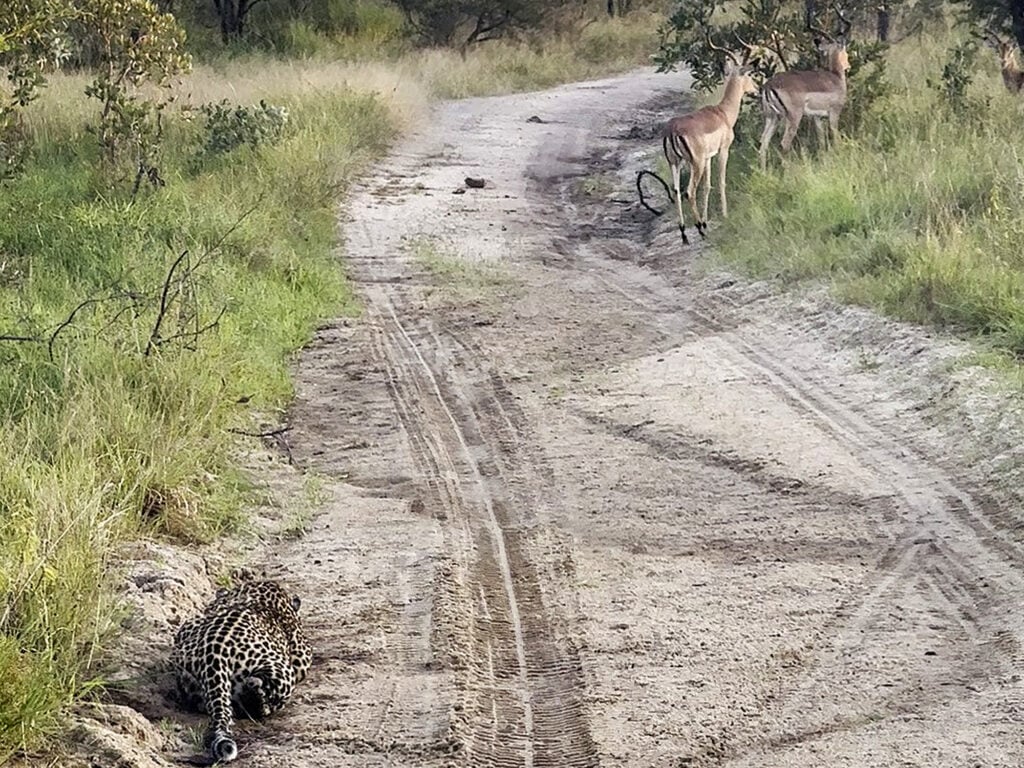
Then one of them turned to see the leopard. The sly predator had been doing a sterling job of sneaking up alongside the road’s edge, but now his cover was lifted and he crouched in clear view of the buck.
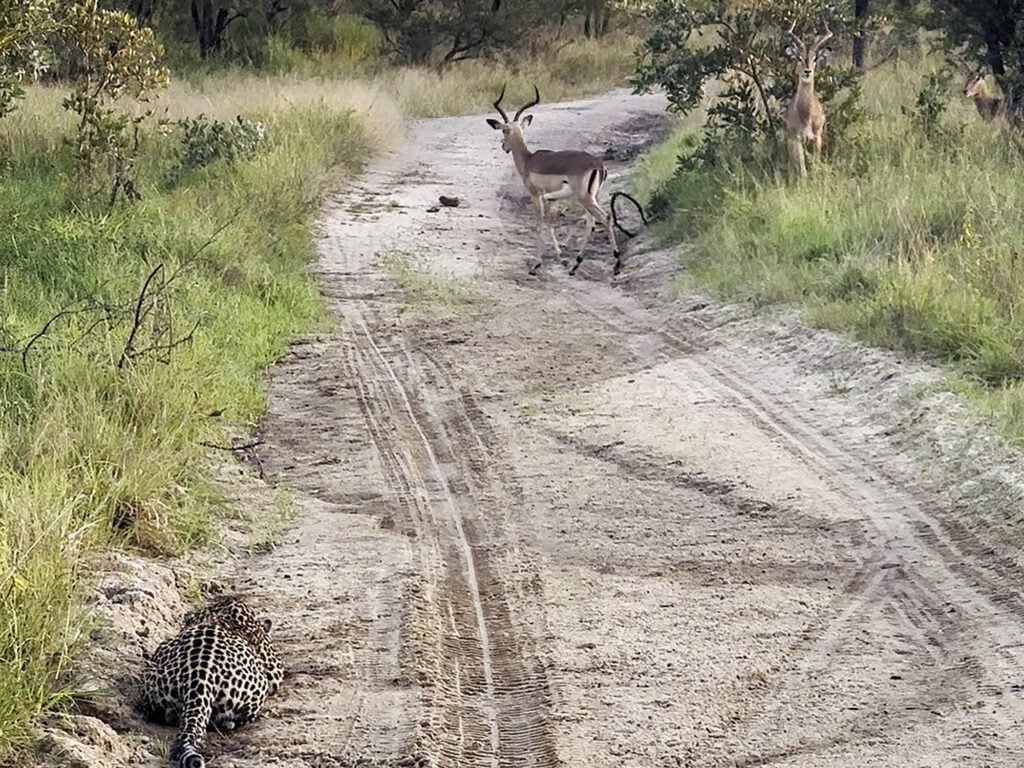
Impalas turn to stare at crouching leopard
The other rams now froze and stared at the leopard, also having become aware of his presence.
Their gaze was disconcerting. Unhidden, the leopard held their attention.
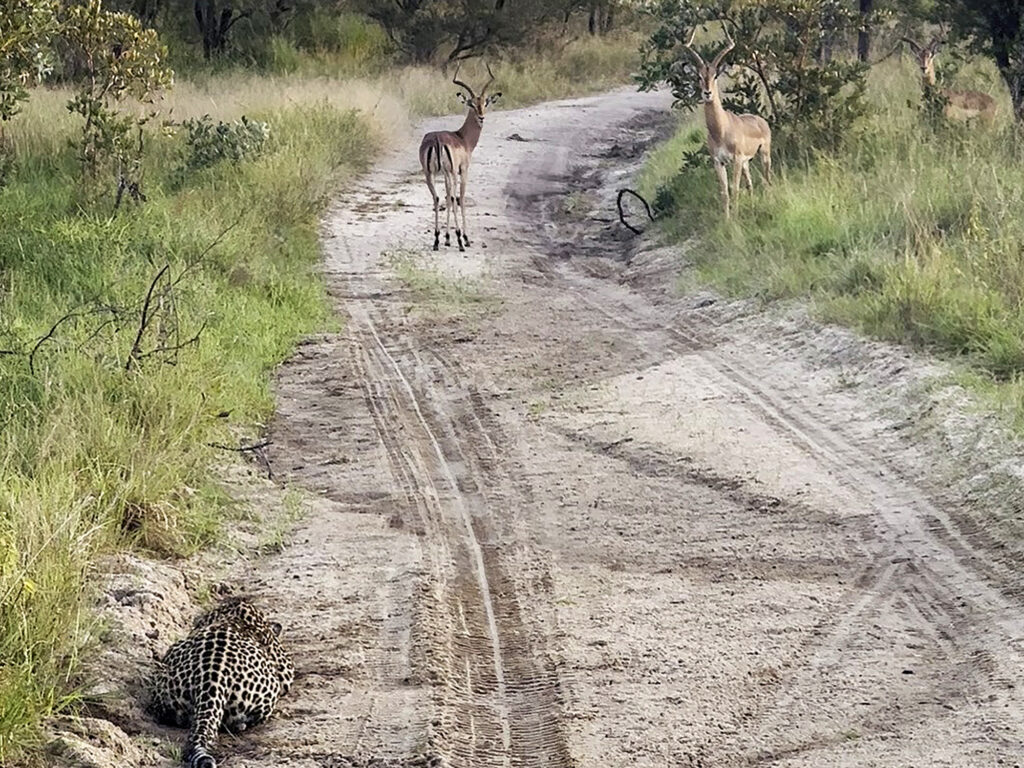
When an impala spots a predator, it often freezes and fixes its gaze in that direction. This ‘staring’ behaviour is actually a form of vigilance. It signals awareness. It’s as though the impala is saying, “I see you.”
If this was a game of hide-and-seek, the leopard had been busted. This was not good for his plans of an unanticipated ambush and he instinctively knew it.
Join Our Wildlife Alert Group
The African bush is full of intense moments like these alert impalas ruining a perfect leopard ambush just by staring. Be the first to see our newest nature footage by joining our exclusive alert list right now.
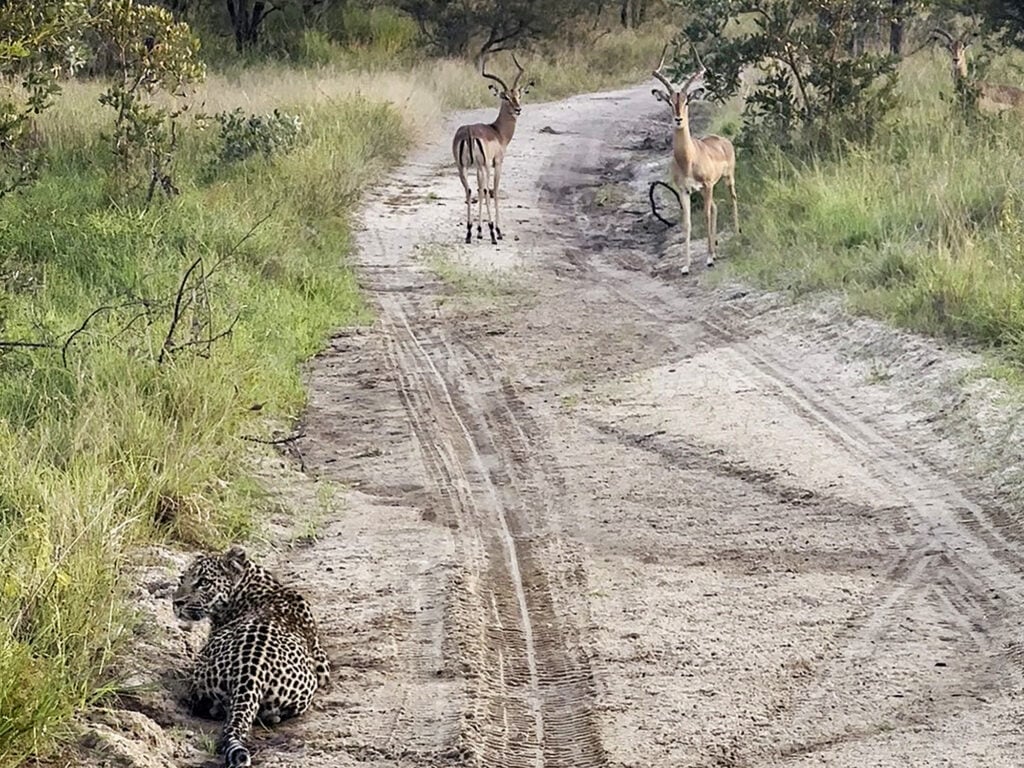
At one point, he even looked back towards the game viewing vehicle as though to say, “Oh bother!”
Many predators, including leopards, will abandon a hunting attempt at this point because chasing alert prey wastes energy and lowers their chances of success.
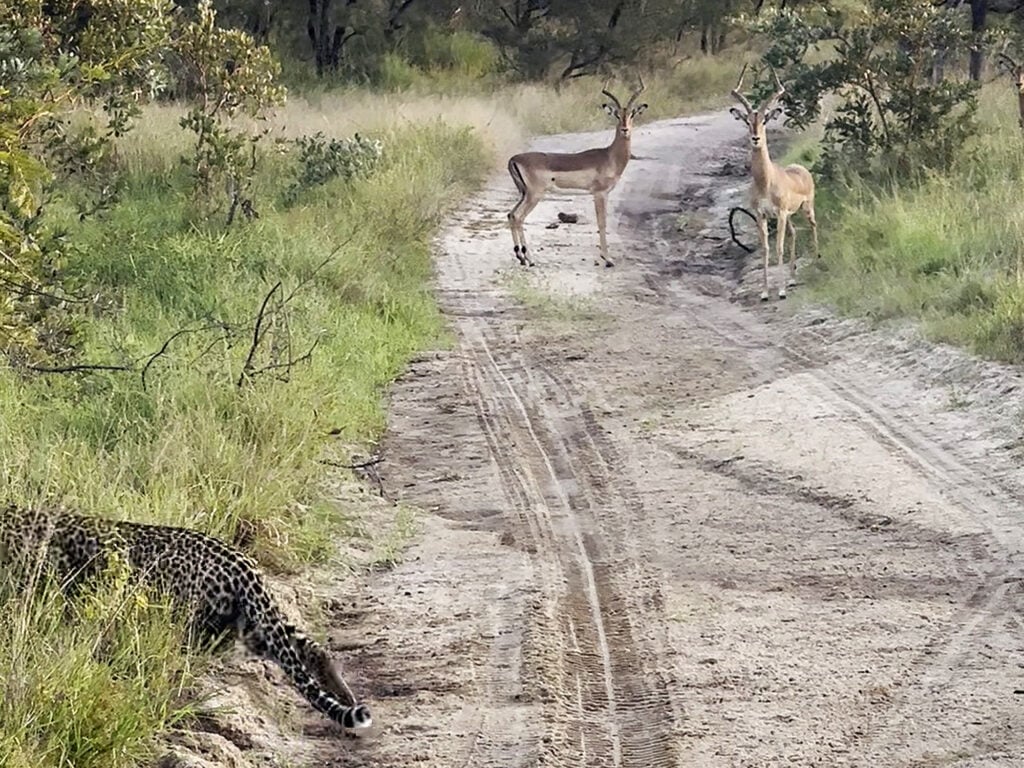
‘Busted!’… leopard stalks off into the bushes
This is exactly what the leopard did. With his cover blown, he skulked away into the nearby grass. His game was up. For this leopard, it wasn’t worth wasting his energy on a fruitless hunt.
There would be more opportunities. Perhaps stalking alongside the open road hadn’t been the best plan after all!
These impala had ‘outstared’ the fiendish predator. In impala herds, the staring effect is amplified when it is carried out simultaneously by a few herd members. Multiple impalas may face the predator, snort, or stamp, making it even clearer that the leopard has been detected.
The leopard soon disappeared from view. It wasn’t that the impala had threatened him. He had simply recognised that the odds of a successful ambush were not in his favour. His years of hunting experience had taught him how to gauge a hunting scenario and even in leaving, he had demonstrated his expertise as a hunter.


