

The video was presented to us by Luke Street from Wild Eye and provided a refreshing view of ‘safaris’ of a different nature. It was explained that in the Pantanal, game viewing centres around water, and that safaris often happen by boat!
Wild Eye offers incredible photographic wildlife safaris to the most captivating wildlife locations worldwide. Pantanal is just one of these.
Photography enthusiasts can enjoy expeditions accompanied by trained photographic guides, to explore and film the best nature has to offer.
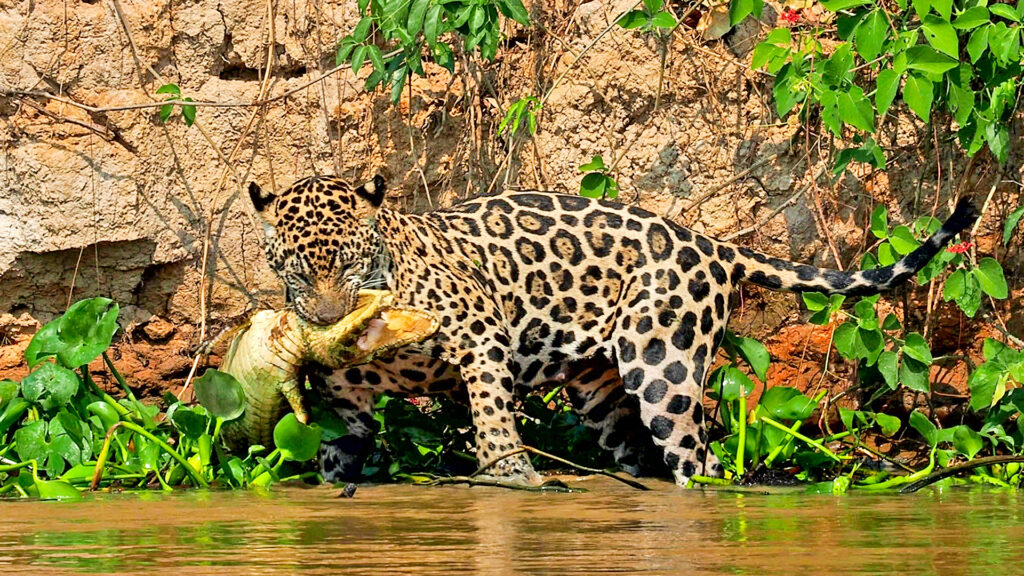
Jaguars are breathtaking creatures. If you are familiar with leopards, you will notice that jaguars share many similarities with them. Both species have golden coats covered in rosette-shaped spots.
However, each species evolved on separate continents and have distinct adaptations. Jaguars are native to the Americas, ranging from Mexico to northern Argentina, with their largest stronghold in Brazil’s Pantanal.
Leopards are found across Africa and parts of Asia, occupying habitats that range from deserts and savannas to forests and mountains.
Physically, jaguars are much more heavily built. They have broad heads, thick necks, muscular shoulders, and short, powerful legs. Adult males can weigh between 56 and 120 kilograms, with some exceptional individuals exceeding this. Leopards are slimmer and more lightly built, typically weighing between 30 and 90 kilograms depending on the region.
A jaguar’s rosettes are also larger and usually contain one or more black spots in the centre, while leopard rosettes are smaller, more tightly packed, and generally lack central spots.
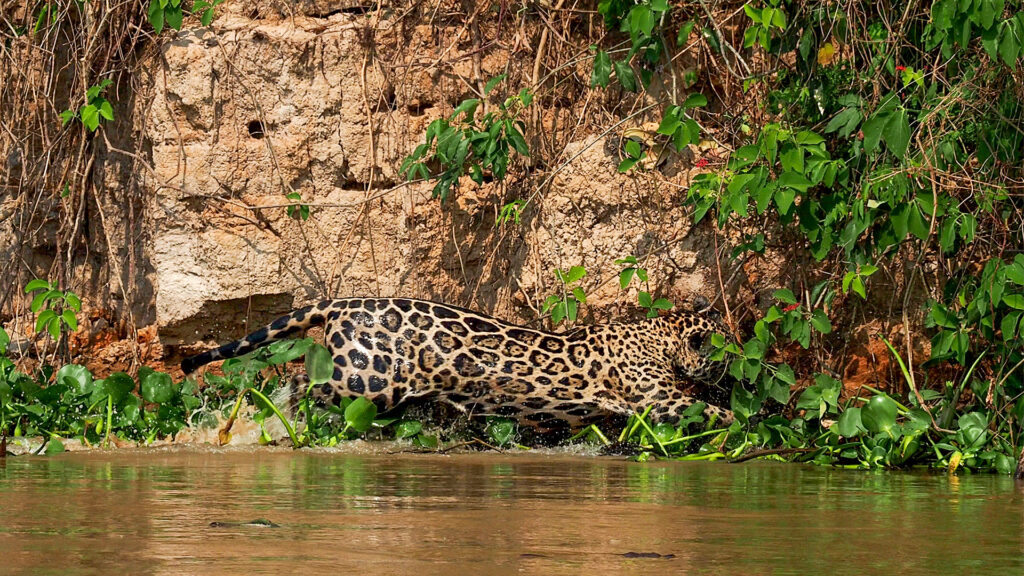
Jaguar makes a striking kill
This jaguar spotted a caiman by the river and went in for the kill.
Unlike most big cats, jaguars are exceptionally comfortable in and around water. They frequently swim across rivers, diving beneath the surface, and hunting aquatic prey.
The Pantanal is the world’s largest tropical wetland and is home to millions of caimans, making them a regular food source for the region’s jaguars.
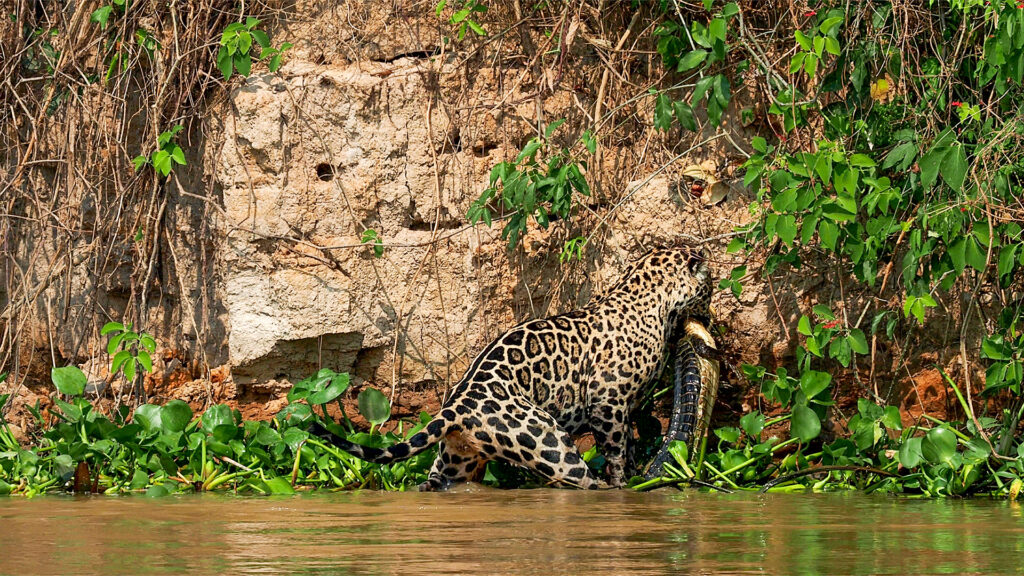
Usually, when jaguars catch caimans, the struggle can be intense. The reptiles will twist violently in an attempt to break free, while the jaguar uses its muscular forelimbs and powerful jaws to maintain its grip.
Jaguar grips caiman by the neck
This jaguar subdued the caiman with its strong jaws and the caiman’s body eventually went limp.
Get our Best Sightings as they Come in
Jaguars possess the strongest bite force of any big cat relative to their size. Rather than suffocating prey with a throat bite, they often kill by biting directly through the skull or the back of the neck, even piercing the armour of caimans.
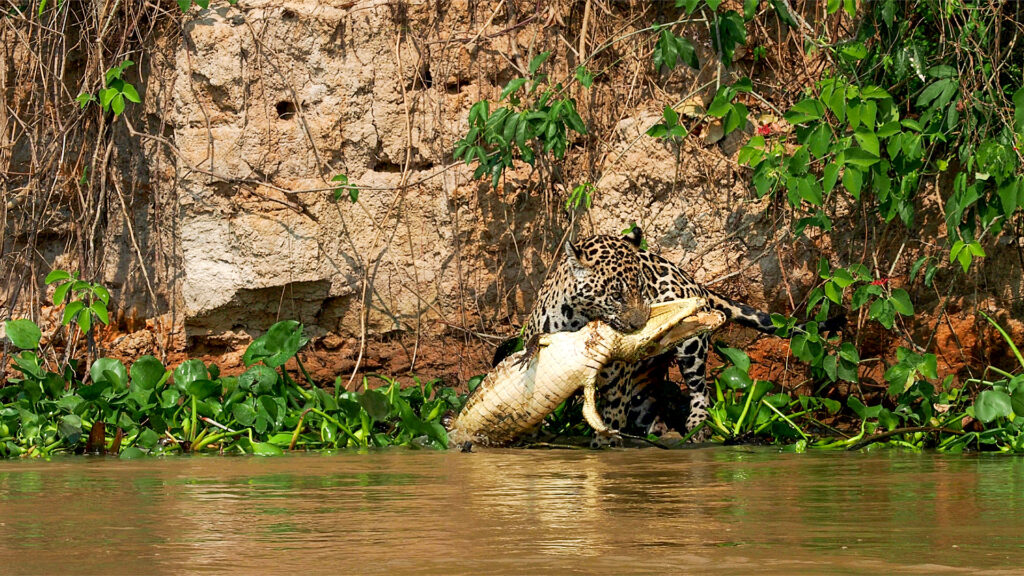
Jaguar moves to find a place to feed
The jaguar traversed the rocky areas alongside the river with the caiman in its jaws.
It was well camouflaged against the rustic shades of the rocky outcrop along which it moved.
Its jaws gripped the caiman by its throat as it dragged its body to a place where it could begin to feed.
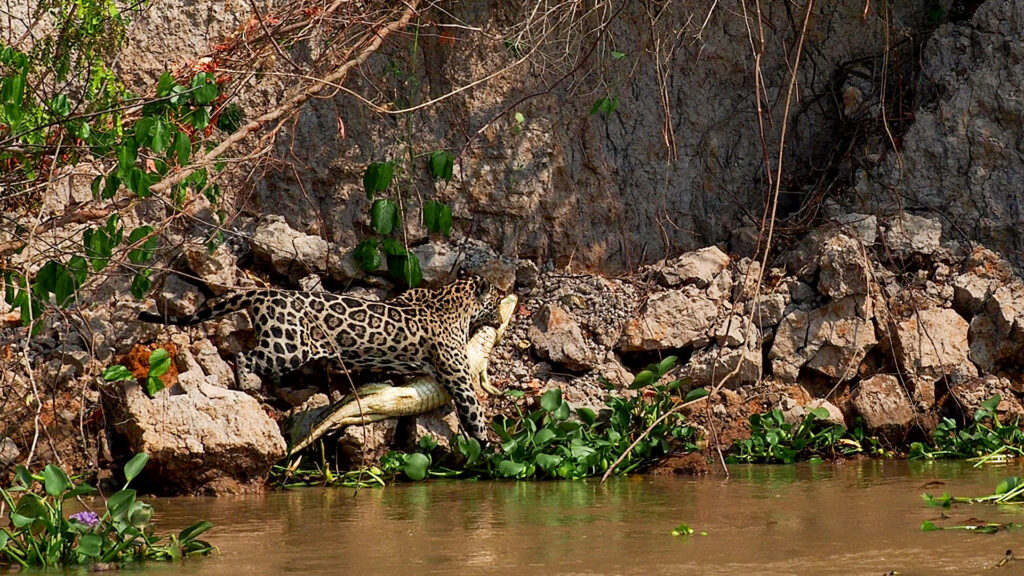
It is typical for jaguars to drag their prey onto the riverbank before feeding.
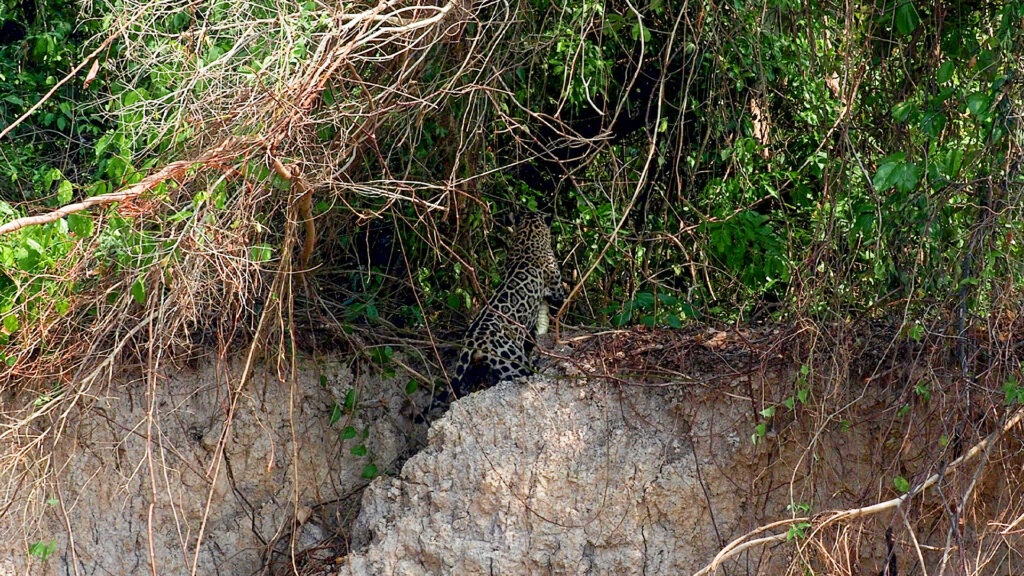
The jaguar eventually disappeared from view, with the caiman still in its grip.
The caiman is part of its typical diet, and jaguars are a natural part of the Pantanal ecosystem. They help regulate caiman populations.
These stunning predators are the main attraction of the Pantanal, and it’s not hard to see why!
Experience game viewing around the world
We offer refreshing, breathtaking views into wildlife across the globe. Join our WhatsApp group for regular sightings updates. Click here to join.


