

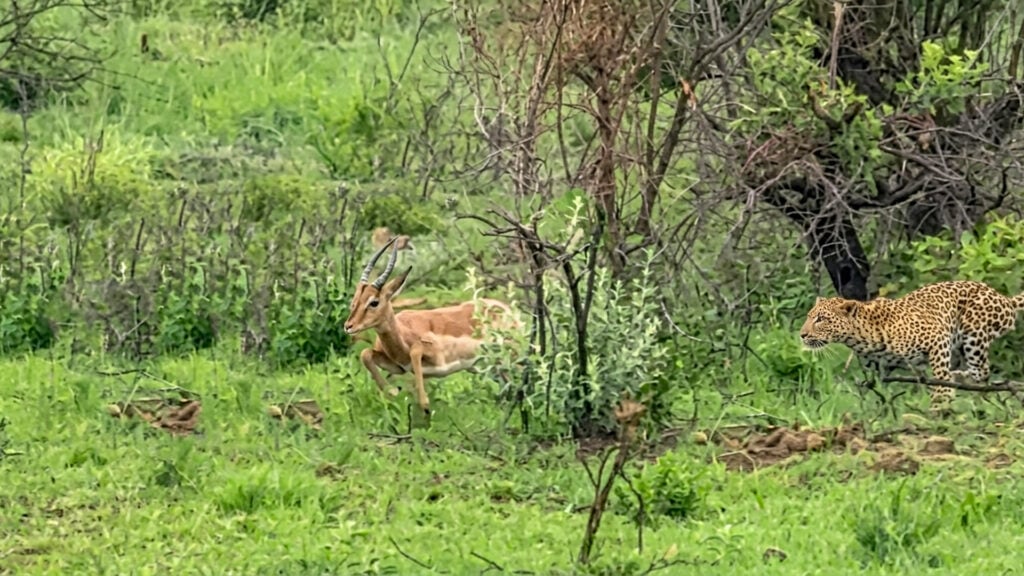
With their dappled coats, unlimited patience, power, and stealth, leopards are one of the world’s deadliest predators. However, even for them, the best laid plans can quickly go awry, as shown in this video.
Panayiotis Efstathiou submitted this bittersweet attempted hunt and sent it to Latest Sightings. He filmed it on safari at South Africa’s Pilanesberg National Park.
Unsuspecting antelope
Our story begins on a lush green meadow somewhere in Pilanesberg. We see a young impala ram browsing near some bushes.

Impalas are the most common antelope in South African parks, forming large herds that find safety in numbers. However, the unusual thing about this picture is that the impala is alone, having strayed from the herd.
Heads up!
Oblivious to all around him, the antelope continues grazing, when, all of a sudden, another creature creeps into view. Can you see it?
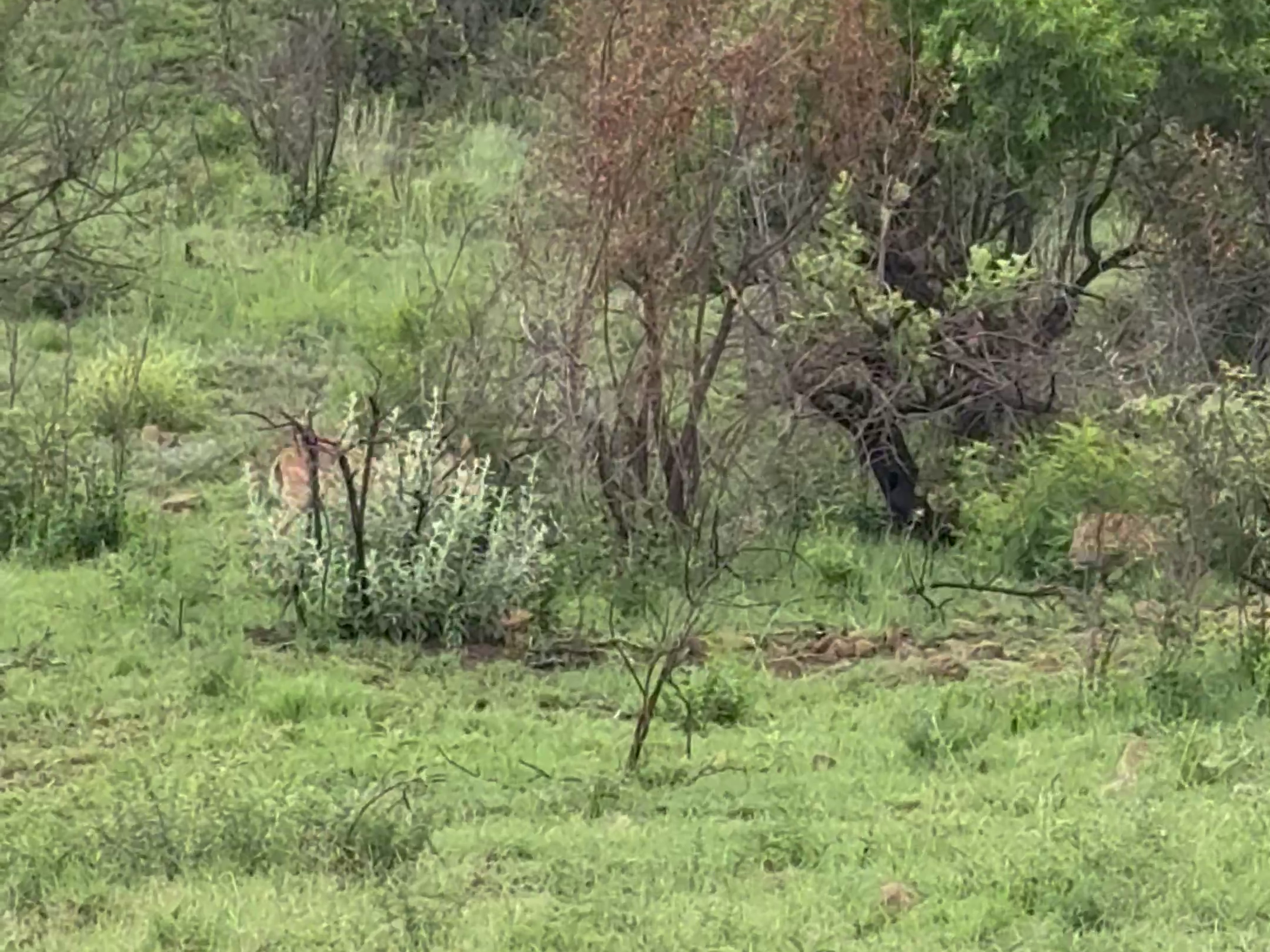
If you look carefully, in the centre-right of the above image, a male leopard has its sights set on the unsuspecting ram. Using a combination of stealth, patience, and cryptic camouflage, the predator has stalked within a few metres of its target.
For the leopard, it has passed the most crucial phase of its plan. Although capable of accelerating to 65 km/h in just a few strides, they cannot sustain the speed for long. In other words, the closer it stalks, the higher the likelihood of hunting success.
Counter-measures
For prey species like impala, their ability to evade capture depends on the group staying alert. Additionally, they need fast reflexes, speed, and agility.

So, when the leopard bursts from cover, it is these latter skills that the antelope relies on. The moment it sees the advancing cat, it turns and springs in the opposite direction.
As it does, it makes a distinctive snorting alarm call to warn others of the predator’s presence. Instantly, other unseen impalas take up the call, ensuring that “everyone” knows there’s danger about.
Lost cause
Although the leopard had done everything right until the moment it sprung its ambush, the adrenaline-filled antelope proves too fast for it.
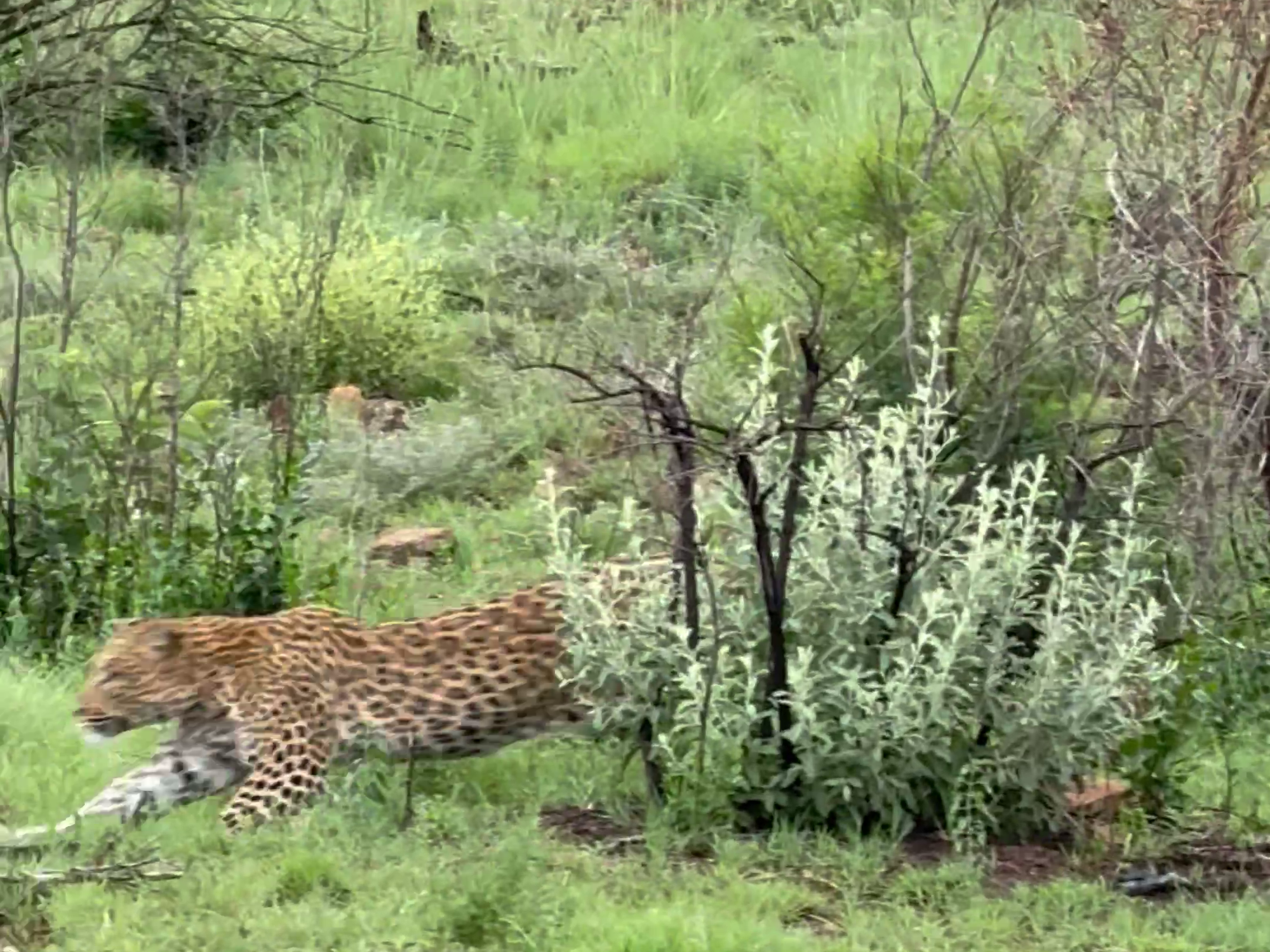
For predators, it is important to balance energy expenditure with the likelihood of a successful outcome. Since they don’t know when they’ll get their next feeding opportunity, they tend not to waste energy on lost causes.
Get our Best Sightings as they Come in
Return to stealth-mode
And so it is that after a chase of less than 30 metres, the leopard gives up the chase. Then, eager to resume its secretive ways, it lies down behind a shrub to get its breath back.

As it does, we witness firsthand how effective their camouflage is. Well, except for the white-tipped tail that sticks out behind it.

While these distinctive tail-tips are useful to cubs when following their mothers through long grass, they don’t do much to keep a hunting leopard hidden. In fact, the first inkling a guide has of their presence is often because they spotted this “tell-tail” feature.
Moving on
Consequently, having failed to fool the still-snorting impala, the beautiful predator rises from its hiding place.

The sooner it can escape their attention, the sooner it will be able to resume its search for its next meal.


