

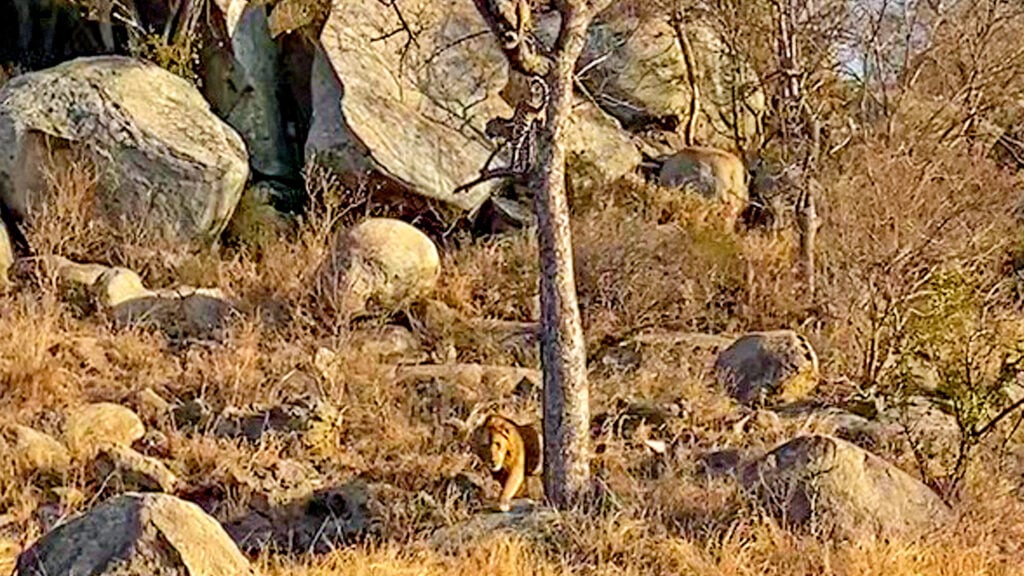
As powerful and fierce as leopards are, there is one animal of which they are constantly wary. This footage highlights the respect shown in Africa’s predator hierarchy.
Marianne Versloot submitted this tense footage to Latest Sightings. She filmed it on the H1-1 in South Africa’s Kruger National Park.
Never Miss A Viral Safari Video
Tense sightings, like this leopard escaping a lion, are popular with our members. To be among the first to see our latest sighting videos, join our exclusive alert list. Click the button below to join the WhatsApp chat right now, and never miss another thrilling moment.
To the trees
As Marianne’s video begins, we see a leopard racing up a tall tree. Leopards are one of the few big cats that are comfortable climbing trees.
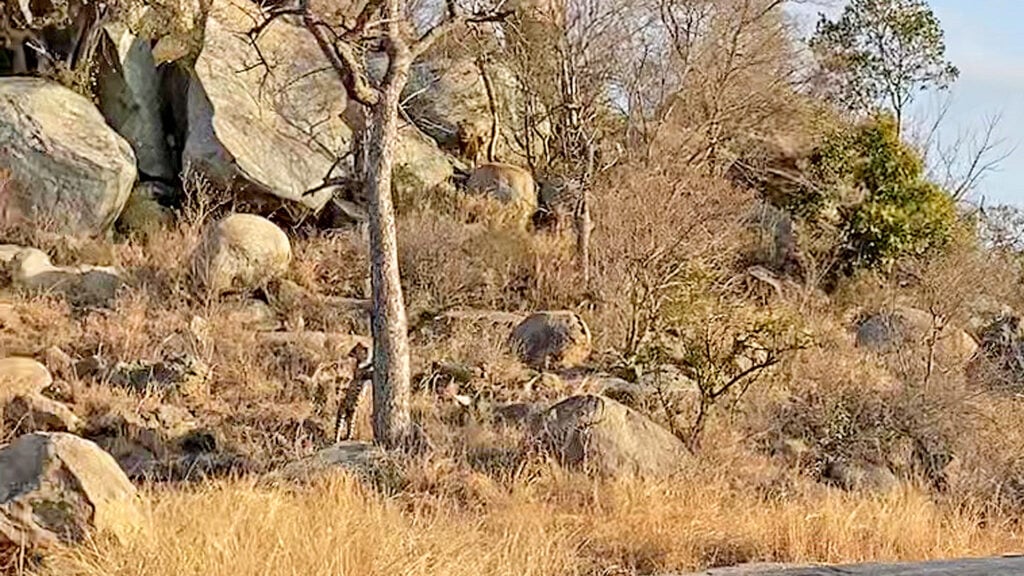
They do so to stash their kills, gain a vantage point, and, as is the case here, escape from danger.
Emerging threat
Subsequently, we see the reason for the leopard’s hasty climb. Emerging from the boulders behind it, we see a large male lion.
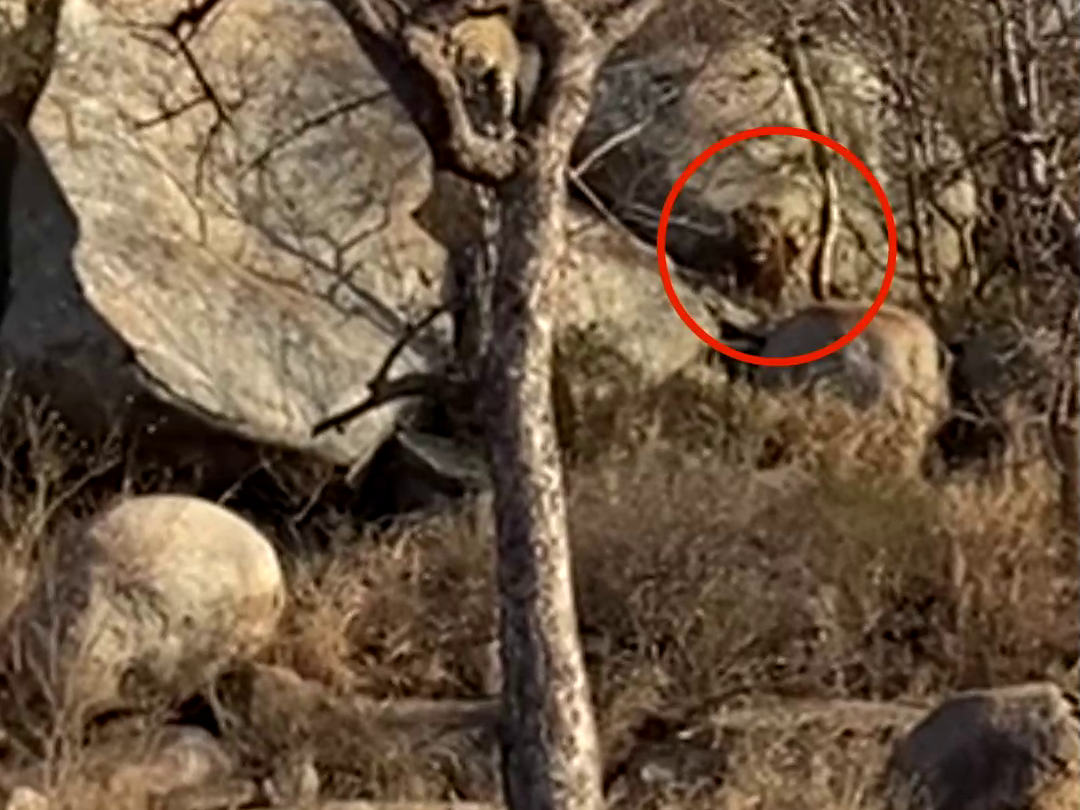
Due to their size, lions sit at the top of Africa’s predator hierarchy. Given the chance, they will attack and kill any other predator competing with them for access to resources.
Over twice the size
Thankfully for the leopard, it spotted the lion well before it got close enough to threaten it. As for the lion, there was nothing he could do but watch.
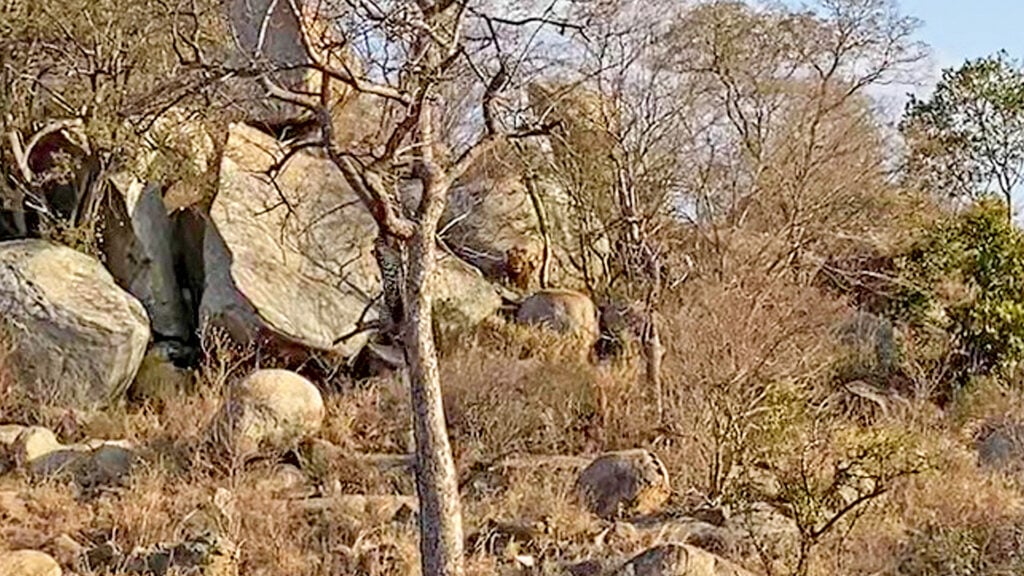
Male lions are nearly three times the size of leopards, weighing up to 250 kg compared to a large leopard’s 90 kg.
Asserting dominance
Subsequently, despite seeing the leopard climb the tree, the lion approaches. While it might not be able to get to the leopard, there are other ways for it to assert its dominance.
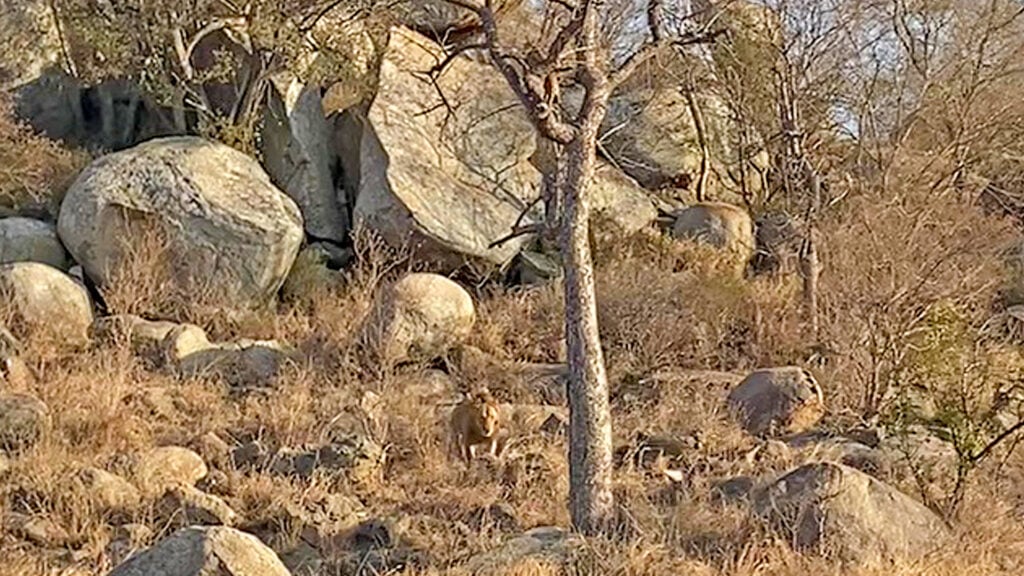
While lions can climb trees if they must, a large male like this would seriously struggle to ascend a tall, vertical trunk like this one.
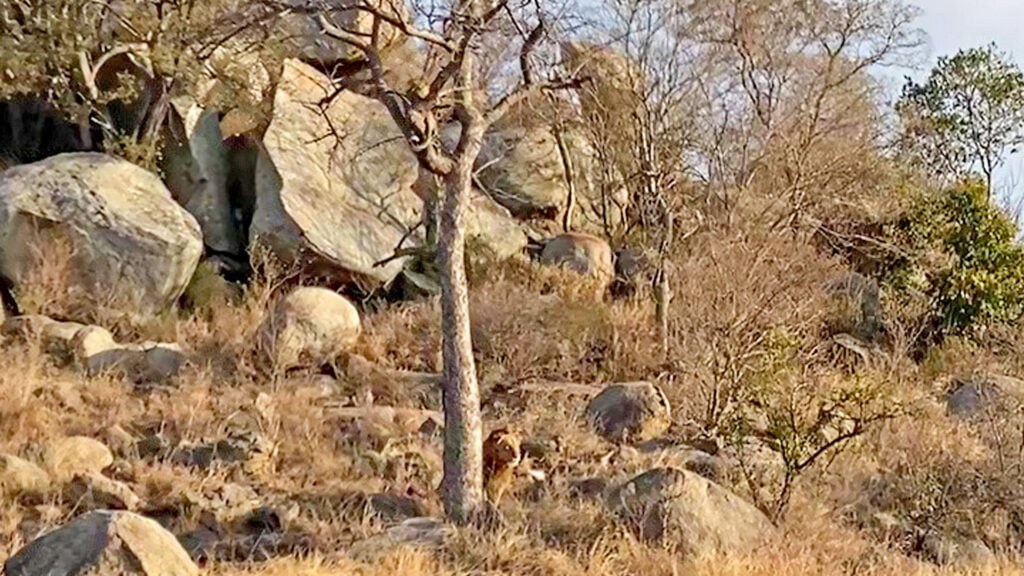
Instead, the lion walks to the base of the tree and sprays urine. He does so to mark his territory and remind the leopard that he is the dominant predator in these parts… even if he can’t climb the tree.
The pressure to patrol
Having made his mark, the lion continues on his way. Male lions spend much of their waking lives patrolling their territories.
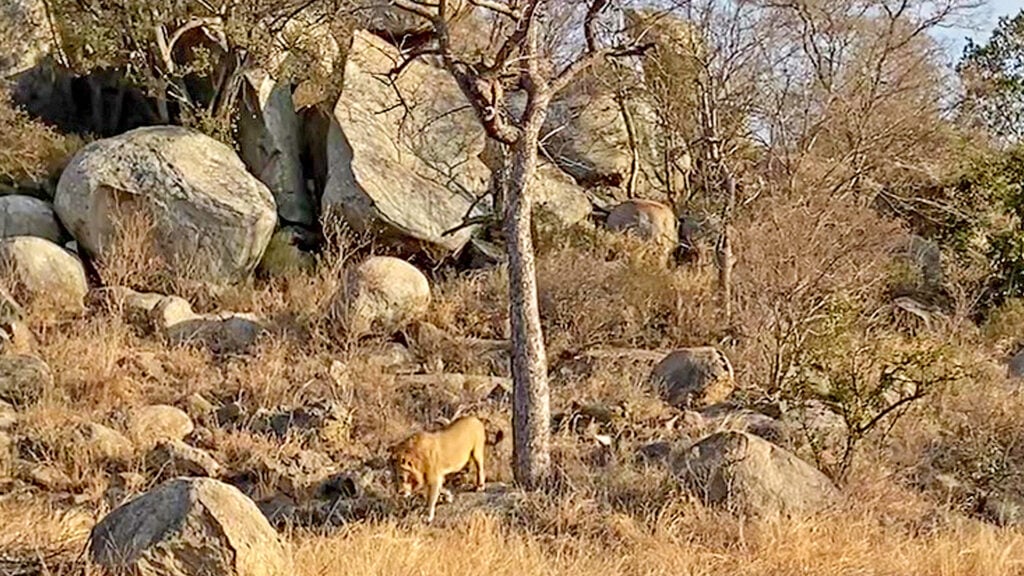
In lion-rich habitats, like the Kruger Park, dominant males are under near-constant pressure from rival males.
Get our Best Sightings as they Come in
Taking no chances
Meanwhile, up in the tree, the leopard keeps a close eye on the departing lion.
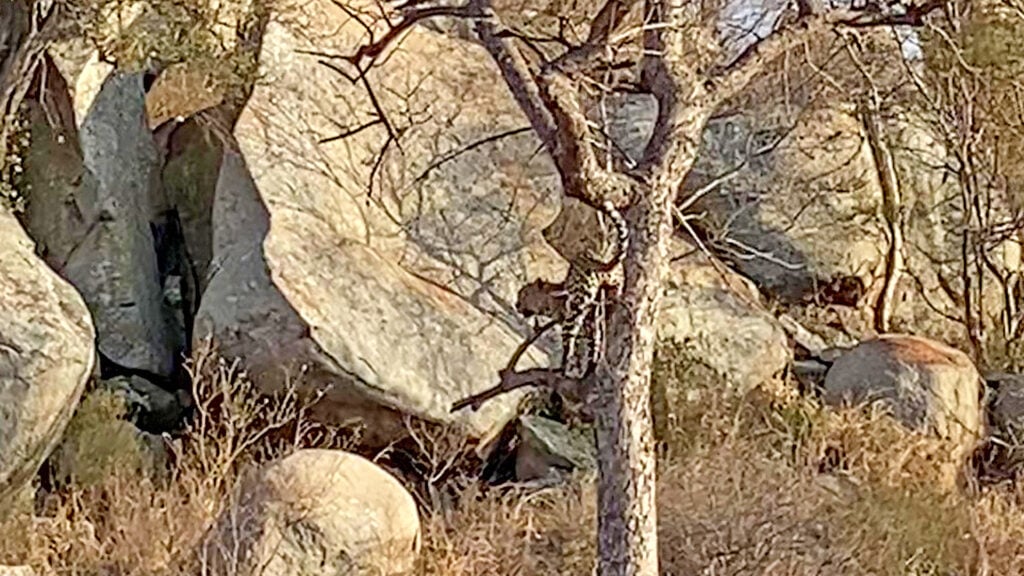
Then, when the larger cat disappears from view, the spotted cat descends.
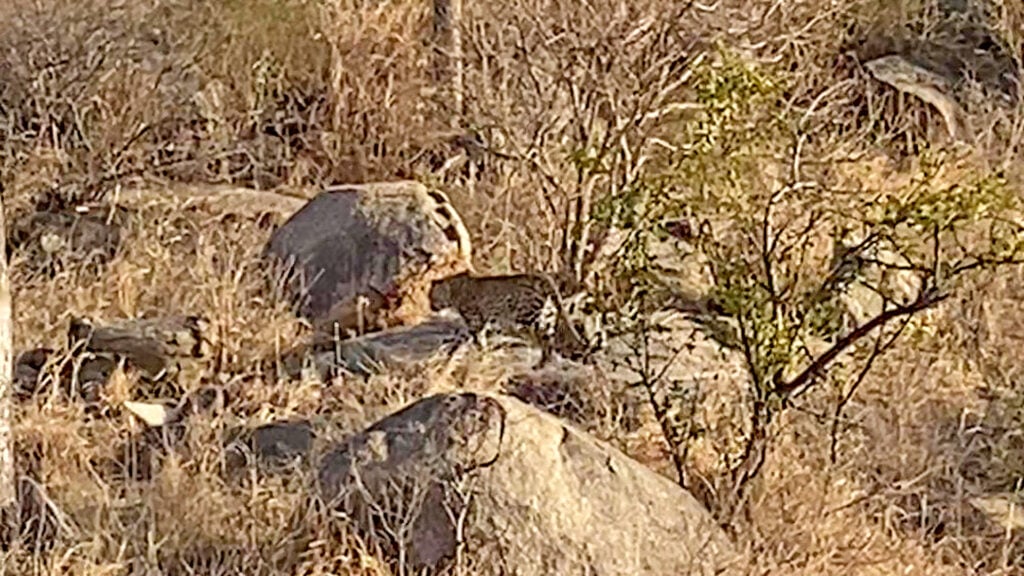
The moment it is back on the ground, it leaves the area. It is simply not worth the risk to hang around when there’s a male lion in the neighbourhood.
Africa’s large predator hierarchy
Lions rule Africa’s predator hierarchy by virtue of their size and social behaviour. Keeping them on their toes, spotted hyenas hold second place thanks to their intelligence and social groupings.
African wild dogs occupy third spot, again thanks to their social tendencies. Of Africa’s two spotted cat species, leopards hold a higher rank than cheetahs due to their superior strength.


