

A Drive in the Dark
Night drives offer a glimpse into a very different side of the African bush. Predators become bolder, and every shadow holds the potential for a hunt.

These drives also offer an opportunity to see certain species that are most active under the cover of darkness, as was the case for this lucky group of safari-goers.
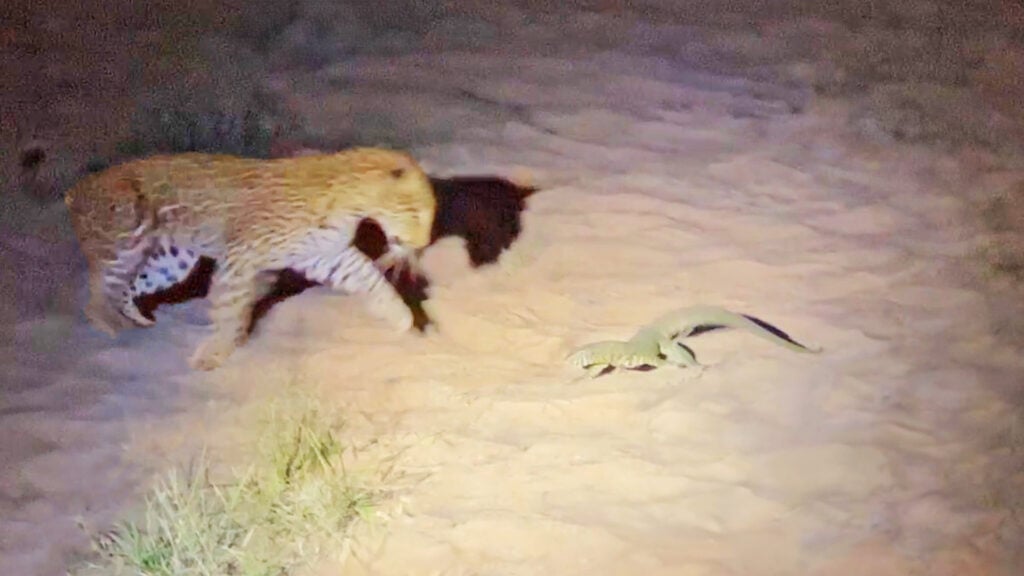
During a nighttime safari at Timbavati Nature Reserve, field guide Dean Robinson and his guests witnessed a thrilling and efficient strike by one of the most elusive big cats: the leopard.
In the cover of darkness, the leopard spotted a monitor lizard creeping through the sand. Without hesitation, it attacked its newfound target!
An Efficient Kill
The monitor attempted to defend itself with powerful tail swipes, but the leopard’s agility was unmatched. Despite its defensive thrashes, the leopard remained in control, almost toying with its prey.

Finally, after a few quick jabs and a last fatal swat, the lizard’s resistance ceased. The leopard’s lightning-fast reflexes turned a potential struggle into a swift and efficient kill.
The moment was brief but intense, and displayed the wild side of Africa at its rawest and most instinct-driven.
No Easy Target
Monitor lizards are formidable reptiles, often reaching lengths of over a meter! Armed with sharp claws, muscular tails, and powerful jaws, they’re no easy catch.
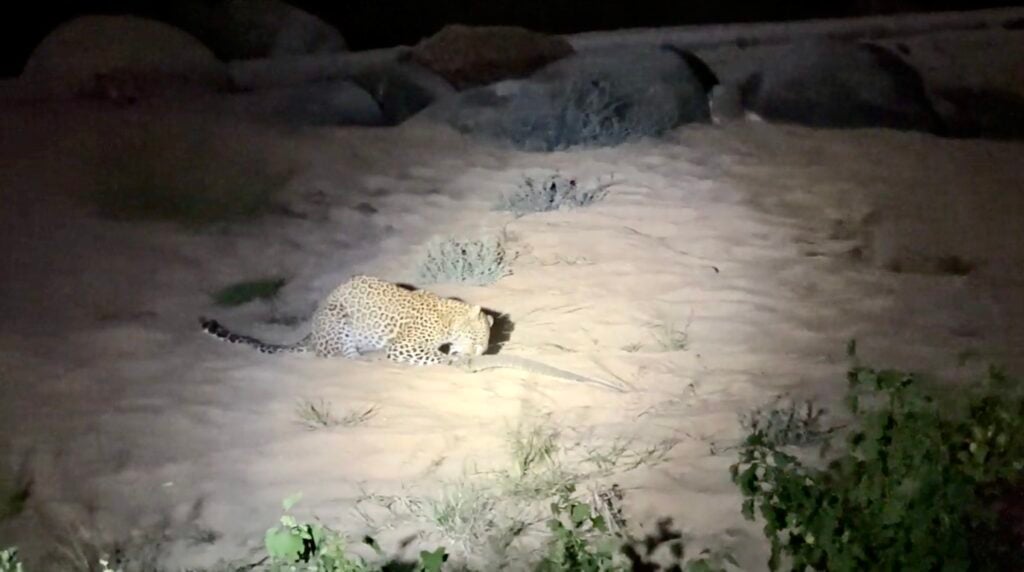
Their tough, scaly skin offers a layer of defence, and they’ll lash out with surprising aggression when threatened. Leopards, however, are one of the few predators capable of taking on such resilient prey.
With patience, stealth, and lightning reflexes, a leopard can outmaneuver a monitor’s defences in seconds. Though not a primary food source, monitor lizards offer a protein-rich meal, making them a worthwhile target when other prey is scarce or the opportunity presents itself.
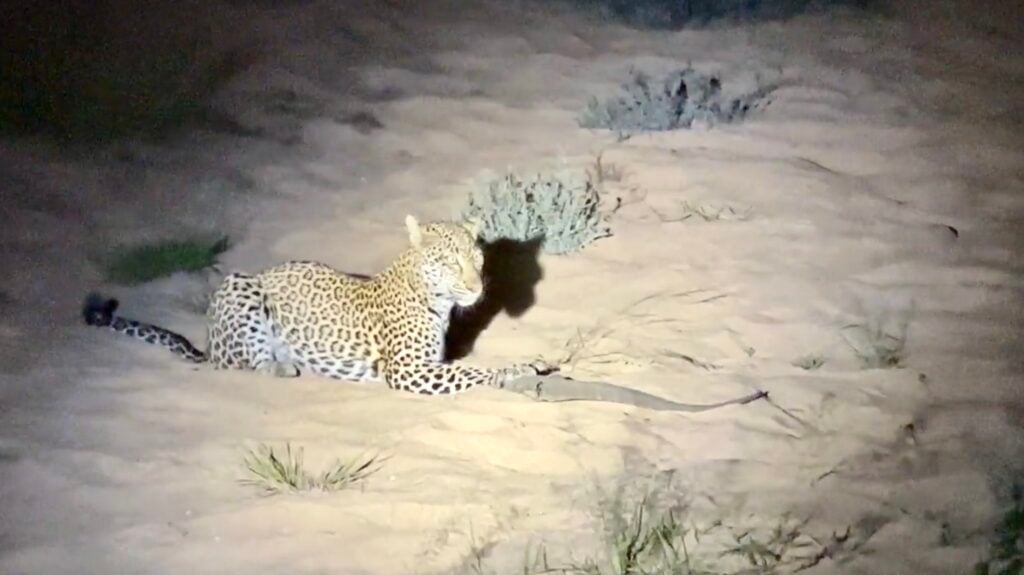
Luckily for this leopard, the lizard in question seemed not to be fully grown and made for an easier target. It was no match for the leopard’s superior strength and hunting prowess.
Adaptability on Full Display
Leopards are famously opportunistic hunters. Their diet is incredibly varied, from birds and rodents to impala, monkeys, and reptiles.
Get our Best Sightings as they Come in
Their solitary and secretive nature makes them difficult to track, and sightings like this are a rare treat. That night, this leopard reminded onlookers of why they are considered one of Africa’s most skilled and adaptable predators.
The Leopard Disappears Into the Night
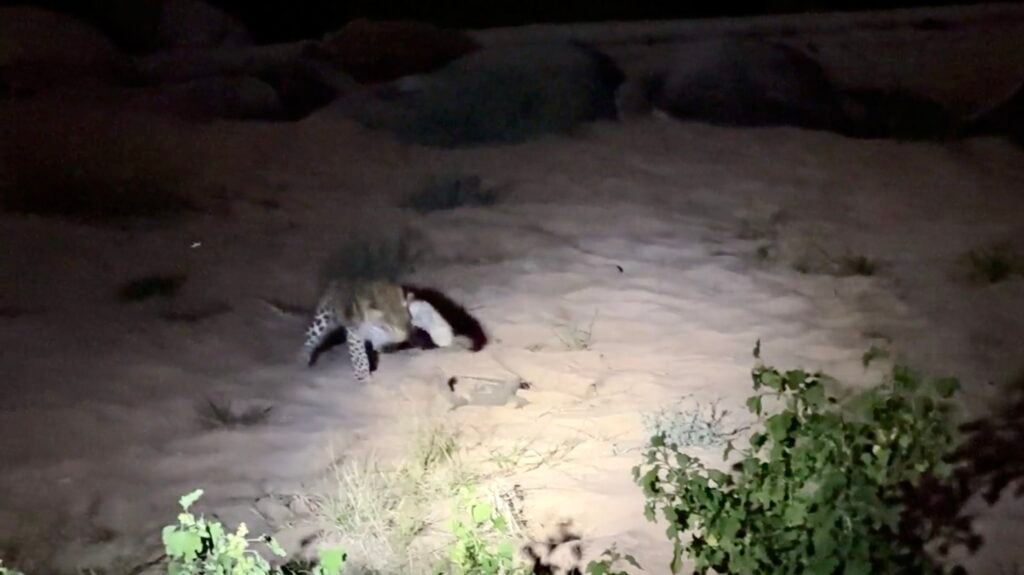
After delivering the final blow, the leopard paused for a moment, then gently picked up its prize in its mouth and disappeared into the darkness. It was a short and silent hunt, perfectly executed.

For the leopard, it was another successful meal. For the safari guests, it was a brief but unforgettable glimpse into the raw and unpredictable drama of the wild.
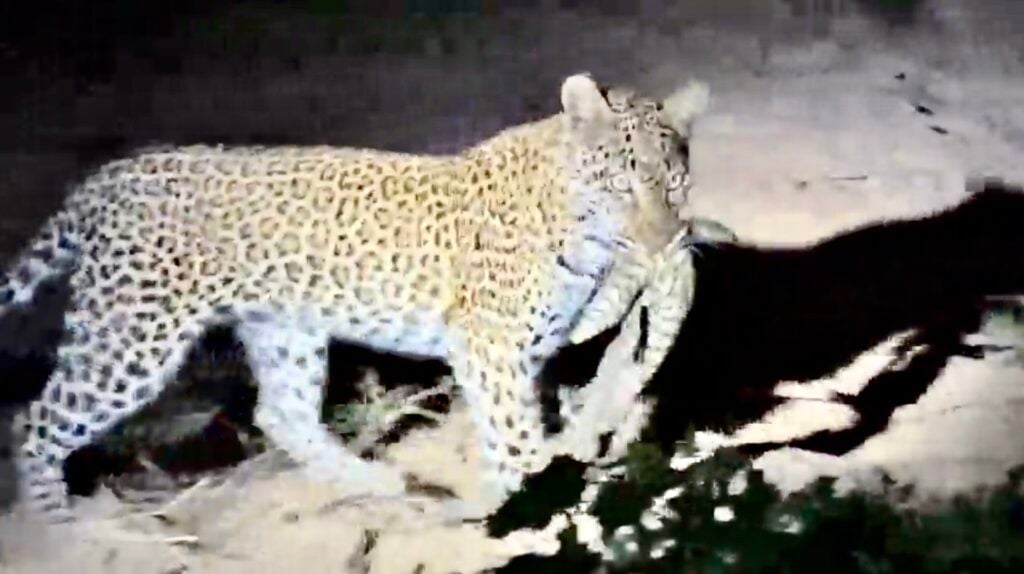
Leopards are masters of stealth and efficiency, making even the toughest prey look like easy targets. This silent nighttime ambush was a clear reminder of the leopard’s place as a top predator in the African bush.


