

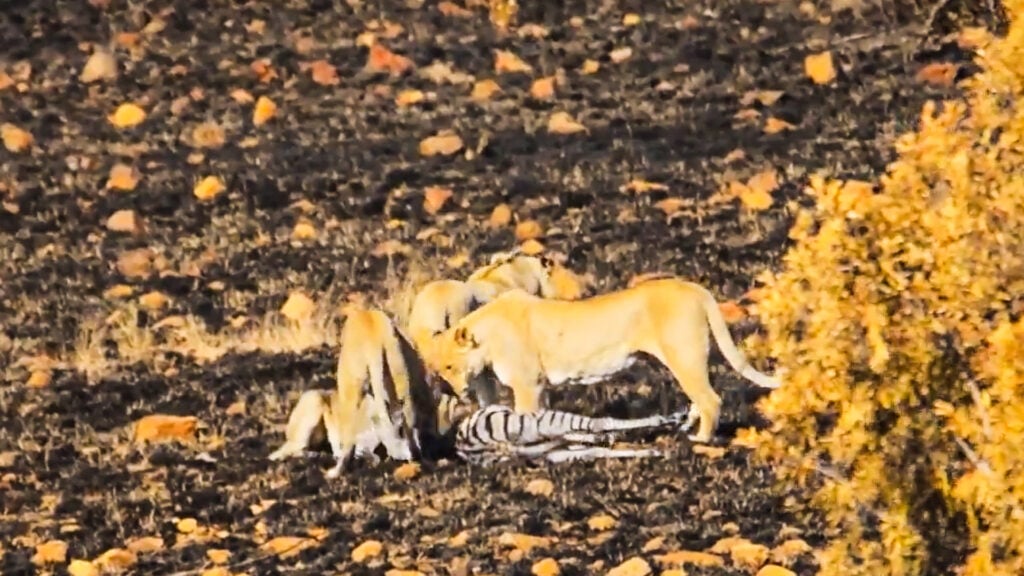
Christo Nel submitted this video to Latest Sightings. He captured the action while visiting Pilanesberg National Park in South Africa.
A lion lying in wait
As Christo’s video begins, we see a lioness lying close to the ground in a landscape recently burnt by fire.
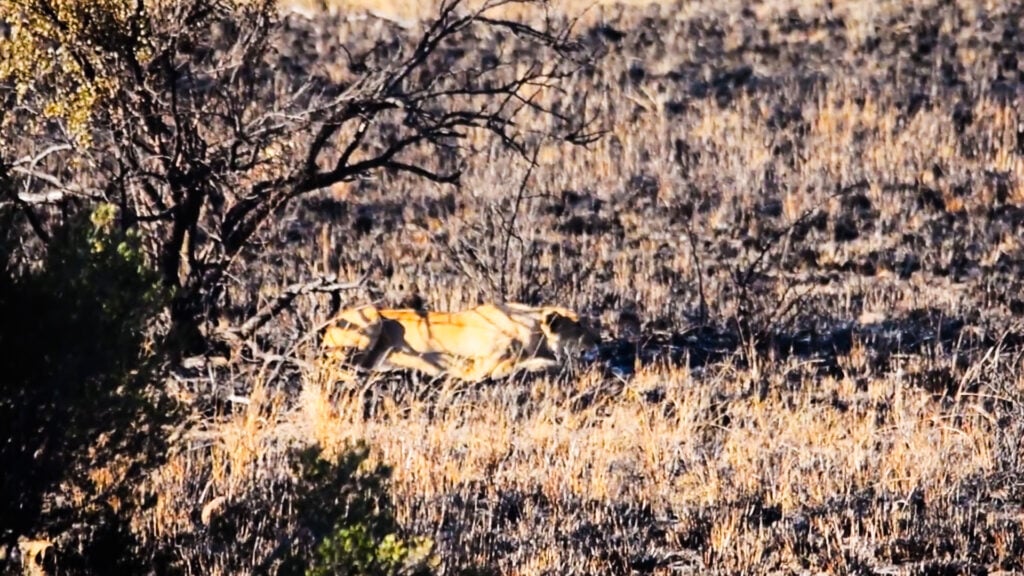
Her tawny colour makes her all but indistinguishable from the remaining patches of dry grass. Hugging the ground, she locks her gaze on a target hidden from view.
Limping zebra
Subsequently, the video cuts to a new scene. In it, we see a young zebra walking across the same fire-scarred landscape. This is what the lioness was watching.
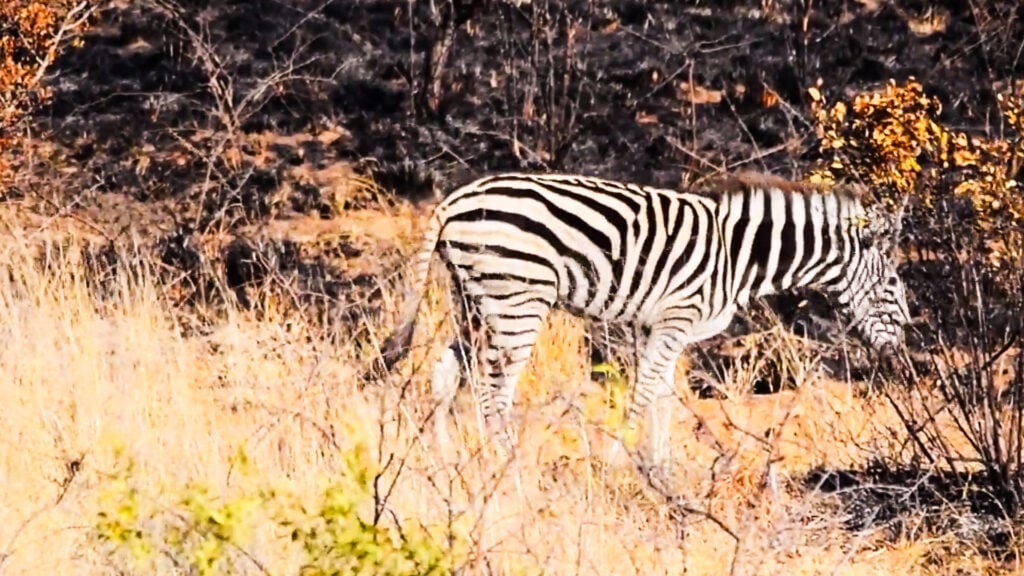
But something is wrong with it, causing it to limp. Closer inspection reveals that the unfortunate animal has an open wound on its right hind leg.
Springing into action
Returning to the lioness in the next scene, we see that the lion is up and running. Ordinarily, lions stalk as close as possible to their prey before launching a short-range attack.
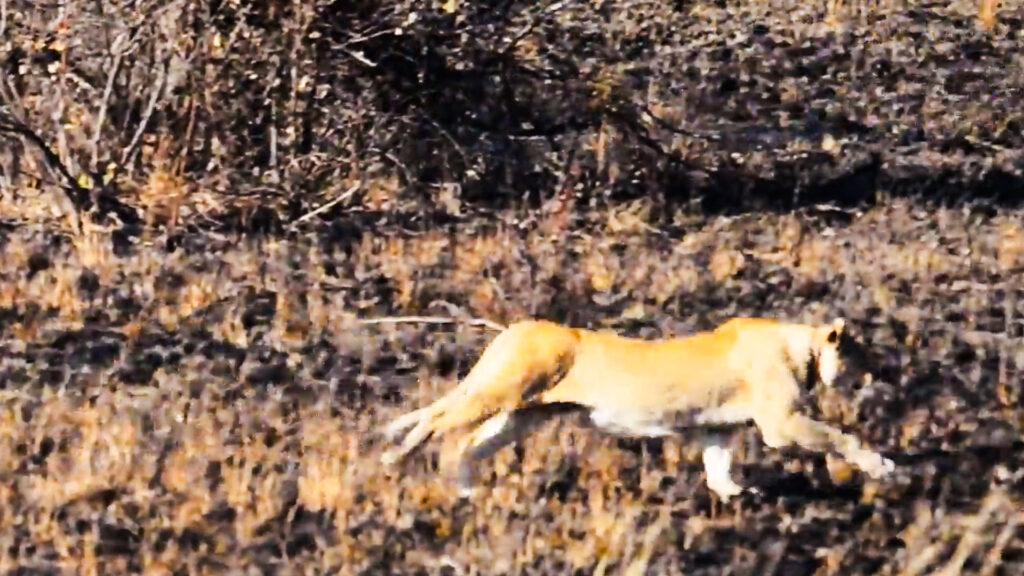
So, it is unusual to see the lion continue running for what seems to be quite a distance.
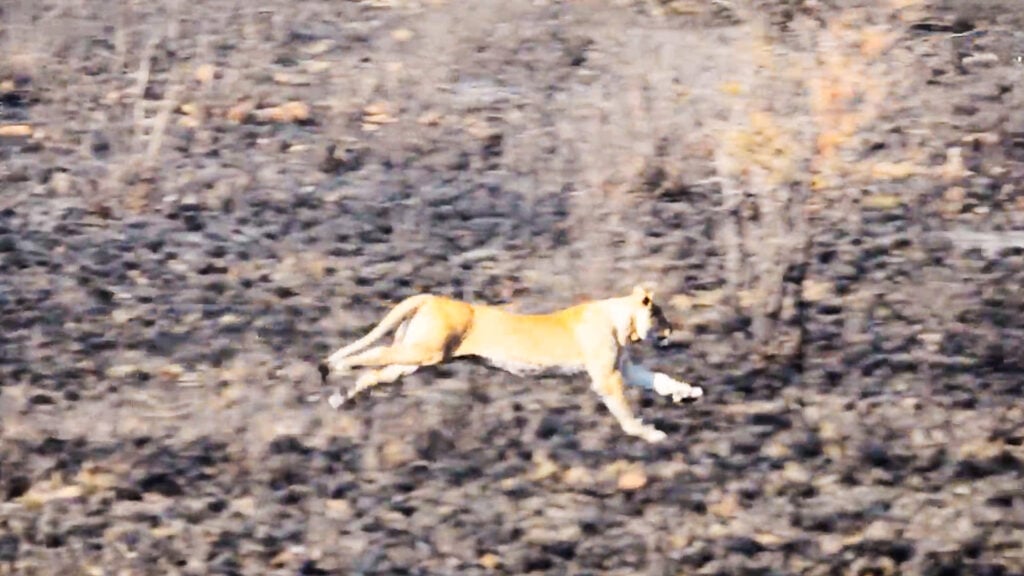
On a side note, you’ll notice that the lioness has a collar. This is likely for tracking, as is often the case when researchers monitor lions.
Fast-moving action
What happens next is a bit of a blur. As Christo struggles to keep his camera on the fast-moving action, we see zebras fleeing.
Then, with the distinct alarm call of the zebras ringing in the air, we see the lion disappear into a gully. Moments later, with the camera still panning wildly, we hear a strangled cry.
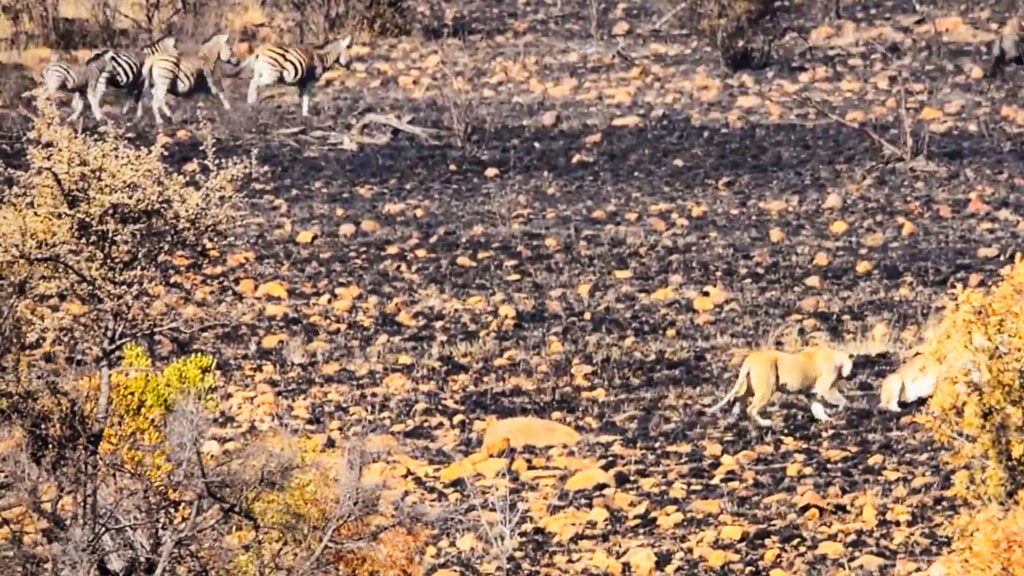
Only now does the camera settle, revealing the partially obscured moment the lioness caught the injured zebra.
Second lion arrives
It’s only with the arrival of a second lion that we realise the hunt was a coordinated effort. As it arrives, the first lioness has her jaws clamped on the throat of the wildly struggling zebra.
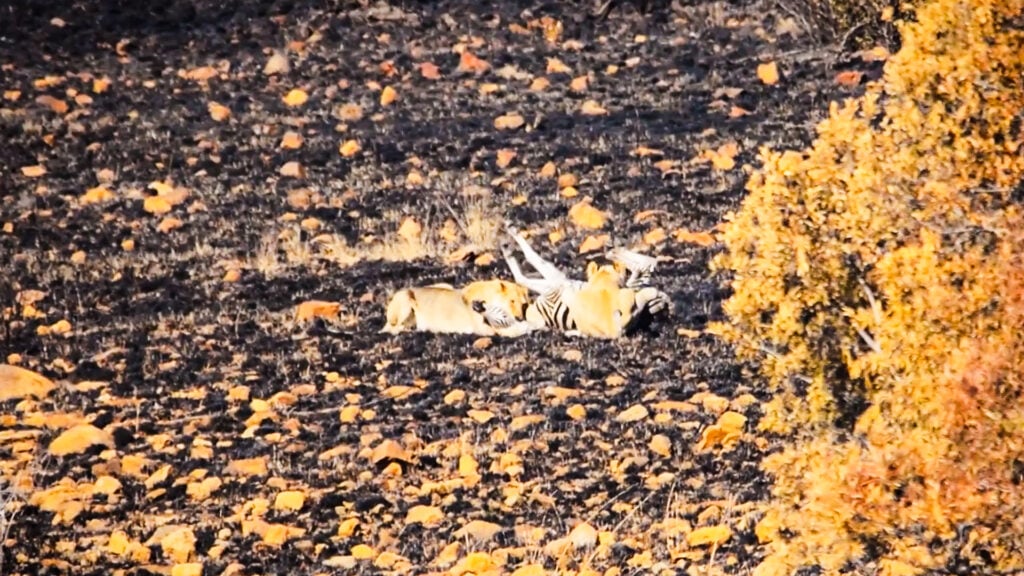
In typical lion fashion, the new arrival does not wait for the prey to die. Rather, she settles down next to the zebra, preparing to feed at its belly area.
By disembowelling their prey, lions may hasten its death, but more importantly, they can then access the nutrient-rich organs.
Get our Best Sightings as they Come in
Young male arrives
Subsequently, another lion arrives. Judging by the sparse beginnings of a mane, this individual is a young male approaching maturity.
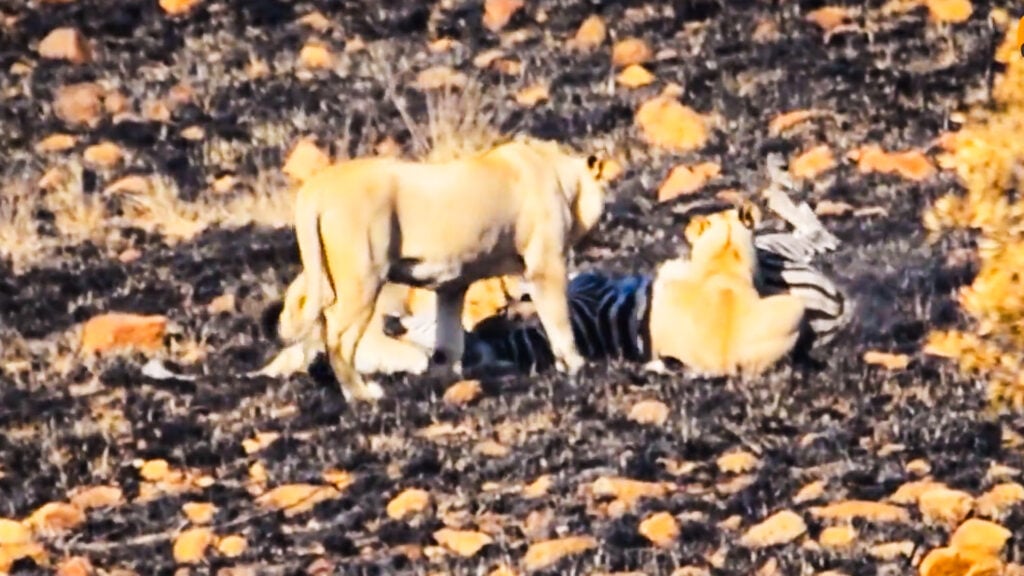
Were it a fully-grown male, he might attempt to seize the entire kill for himself. But since he hasn’t yet earned that right, he settles for eating alongside the two lionesses.
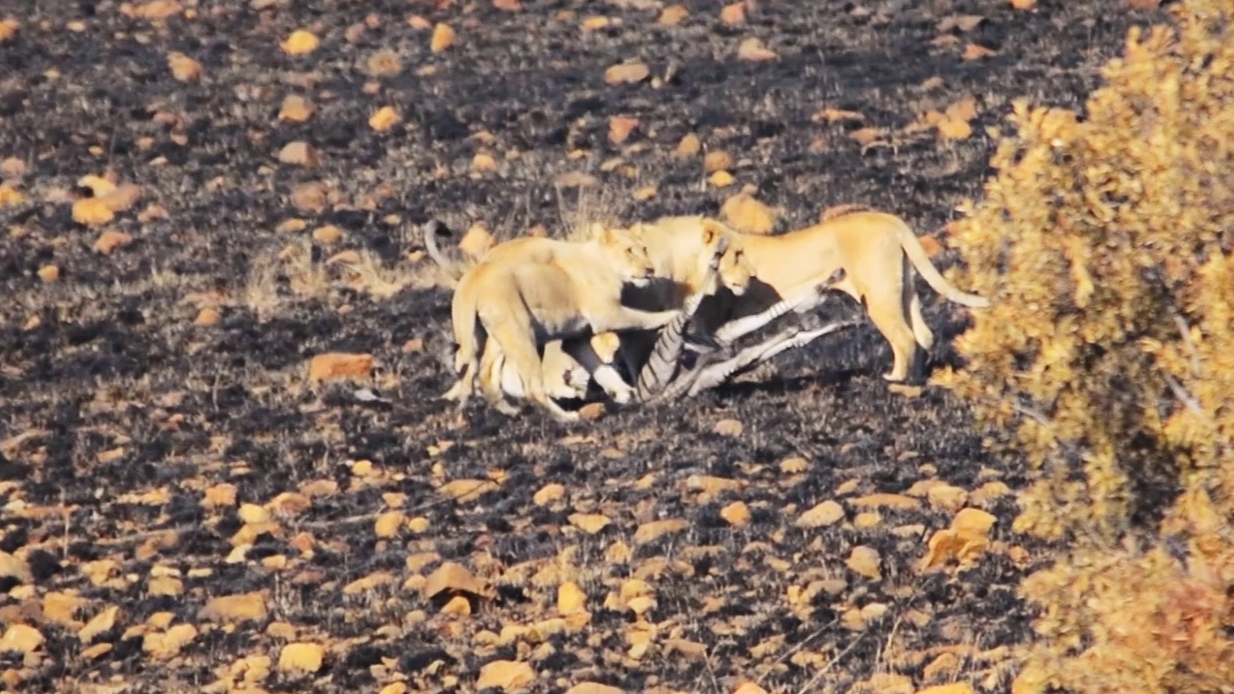
Amazingly, the zebra continues to struggle, its striped legs thrashing in a desperate bid to survive. Depending on how effective the throat grip is, it can take prey an uncomfortably long time to succumb through asphyxiation.
Limited intervention
Many people find it difficult to accept that, in national parks and conservancies, injured animals receive no intervention and must survive on their own.
The reasons authorities adopt this hands-off approach are varied but boil down to the same thing. For Nature to thrive as it should, it is best to let natural processes unfold without interference.
Exceptions are usually made only when the injuries result from human activity, like wounds caused by a poacher’s snare.


