

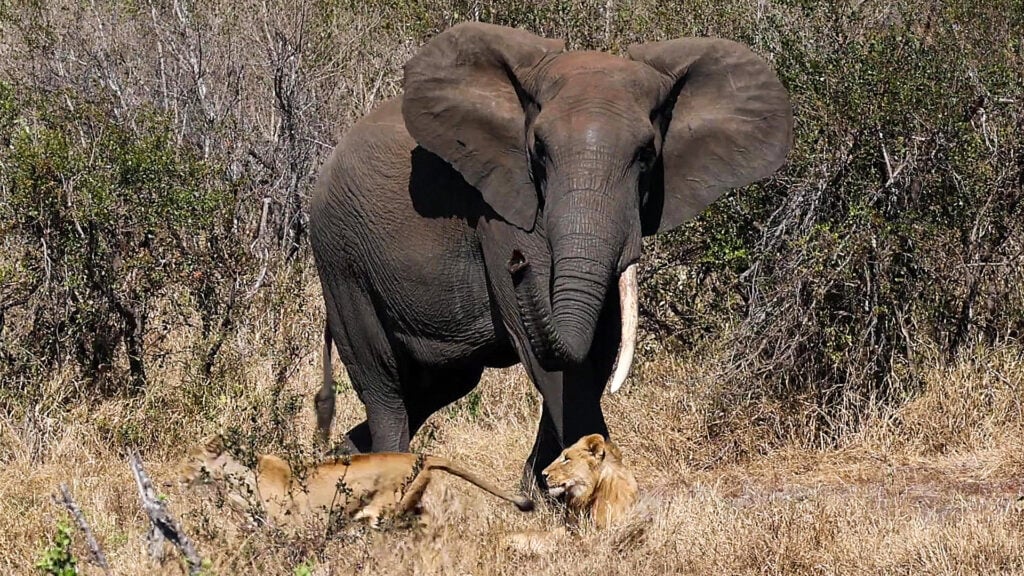
Despite their massive size, elephants move remarkably quietly. So much so that a pride of lions got quite a fright when a lone bull interrupted their afternoon slumber.
Jurgens Potgieter sent this amusing footage to Latest Sightings, which he filmed while on safari in South Africa.
Watch the video now:
Lone bull on the move
Our story begins serenely enough. A lone elephant bull makes its way through the bushveld without a care in the world.
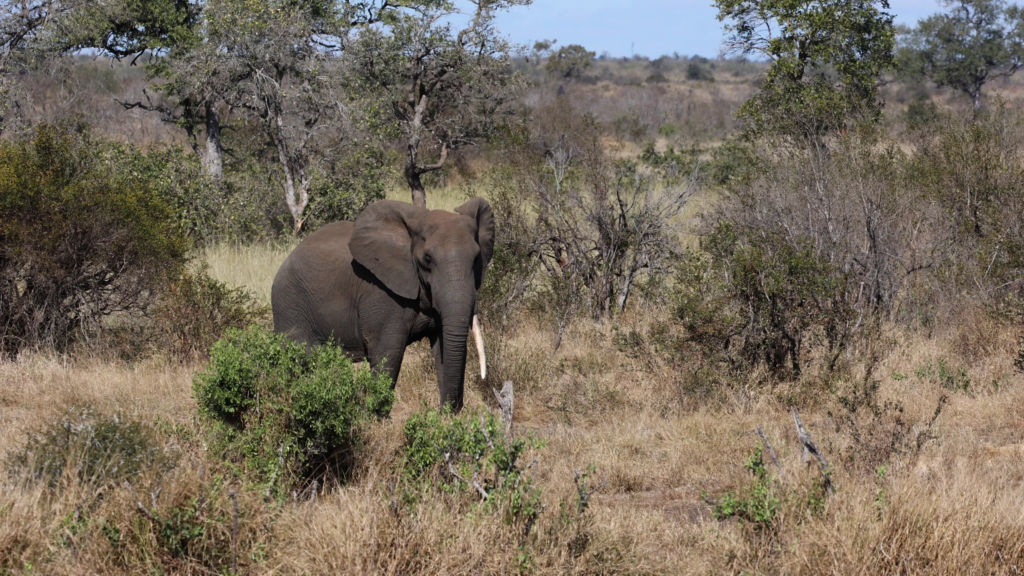
As you can see, the elephant only has one tusk, which it may have lost while fighting. Some say that one-tusked elephants are occasionally more temperamental.
Shock-absorbent pads
For their size, elephants move very quietly. In fact, if you removed the flesh around their feet, you would discover they actually walk on their tiptoes.
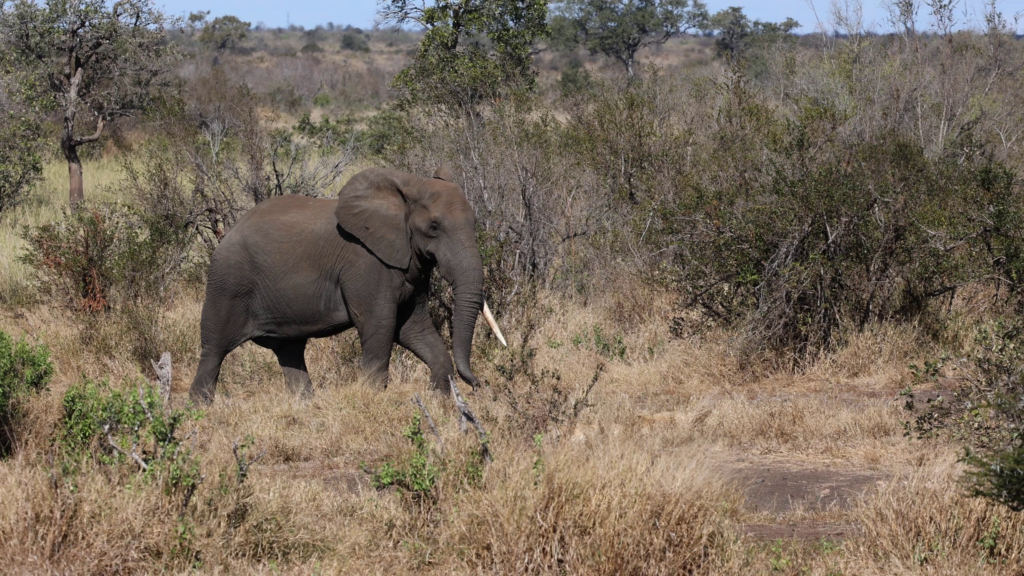
However, the reason they’re so quiet is because of the massive pads on their feet that act as shock absorbers. As they walk, these pads spread out, distributing weight and dulling sound.
Tail flick giveaway
Elephants are quite short-sighted, with their acute vision limited to between 10 and 45 metres. However, they are really good at detecting movement.
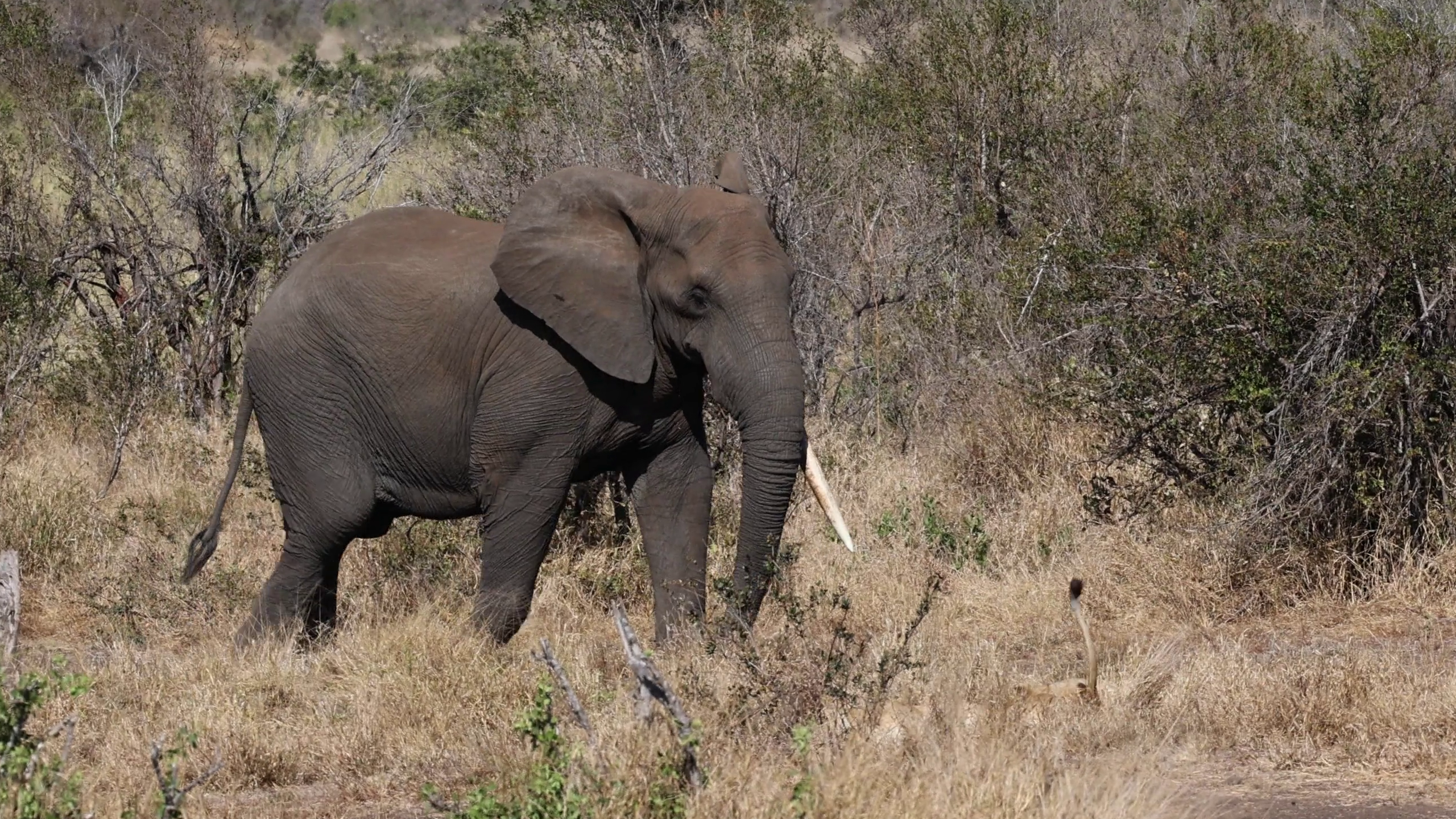
Consequently, when a distinctive black-tipped tail suddenly flicks up from the dry grass nearby, the bull instantly notices. Looking closer, we see tawny shapes lying just metres from the elephant’s path.
Mildly alarmed
Instantly, the elephant’s demeanour changes. He lashes his tail, swings his trunk, raises his head, and flares his ears.
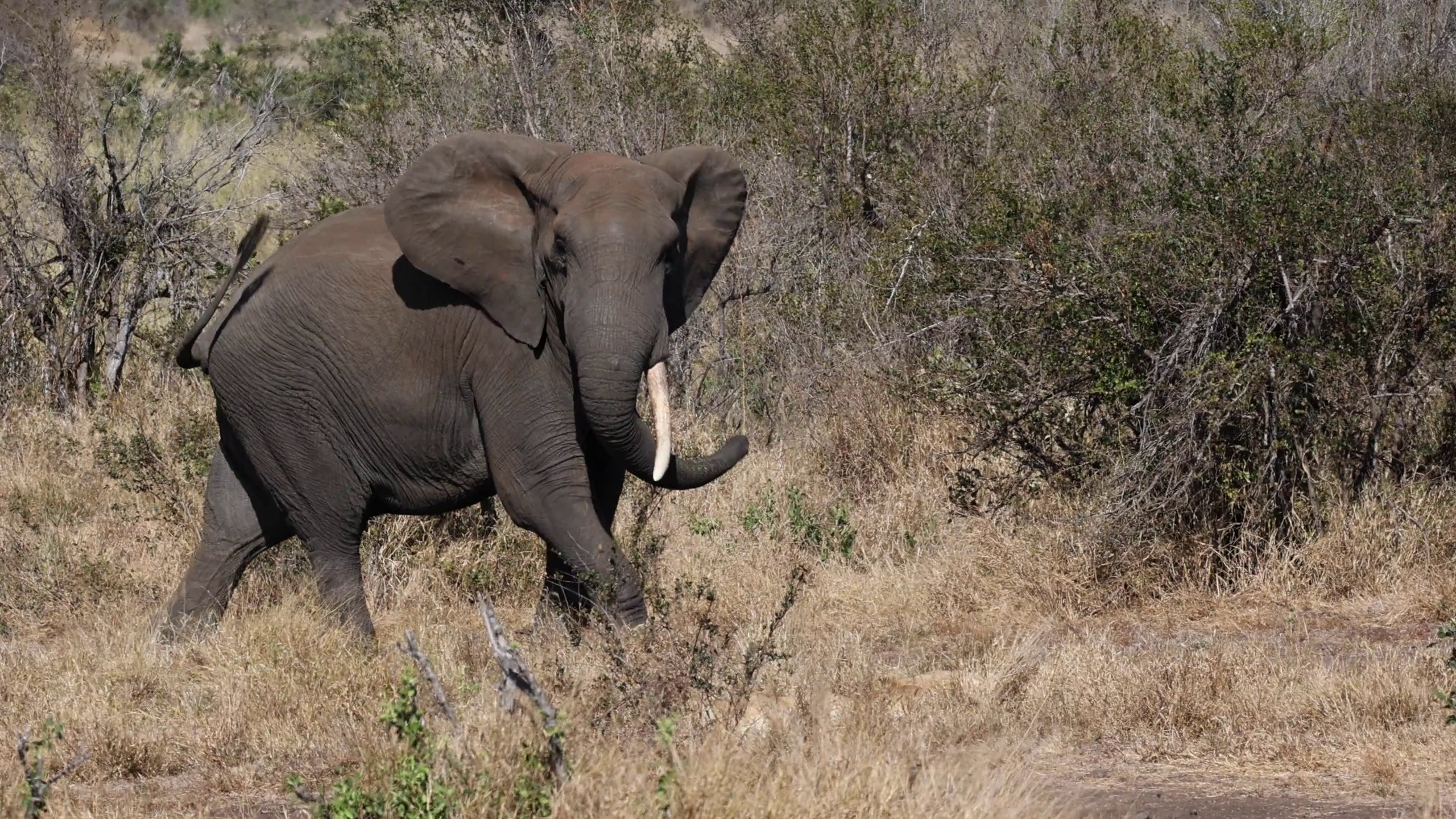
His body language is conveying mild alarm. However, the bull, secure in his size and strength, continues walking while keeping a close eye on the creatures nearby.
No rest for the wicked
As the bull gets closer, he seems to realise what it is that has caught his attention. It is a pair of lions doing what lions do best: sleeping.
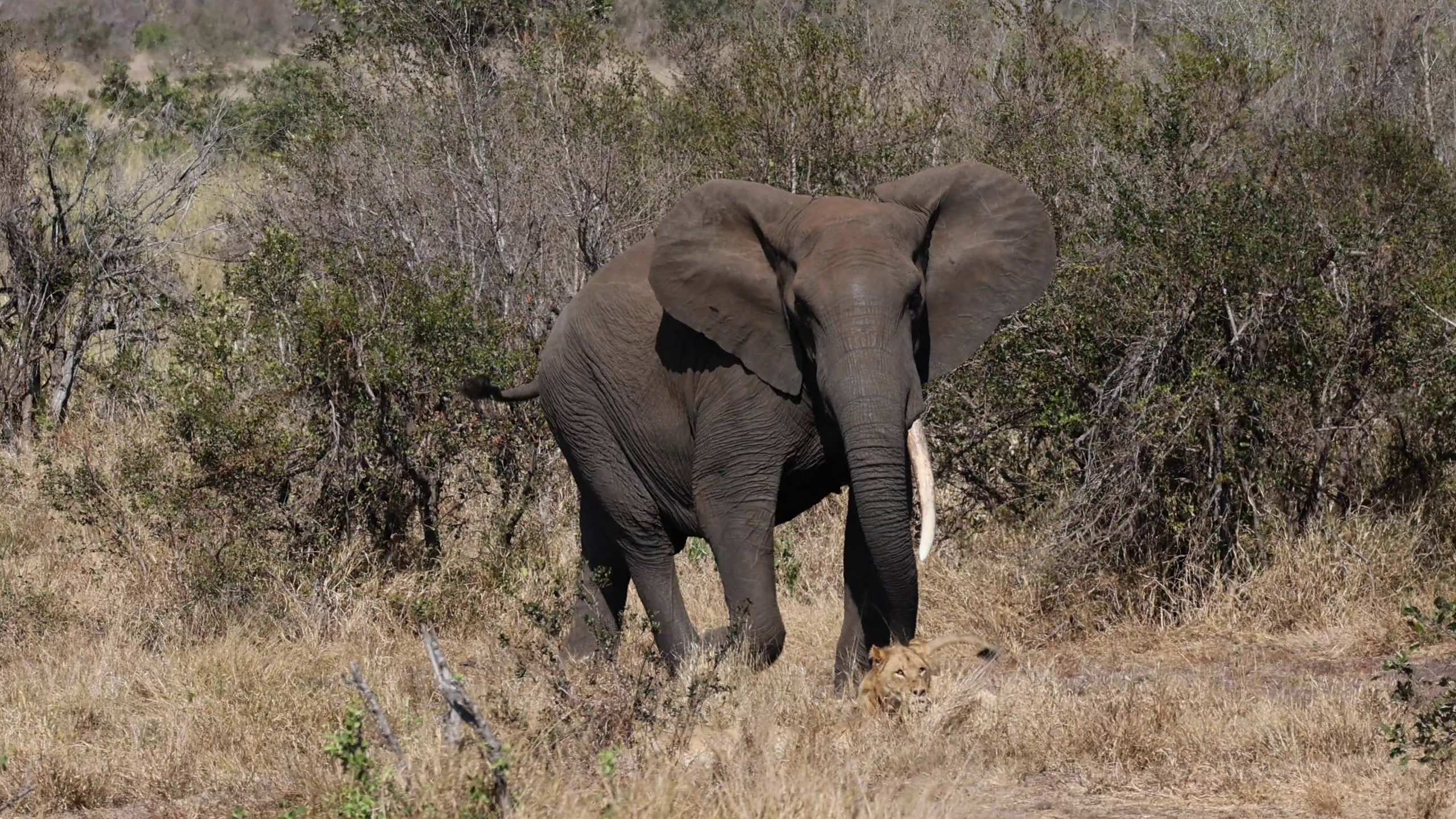
Although the bull probably realises they’re not hunting, he instinctively regards them as a possible threat that he can do without. Consequently, when he moves to chase them off, the lions suddenly become aware of his presence and raise their heads.
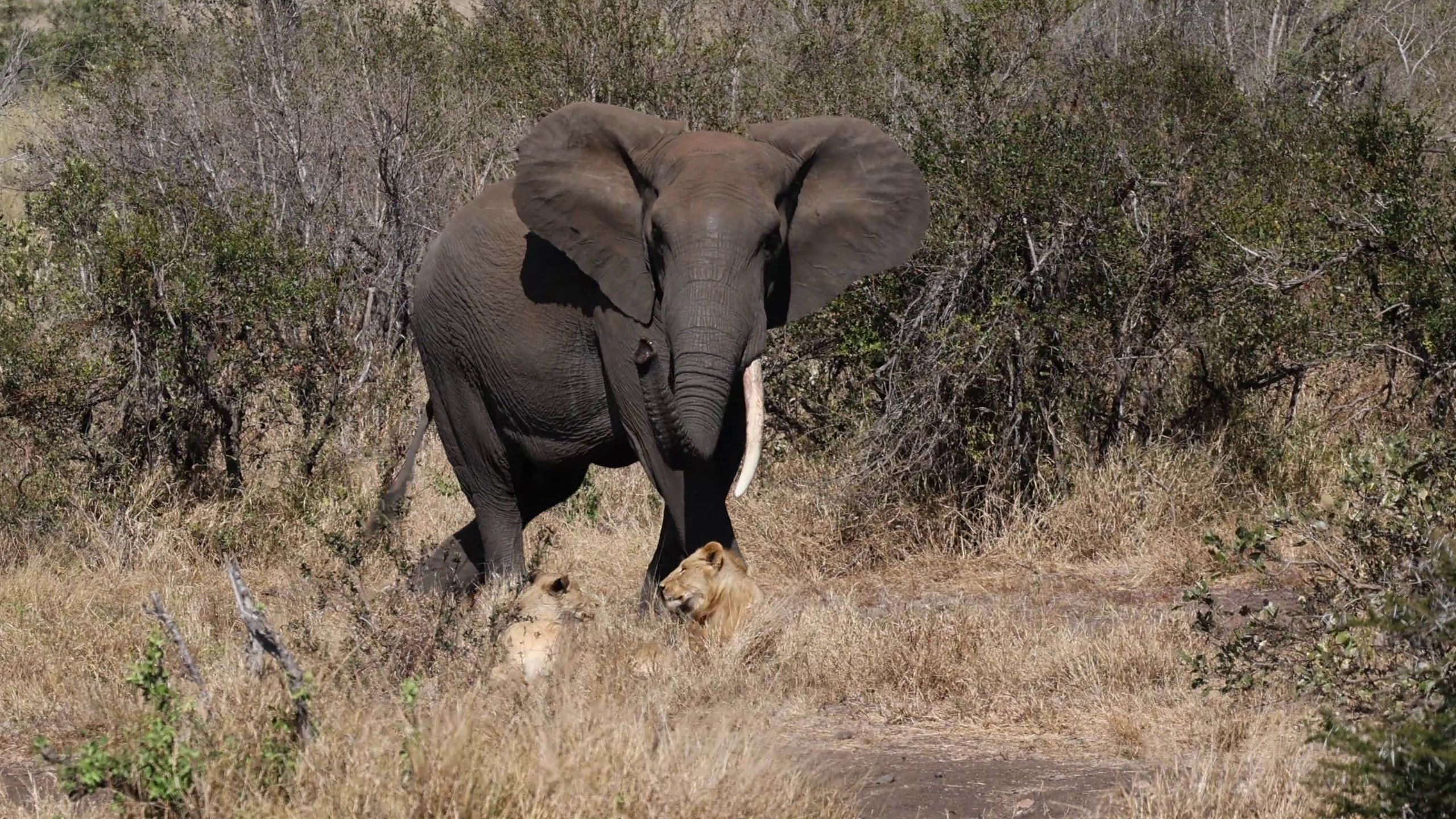
Meanwhile, you can imagine the lion’s surprise on waking to see the bull’s massive form bearing down on them. Together, they look at the bull, look at each other, and quickly agree their siesta is over.
Get our Best Sightings as they Come in
No follow-through
With the elephant now just a couple of metres away, the lions do the only sensible thing. They get up and run.
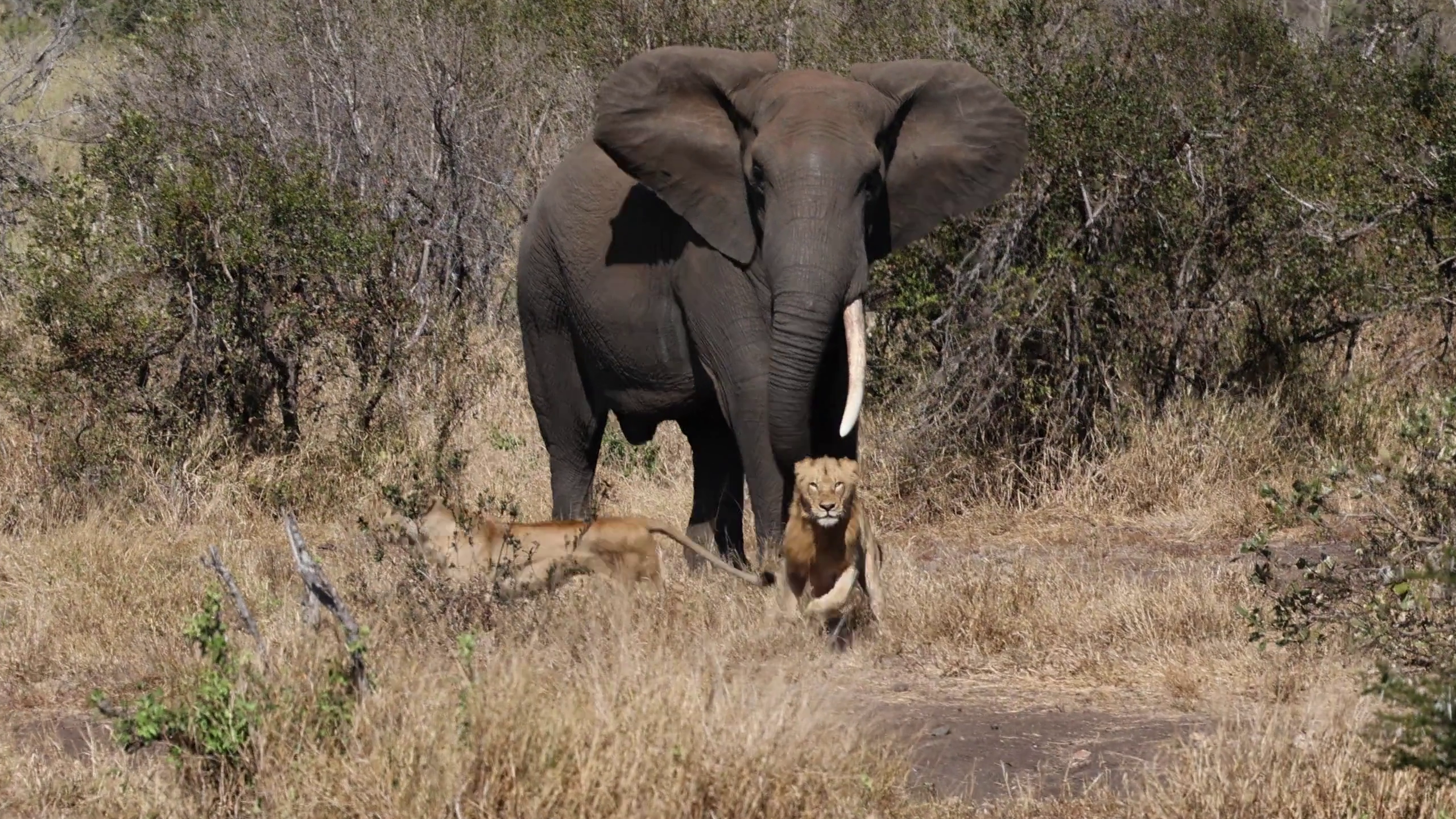
As for the elephant, he seems content to see them flee. Aside from maintaining a posture meant to intimidate, he doesn’t trumpet or escalate his aggression in any way.
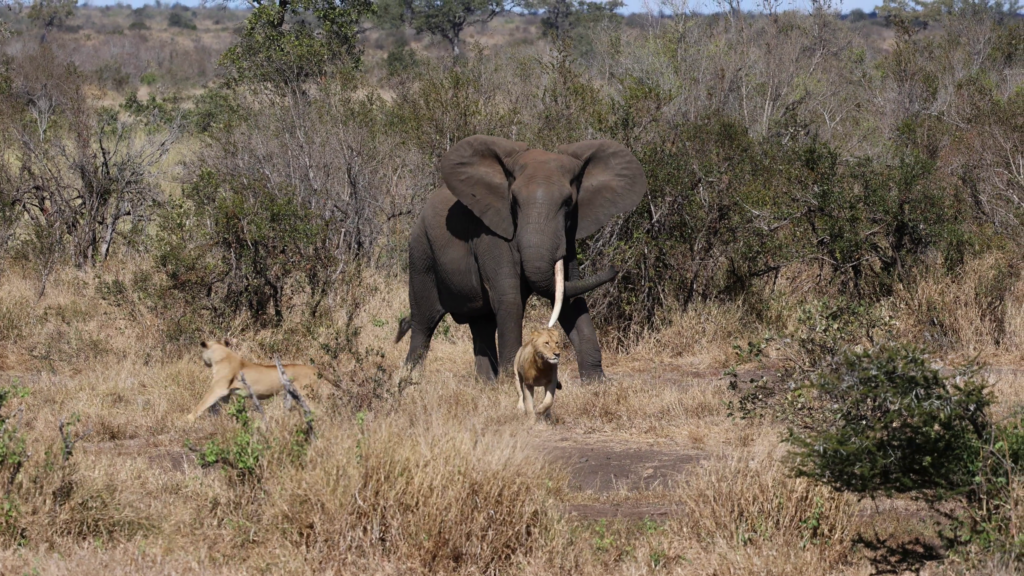
Had he truly felt threatened or been in the aggressive male breeding phase known as musth, he may well have chased after them. However, luckily for the lions, that is not the case.
Mutual comfort
Sensing that it is not being chased and that the danger has passed, the young male lion turns to face the elephant. In his short flight, he created a comfort zone around himself, within which he no longer feels threatened.
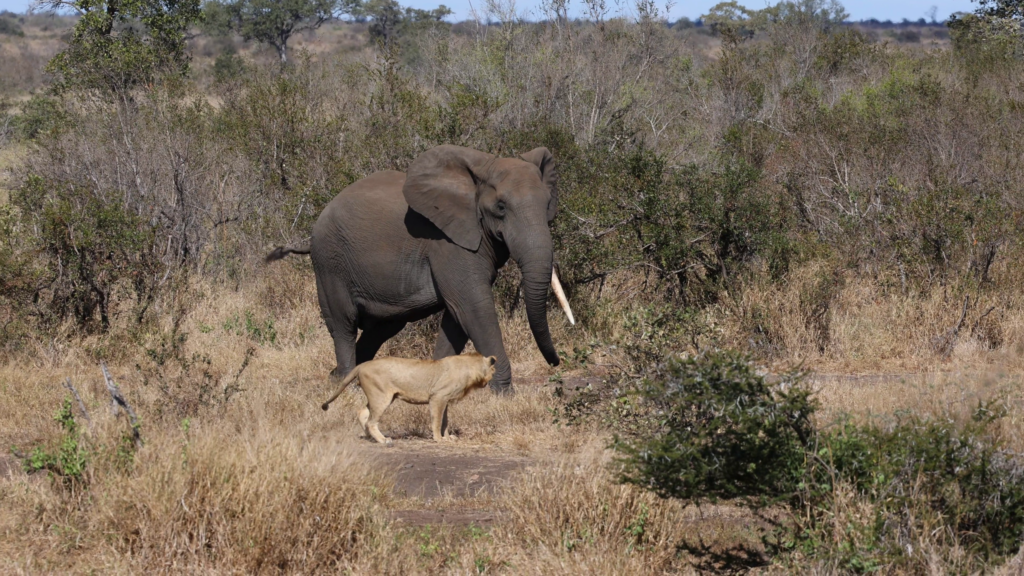
As it happens, the elephant is similarly pleased with the distance that now separates them. As such, his body language relaxes, and he continues on his way. One can only wonder whether the lions went back to sleep after that heart-stopping moment.


