

Travis Carreira was among those privileged to watch the priceless moment. The tiny elephant’s umbilical chord was still visible as it made its way across the road.
It was tenderly supported by the older elephants, which also kept a protective eye out for it. The elephants caused something of a roadblock as they crossed over, however, the game viewers didn’t seem to mind.
They realised the full gravity of the moment and the rare glimpse they had been given into the elephant herd’s daily life. The small elephant was still wobbly on its feet, however, with the help of the herd, it was strong enough to cross to the other side of the road.
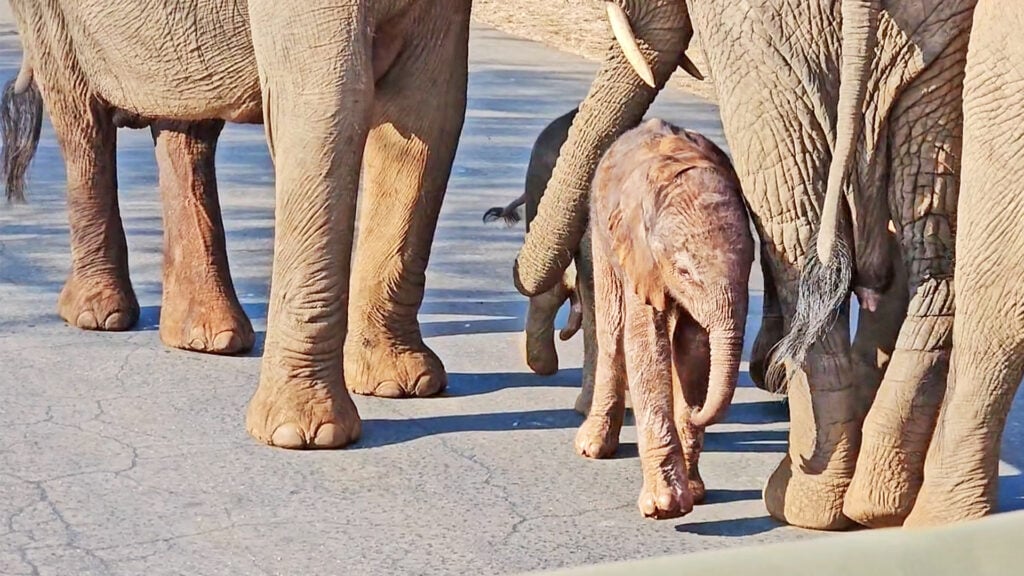
A miraculous ‘first’ witnessed by many
Baby elephants are actually quite quick to walk following their birth. A newborn elephant is usually on its feet within minutes to an hour after birth, despite weighing around 90 to 120 kilograms.
Get our Best Sightings as they Come in
No easy feat!
As demonstrated by this little one, these first steps are unsteady because the calf has never used its muscles before. To compound the complexity of these initial steps, the small elephant’s trunk also initially behaves like a separate limb. It swings and sometimes even gets in the way.
For these reasons, the first steps of an elephant are no easy feat! However, walking early is critical for the elephant’s survival. This is because elephants are mobile animals which rely on constant movement to reach water, food, and safe resting areas.

This beautiful sighting demonstrated how the elephants are willing to come alongside new members to their herd, and the complex social bonds which exist between herd members.
Following these initial steps, the calf’s coordination will improve rapidly in the first few days of its life. Its muscles will continue to strengthen and neural pathways will develop. This will allow it to keep pace with the slow but steady rhythm of the herd.
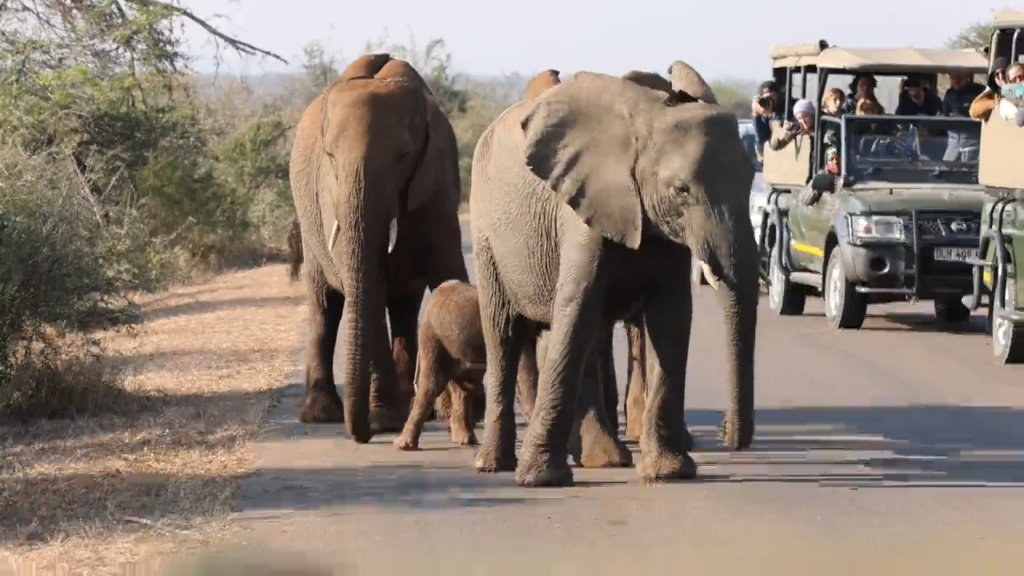
A tentative moment remembered by all
These motorists must have held their breath as the elephants passed through. This is because elephants are highly protective of their young, and drivers and occupants of game viewing vehicles need to demonstrate respect for the species when they come close to a herd.
Herd behaviour plays a central role in helping a calf master these first movements. Elephants live in matriarchal family groups led by an experienced female, and the birth of a calf triggers immediate protective behaviour.

Here, the adults formed a loose circle around the newborn, creating a living barrier against the possible threat posed by cars. At the same time, they offered physical support for the calf when it stumbled. They used their trunks to steady or guide the calf as it walked along.
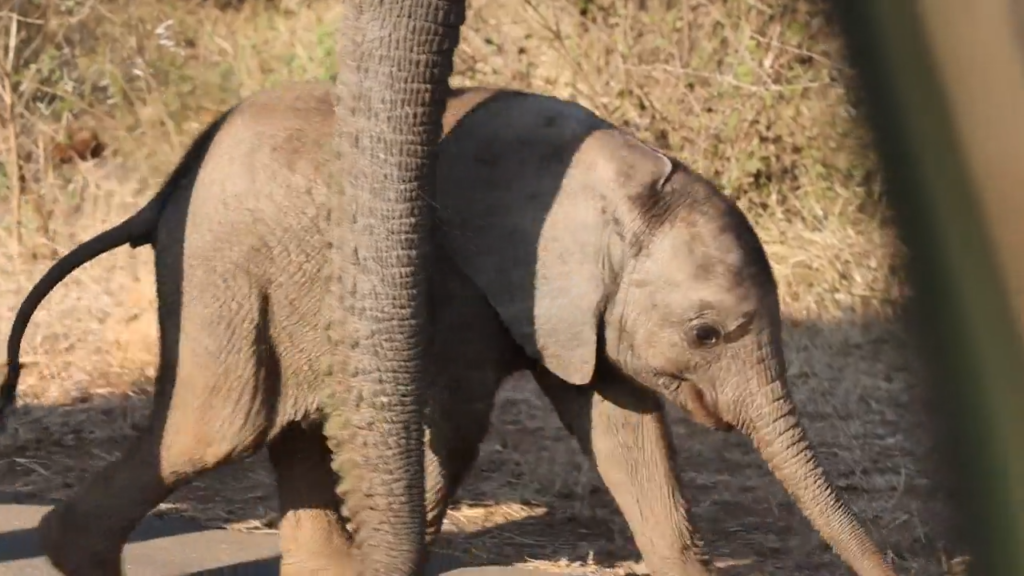
The little thing held everyone’s attention, as well as the attention of the herd.
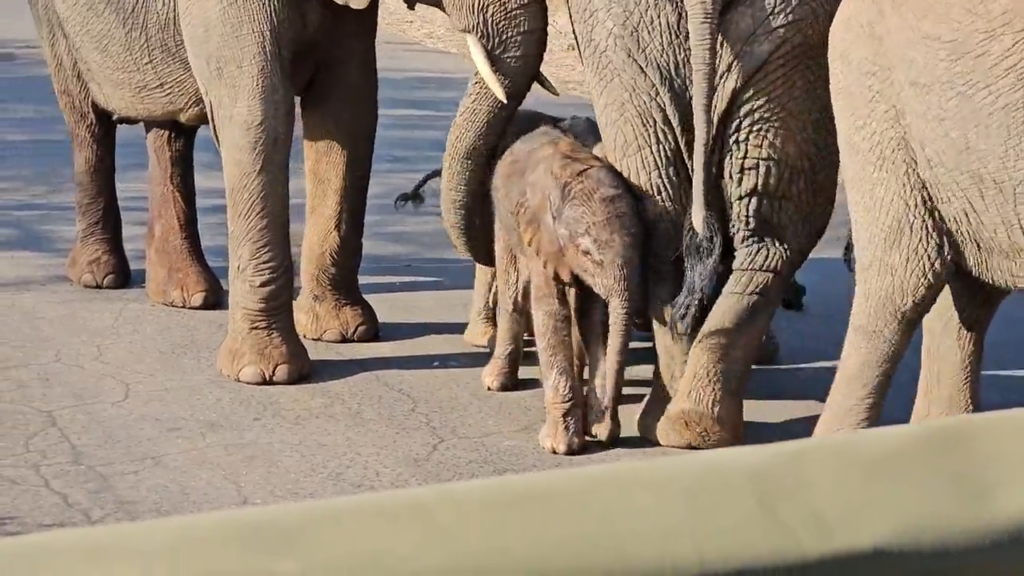
Newborn embarks on incredible journey
The tiny elephant boldly made the long journey across the road, thanks to the collective care provided by the herd.


