

Giraffes are the world’s tallest animals, measuring up to 6 metres in height. As such, their young come into the world from a dizzying height, as seen in this footage.
Emma-Jane Smythe submitted this touching footage to Latest Sightings. She filmed it while visiting South Africa’s Olifants Game Reserve.
Watch the video here:
In labour
As Emma-Jane’s video starts, we see a female giraffe standing in the bushveld. At first glance, she appears at peace, gazing into the distance.
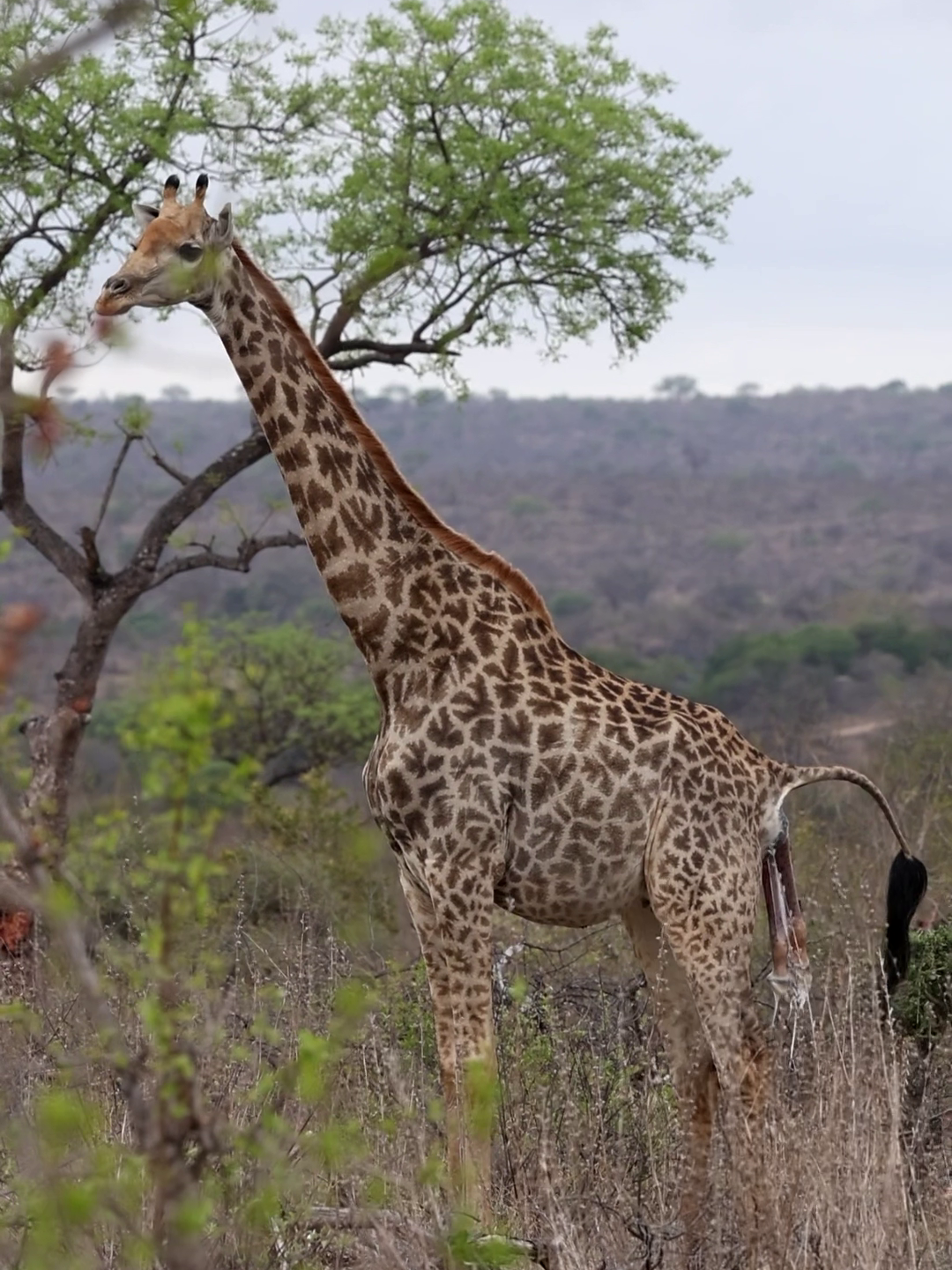
However, on closer inspection, we note that she is in the midst of a very special moment. The giraffe is in labour, with the front legs of her calf already showing from her back end.
Upright birth
As her labour progresses, the cow seems at peace, even going so far as to nibble on some leaves. She has carried the foetus for 15 months, and Emma-Jane is very fortunate to be there for this momentous occasion.
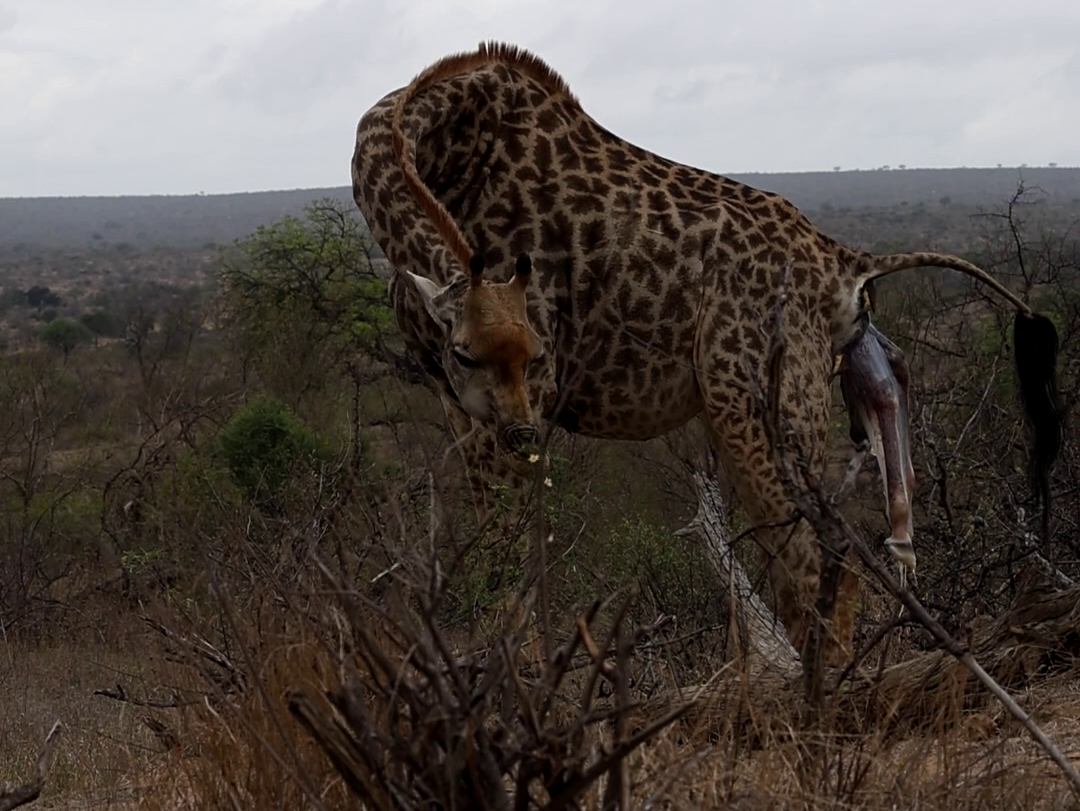
Giraffe calves are born head-first, in a so-called “Superman-pose”. This means that the head, neck, and front limbs emerge first, until the body widens at the shoulders.
Never Miss A Viral Safari Video
Moments like this, once-in-a-lifetime giraffe birth sighting, are very popular with our members. To be among the first to see our latest sighting videos, join our exclusive alert list. Click the button below to join the WhatsApp chat right now, and never miss another thrilling moment.
Protected and nourished
Like all young mammals, the unborn calf’s body is encased in a membranous, fluid-filled bag known as the amniotic sac. Furthermore, it is connected to its mother by an umbilical cord by which the foal is nourished until birth.
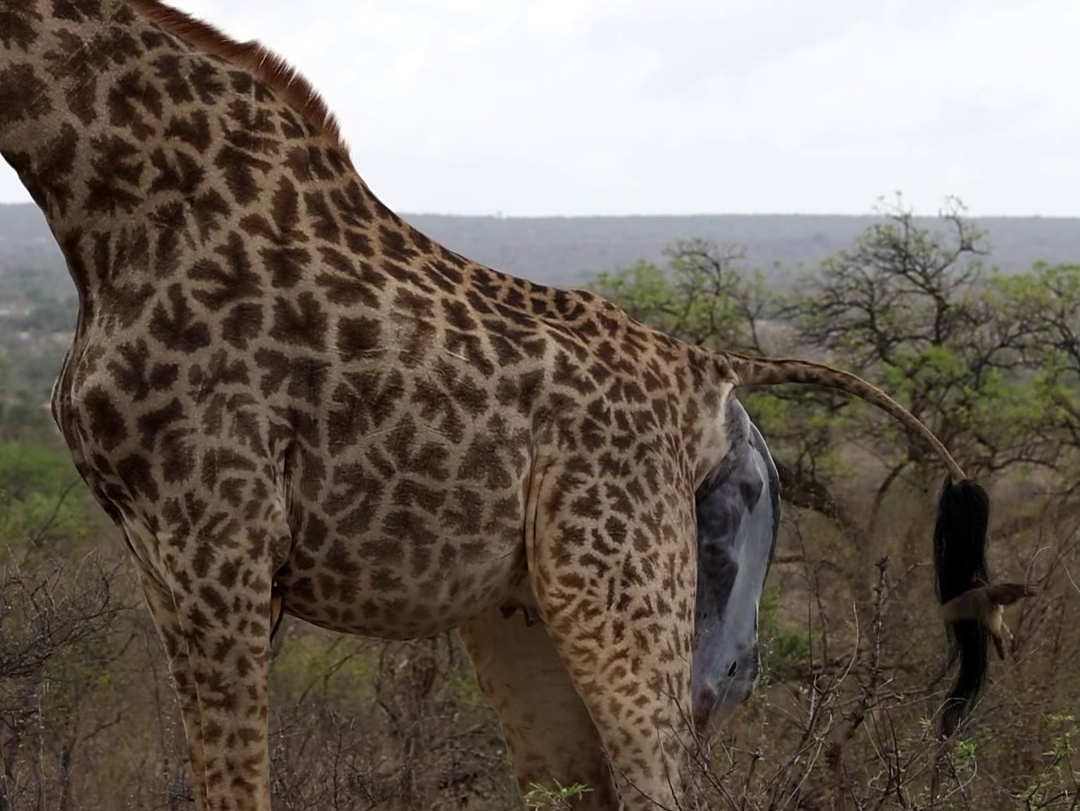
The exit to the female’s birth canal sits roughly two metres above the ground. As such, the actual birth is quite dramatic.
Get our Best Sightings as they Come in
Moment of truth
After several minutes, the moment of truth arrives suddenly. One moment, the calf is dangling in the air, and the next, it tears through the amniotic sac and slips smoothly from the female’s body.
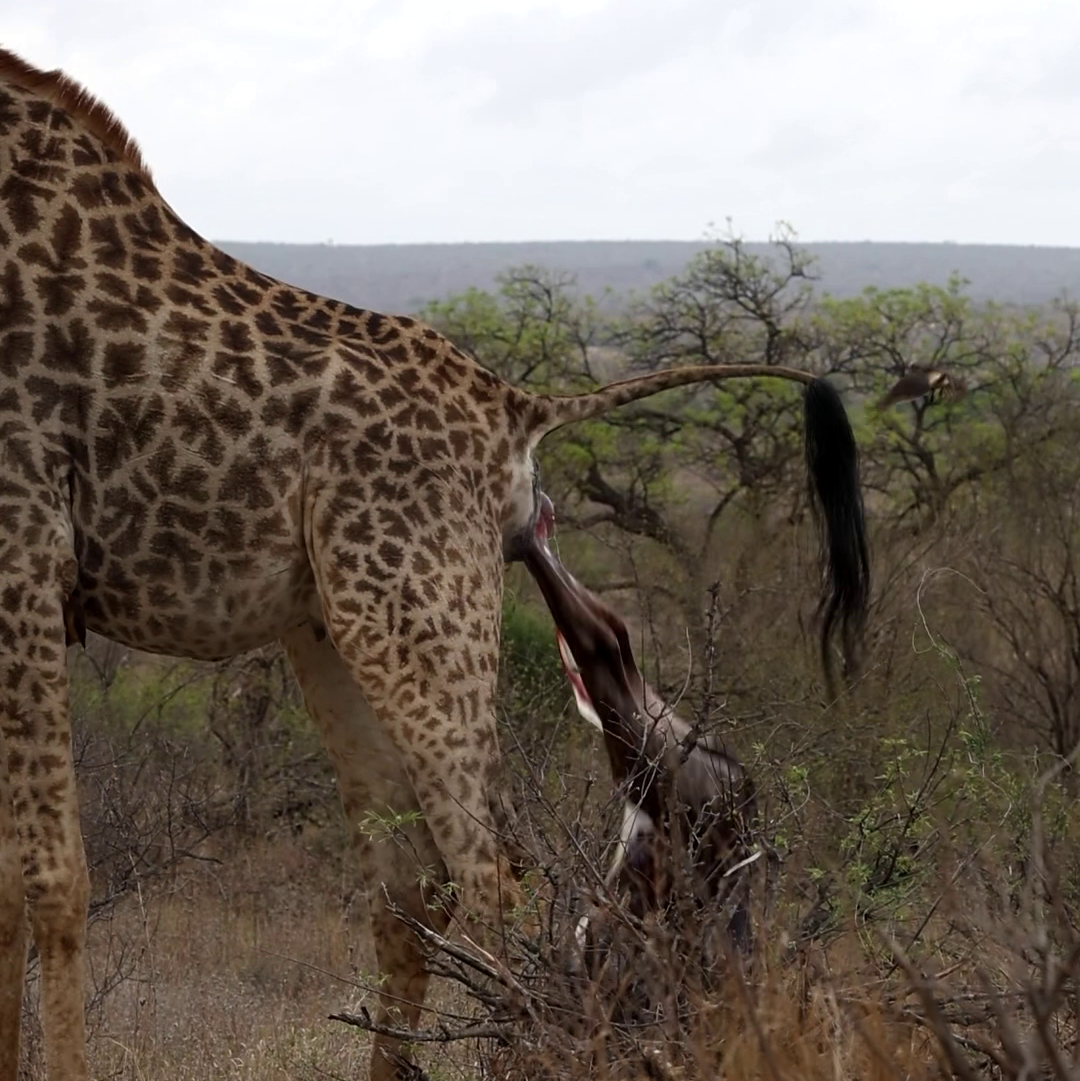
As the calf’s head, neck, and front legs touch the ground, they fold to absorb much of the impact as the rest of the body follows. As it falls, the umbilical cord snaps and the impact “kickstarts” the calf’s respiration.
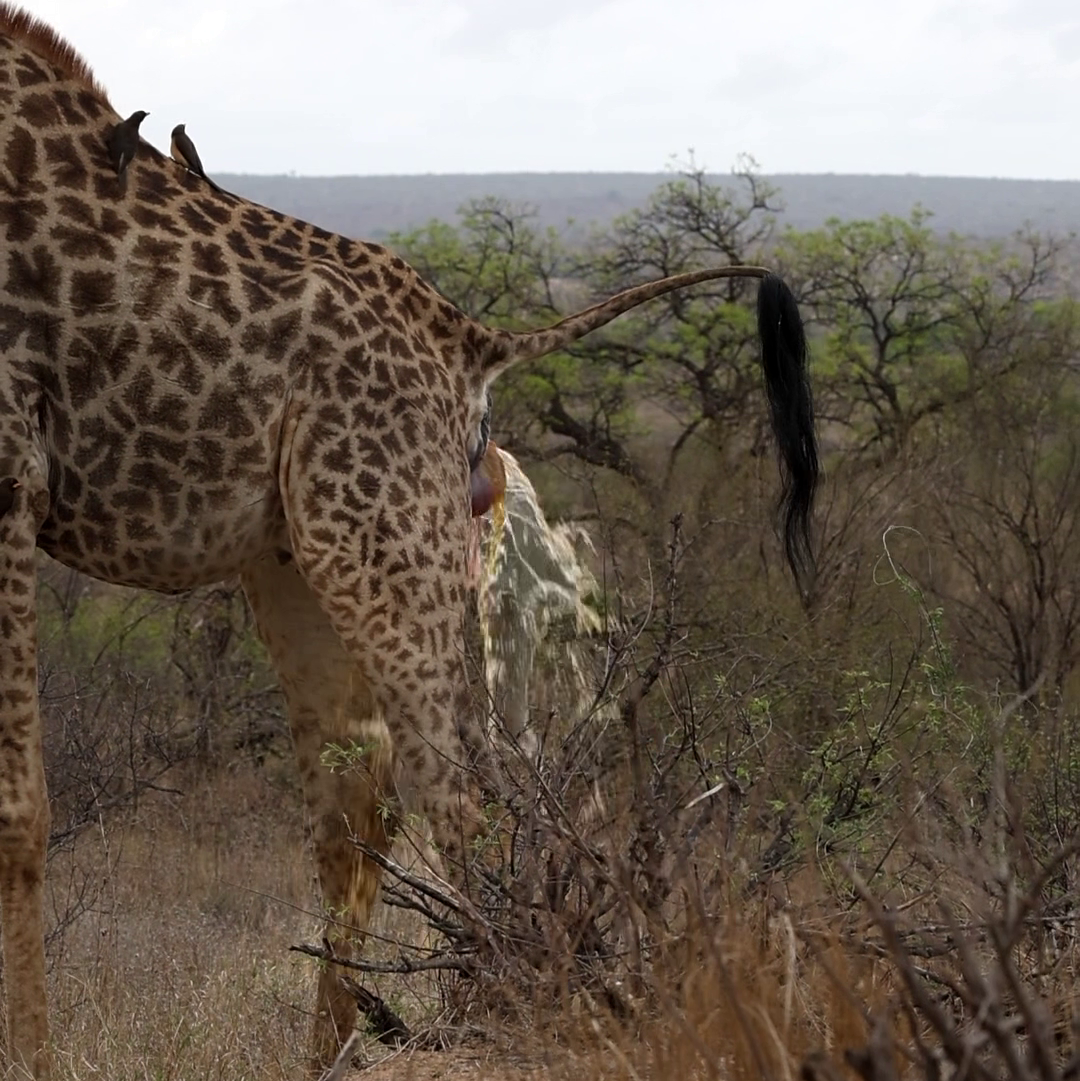
Subsequently, we see a large volume of amniotic fluid gush from the mother’s body, along with the placental remnants.
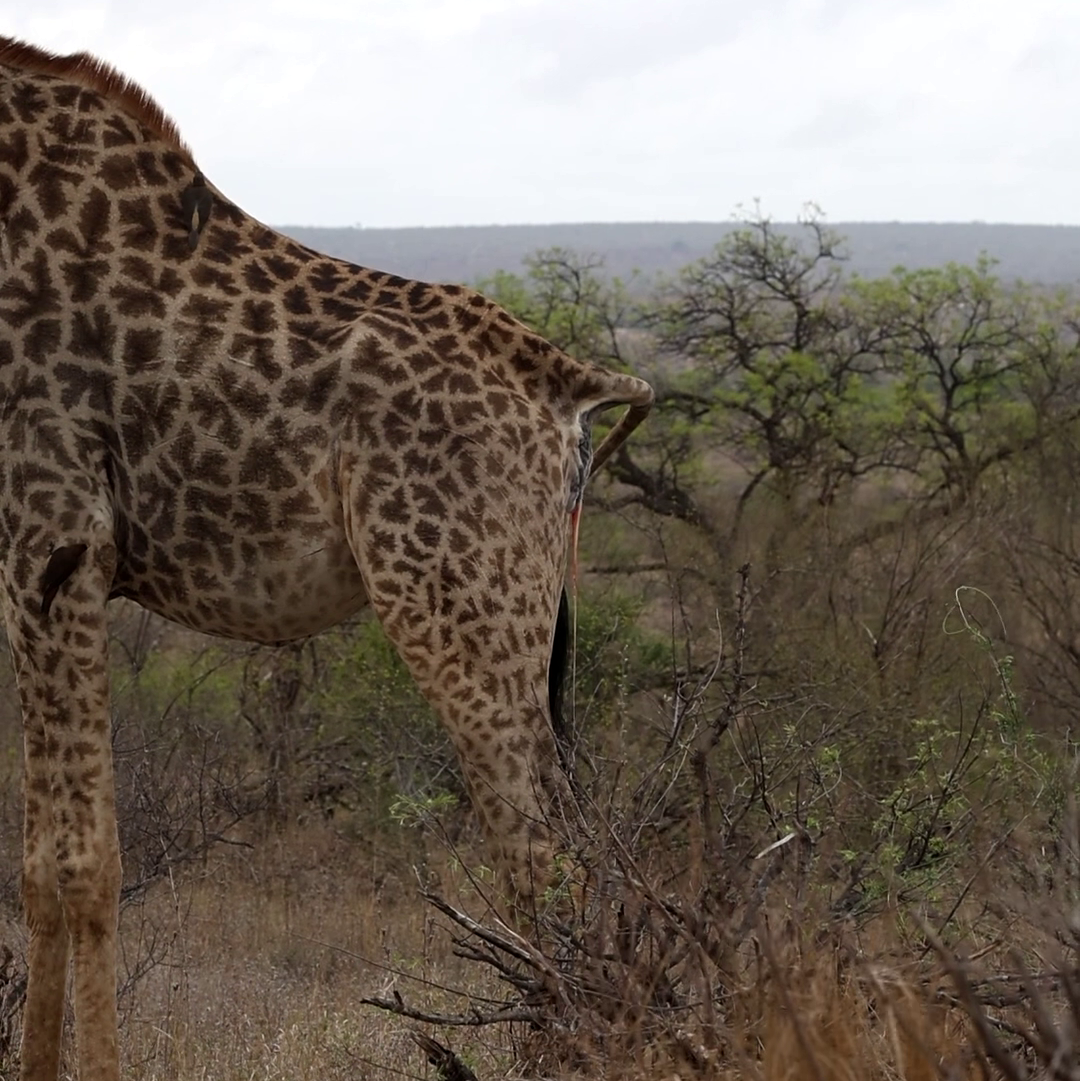
And, just like that, a new life has arrived on the plains of Africa’s wildlands. A place where predators roam, eager for an easy meal.
A race to move
As her calf lies at her feet, the new mother bends down to inspect her newborn. This is a crucial time, as the scent of her body fluids may attract predators.
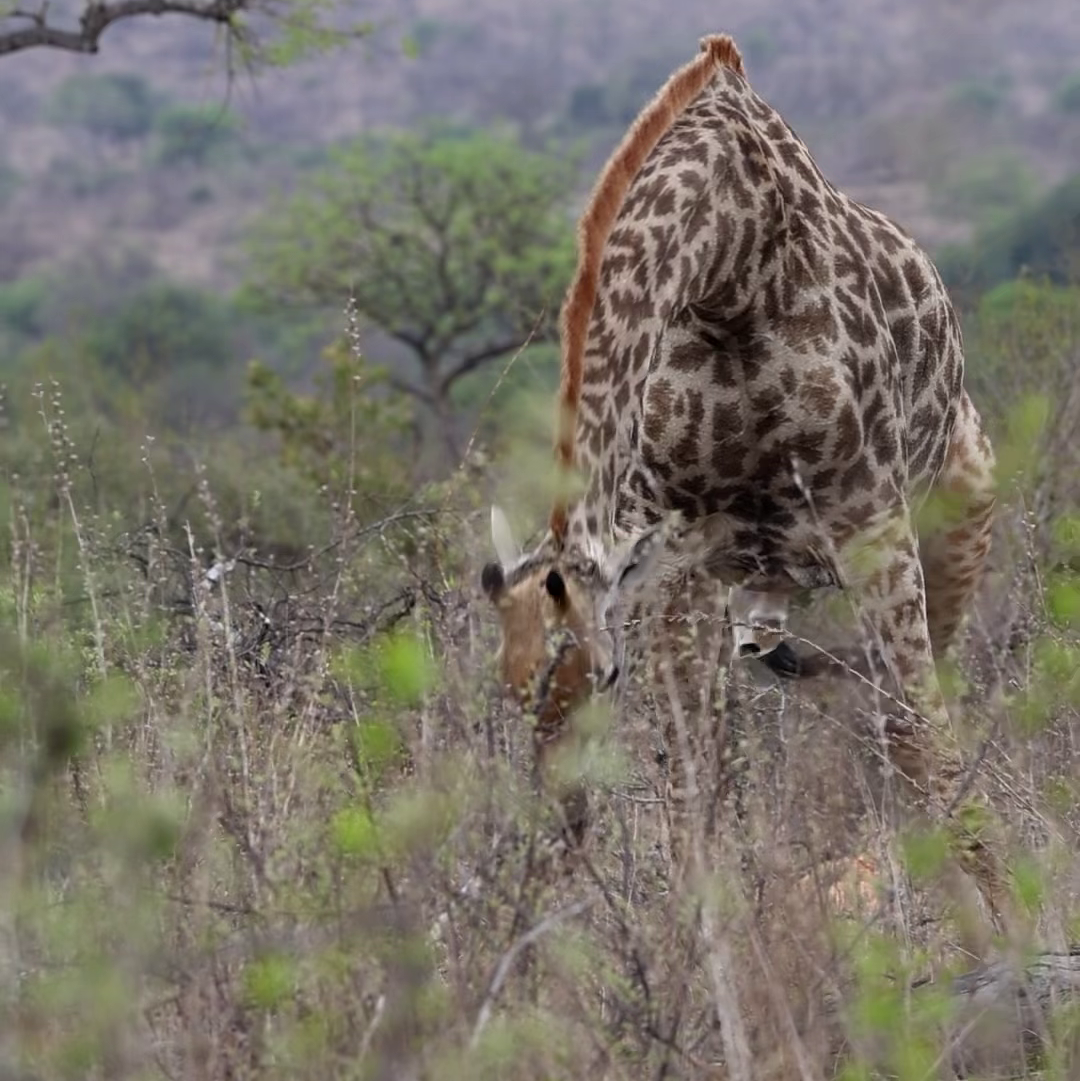
To reduce the chances of discovery, the mother licks her calf to remove the giveaway scent. Meanwhile, the calf will begin the process of getting to its feet.
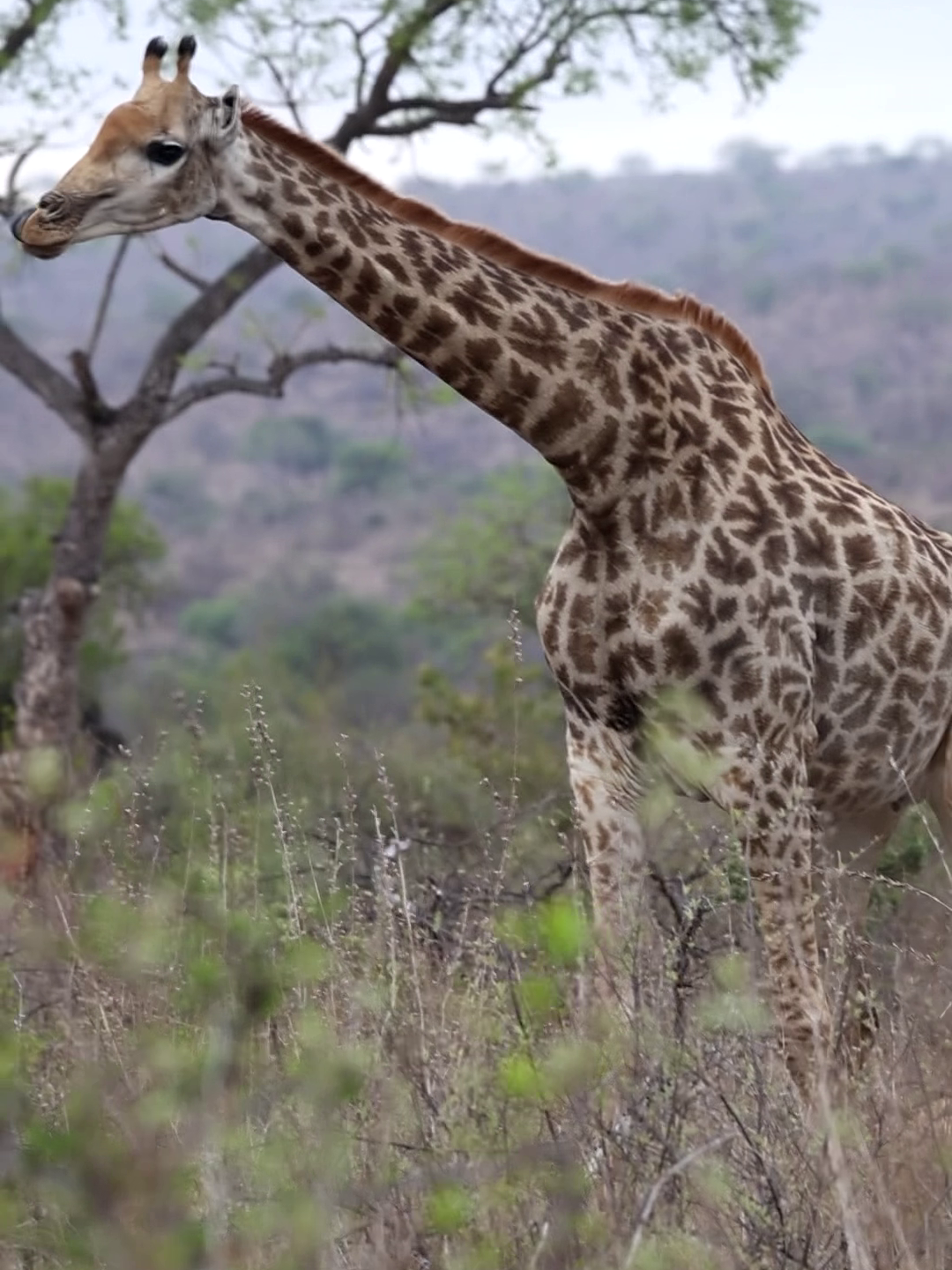
If all goes well, calves can generally stand within an hour of birth. Although their first steps will be clumsy, they soon get the hang of walking. Within a couple of hours, the calf can run alongside its mother. More evidence on Nature’s amazing efficiency.


