

Elephants are among the most colourful animals to watch in the bushveld. This is because, in addition to having strong social bonds, they love to play!
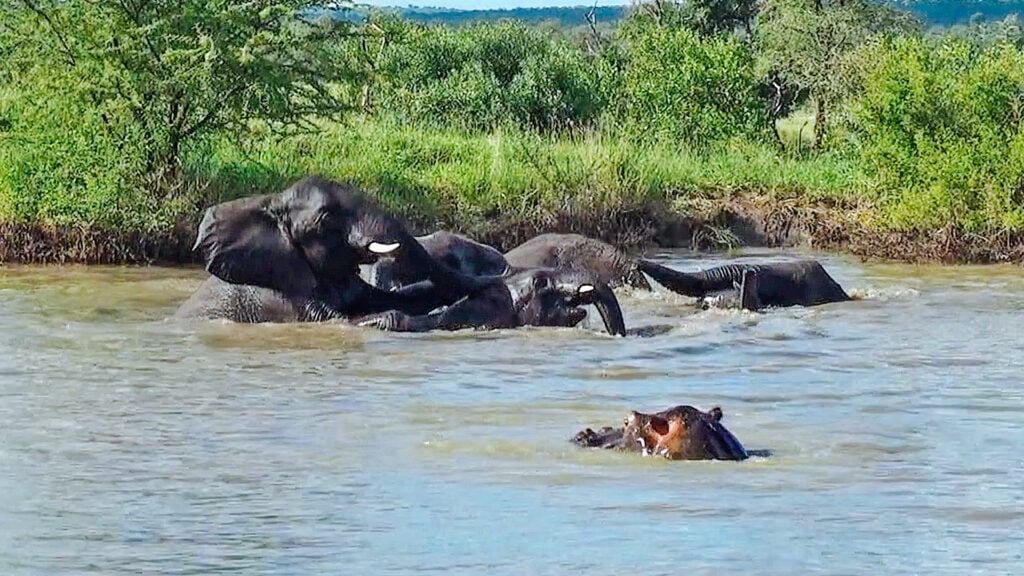
Hippo looks on as ellies dunk and dive
Join Our Wildlife Alert Group
Be the absolute first to see our newest nature footage by joining our exclusive alert list. Click the link to jump into the chat right now and never miss out.
These ones cooled off in a river, oblivious to the presence of a nearby hippo, as they dunked and dived and at certain intervals, even used their trunks as snorkels!
The hippo watched from a distance, with its beady eyes looking out from just above the water’s surface.
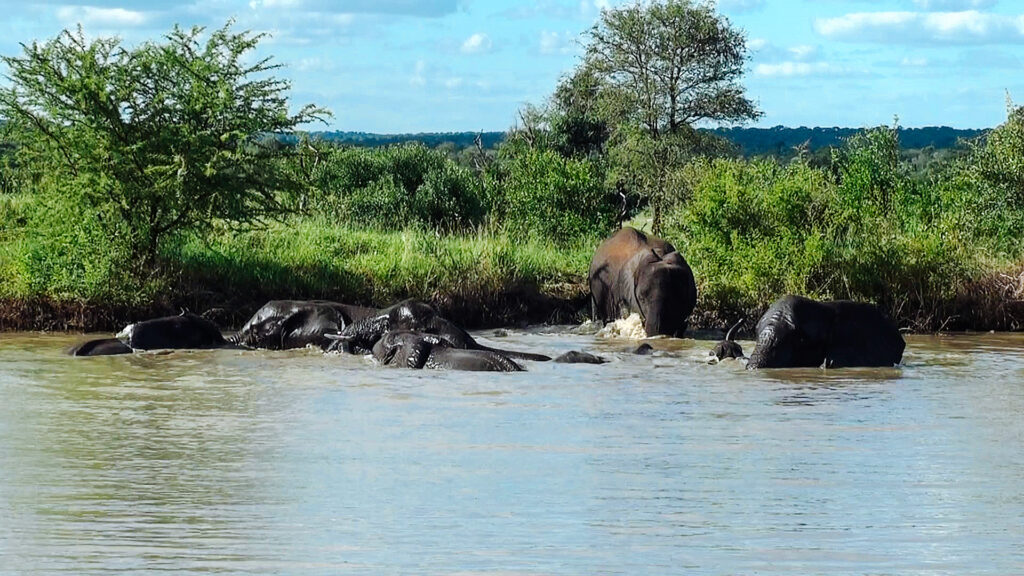
A learning experience
The play behaviour of elephants is best understood as part of their broader biology. In structured herds, such as those found in Kruger National Park, play is most commonly observed in calves and juvenile elephants, and it contributes directly to physical development, coordination, and social learning.
Young elephants will engage in a range of play behaviours, including chasing, pushing, mounting, and mock sparring. These actions are not random. They help develop strength, balance, and motor control, all of which are essential for survival.
Get our Best Sightings as they Come in
For males, especially, mock sparring mirrors the head-to-head contact they will later use in real competition. For both sexes, interactive play establishes social boundaries and reinforces relationships within the herd.
Water-based play is a natural extension of these developmental processes. Since elephants require regular access to water for physiological reasons, opportunities for play frequently occur at rivers, dams, and waterholes.
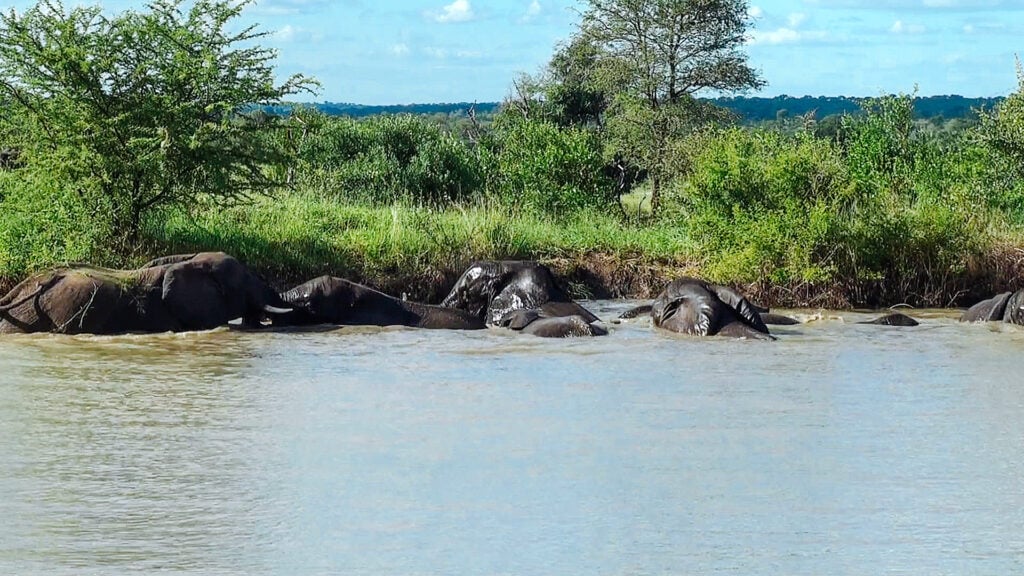
A social event for the entire herd
However, in this special sighting, it wasn’t just the calves which were enjoying some water play. The adults were in on it too!
While play is most frequent and obvious in calves, larger and fully grown elephants also engage in play-like activity, especially in water.
Elephants, including the ‘grown-ups’, often remain in water for extended periods, and their behaviour can shift from purely functional to more relaxed and interactive.
Larger elephants have been observed rolling their bodies, submerging completely and resurfacing repeatedly, or using their trunks to spray water in a repeated and exaggerated way. These actions can serve cooling and skin-care functions, but when they are prolonged, repetitive, and occur in the absence of immediate need, they are classified as play-like behaviour.
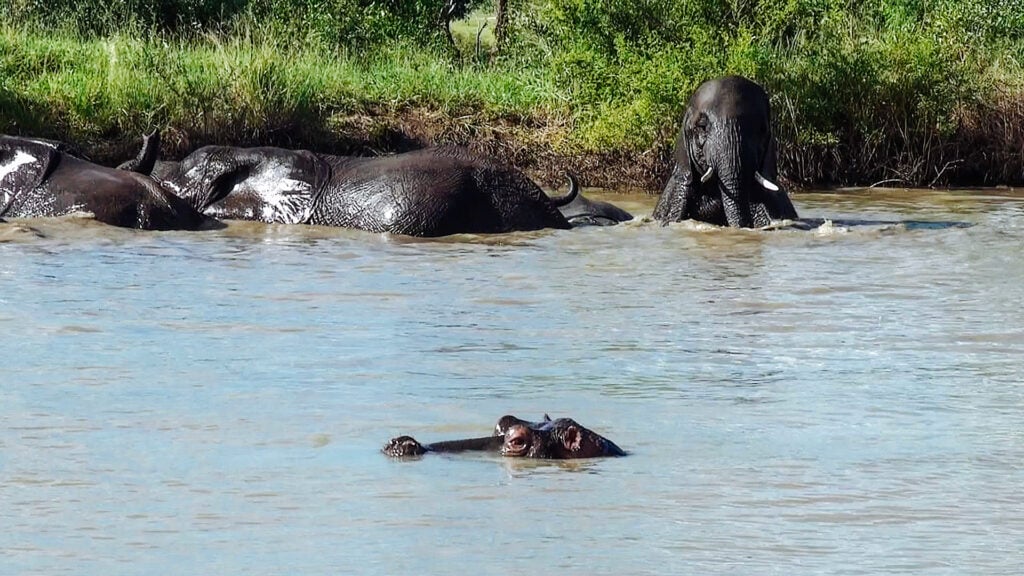
The hippo continued to lurk in the background while the elephants enjoyed a good swim.
As social animals, swimming serves to create strong ties between herd members. Adult females within a herd maintain strong bonds, and shared time in water can reinforce these relationships. Even for bulls, particularly younger or socially tolerant individuals, water can be a space where interactions are less tense compared to dry land encounters.
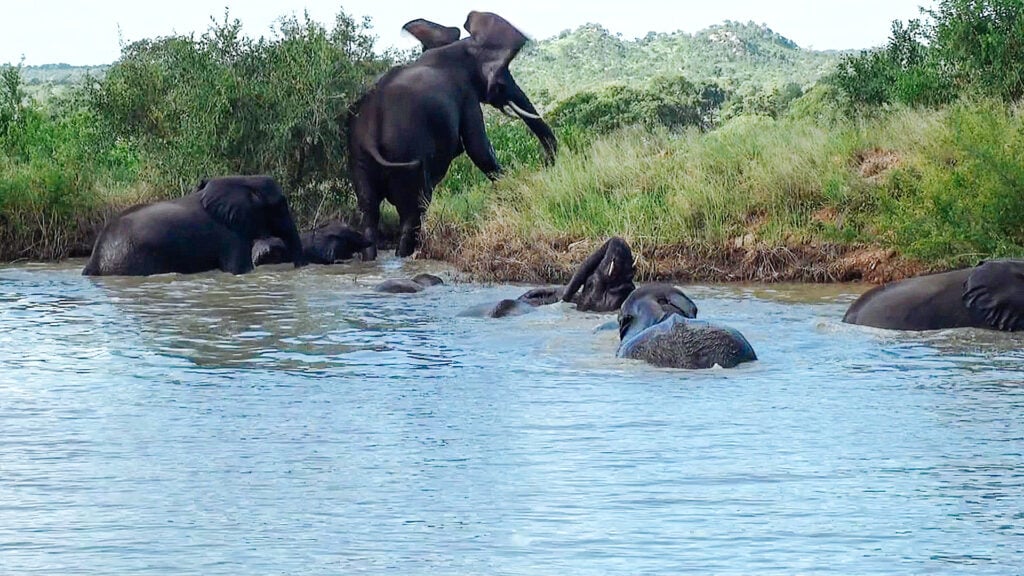
Having enjoyed a swim, some of the herd members eventually left the river, appearing somewhat more respectful as they emerged from the waters, solemnly regaining a regal composure, to resume grazing.
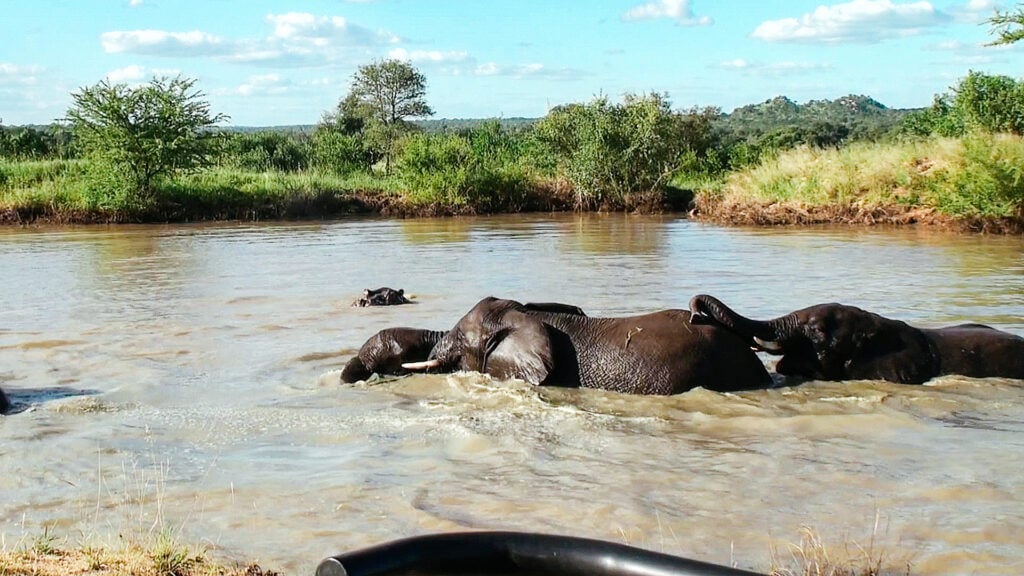
Here’s to ‘the good life’!
Some continued, however, to cool off in the river, and the hippo continued to look on, perhaps learning a thing or two about what it means to let your hair – or, ‘ears’ – down and enjoy the good life!


