

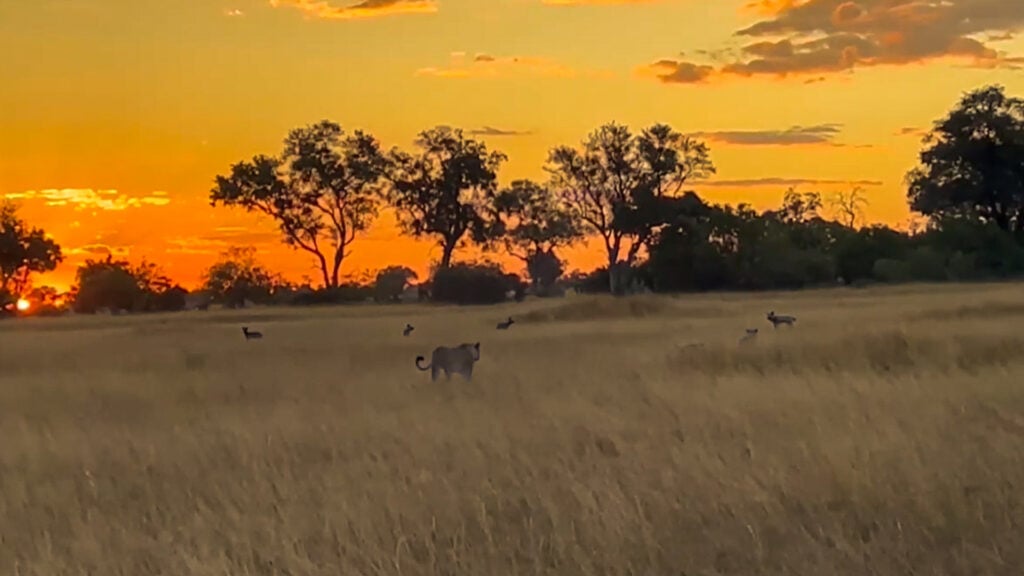
Andrew Edwards submitted this spectacular footage to Latest Sightings. He filmed it in Botswana’s Okavango Delta.
Wild dogs on the alert
As Andrew’s video begins, we see one of Africa’s most efficient predators spread out on a floodplain in the delta. These medium-sized predators live in packs, numbering on average ten members.
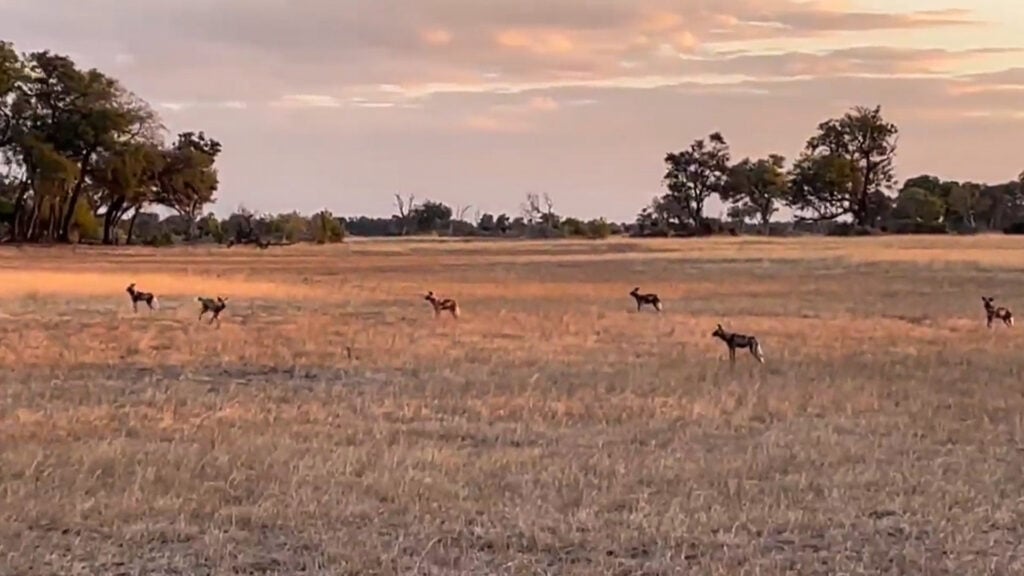
The dogs are on the alert. But have they spotted prey, or has something else caught their attention?
Suddenly, one of the dogs turns and runs…
A lion pride approaches
Subsequently, the camera pans to the left, revealing the reason for the dogs’ alert posture and retreat. A pride of lions is advancing towards them.
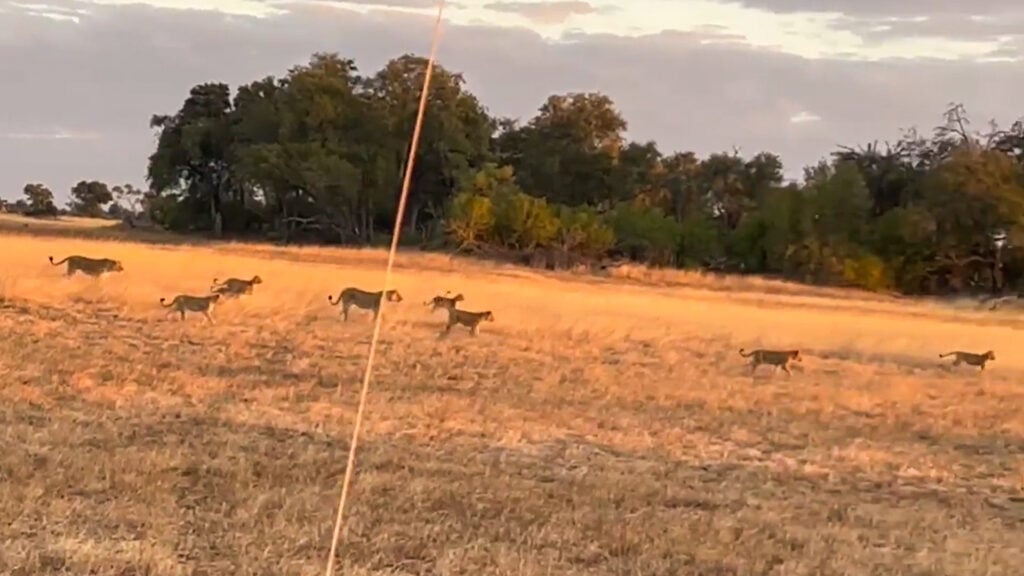
While the adult lions walk at a steady pace, some of the cubs break into a run, pursuing the dogs.
Lions are the largest predators in Africa, and their individual strength is amplified by their social tendencies. As a fighting force, they have no equal.
Safety in the long grass
As the dogs retreat, they enter long grass. Consequently, the cub that chased them pulls up short, unable to clearly see its adversaries.
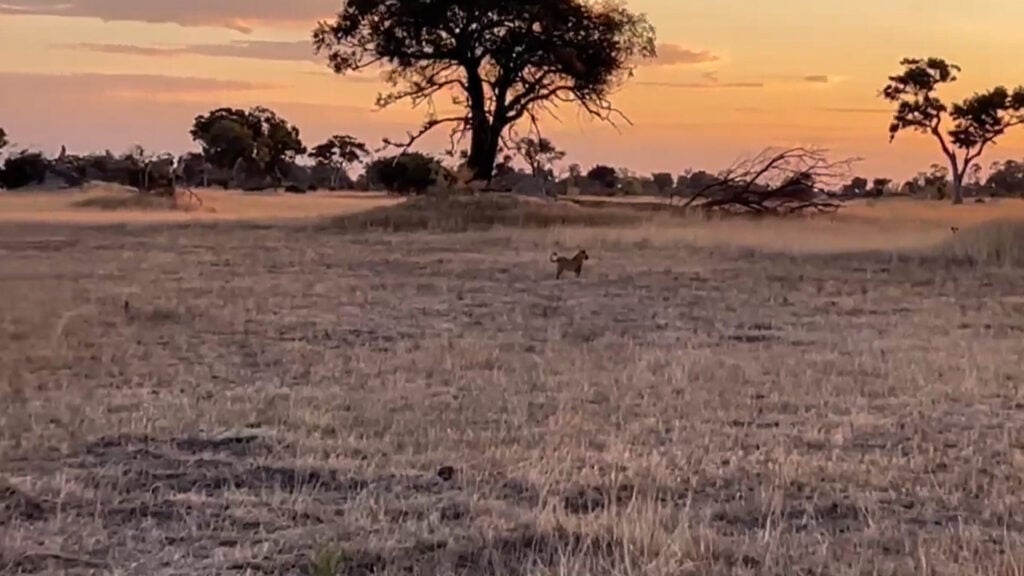
As the sun dips towards the horizon, the young lion’s tail lashes. It knows enough to recognise the competition, but is too inexperienced to realise the advantage it holds.
Stand-off
Meanwhile, the dogs have stopped their retreat. Rather than waste energy in needless flight, they keep an eye on the cub and the pride advancing behind it.
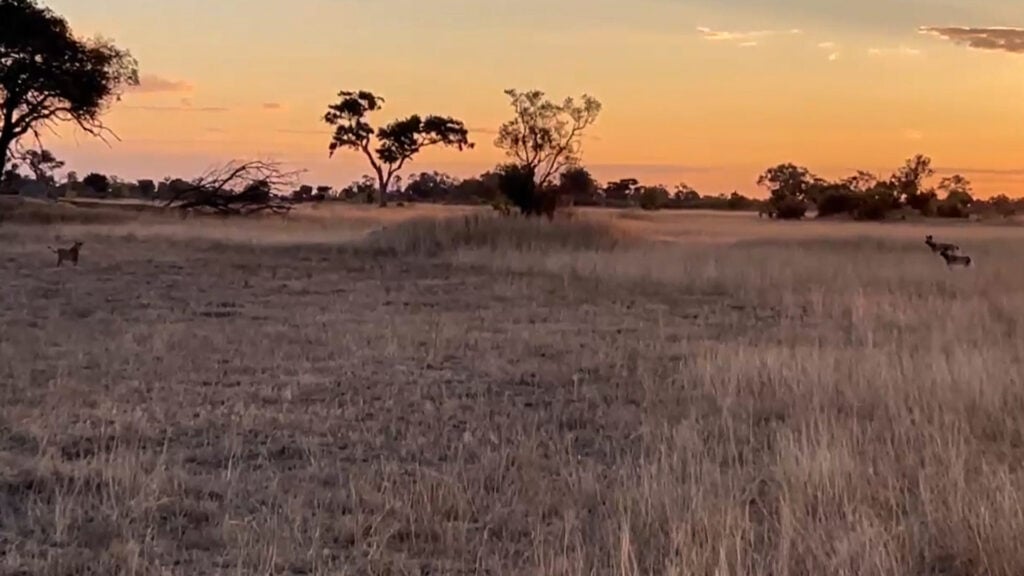
What we’re seeing here is the use of comfort zones. These are imaginary circles around animals, within which they feel safe from other species.
Should the other species encroach on the zone, the other will likely move to restore the distance separating them. These zones are dynamic and adjust depending on various factors, such as terrain and body language.
Comfort zones illustrated
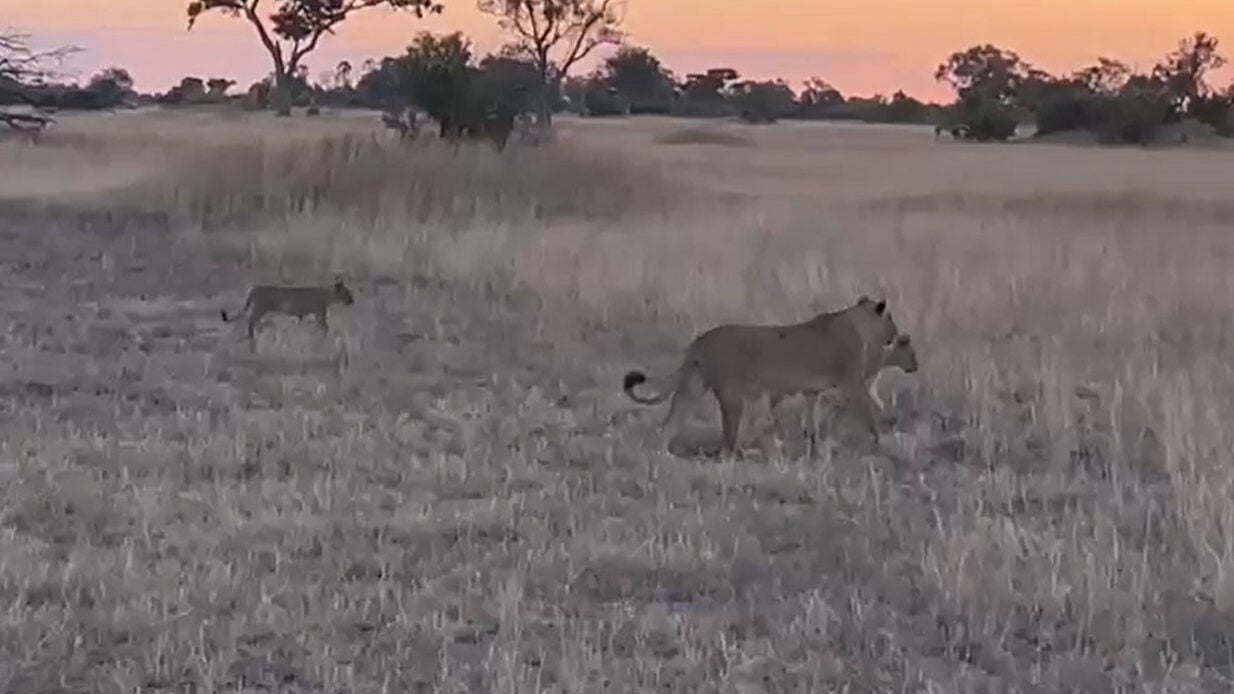
We see this illustrated when the lions enter the long grass. In the fading light, the diurnal dogs probably find it difficult to track their adversary’s movement in the tall grass.
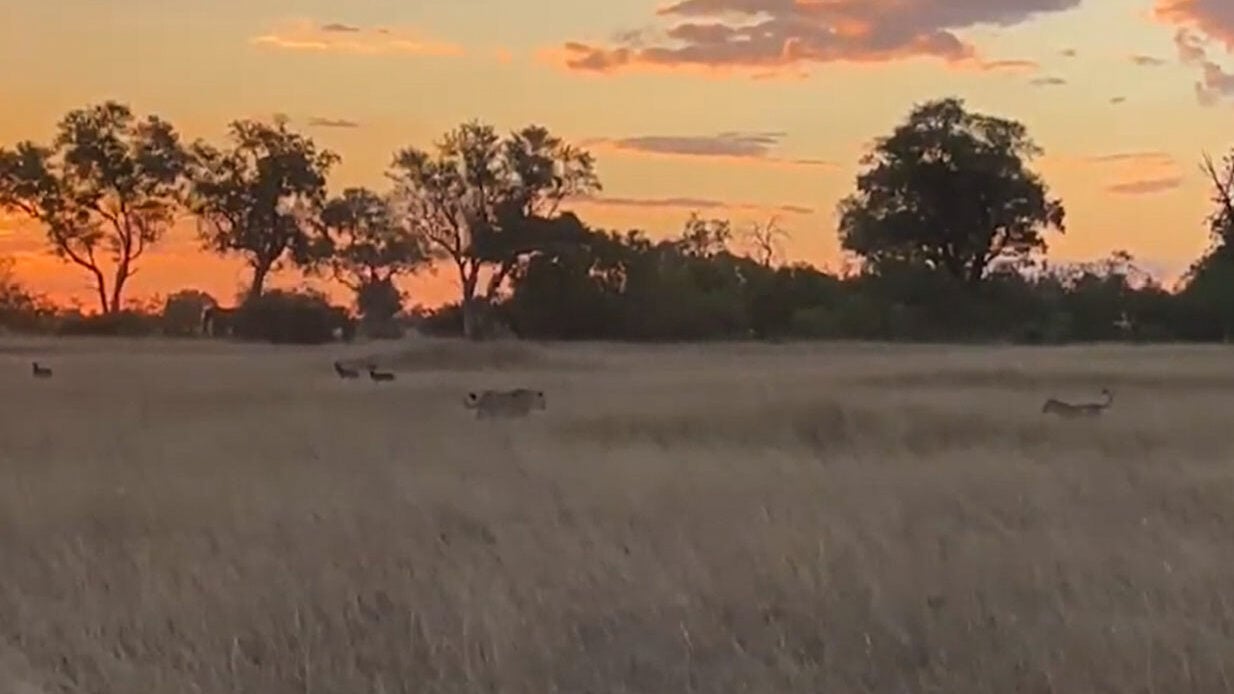
It is not only the dogs who are perturbed. As the dogs move to maintain their comfort zones, the cub returns to safety alongside one of the leading adults.
Get our Best Sightings as they Come in
Reassured
However, it doesn’t take much for the cub to feel reassured. No sooner does it touch base with the lioness than it sets off once more to challenge the dogs.
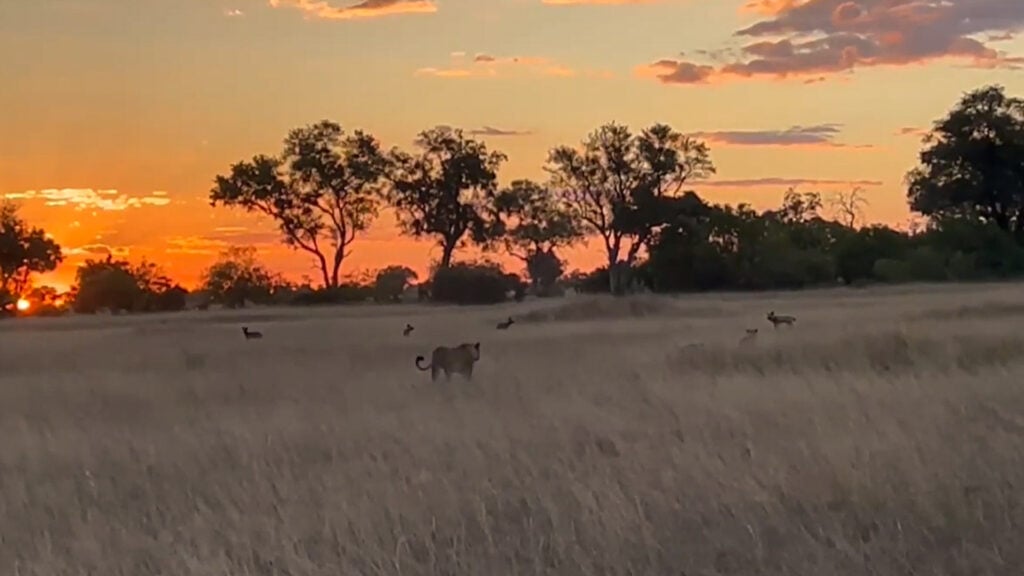
While in this instance, with the pride nearby, the cub is probably quite safe, it might be quite a different story if it were entirely alone.
As the video draws to an end, we see the dogs change their tactics. Seeing the lions maintain their course, the dogs retreat at a perpendicular angle.
They stop occasionally to make sure the lions are not following. By doing so, they have successfully avoided a physical clash and conserved their energy.
Interpredator competition
The competition between predators is intense. After all, they are competing for the same things: territory and resources.
When the opportunity presents itself, such as when they encounter a young or injured rival, they may attack or kill it.
Lions, with their superior strength and numbers, are the chief culprits, but hyenas, leopards and wild dogs will also do so on occasion.


