

Darkness on the Move
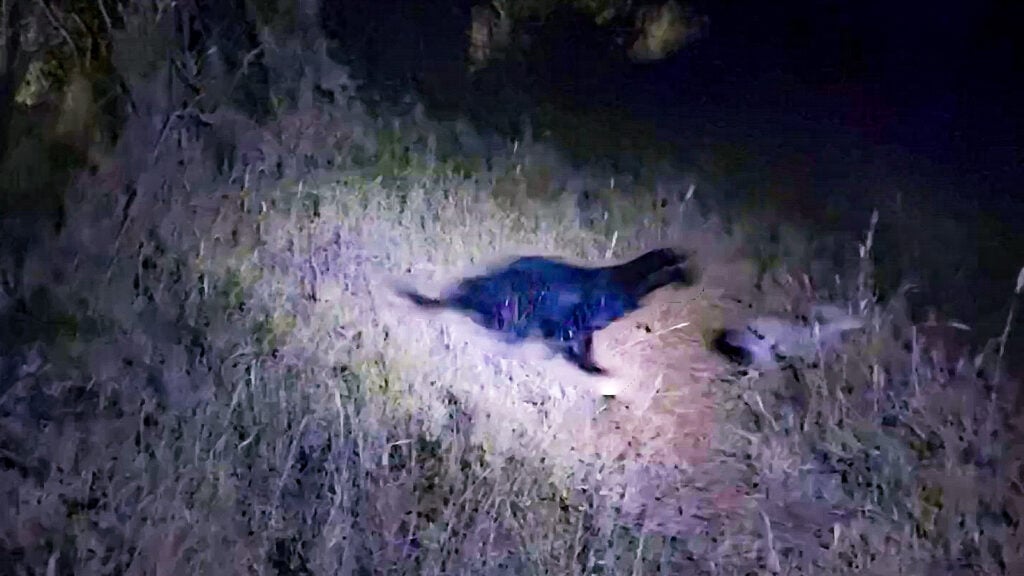
Night drives at Laikipia Wilderness Camp have a way of delivering the unexpected, but what Malvina Bartmanski and her group witnessed was something most safari-goers never see in a lifetime. The beam of a flashlight swept across the bush, illuminating the kind of scene that stops conversation cold.
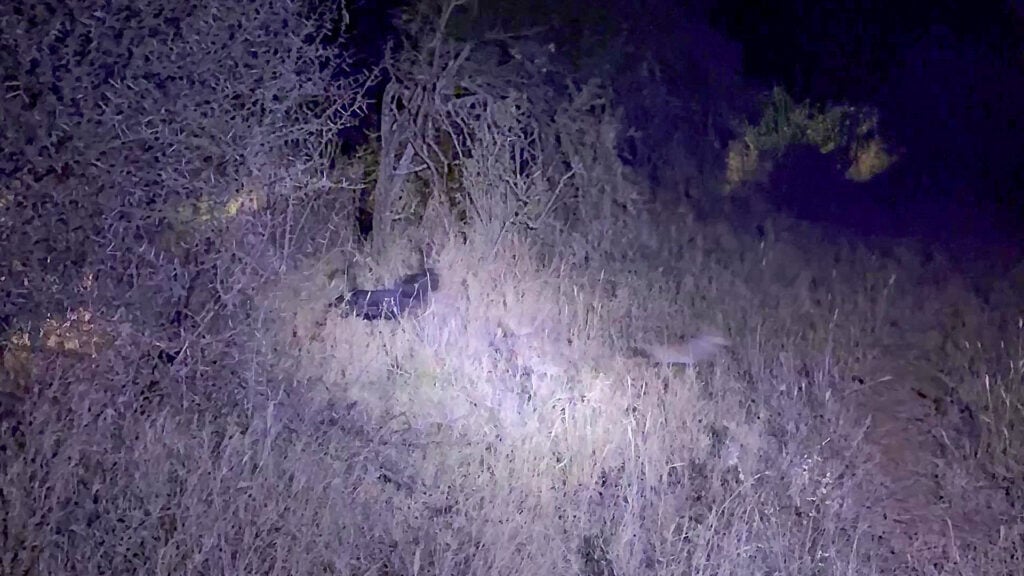
Already in motion, a black leopard launched itself from the undergrowth with coiled, explosive precision, closing the short distance to its target in an instant. The prey was a dik-dik, one of Africa’s smallest antelopes, tucked into the brush just a couple of metres away.
Watch the Sighting:
A Kill in Seconds
Having no time to react, the dik-dik let out a sharp squeal as the leopard pulled it from the bush, its small frame twisting briefly against the grip. But the struggle was short-lived.
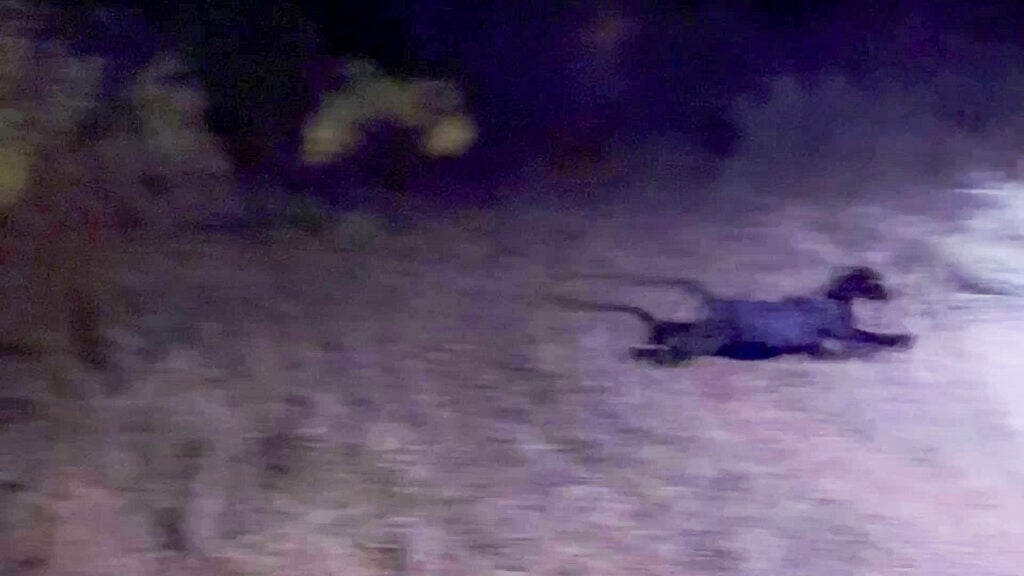
Within moments, the leopard had the animal locked firmly in its jaws, composed and unhurried, as though this was simply the natural order of things playing out on schedule.
What followed was equally remarkable. Rather than retreating into the darkness, the leopard turned and walked directly toward the vehicle, prey dangling from its mouth.
The Exceptionally Rare Cat
Black leopards, are not a separate species but rather a colour variant caused by a genetic condition known as melanism. An excess of dark pigment causes their coat to appear entirely black, though their characteristic leopard rosettes are still present beneath the surface.
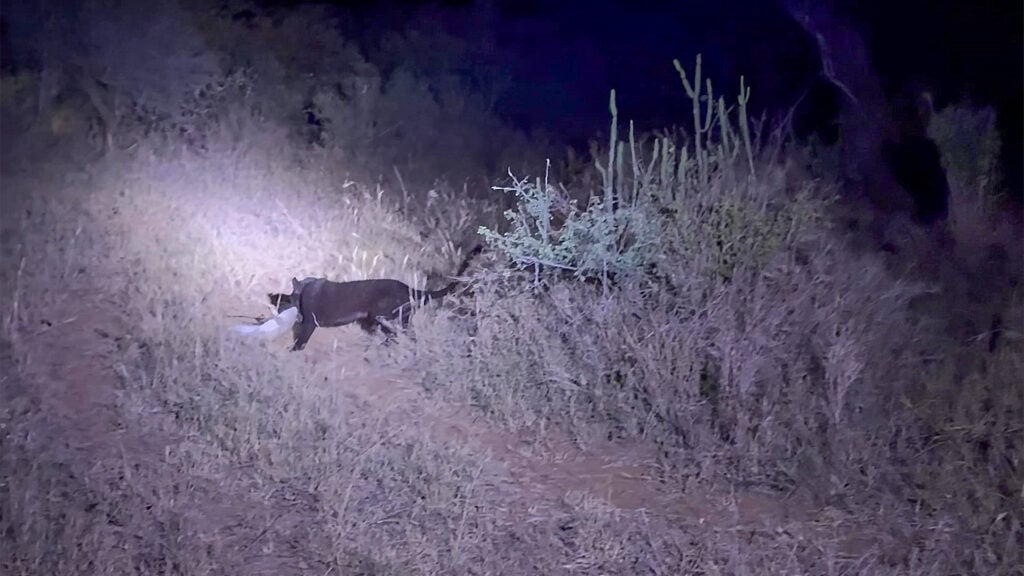
As this individual approached the vehicle, Malvina’s footage captured something genuinely special: even against the deep black of a Laikipia night, the faint outline of those iconic spots was still visible, shimmering just beneath the surface of the coat like a secret the animal couldn’t quite keep.
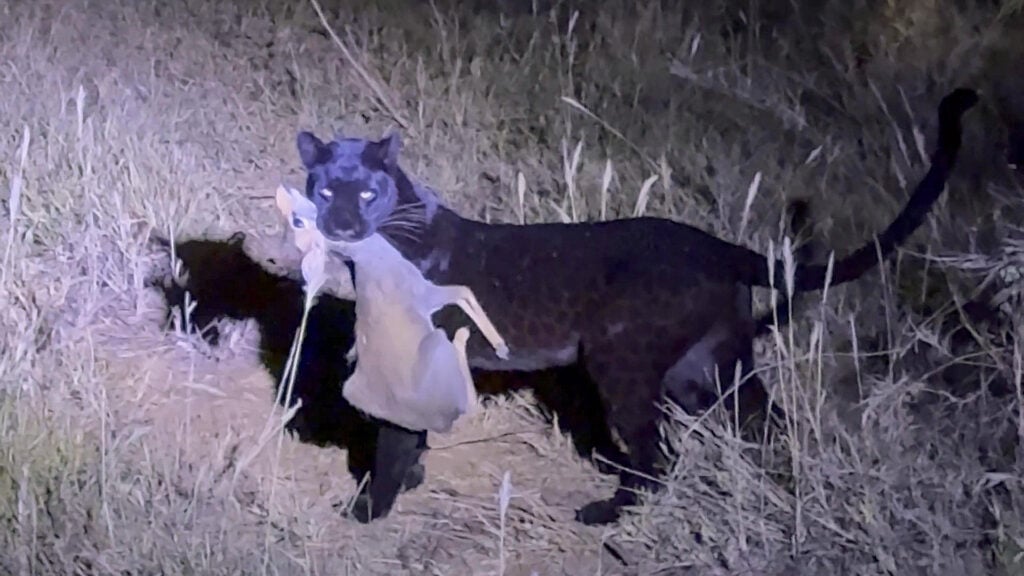
Black leopards are exceptionally rare across Africa, with confirmed sightings being few and far between. The Laikipia region of Kenya has become one of the most reliably documented locations on the continent for melanistic individuals, making it a special site for wildlife photographers and conservationists alike.
Hunters Built for the Dark
Leopards are formidable predators under any circumstances, but melanistic individuals carry an undeniable advantage after sunset. Their dark coats absorb what little light exists, allowing them to move through the landscape as little more than a silhouette.
In a place like Laikipia, where rocky outcrops and dense bush create a complex terrain, that invisibility is a powerful tool.
Get our Best Sightings as they Come in
Dik-diks, despite their size, are not easy targets. They are alert, fast, and intimately familiar with their home territory.
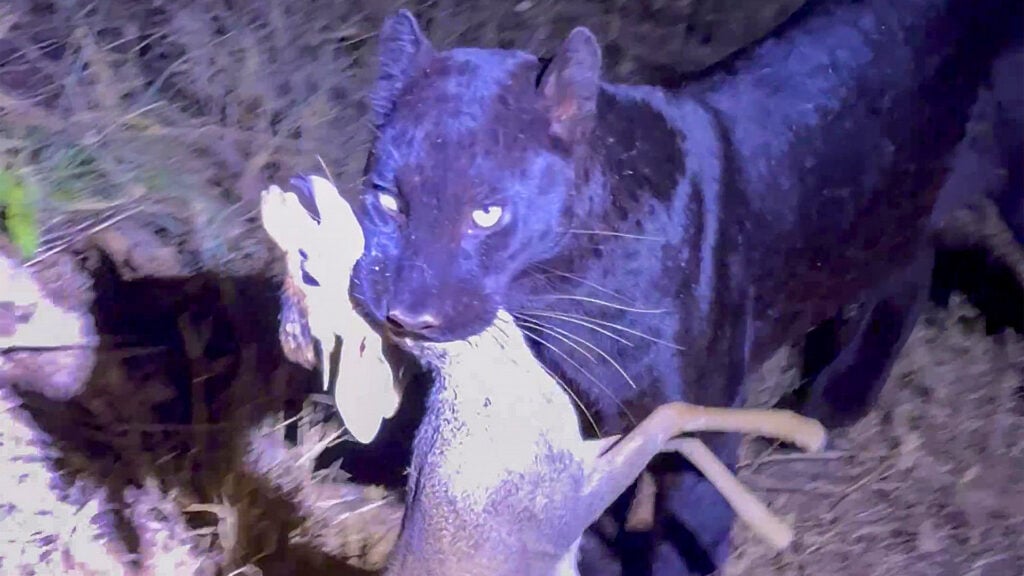
To catch one cleanly and confidently in the dark speaks to the leopard’s exceptional skill, patience, and timing. This was not a lucky strike. It was the result of a finely tuned predator doing what it was born to do.
A Moment That Stays With You
Footage like this is a reminder of just how much the bush conceals within its shadows. A thirty-second clip captured on a quiet night drive in Laikipia tells a story that stretches far beyond its runtime, touching on rarity, predation, and the strange, humbling privilege of being present for something so few ever witness.


