


Something Different in the Herd
On a routine drive through Sabi Sabi Private Game Reserve. Ranger Ronald Mutero was following a small herd of Zebra across the open plains when something stopped him in his tracks.
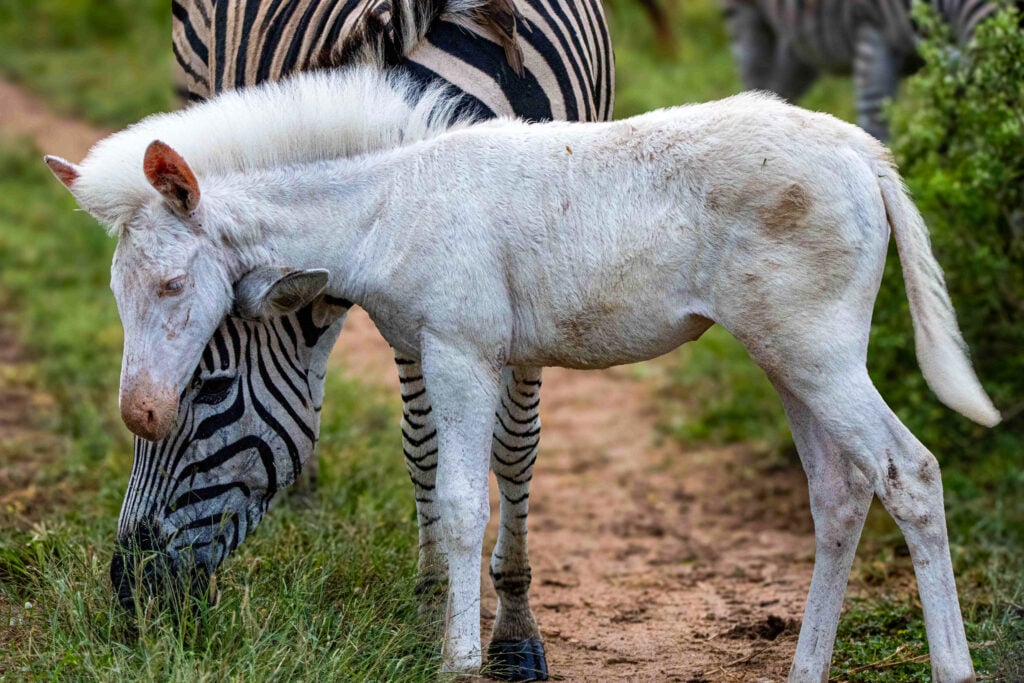
Tucked closely beside one of the mares was a foal unlike anything most people will ever see in the wild: its coat was almost entirely white, its markings so faint they had nearly vanished altogether!
From a distance, the foal seemed to glow. While the rest of the herd wore their bold, familiar black-and-white patterns, this youngster stood apart in the most dramatic way possible.
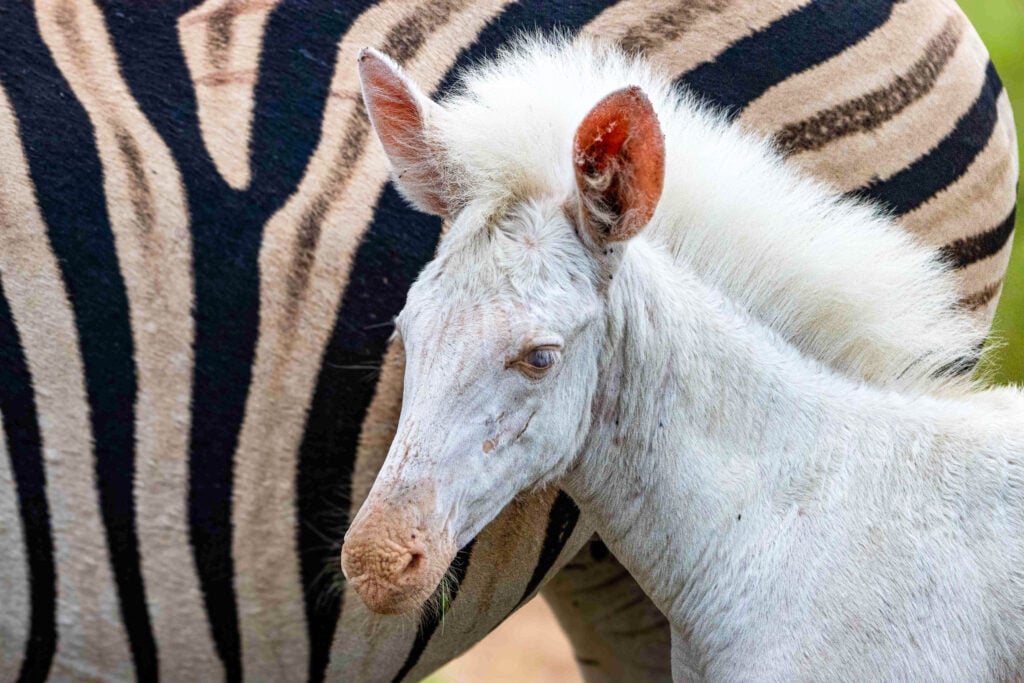
It was immediately clear that this was no ordinary sighting.
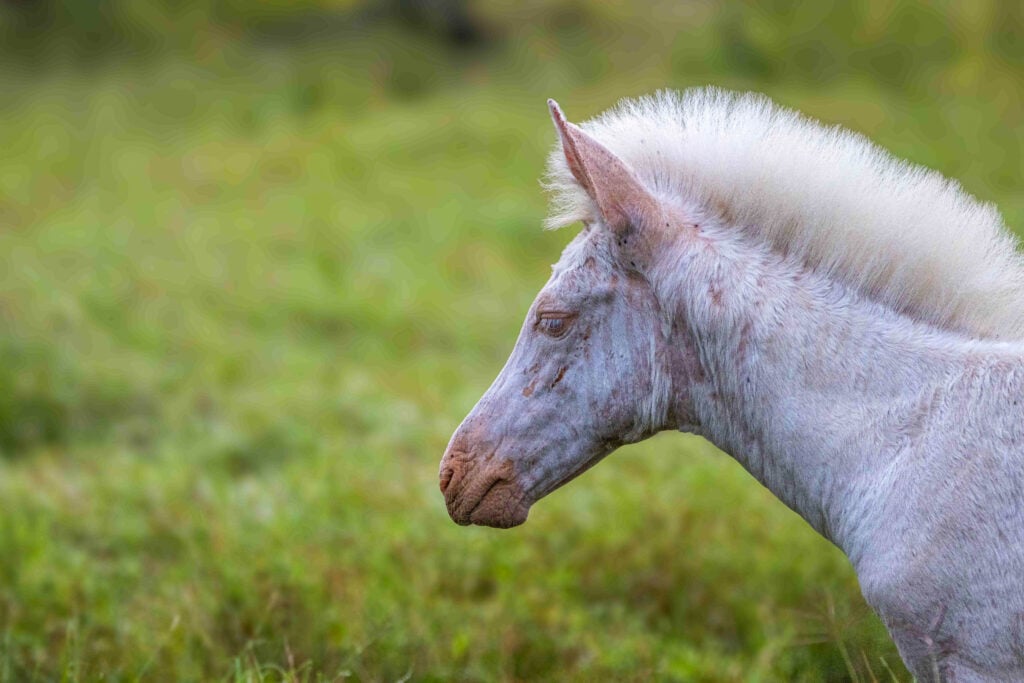
The foal’s unusual appearance is most likely the result of leucism, a rare genetic condition in which pigmentation is only partially produced. This sets it apart from albinism, which eliminates melanin entirely and typically results in pink or red eyes.
A leucistic animal may retain normal eye colour but show significantly reduced pigmentation across its coat.
Stripes That Serve a Purpose
To understand why this sighting matters, it helps to appreciate what zebra stripes actually do. Far from being decorative, their bold patterning serves several important survival functions.
When a herd moves together, the visual noise created by overlapping stripes makes it extremely difficult for a predator to lock onto a single individual. It is a phenomenon sometimes called the dazzle effect, and it is one of nature’s most effective anti-predator strategies.
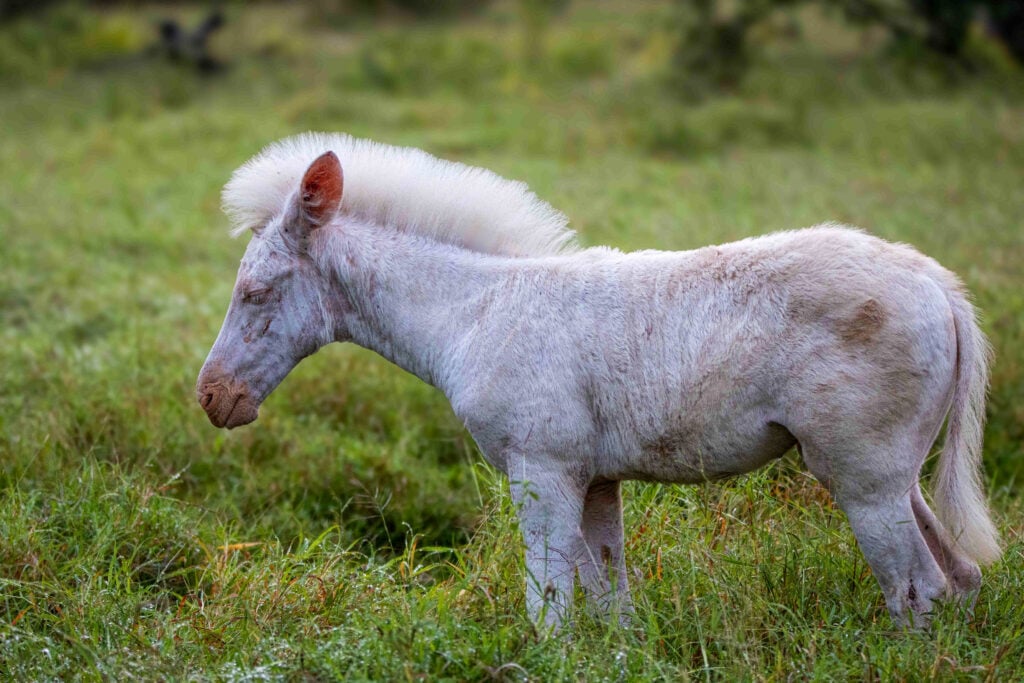
A leucistic foal, lacking that high-contrast pattern, may lose access to that advantage. In open grassland, its pale coat makes it easier to spot, and it no longer blends into the visual chaos of a striped herd.

That said, this is not a death sentence. Its most important protection remains exactly what it was on the day Ronald found it: a watchful mother and the collective eyes and ears of the herd around it.
We previously documented a similarly striking stripe anomaly in Shingwedzi, where a zebra was spotted with a large black patch replacing its mid-body stripes entirely, the result of a different but equally rare genetic mutation known as pseudomelanism.
A Foal Unbothered by Its Rarity
What made the sighting all the more special was how unremarkable it appeared to everyone involved, except the humans watching. The pale foal grazed beside its mother, nudged her gently, and moved slowly with the herd as it scanned the surroundings.

The other zebras showed no signs of disturbance. There was no rejection, no unusual behaviour, just a herd doing what herds do, with one very extraordinary member along for the ride.
Get our Best Sightings as they Come in
Leucistic zebras are documented so rarely across Africa that each confirmed sighting is considered scientifically significant. The handful of known cases have drawn attention from researchers interested in understanding genetic variation in wild populations, and how unusual traits like this one emerge, persist, or disappear over time.
A Moment the Bush Rarely Offers
Sightings like this are a reminder that even the most familiar species can still produce something truly astonishing. Zebras are seen on many game drives across the bushveld, yet here was one rewriting the rules of what a zebra is supposed to look like.

For Ronald and his guests that day, it was the kind of quiet, unhurried sighting that lingers. A small white foal, barely distinguishable from the pale morning light, walking gently through the grass beside its mother.
The bush rarely offers moments this rare, and when it does, they tend to stay with you for a very long time.
Follow Sabi Sabi on Facebook and YouTube to stay up to date with sightings and stories from the reserve.