

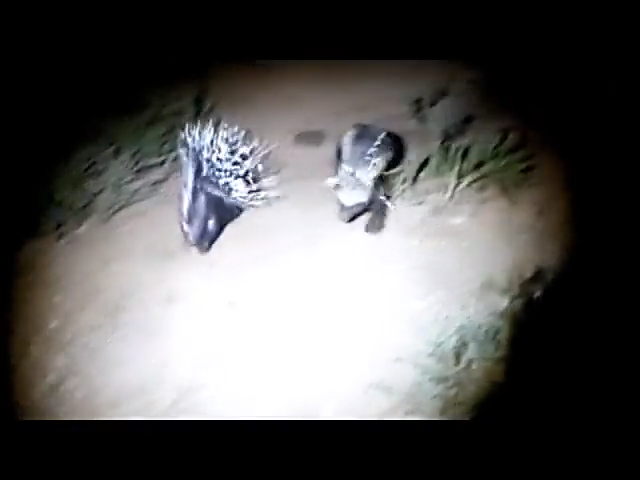
Elsemarie van der Walt managed to capture the epic moment. It had caught her quite by surprise but fortunately she had her phone camera ready.
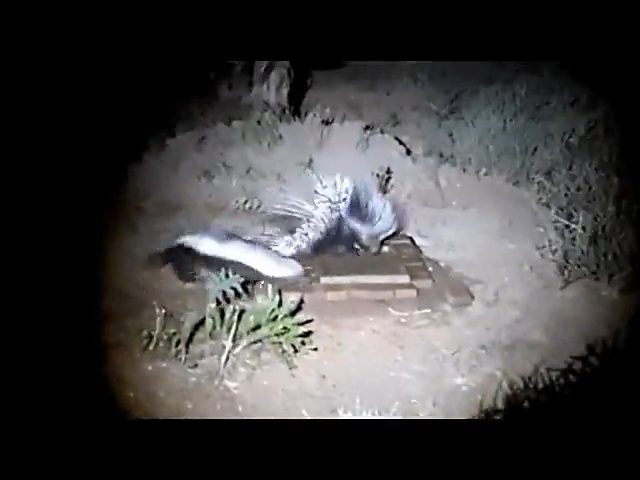
Unusual skirmish unfolds in full view
“The sound of quills alerted us to the epic nocturnal drama playing out in our fynbos garden at the bird bath,” Elsemarie recalled.
The word ‘drama’ was an understatement for the scene which unfolded. While honey badgers sound sweet as honey, they are actually quite aggressive and territorial, and this one had its focus set on a porcupine.
The honey badger, is famous for its toughness. It has powerful foreclaws for digging and strong jaws capable of crushing bone!
Get our Best Sightings as they Come in
It is also highly intelligent, persistent, and opportunistic, feeding on rodents, reptiles, birds, insects, and carrion.
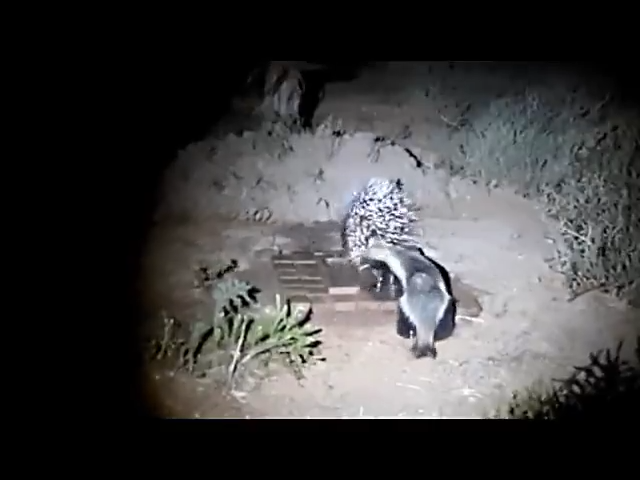
Relentless honey badger launches strong attack
Elsemarie recalled how the honey badger relentlessly pursued a porcupine in the shadows of night.
Using a spotlight, they were able to watch the brawl for a minute as it unfolded. It appeared the honey badger wasn’t about to relent, even though some of the porcupine quills had become embedded in its fur.
Honey badgers have loose, thick skin which allows them to twist around even when grabbed, and the quills had managed to penetrate this furry exterior.
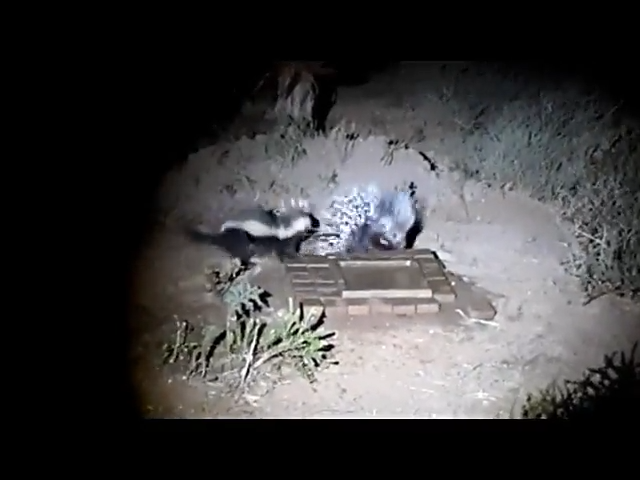
Honey badger pursues porcupine with impressive speed
The honey badger was relentless in its pursuit of the porcupine, in spite of the quill injuries from the attack.
The porcupine most commonly encountered in southern Africa is the Cape porcupine. This is the largest porcupine species in the world. It can weigh up to 30kg.
Its defense is these formidable, sharp quills. Some of these quills can reach up to 50cm. These quills are not thrown. Rather, they detach easily when embedded in a predator.
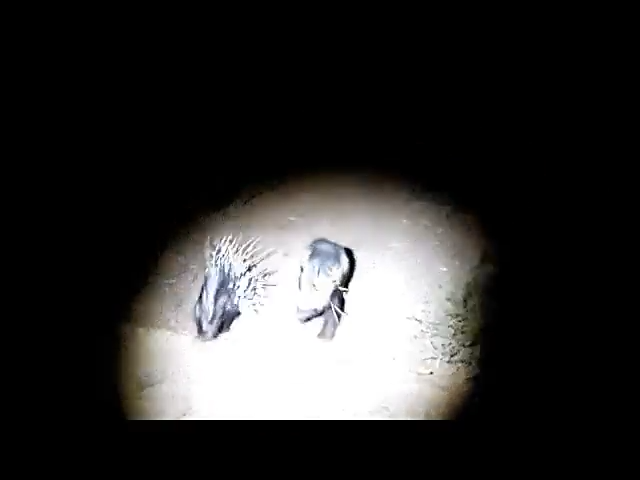
As the tussle intensified, an increasing number of quills became embedded in the honey badger’s fur.
Honey badgers will usually only prey on juvenile porcupines, so this one was possibly a juvy. Attacking an adult Cape porcupine can be dangerous. Quills can penetrate deeply into the face, chest, or paws of the badger. If not removed, they can cause infection or impair movement.
Usually such encounters between honey badgers and porcupines are short-lived, with the badger retreating, especially if the porcupine is large and alert. Even a tough predator must weigh the energy cost and injury risk.

Dualling pair disappear from sight
Elsemarie explained that the outcome of the tussle between honey badger and porcupine remained unknown as the two soon disappeared into the bushes and she lost sight of them.
She did, however, pick up 27 quills the following morning from the area where the battled had ensued, testifying to the hellish skirmish what had unfolded the evening before.
This rare skirmish showed something important. This is that survival is not always about aggression. Many times it comes down to cost versus reward. The honey badger’s boldness might have been great, however, the porcupine’s defensive engineering possibly meant that the actual confrontation wasn’t very long.


