

Night drives often yield some rare sightings. For example, they present the opportunity to witness servals during their active hours.
Although servals can be active during daylight hours, they are especially effective at dawn, dusk, and during the night when many small animals begin to move through the grasslands. The darkness gives them an advantage, allowing them to rely on hearing rather than sight alone.
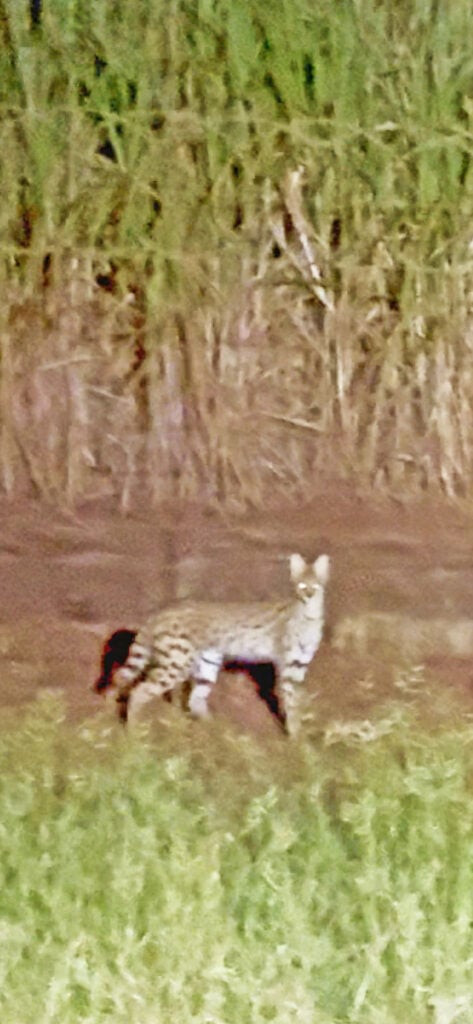
A serval is a medium-sized wild cat native to much of sub-Saharan Africa. It has a slim body, oversized ears, and unusually long legs compared to its body size.
Those long legs help the serval move through tall grass and also allow it to leap vertically into the air when striking prey. Adult servals generally weigh between 9 to 18 kg, though some individuals can be larger.
Their golden-yellow coats are covered in black spots and stripes, providing camouflage in grassland habitats where shadows and vegetation break up the outline of the body.
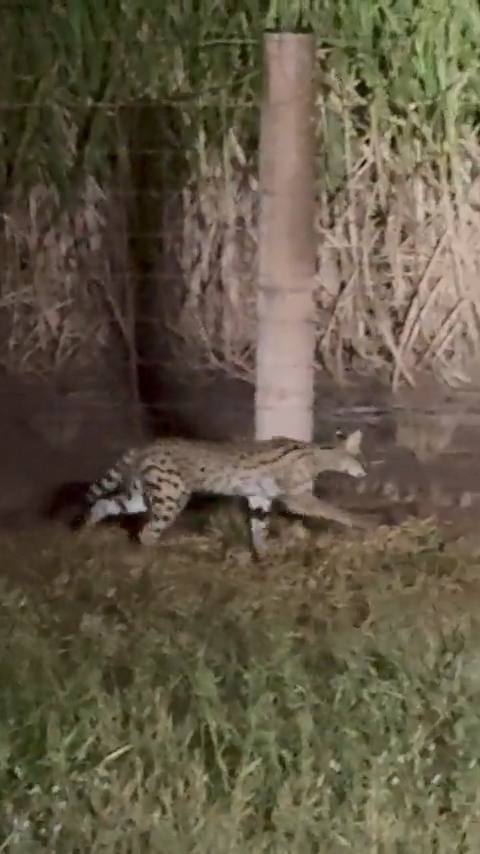
This one ran out in clear view of the game viewing vehicle. It was a mission to find food and it moved with haste and determination.
Get our Best Sightings as they Come in
At one point, it could be seen leaping into the air, jumping upon something which remained hidden from view.
Seizing the opportunities presented by the night hours
The African night environment presents both opportunities and dangers for a serval. While darkness helps conceal the cat from prey, it also hides larger predators. Leopards, lions, hyenas, and large eagles can threaten servals, particularly younger individuals.
Servals rely on stealth and awareness to survive. Their spotted coats blend effectively into grass and reeds, and they often freeze motionless when sensing danger nearby. Remaining undetected is one of their main defenses.
A unique hunting strategy
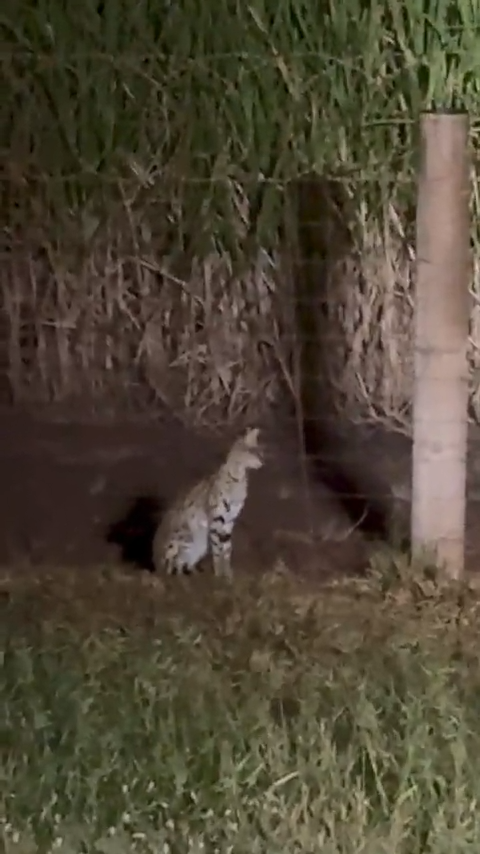
Night footage often captures the serval pausing completely still for several seconds. This behaviour is part of its hunting strategy.
The cat listens carefully for movement beneath the grass, using its large rounded ears to detect even faint sounds. Servals have some of the largest ears relative to body size of any cat species. The ears can rotate independently, helping the animal pinpoint the exact location of prey hidden under vegetation. Rodents moving through tunnels or rustling dry grass can easily betray their position to the predator.
A skilled hunter
A serval’s hunting success rate is remarkably high for a wild cat. Studies have suggested that servals succeed in roughly half of their hunting attempts, which is far higher than the success rate of larger cats such as lions or leopards. Their prey usually consists of small mammals including rats, mice, gerbils, and other rodents. They also hunt birds, frogs, reptiles, insects, and occasionally fish.
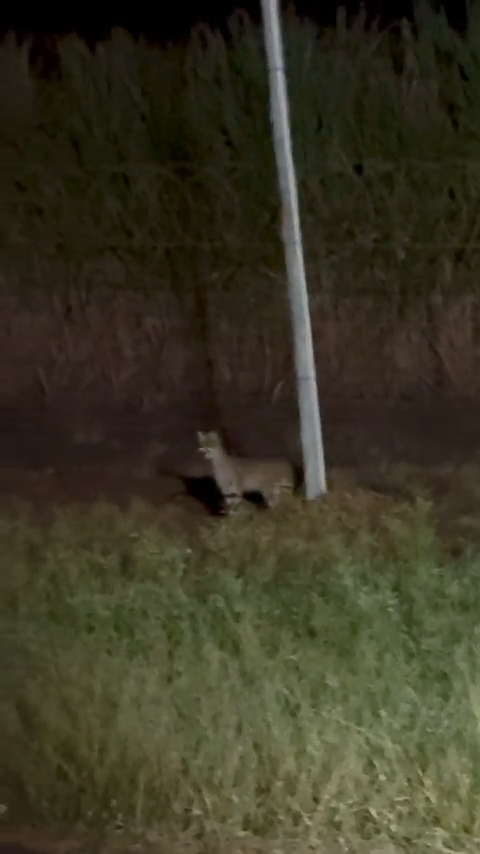
As this serval moved through the night, each one of its steps appeared deliberate. Unlike larger cats that may rely on strength to overpower large prey, servals depend on precision and speed
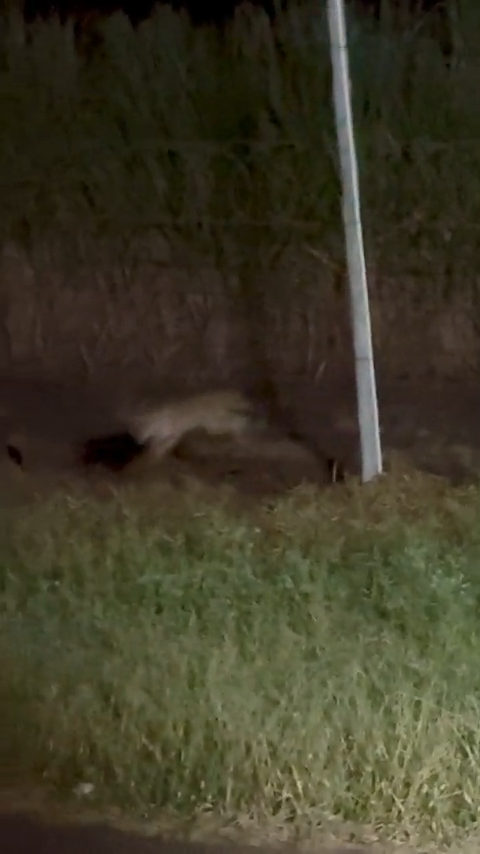
Its impressively high leap as it closed in on an unseen creature was a demonstration of its skill as a hunter. This dramatic pounce, which is typical of hunting servals, can break the spine of a rodent or stun prey long enough for the cat to deliver a killing bite.


