

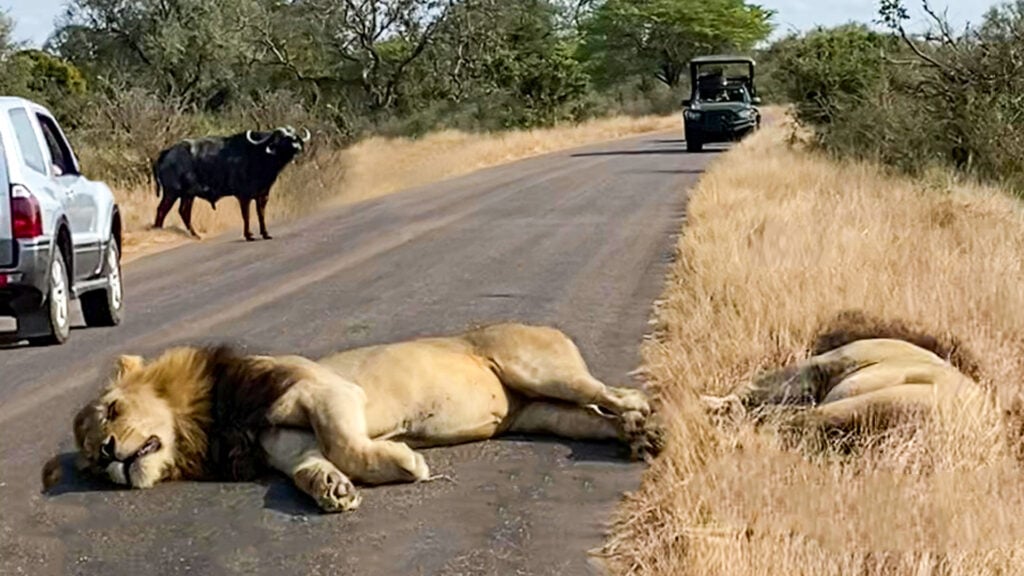
On a blustery, overcast day in Kruger National Park, field guide and wildlife photographer Deon Kelbrick stumbled upon a sighting that perfectly captured the unpredictable rhythm of the bush.
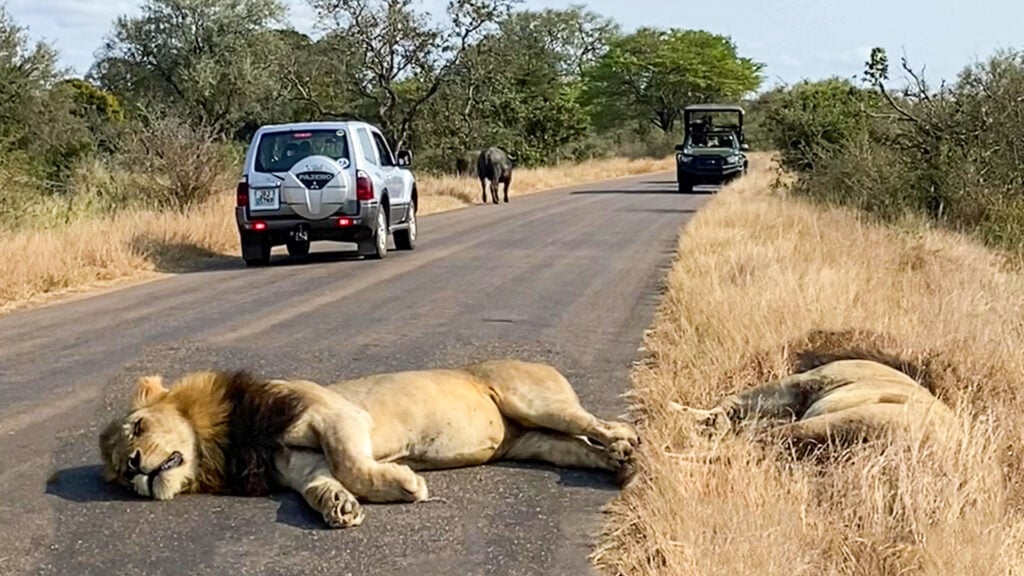
His compilation of footage shows two fully grown male lions sprawled out in complete relaxation: one stretched out directly on the paved road itself, the other lying just off its edge. With the wind blowing gently and the sun breaking through the clouds at just the right angle, the conditions were ideal for a midday nap.
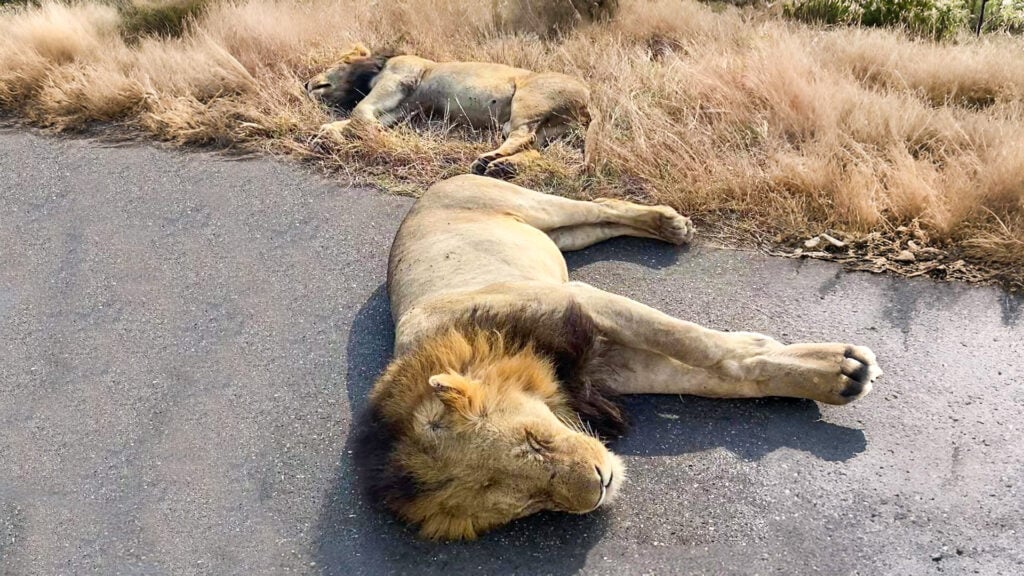
As Deon filmed, he couldn’t help but laugh at the scene unfolding in front of him.
“Now this is what you call chilled lions,” he joked. “Look at these guys, they have no care whatsoever with the cars next to them.”
One by one, vehicles respectfully crept past the lions, trying to stay quiet and avoid waking them. Remarkably, the lions didn’t even lift their heads at the sound of the humming vehicles merely a couple of meters away.
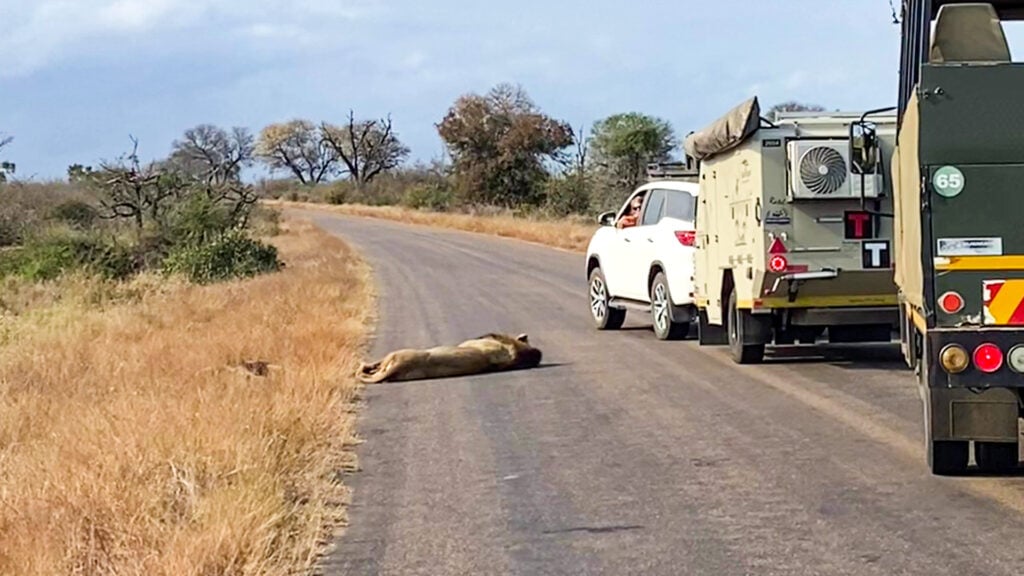
Their paws remained limp, and their eyes firmly shut. It was as though the road and everything on it simply didn’t exist.
The Predators Choose Rest Over Opportunity
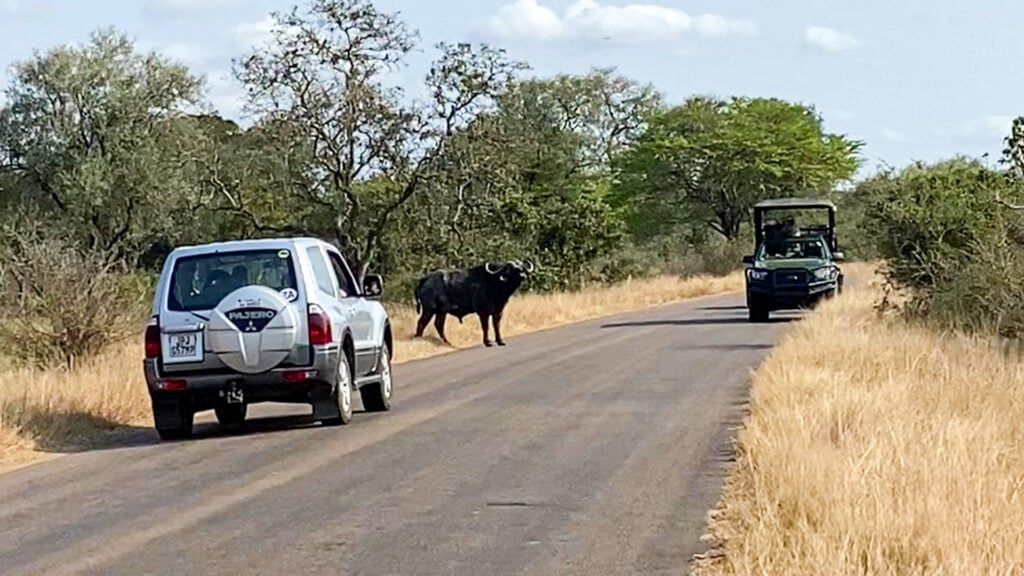
What made the scene even more surprising was what happened next. A short distance down the road, a couple of buffalo appeared.
They slowed their pace and stopped immediately after spying the lions. Their bodies looked primed for flight or defence, and for several tense moments, the buffalo stood frozen, assessing the risk.
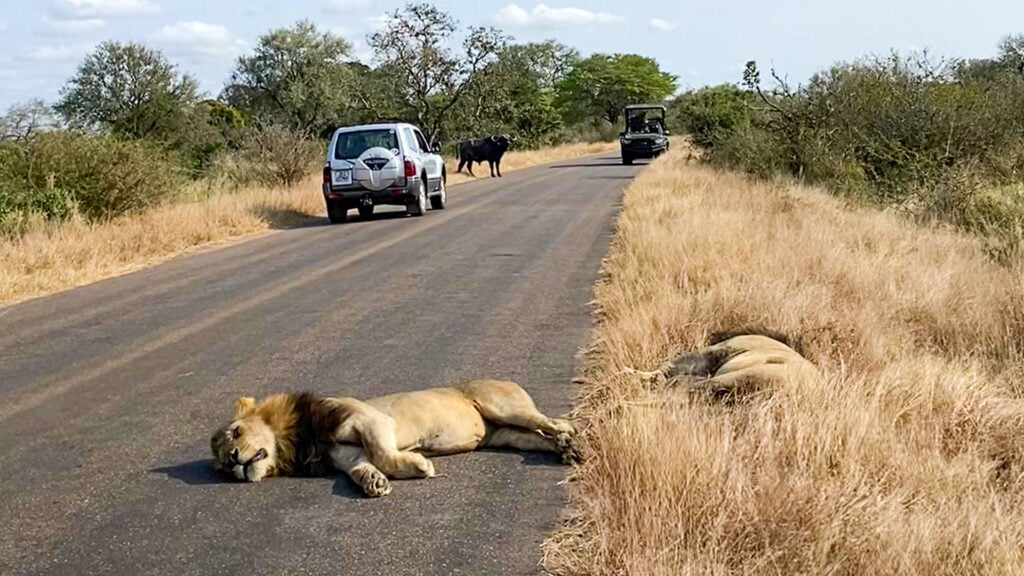
Despite a potential meal within arm’s reach, the lions remained asleep. There was no flicking of their ears, no twitching of their tails, and no sign they even noticed the prey wandering into their area.
Eventually, the buffalo seemed to reach the same conclusion as the onlookers: there would be no hunt today. Once they realized the lions had no intention of waking, they casually turned and sauntered off, the moment of tension dissolving as quietly as it arrived.
Why the Lions Ignored Everything
To human observers, it might seem baffling that lions would ignore both buffalo and vehicles so completely. But biologically, this behaviour makes perfect sense.
Lions can spend up to 20 hours a day resting, conserving energy for short, intense bursts of activity. Successful hunts require strength, coordination, and favourable conditions, and not every moment presents the right opportunity.
Large male lions, in particular, are often less inclined to hunt unless circumstances are ideal or food is scarce. If they’ve eaten recently or are conserving energy for later, even prime prey can be ignored entirely.
In addition, the weather likely played a role in their ignorance of the prey. Cooler, overcast midday conditions are ideal for resting, while hunts are more likely during the early morning or evening when prey movement increases, and temperatures drop further.
A Learned Indifference
Equally interesting was the lions’ total disregard for the passing vehicles. In areas like Kruger, lions have become habituated to cars that behave predictably and do not pose a threat.
Get our Best Sightings as they Come in
Over time, they learn to filter out vehicles as background noise, much like birds ignoring traffic in a city. This indifference can be unsettling for visitors, but in protected areas where animals are not persecuted, it’s perfectly ok.
A Reminder That the Bush Sets Its Own Pace
This sighting is a perfect example of how expectations don’t always align with reality in the wild. Lions don’t hunt just because prey is nearby, buffalo don’t charge just because lions are present, and sometimes, the most memorable encounters are the quiet ones, where nothing dramatic happens at all.
As Deon’s footage shows, the bush operates on its own schedule. Some days bring chaos and conflict, while other days bring nothing more than two very sleepy lions, a few cautious buffalo, and the gentle hum of cars rolling past unnoticed.


