

When storks spotted a pair of otters foraging, they decided to hang around. The footage beautifully depicts a form of symbiosis.
Michael Botes sent this footage to Latest Sightings. He filmed it at MalaMala Game Reserve, within South Africa’s Sabi Sands Private Game Reserve.
Watch the video here:
Saddlebilled stork
Opening to a tranquil scene of the Sand River, we see a beautiful saddlebilled stork walking in the shallows. These striking birds are found across sub-Saharan Africa and are considered endangered in South Africa.
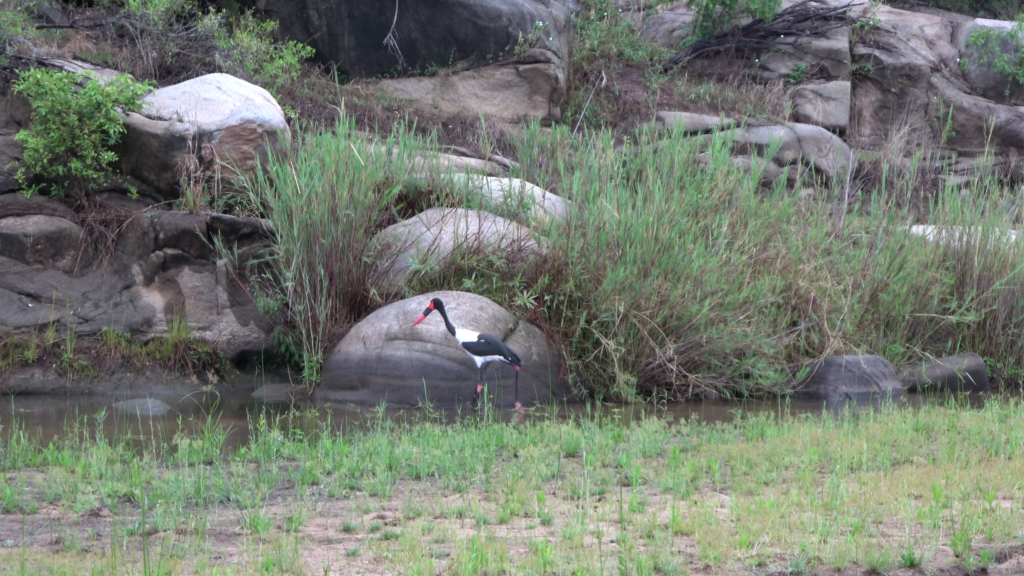
The large bird is no doubt looking for something to eat. Their diet includes insects, amphibians, fish, and small mammals.
Super-cool Cape clawless otters
As the stork makes its way downstream, it encounters a rarely seen river resident. In the video, you can hear how excited Michael is, repeatedly referring to the sighting as “super cool”.
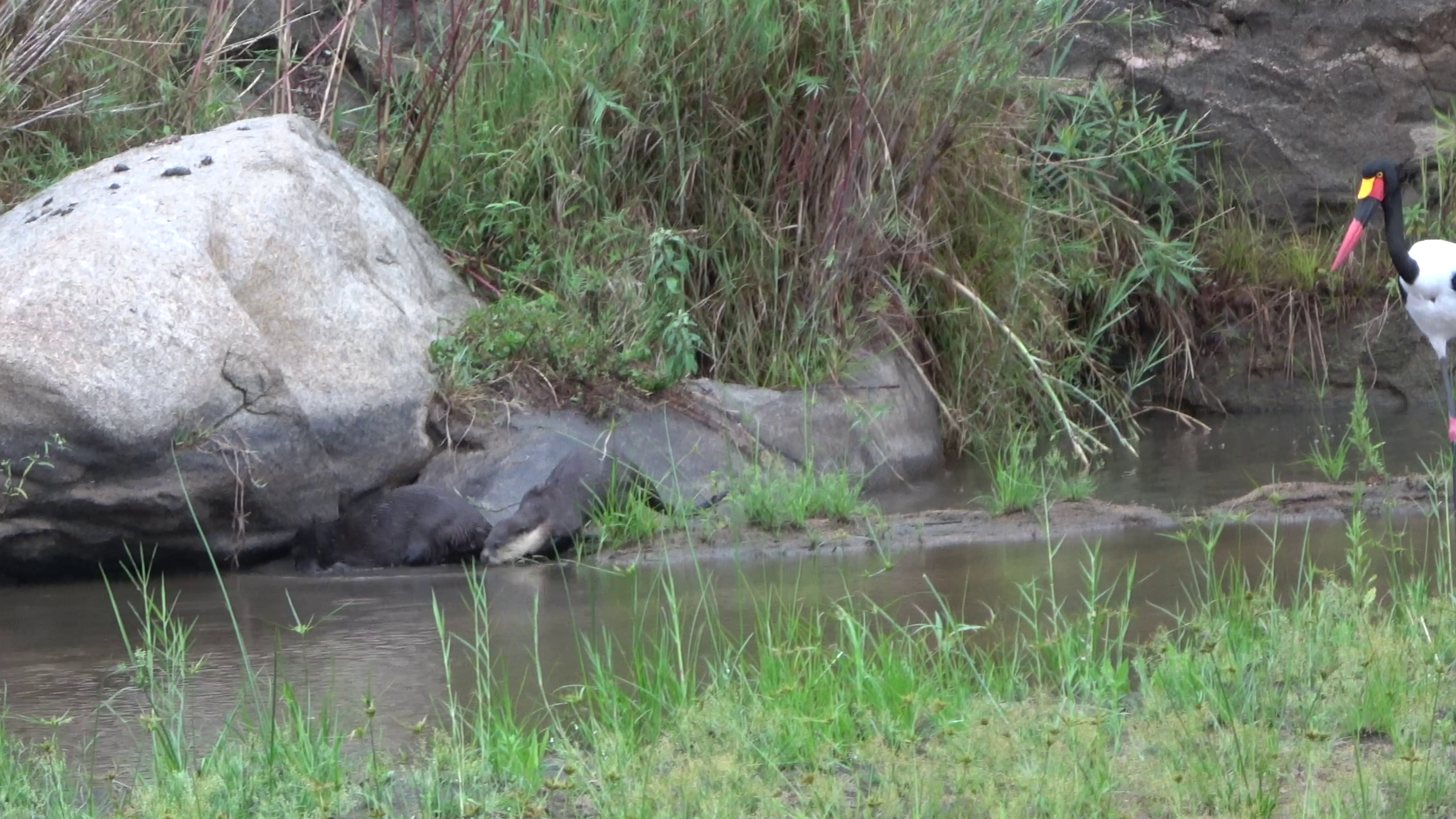
And rightly so, for a pair of Cape clawless otters are socialising next to a large boulder. Sub-Saharan Africa is home to these much-loved creatures, whith conservationists classify as Near-Threatened. This means extinction threatens them unless there are measures to protect their riverine habitats.
An opportunity with otters
Meanwhile, when the stork sees the otters, it seems it is as intrigued as Michael. Since they share the same aquatic habitat, they’re likely to be familiar with one another.
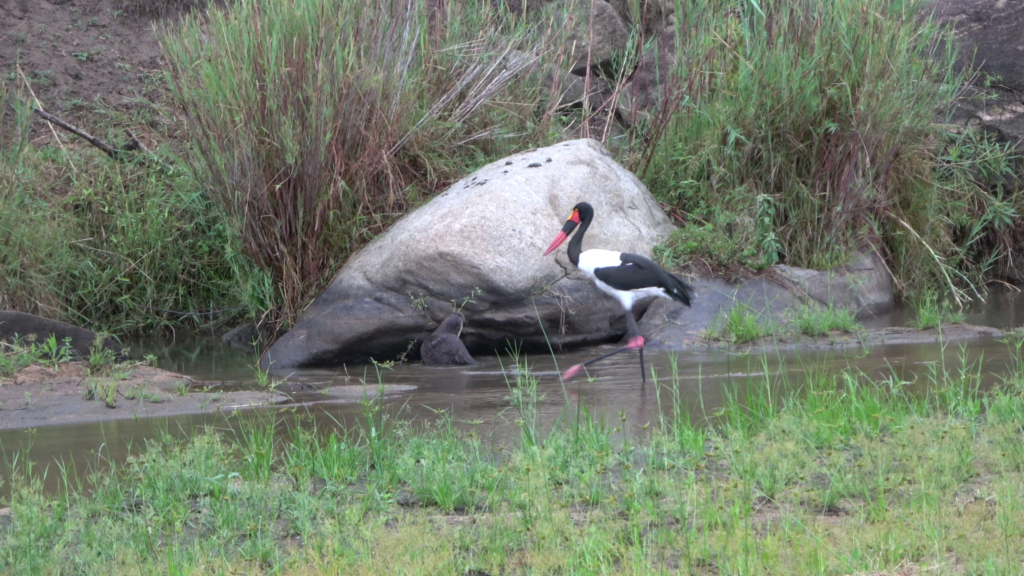
As curious as the stork is, the otters are unfazed by its presence. Instead, they busied themselves, briefly disappearing under the large boulder. The rock may hide the entrance to their holt (burrow).
Allogrooming
Subsequently, the pair groom one another. This behaviour, called allogrooming, keeps them clean and strengthens their social bonds.
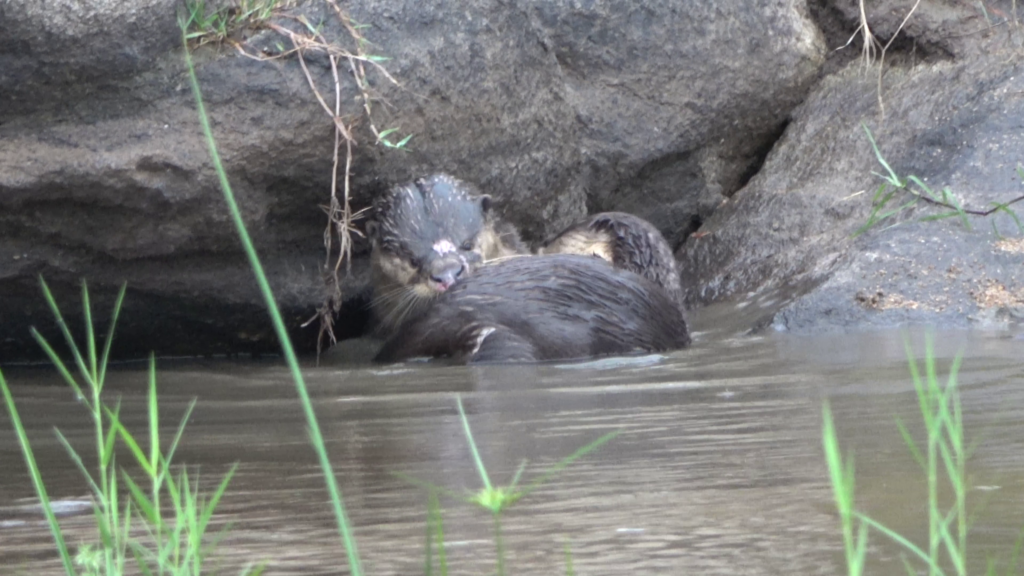
You’ll note that one of the otters is larger than the other. Consequently, it is safe to assume this is a mother and her sub-adult kit (pup).
Interspecies relationships
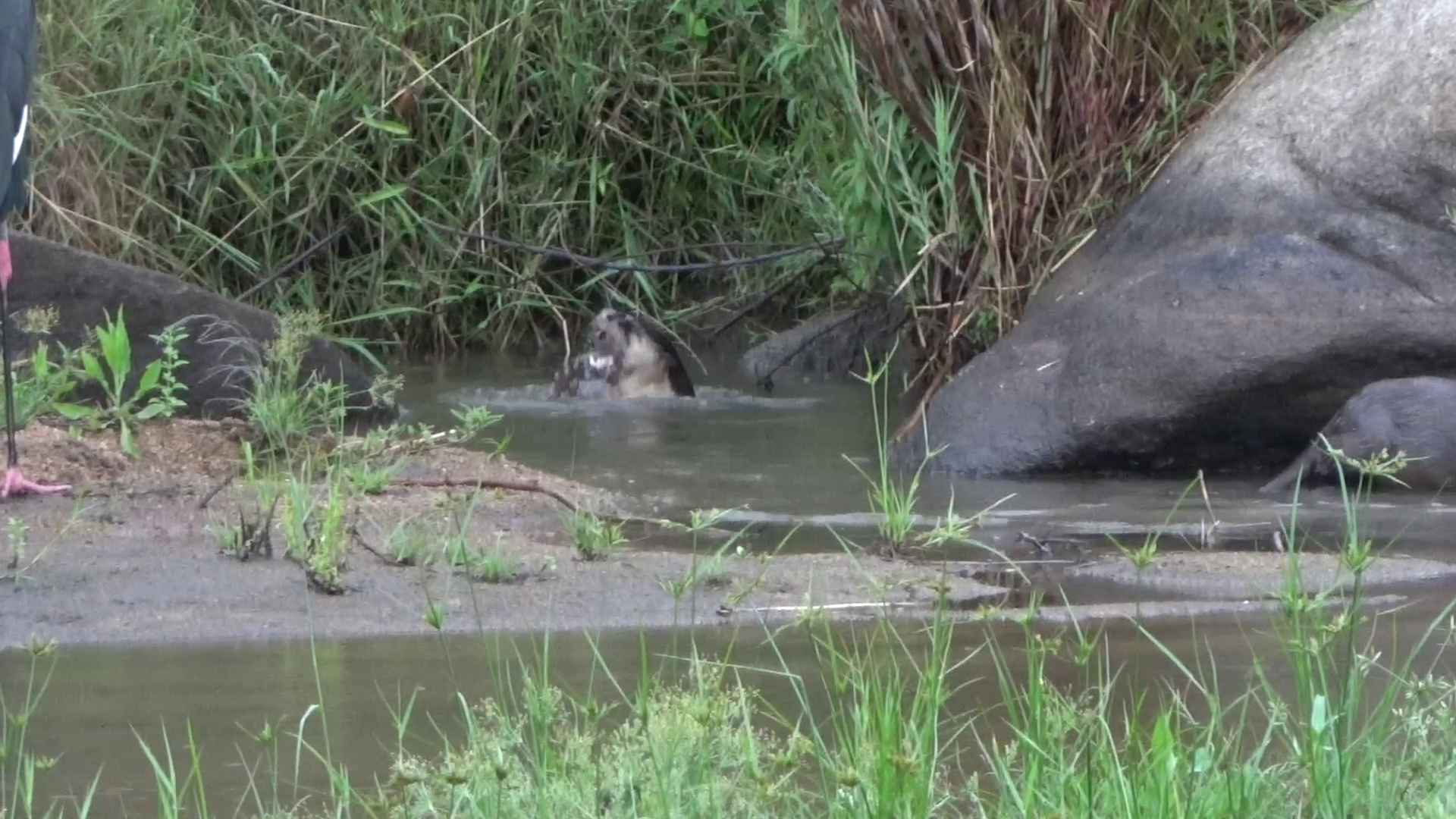
Later, the pair moves between two boulders, and it looks like they are hunting for something to eat beneath the surface. And this in turn, likely explains the stork’s apparent interest.
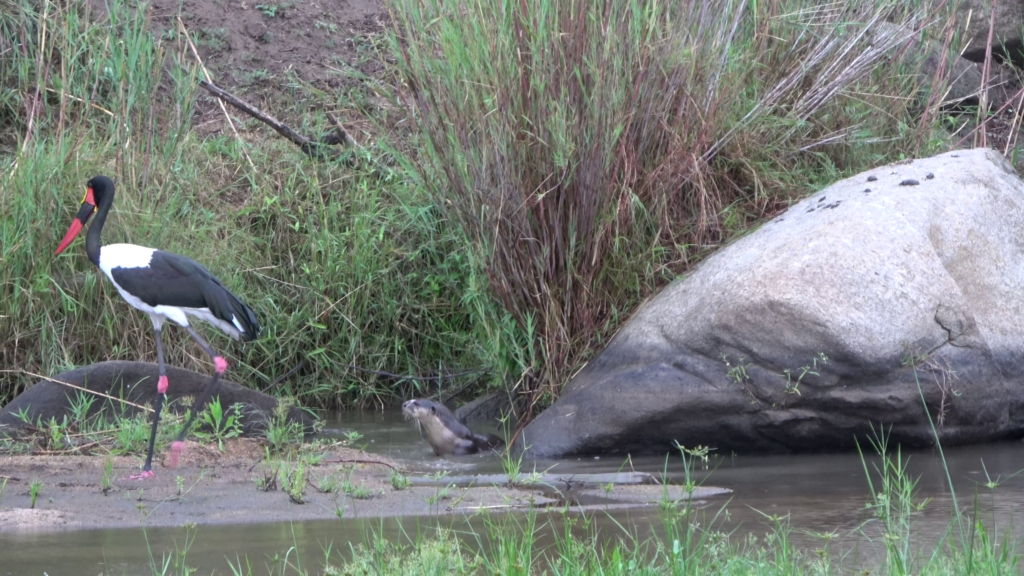
In Nature, when different species share a habitat niche, it is broadly termed symbiosis (from the Greek term for “living together). In this instance, it looks like the stork is hoping to snap up any snacks stirred up by the otters’ foraging.
Accordingly, their symbiotic behaviour falls under commensalism, where one species (the stork) benefits while the other (the otter) remains unaffected by the relationship.
Worthwhile waiting
A short while later, a second stork arrives. Clearly, the birds know that where otters forage, snacks can be had.
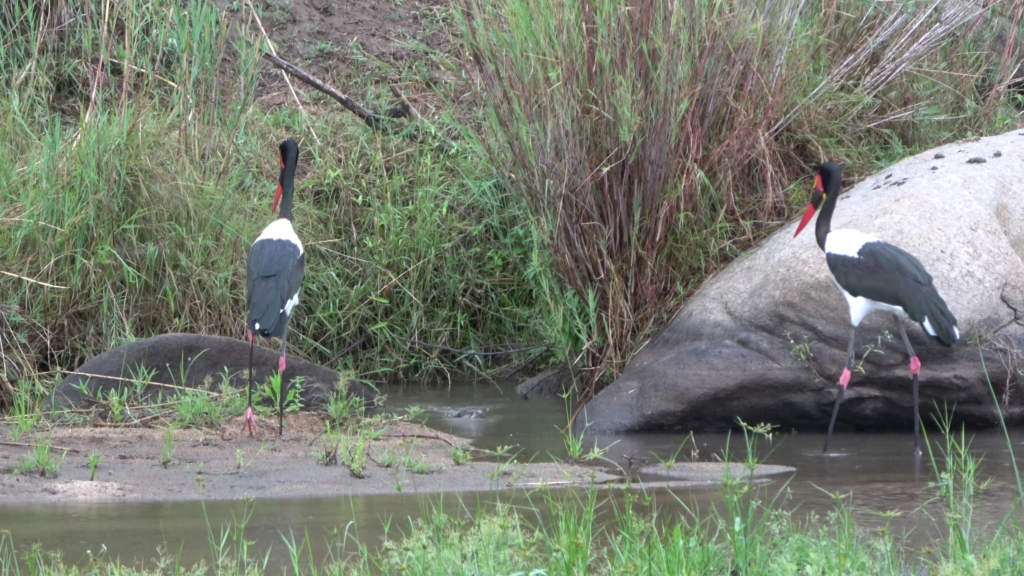
Subsequently, when the youngster raises its head to swallow a morsel, we realise that the storks are onto something.
Mom on a mission
Having thoroughly searched the pool between the rocks, the otters are ready to move on. At this point, the pup emerges entirely, showing off its sleek body and long, paddlelike tail.
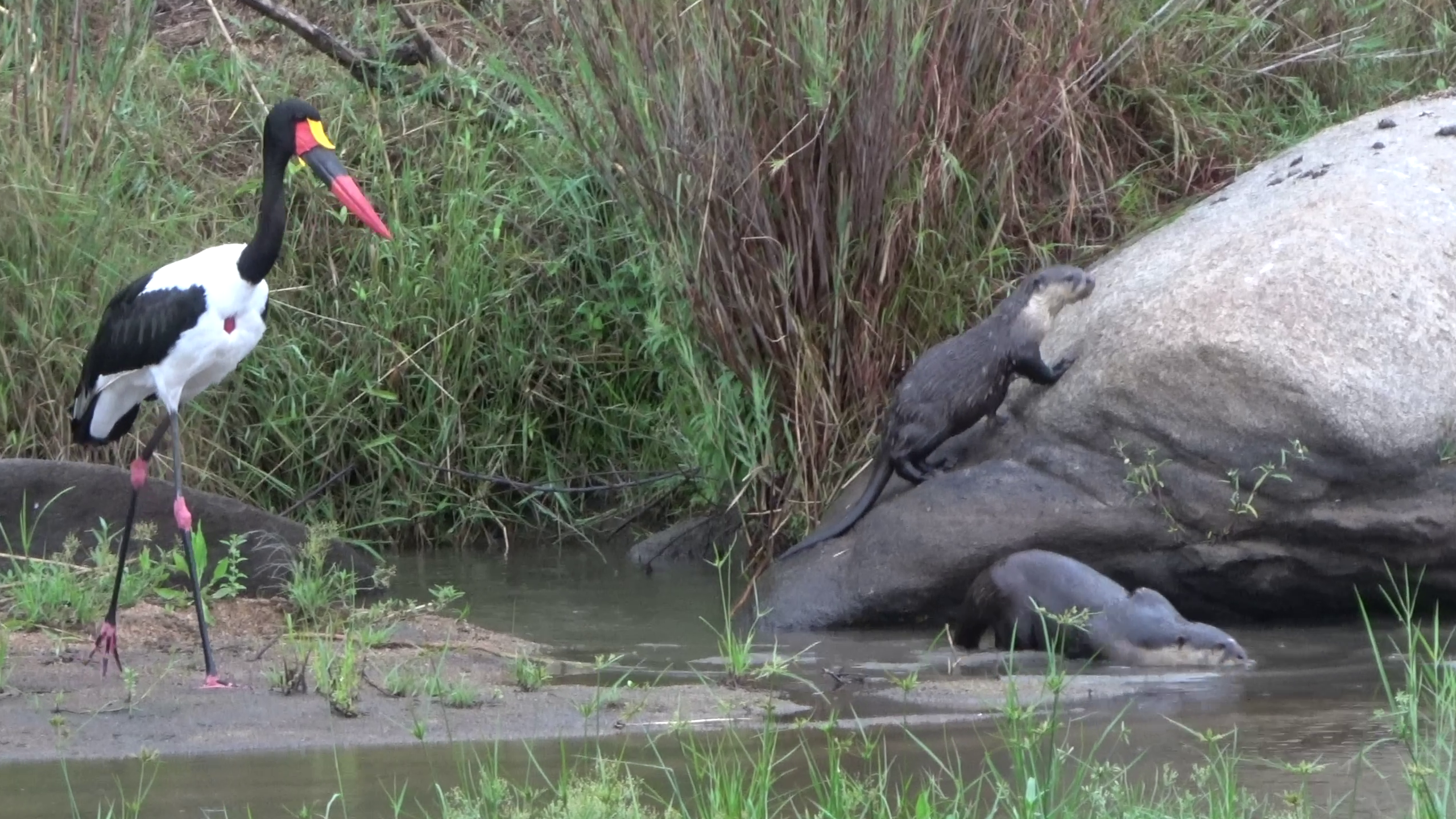
However, as Mom moves on, the kit realises there’s no time for suntanning. Consequently, the little one stays right behind her as she scampers through the shallows.
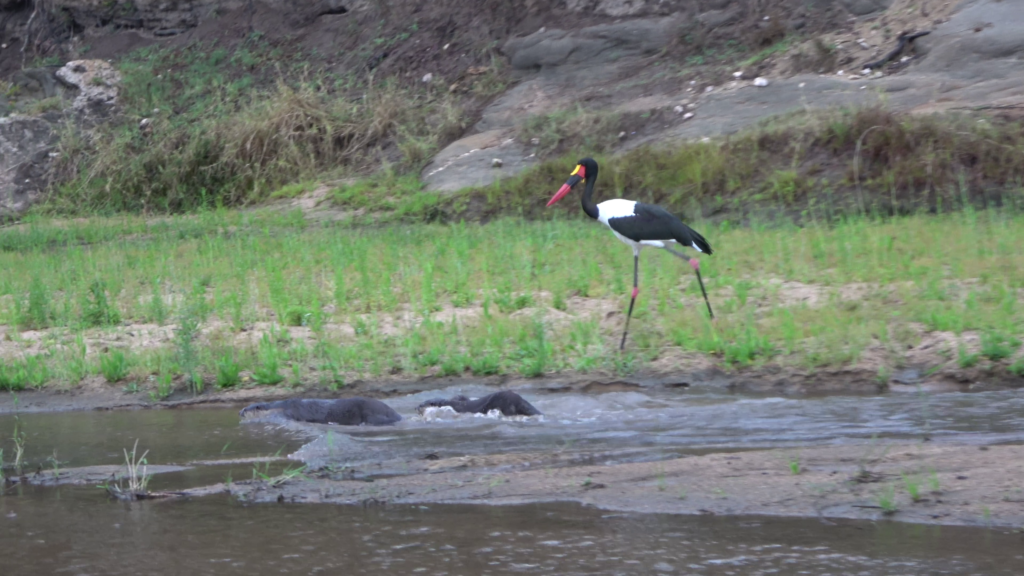
Confirming our assessment that the stork is hoping to score a meal, it strides along the riverbank alongside the playful pair. The pup is full of energy, hopping in and out of the water as they move away from a delighted Michael.
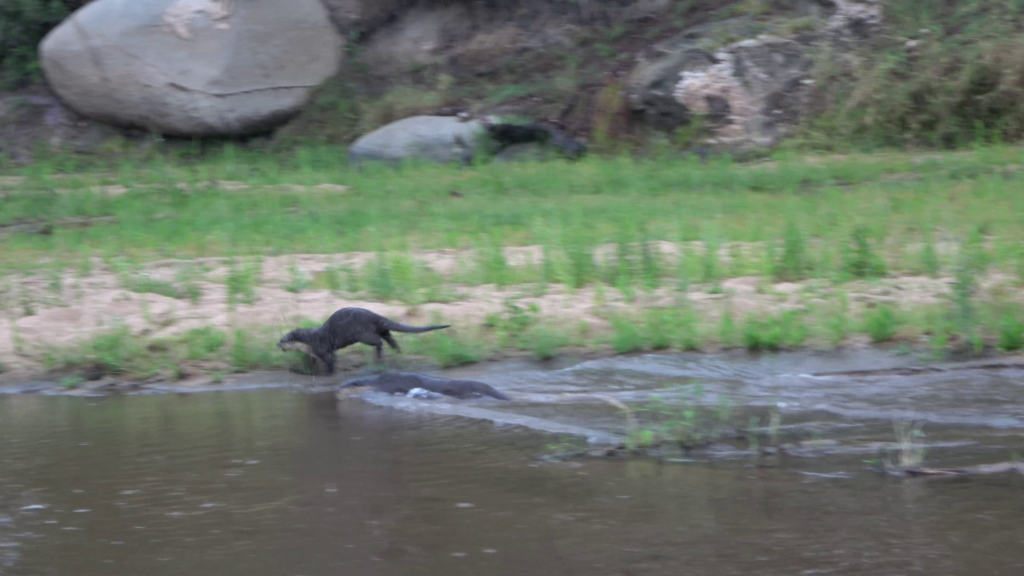
As the storks struggle to keep up, the otters search every nook and cranny in their relentless search to sustain their energetic lifestyles.
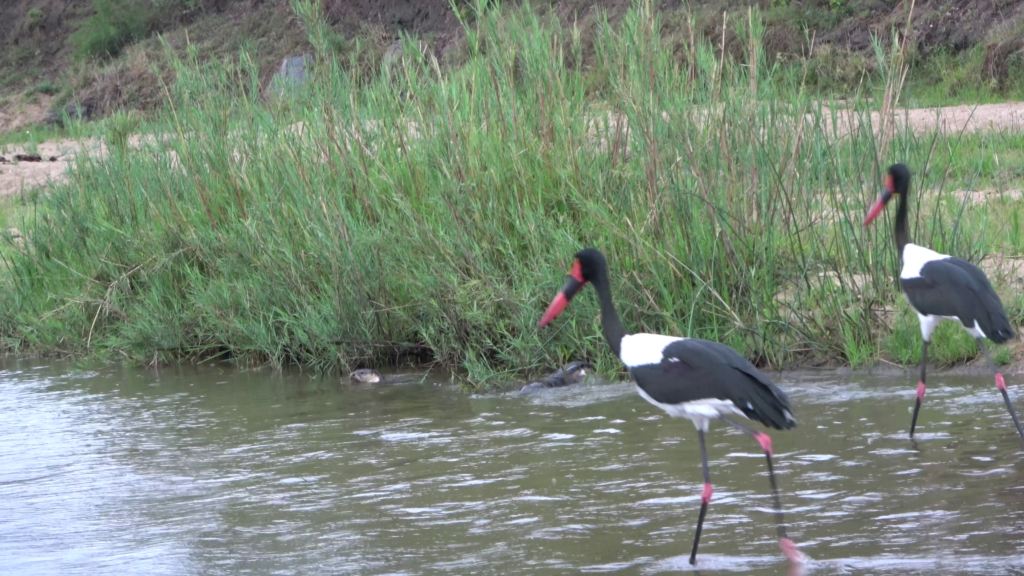
What an otterly adorable sighting!


