

Mjejane Game Reserve set the stage for this dramatic encounter.
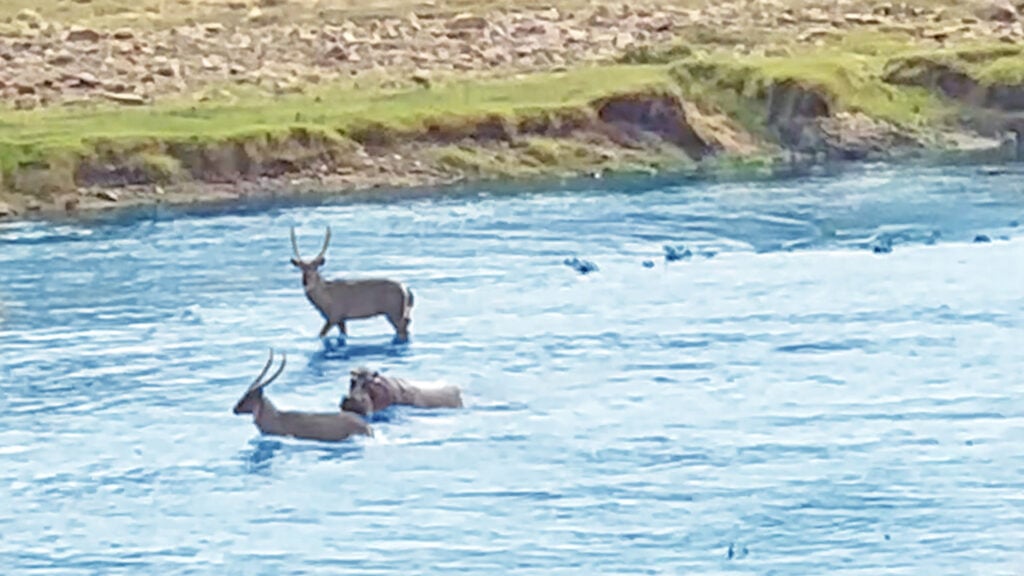
Hippo displays displeasure over buck’s presence
The waterbuck rams had been wading in the shallow depths of the river when the hippo started to approach them.
He was clearly not happy and came barreling towards them, letting them know who was boss.
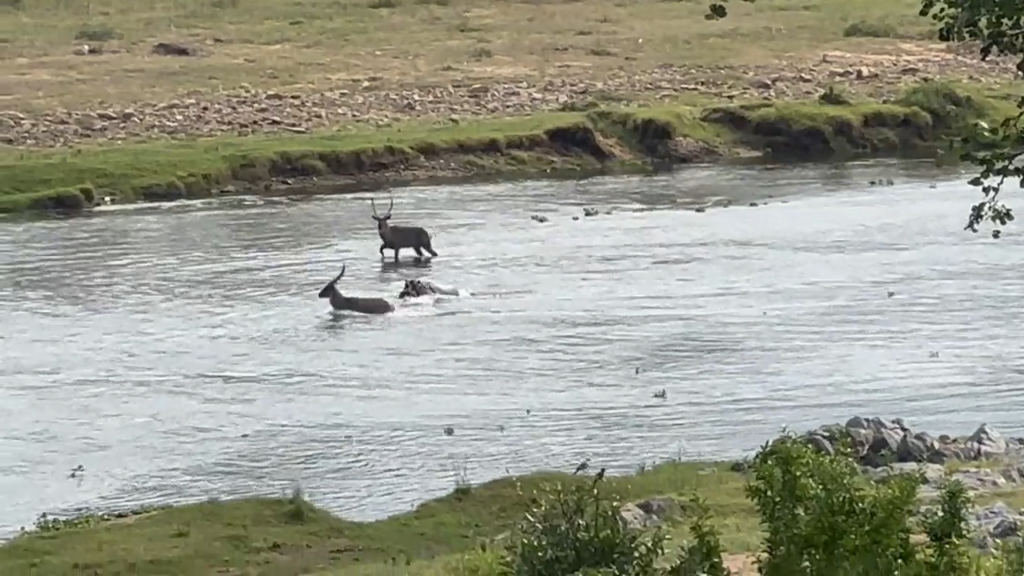
The common hippopotamus is native to sub-Saharan regions, including river systems in the Kruger National Park.
Hippos are also the third-largest land mammal after elephants and white rhinos. This hefty fellow possibly weighed between 1 500 and 3 200kg.
Despite their bulky appearance, hippos can run at speeds of up to 30km/h over short distances. They’re also pretty fast in the water, as this hippo demonstrated.
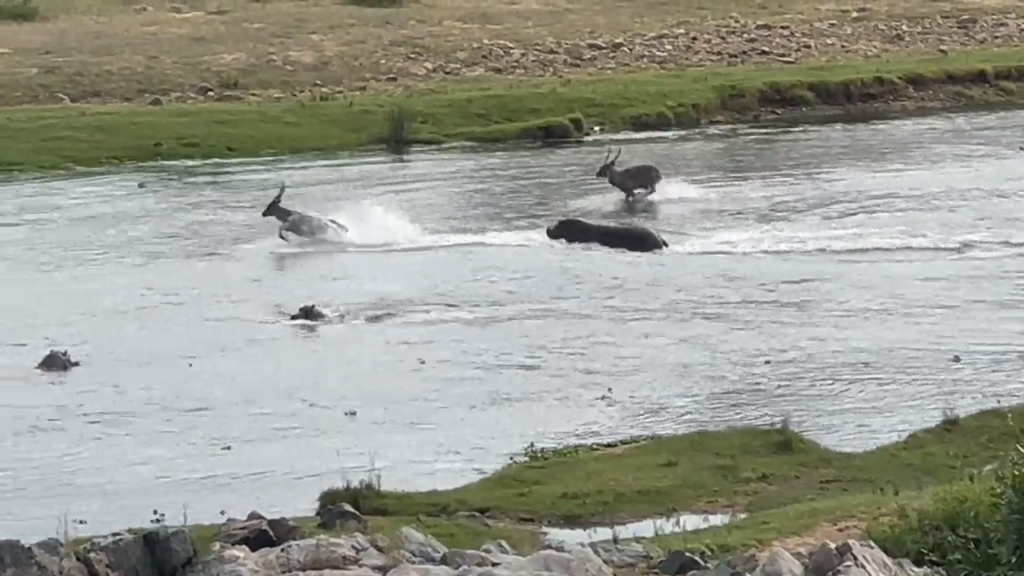
Waterbuck leap with great finesses away from pursuing hippo
The hippo continued to chase after the waterbuck, and they were so startled that they appeared to be jumping across the water’s surface.
They moved with speed and agility and did everything they could to get out of the hippo’s way.
Hippos are highly territorial in water, particularly dominant bulls, who control stretches of river and the groups of females within them. These territories are defended aggressively against rival males and sometimes against other large animals, such as waterbuck, intrude too closely.
Built for life near the water
The waterbuck is a large antelope species well adapted to life near water. The species is found in regions across eastern and southern Africa and relies on rivers and wetlands as escape routes from predators like lions and crocodiles.
Adult males can weigh up to 260kg and are distinguished by their long, ringed horns which curve gracefully backward. Their shaggy brown coats secrete an oily substance which makes them less palatable to predators and gives off a musky odor.
Get our Best Sightings as they Come in
Unlike hippos, waterbuck are not territorial in water itself but are strongly tied to areas near reliable water sources. Males establish territories on land during breeding season, defending access to females.
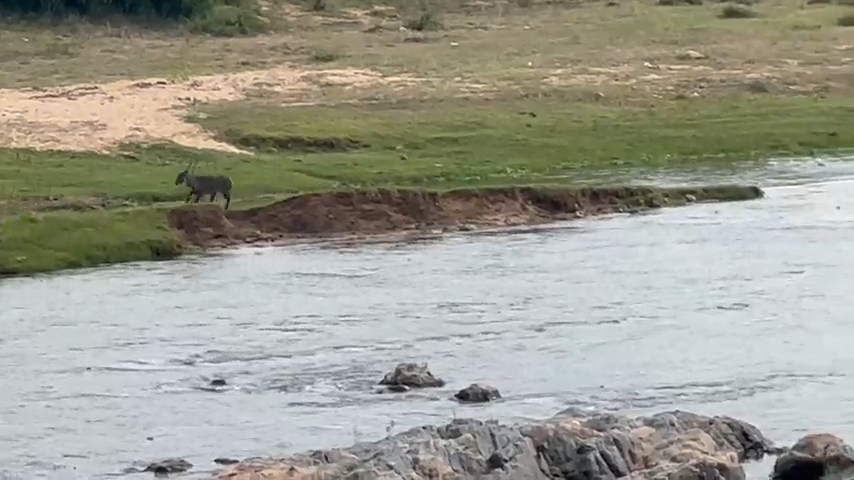
Waterbuck escape to safety
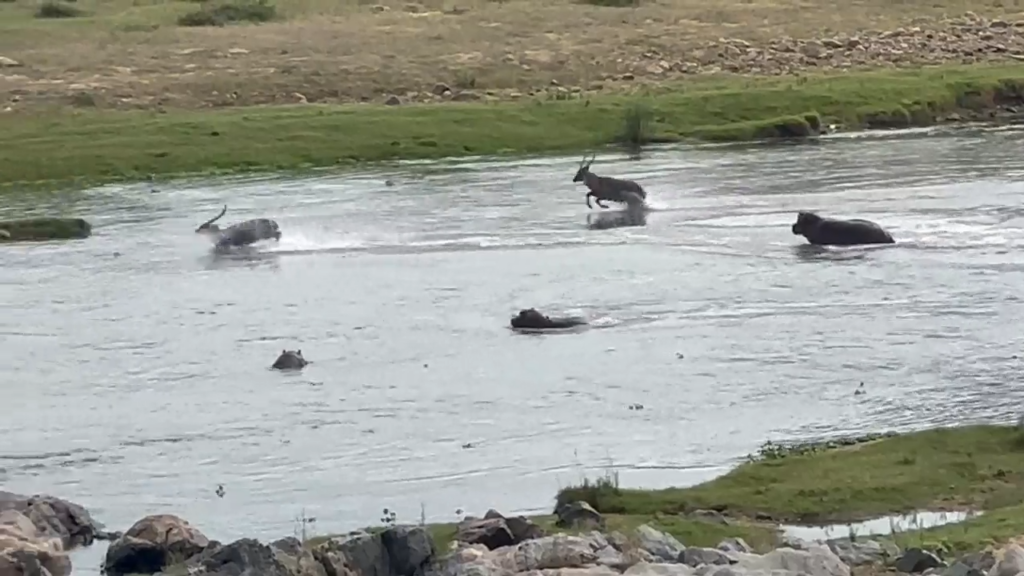
It was impressive watching these waterbuck leap their way to the shore. In spite of their large size, they appeared weightless as they jumped to impressive heights in a bid to get away from their pursuer.
When threatened, waterbuck typically bound away using these telltale high, springing leaps. This escape plan definitely worked for these waterbuck, and they made it safely to the shore.
They soon disappeared from view. They weren’t about to chance hanging around the shoreline.
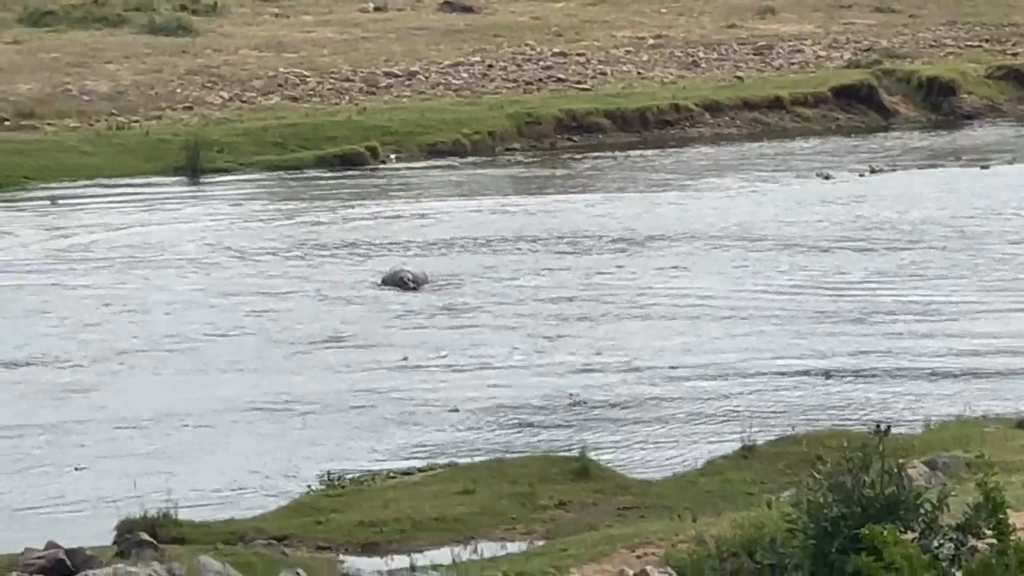
Hippo relaxes into water after successful chase
The large hippo was again left in peace. He settled into the watery depths, having established himself as the boss.
Ironically, water is often the place waterbuck will run to when their safety is threatened. However, this instinct to draw near to the water brought these two animals into conflict with the bossy hippo, who viewed the water as exclusively his.
The sighting was a reminder of the complex interactions which happen around water sources, and the need to have a camera ready, just in case action arises.


