

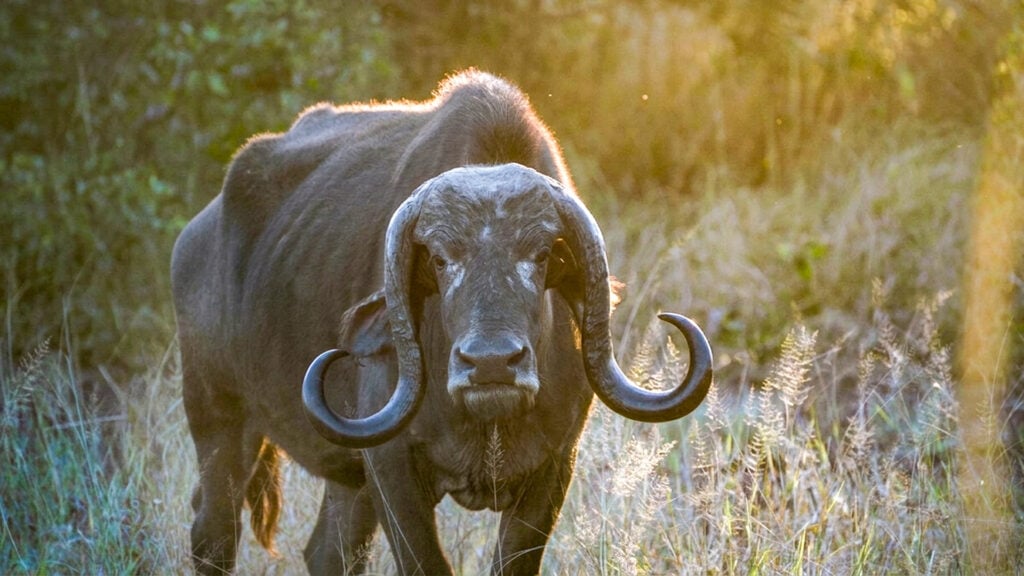
A Familiar Face at the Waterhole
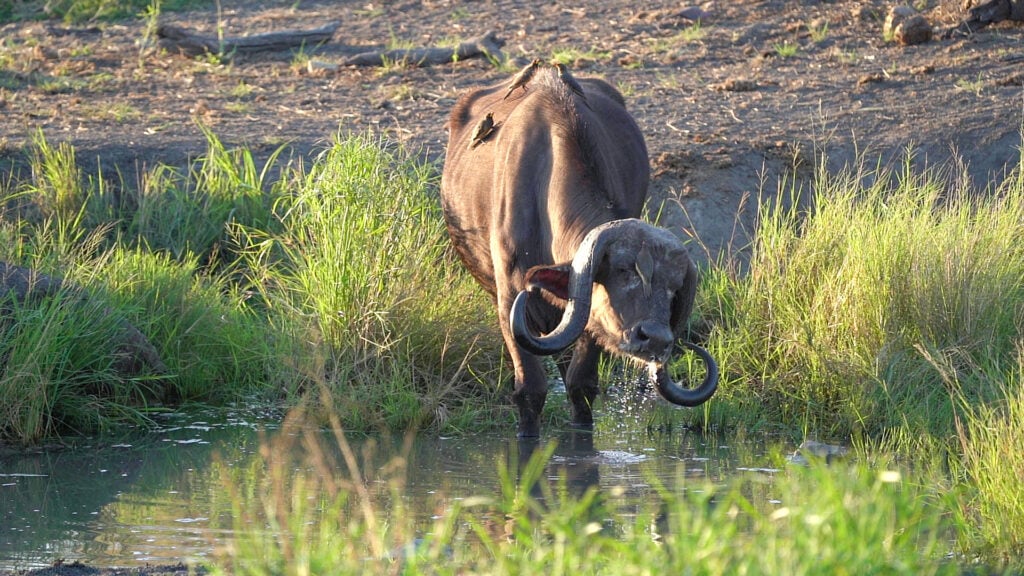
Photographer Dylan Pons was out at Klopperfontein in Kruger National Park when he spotted a buffalo making its way down for a drink. At first glance it looked like any other bull ambling toward the water, unhurried and calm, with a few oxpeckers hitching a ride along its back and picking at ticks as it walked.
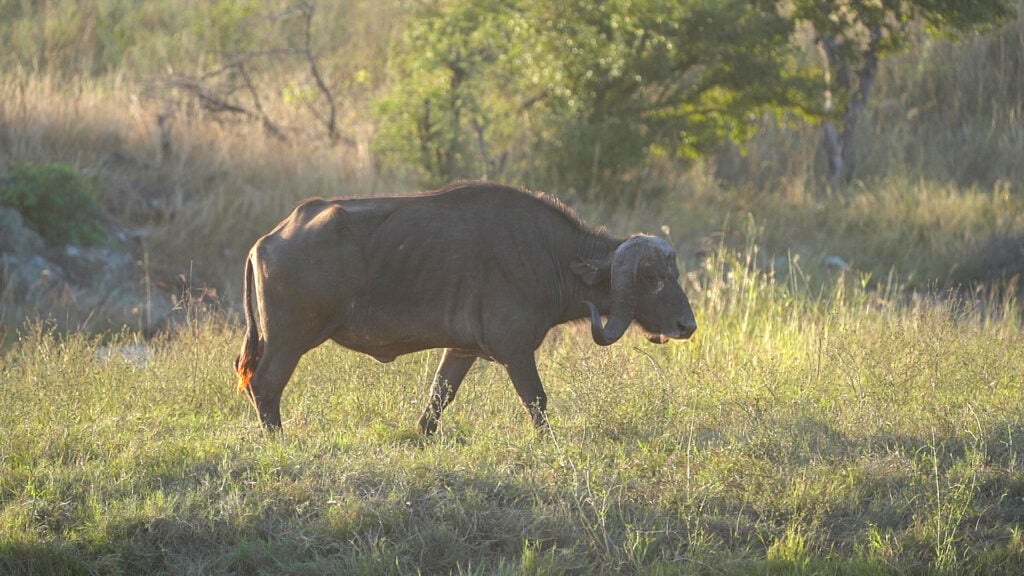
But as the buffalo turned side on, its horns told a very different story.
Rather than curving upward into the classic “boss” shape most people associate with buffalo, this bull’s horns ran down alongside its face before flicking up sharply at the tips. The effect was almost stylish, like a swept back hairdo from another era.
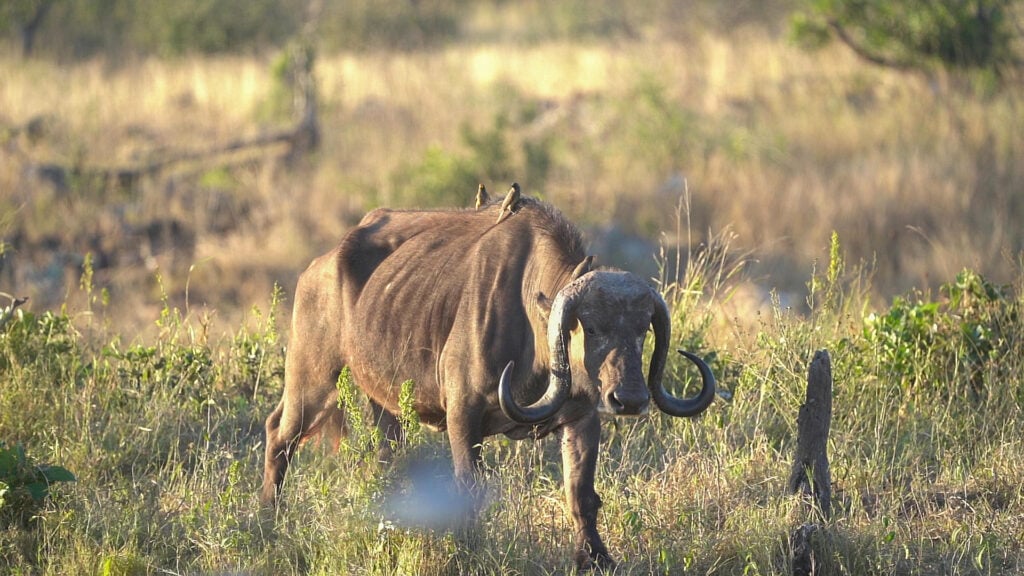
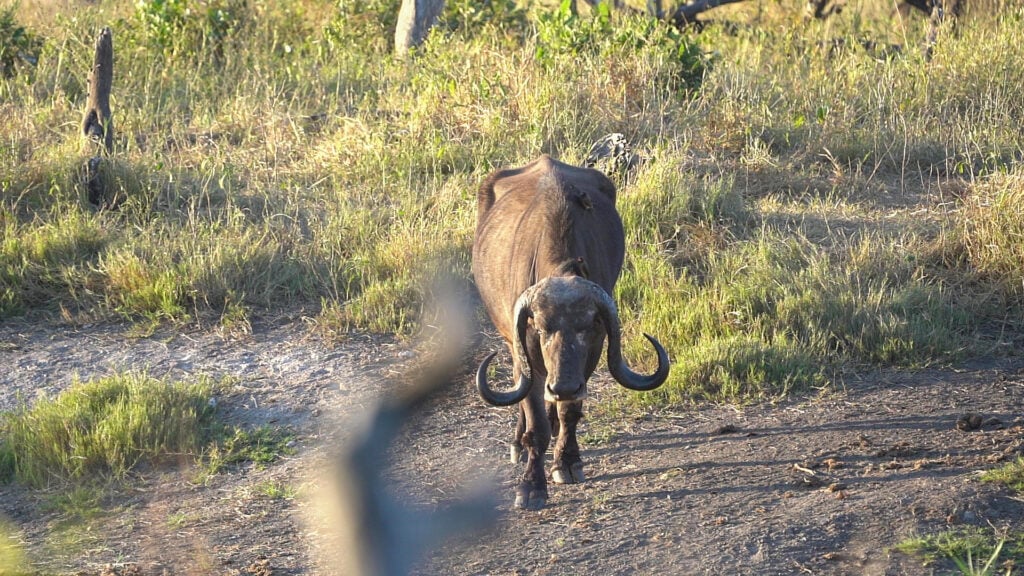
It’s the kind of sighting that makes you look twice, and then look again just to be sure you saw it right.
Not Your Average Set of Horns
Buffalo horns are famous for their heavy, fused base known as the boss, which forms a thick armoured plate across the forehead in mature bulls. From there, the horns typically curve outward and upward into hooks.
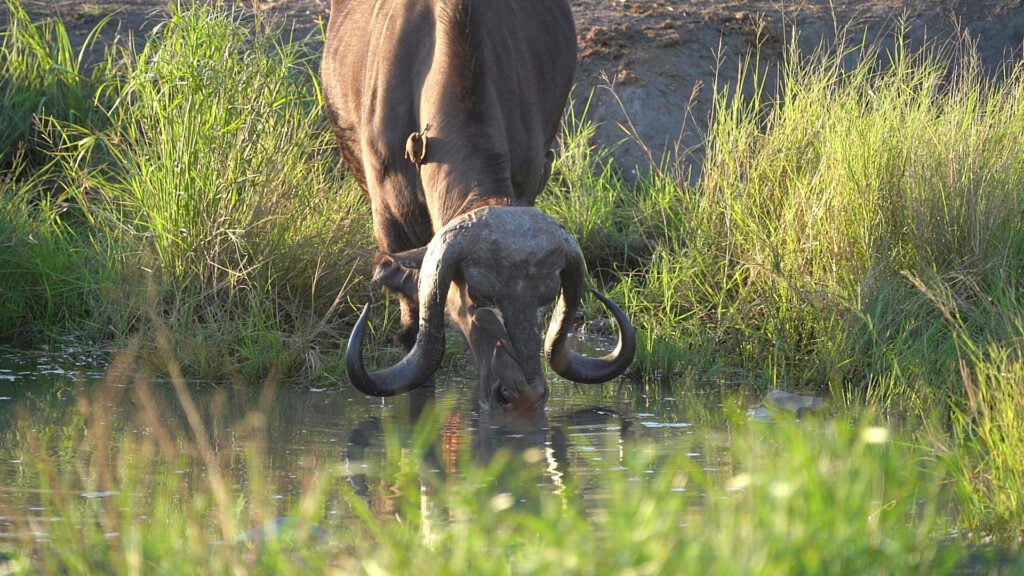
This bull’s horns clearly had that same strong base, but the growth pattern veered off in an unusual direction.
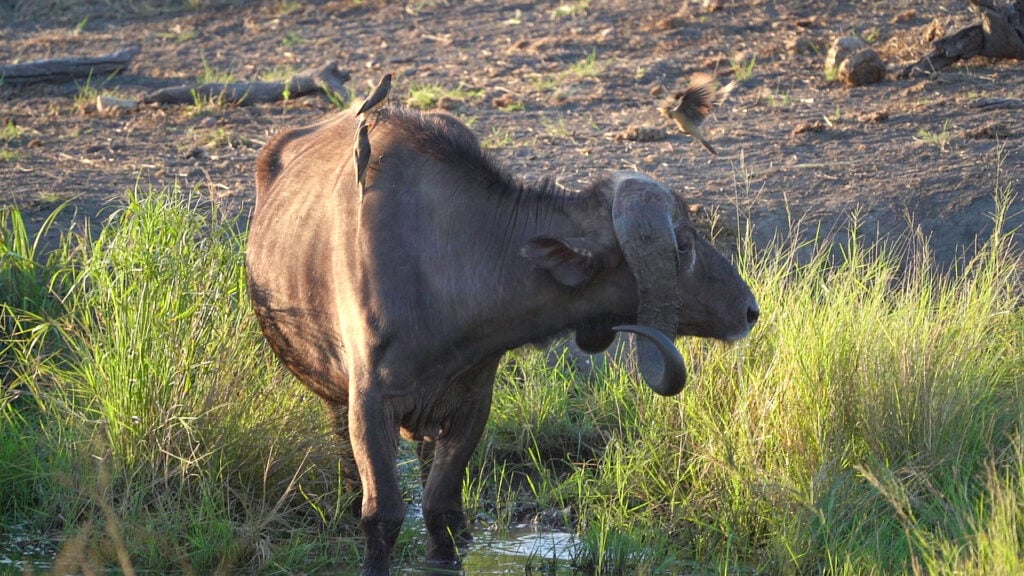
Horn shape in buffalo is largely genetic, but it can also be influenced by injury, uneven growth, or simply natural variation within the population. Sometimes a horn is knocked or damaged while young, changing the angle it grows at for the rest of the animal’s life.
Get our Best Sightings as they Come in
Other times, it really is just a quirk of genetics, the same way some people are born left handed or with a widow’s peak. Either way, the result is a buffalo that would be nearly impossible to mistake for any other in the herd.
A Useful Kind of Different
Distinctive horns like these aren’t just fun to look at, they’re incredibly useful for guides and researchers who track individual animals over time. A bull with an unmistakable horn shape can be recognised instantly, sighting after sighting, helping build a picture of its movements, age, and behaviour across the years without needing to rely on tags or collars.
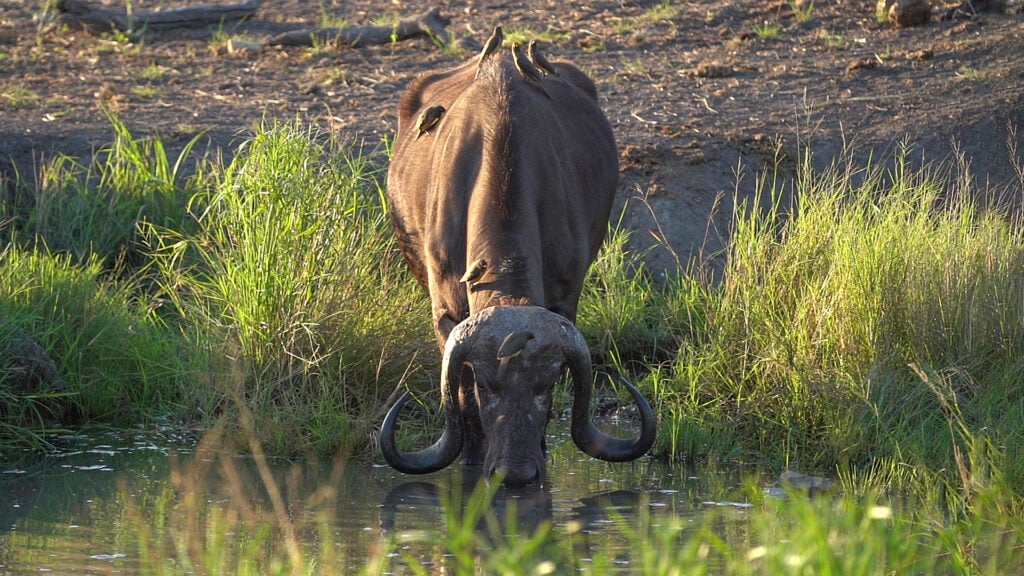
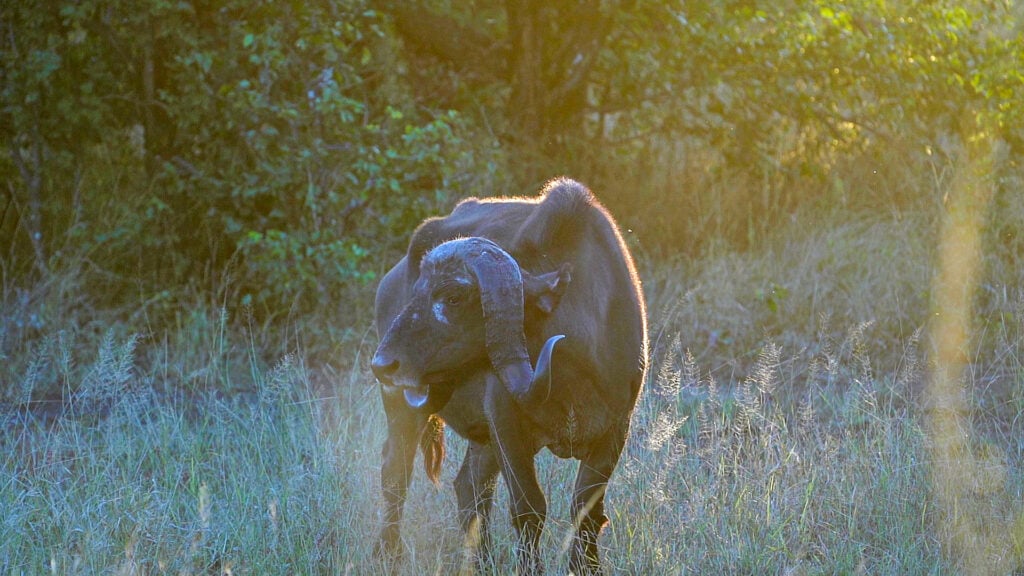
For the buffalo itself, horn shape can still play a role in dominance and defence, even if it looks a little different to the norm. Buffalo bulls use their horns to spar for status within the herd and to fend off predators like lions, and a solid boss combined with sharp tips still gets the job done, curled or not.
A Small Detail Worth Noticing
Sightings like this are a good reminder that no two animals in the bush are ever quite the same, and sometimes the smallest details are the ones that stick with you longest. This buffalo’s one of a kind horns turned an everyday drink at the waterhole into a sighting worth sharing.
If you enjoy spotting unusual animals like this one, our Sightings Group is the place to be, with real time sightings sent in by people currently out in Kruger, along with road closures and other useful park updates as they happen. Follow the link above to join!


