

The African lion (Panthera leo) is the largest mammalian predator in Africa. As the only large, social feline, they dominate both the predator hierarchy and the food chain.
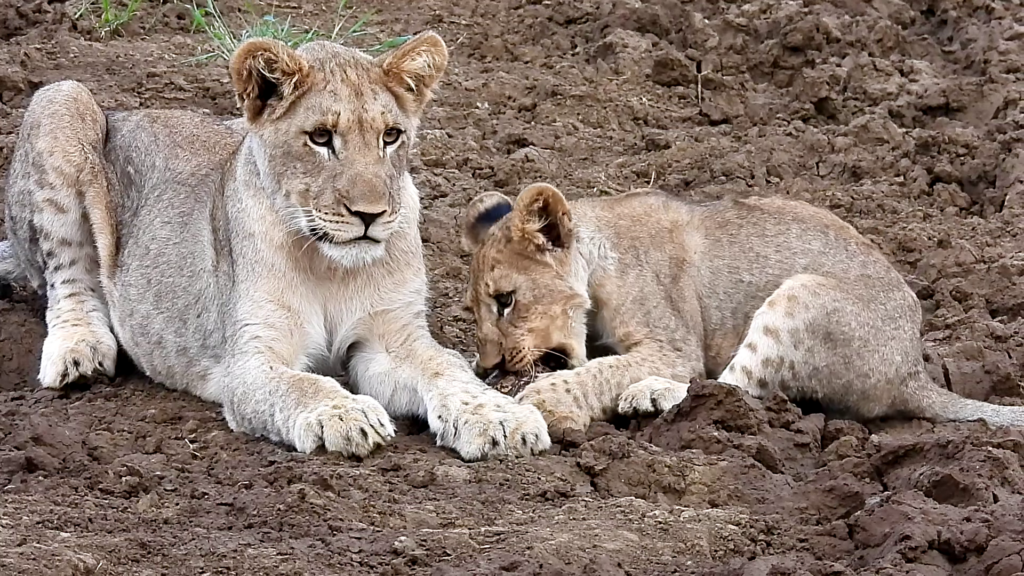
Today, a dwindling number of lions roam across sub-Saharan Africa, with most populations concentrated in the national parks of east and southern Africa. In South Africa, lions occur in their greatest numbers within the Greater Kruger National Park.
In this article, we’ll share some tips to increase your chances of spotting lions when visiting the Kruger National Park.
Latest Sightings app
The Latest Sightings app provides real-time updates on where popular species have been spotted.
However, for some, half the joy of seeing a lion is being able to brag that you found it yourself… and then share it on the app.
Kruger’s lion population
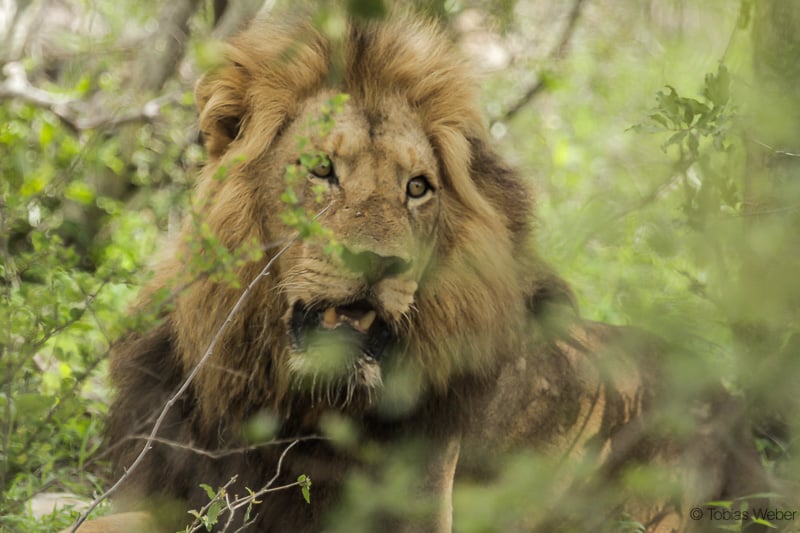
In 2015, researchers estimated that around 1,600 lions lived in the park. According to data collected, they live in prides averaging 12-15 members, with a density of around 13 lions per 100 km².
Considering that Kruger covers 19,485 km², that’s an awful lot of space for them to hide. However, you’ll be glad to know that lions are the most frequently spotted big cats, and the second most often spotted predator, after spotted hyenas.
King of the jungle? Not so much
Jungles are quite a different habitat from that preferred by lions. They are most at home in fairly open terrain, with enough cover in which to stalk their prey.
This means you should concentrate your search in areas of open savannahs and mixed woodlands. While lions often rest or move through dense bush, your chances of spotting them are quite slim.
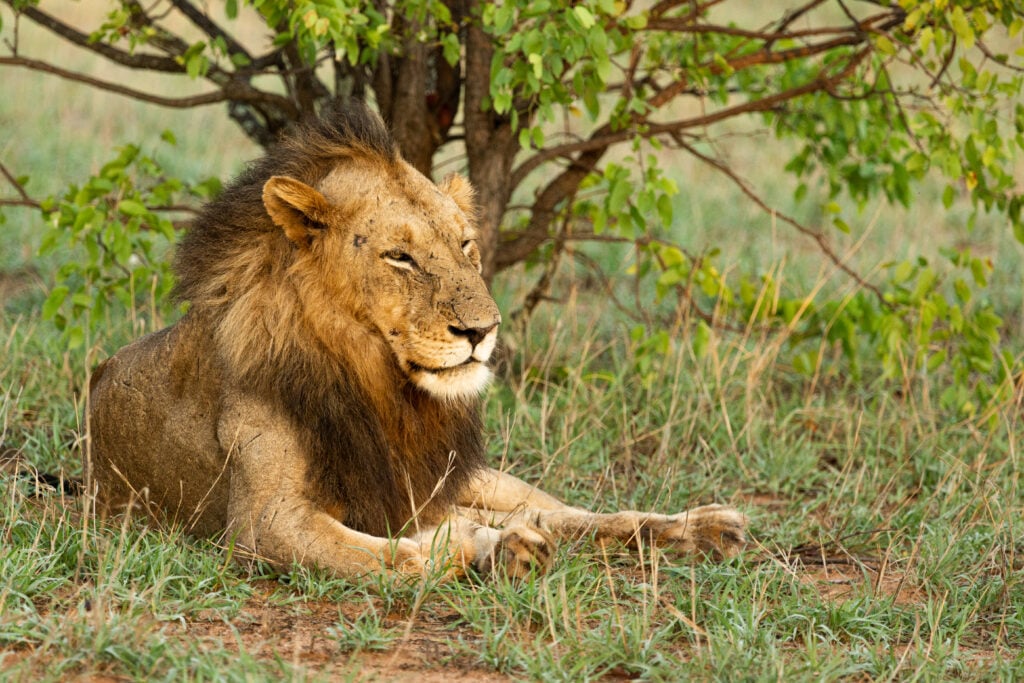
In Kruger, these habitats stretch between Skukuza and Lower Sabie, as well as across the central plain which run along eastern Kruger, from Lower Sabie northwards past Satara.
Excellent sightings can also be had further north, particularly along the rivers near Olifants, Letaba, and Shingwedzi Camps.
Get our Best Sightings as they Come in
Resources = results
These mixed grasslands attract the favoured prey species of lions: buffalo, zebra, wildebeest, and giraffe.
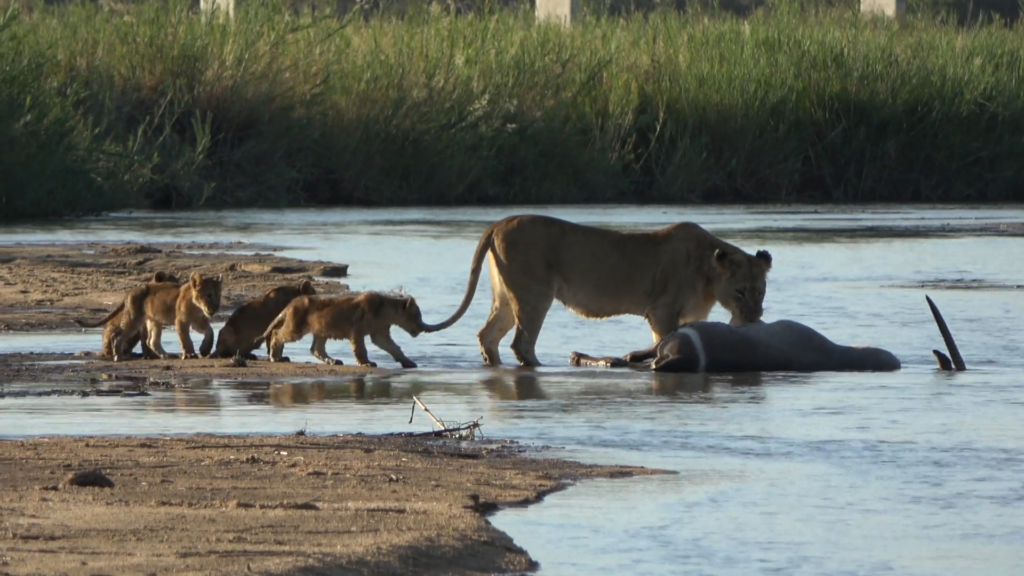
Now consider the fact that both predator and prey need water to survive. As such, it is safe to assume that the likelihood of spotting lions increases near water. Indeed, waterholes and riverbanks are statistically where you are most likely to witness predator-prey interactions.
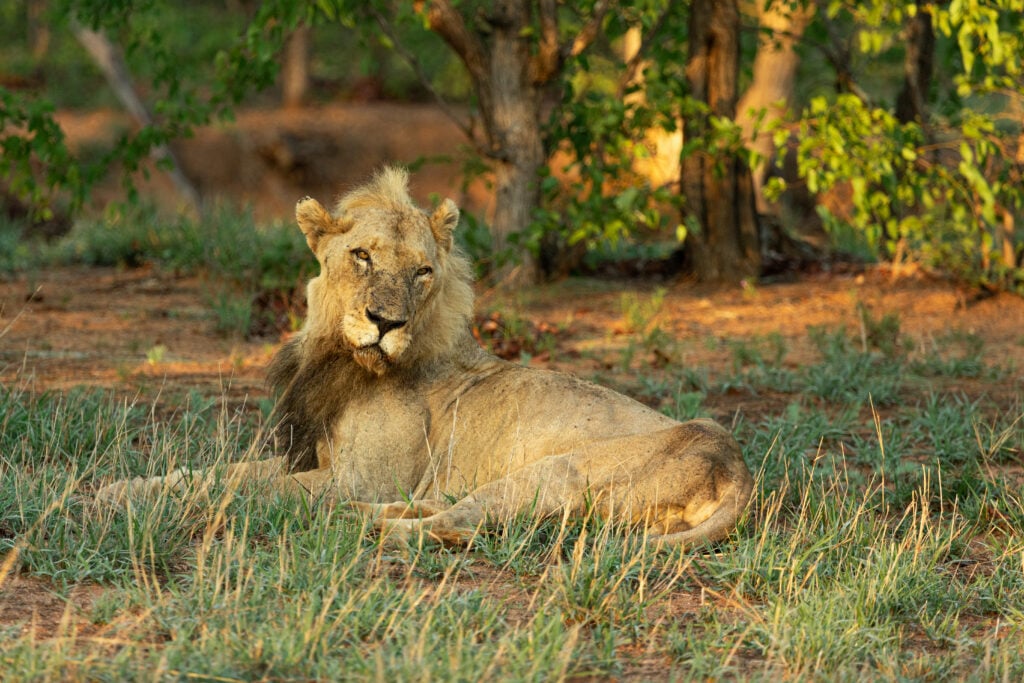
Bear in mind that in summer (October to March), standing water is widespread after the rains. In winter, water supplies are limited to a few dams, rivers, and artificial waterholes. Therefore, your best chance of seeing lions near water is in winter (April to September).
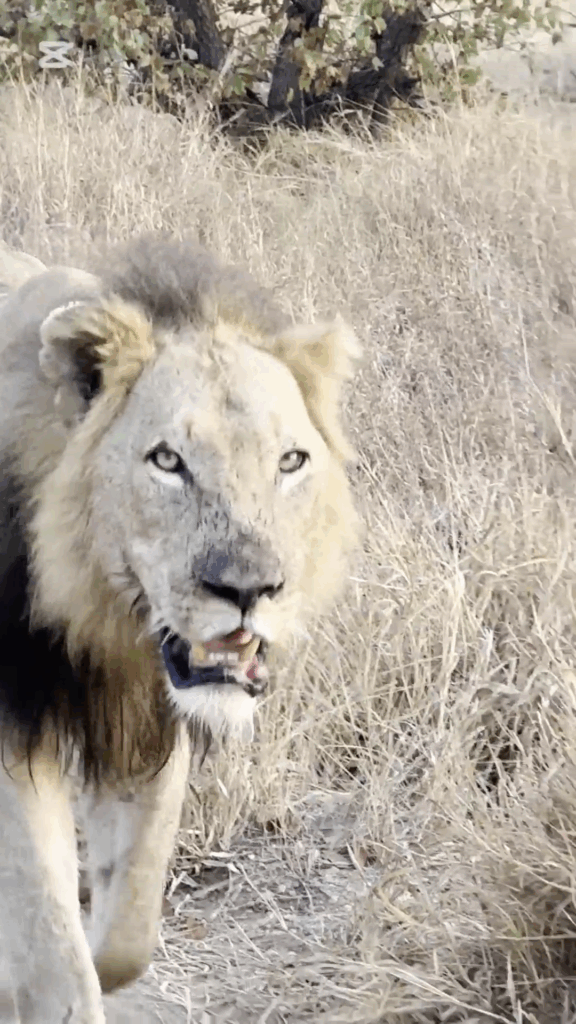
Also, monitor the behaviour of other species. You may notice a herd of zebras all focused on a particular bush, or hear the alarm calls of monkeys. Learning to read these signs greatly increases your chances of finding predators nearby. Likewise, circling vultures, particularly when descending, can point you towards lions on a kill, although it might not be visible from the road.
When to find lions
Strictly speaking, lions are most active at night, when cooler temperatures allow for higher activity levels and increased cover from prey species. So, consider booking a sunset or night drive to see them in action.
Also, when in camp, listen for lion vocalisations at night. They may be closer than you think. Lions often come onto roads in the early morning, so be sure to set out as the camp gates open, as they are regularly found walking on roads throughout the park.
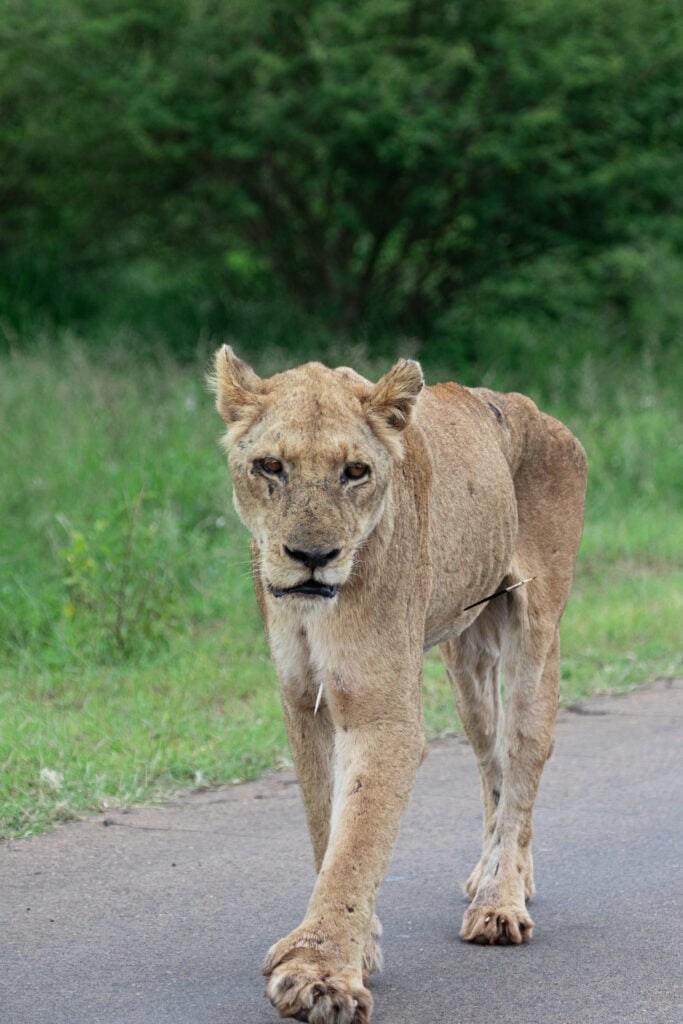
That said, they are not averse to daytime activity, particularly in cooler weather. Also, windy conditions work in their favour when hunting.
Taking all that into consideration, remember that lions are notoriously lazy, spending up to 20 hours a day sleeping. However, with patient scanning, you might be rewarded with a glimpse of a flicking ear or twitching tail. And don’t be shy to take a closer look at that lion-shaped rock.
And last, but not least, when all else fails, try asking other visitors. Most people love sharing their sightings. And you should, too.


