

Deon Kelbrick captured the spectacular scene in the MalaMala Game Reserve.
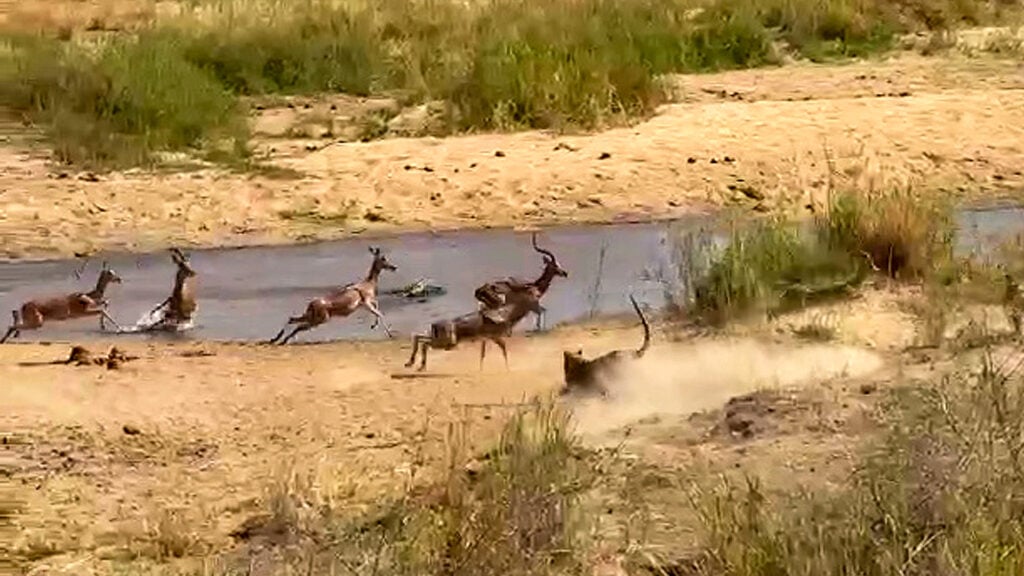
Bachelor herd of impala settles alongside river
Leopards are ambush predators and most often appear to emerge from nowhere when they charge for their intended prey.
This herd of impala had settled alongside a river and were busy grazing, while a stealthy leopard stalked them and watched them from the covering of some nearby long grass.
It appeared that they were sitting ducks, with many of them in vulnerable positions with their heads down as they drank from the river.
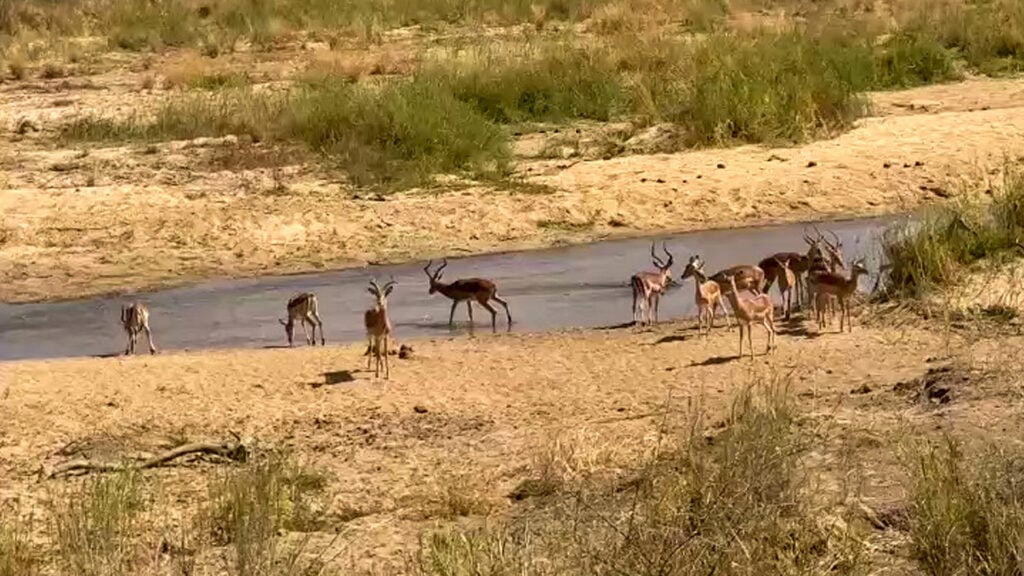
Stalking leopard makes his presence known
This was a bachelor herd of impala, meaning that it was comprised mostly of rams or male impala. The bucks’ long horns could be seen glistening in the sun and the setting was peaceful. This was until the leopard made his presence known and he did so with great fury!
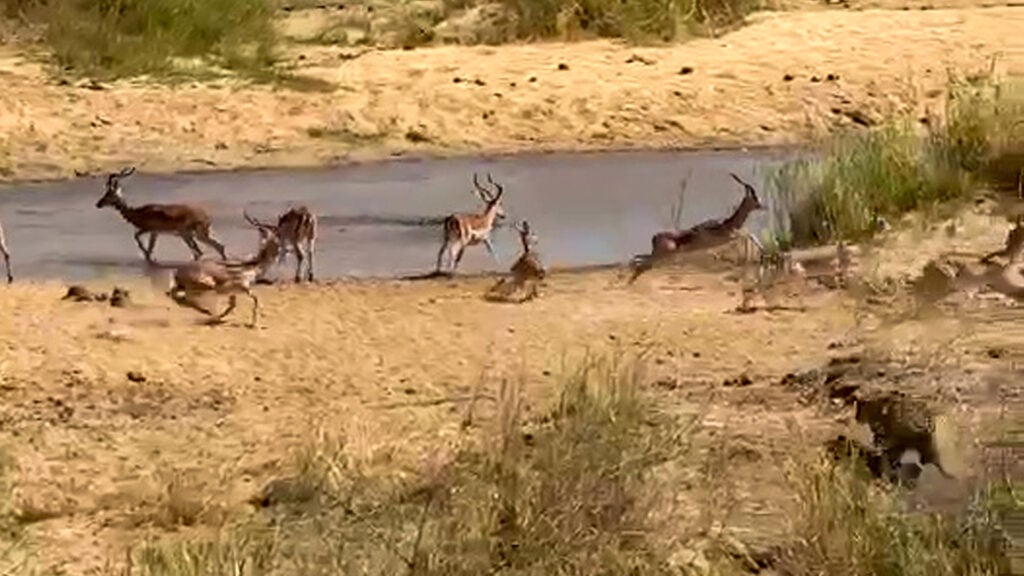
Impala rams react to leopard’s onslaught
The impalas’ reaction time was brilliant. As soon as the leopard had moved out of hiding, they were on their feet and running like the wind. Impala run with leaps and long strides, and display an unusual grace, even while being pursued.
These impala ran in all directions, kicking up dust and causing a great commotion.
Get our Best Sightings as they Come in
Typically, when a leopard charges, impalas don’t just run in a straight line. Instead, they explode into erratic, high-speed movement.
As these ones did, they scatter in multiple directions at once, making it hard for the leopard to lock onto a single target. At the same time, each impala performs sharp zig-zag turns and sudden leaps (called ‘pronking’), breaking the predator’s focus.
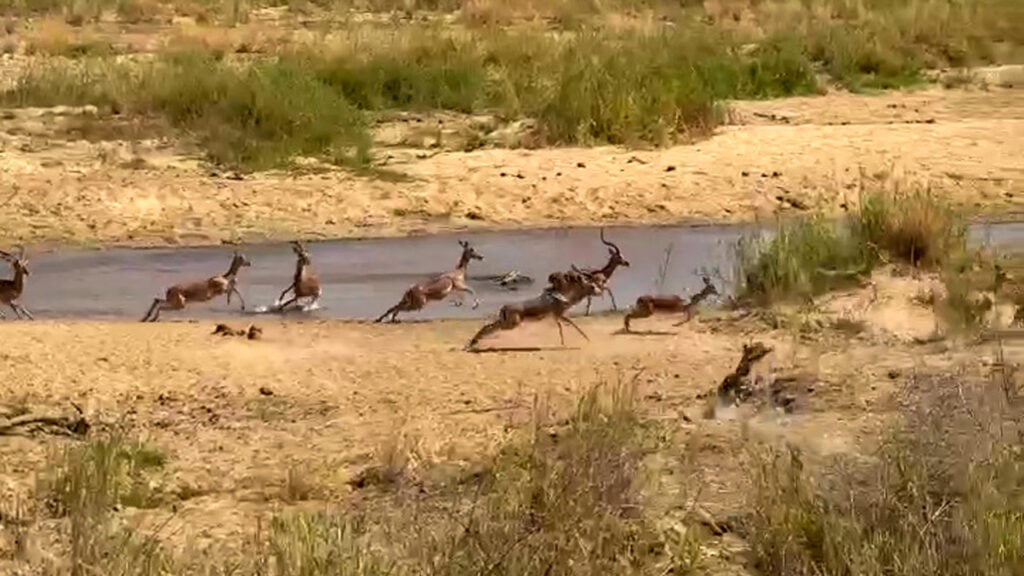
Leopards rely on precision and timing. They need to commit to one animal in a split second. But when the herd fragments and individuals move unpredictably, the leopard’s brain has to constantly recalculate. That hesitation, even for a moment, can mean failure.
There’s also a visual overload effect. A charging leopard sees flashing bodies, crossing paths, and vertical jumps all at once. This creates sensory confusion, making it difficult to judge distance and direction.
Instead of closing in for the kill, the leopard appeared to be confused; moving this way and then that way, while the impala got away!
Impala flee leaving leopard alone in a cloud of dust
He was surrounded by a thick cloud of dust by the time the last impala had disappeared from sight.
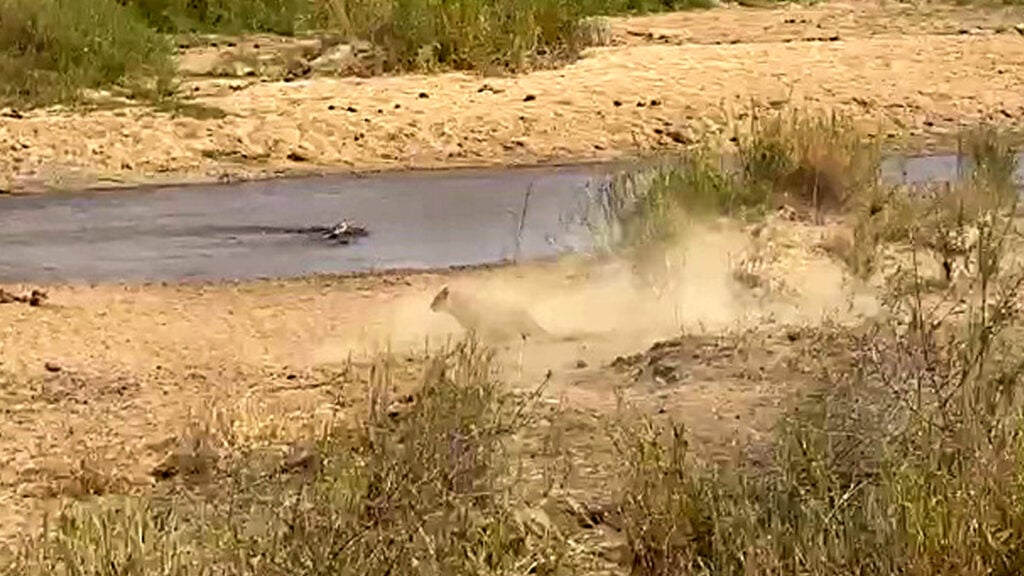
Now it was just him and the cool, calm river.
The poor leopard had botched up any chance of a kill. Having expended so much energy, he would need a little time to recover, before trying again.
He was a beautiful creature with a lithe, strong form. No doubt he had many kills in his lifetime, however, this clearly wasn’t his day!
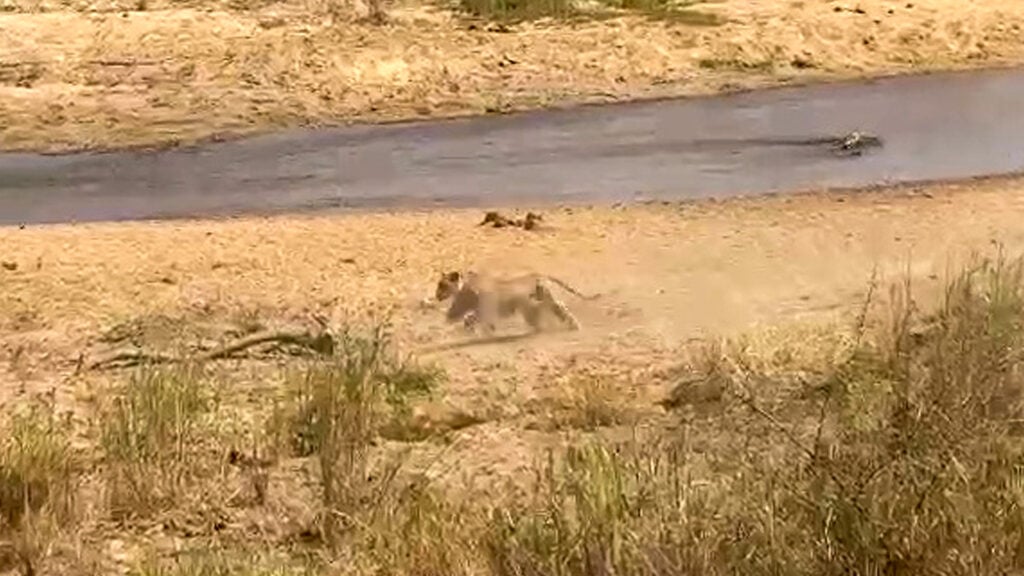
Meantime, this herd of impala had demonstrated to spectators why there is strength in numbers.
For Deon, this was a learning experience. Impalas don’t outrun a leopard by speed alone. They also outplay the predator by overwhelming its ability to choose.


