

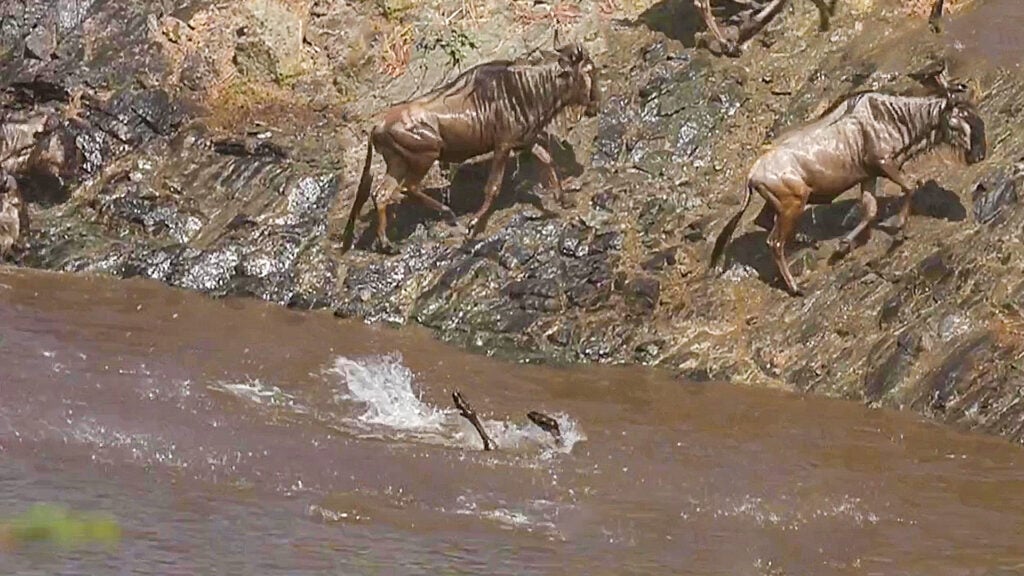
Large herds of grazing animals cannot stay in the same place forever, as their numbers often allow them to eat the plant-life in an area quicker than it can replenish itself.
For this reason, animals like wildebeest must undertake the Great Migration, moving constantly from one place to another, giving the grass behind them time to regrow, while they follow greener ground.
Watch Now:
Rachel Chapman caught footage of these wildebeest crossing some slow moving water and sent it to Latest Sightings, but these unlucky animals realized too late that they weren’t alone in the water.
An Audience For A Descent
The herd of wildebeest had gathered alongside a large herd of zebra at the top of a hill, looking down on a large body of water. Despite needing to cross, the animals seemed reluctant to go down to the water’s edge.
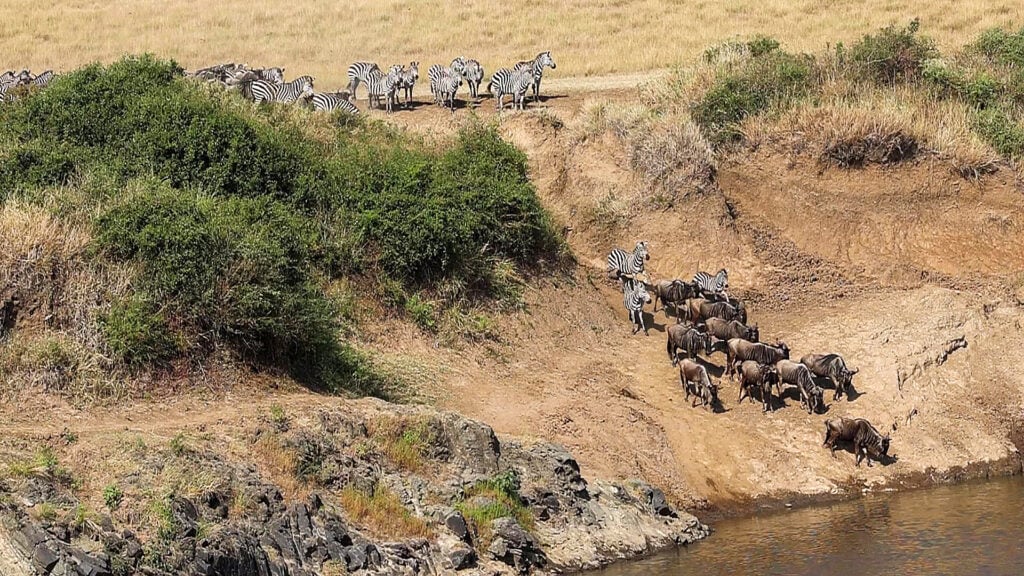
A string of wildebeest did eventually brave the descent, while the herd of zebra looked on, safe from water-dwelling predators at the top of the steep hill and perfectly willing to let the wildebeest confirm for them whether or not the water was safe.
Despite needing to move to better grazing grounds to survive, these animals were likely painfully aware of the risks that deep water presented, as anything, like a hungry crocodile, could be lurking just beneath the surface just waiting for them to come close enough.
No Choice But To Try
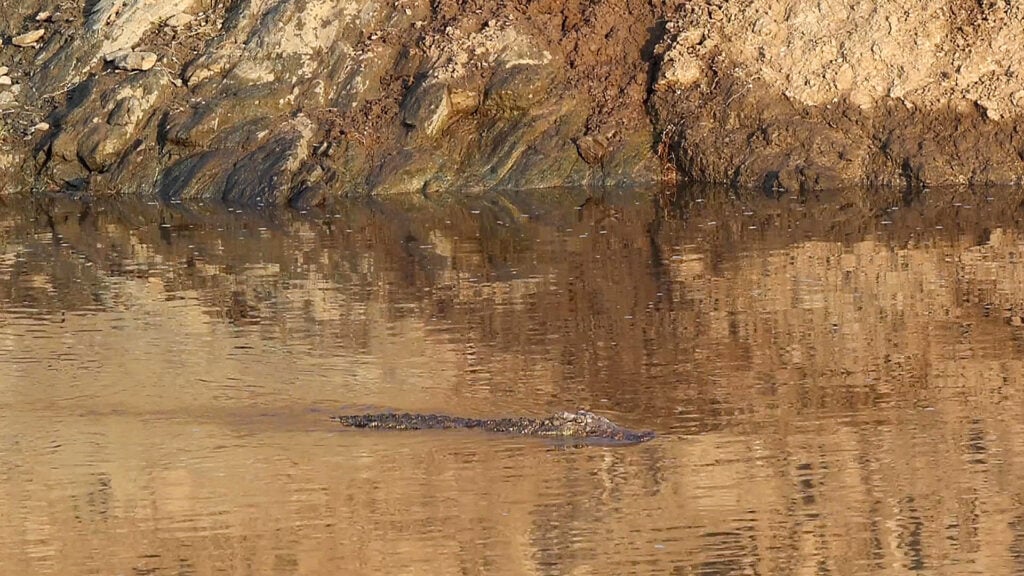
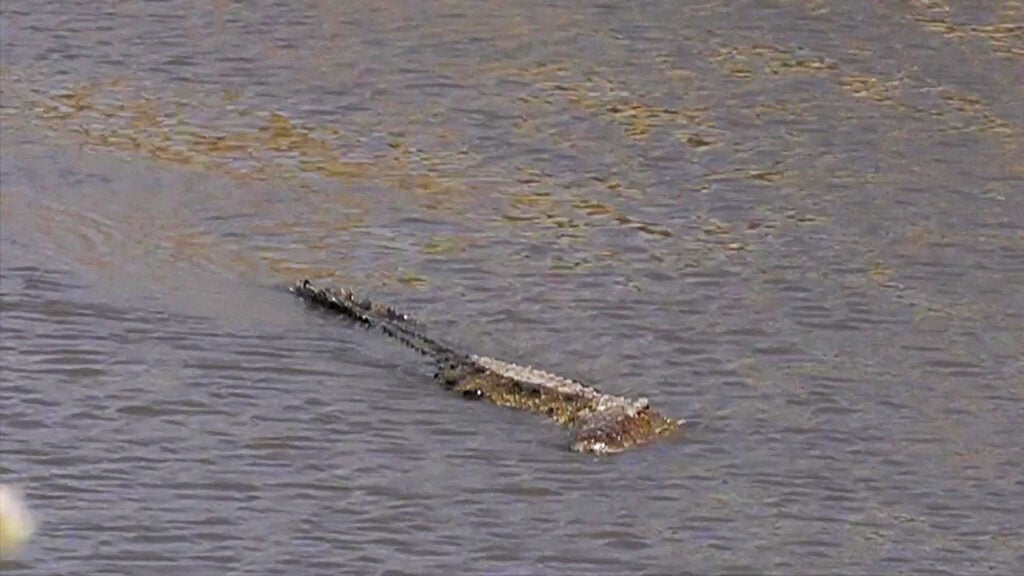
The crocodile floating just above the surface, waiting for the wildebeest to cross its path close enough for it to lunge, proved that the water was dangerous. For the wildebeest, though, crossing the water was a necessity, and this was a likely spot.
Grassland can only sustain a herd for so long before the herd depletes it, so they need to move on to greener pastures while they let the ground behind them regenerate and regrow.
In this case, moving on to find new and vital sources of food means crossing this water and getting safely to the other side. And that means getting past the waiting crocodile.
Living Life On The Edge
With so many wildebeest forging their way through the water this crocodile didn’t need to rush, it could take its time drifting slowly closer as it patiently waited for an opportune moment to strike.
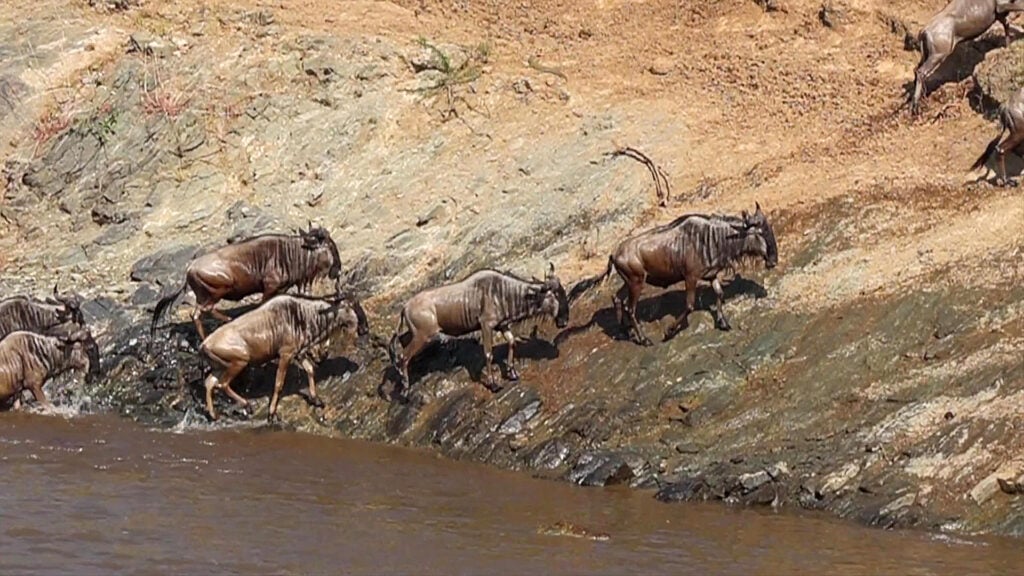
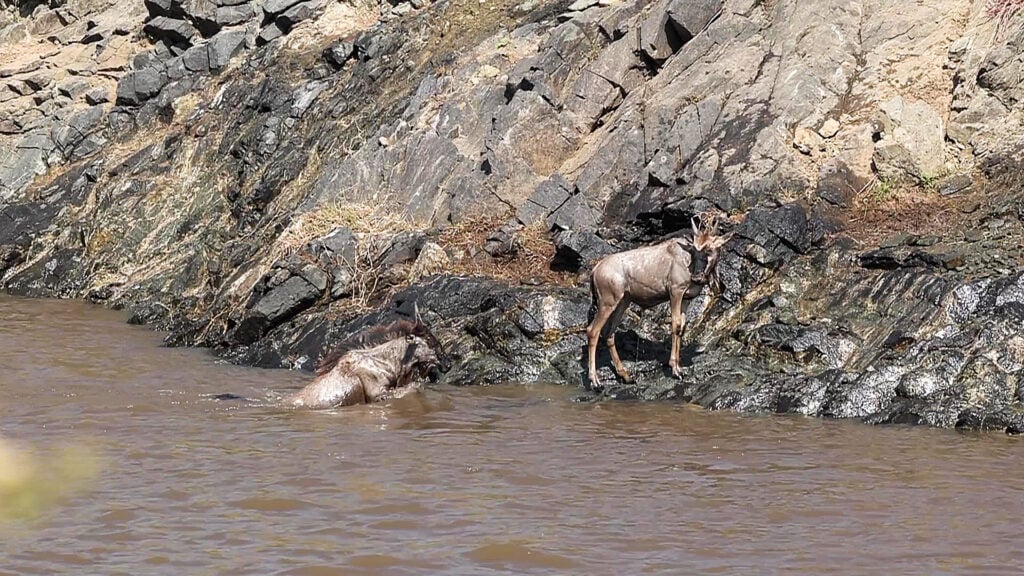
Better yet, the far side of the water was rocky outcropping which meant the wildebeest could only climb up onto land in select places, and with the amount of them crossing this meant there were bottlenecks that left large numbers of wildebeest in the water with nowhere to go.
All the crocodile had to do was let the currents of the water take it closer to the edges, where the wildebeest were struggling to hoist themselves out of the water and onto the slippery rocks.
Get our Best Sightings as they Come in
The Opportune Moment
When the crocodile saw the opportunity to strike it did so quickly and cleanly. One of the wildebeest stumbled slightly climbing out of the water, just enough to almost lose its footing.
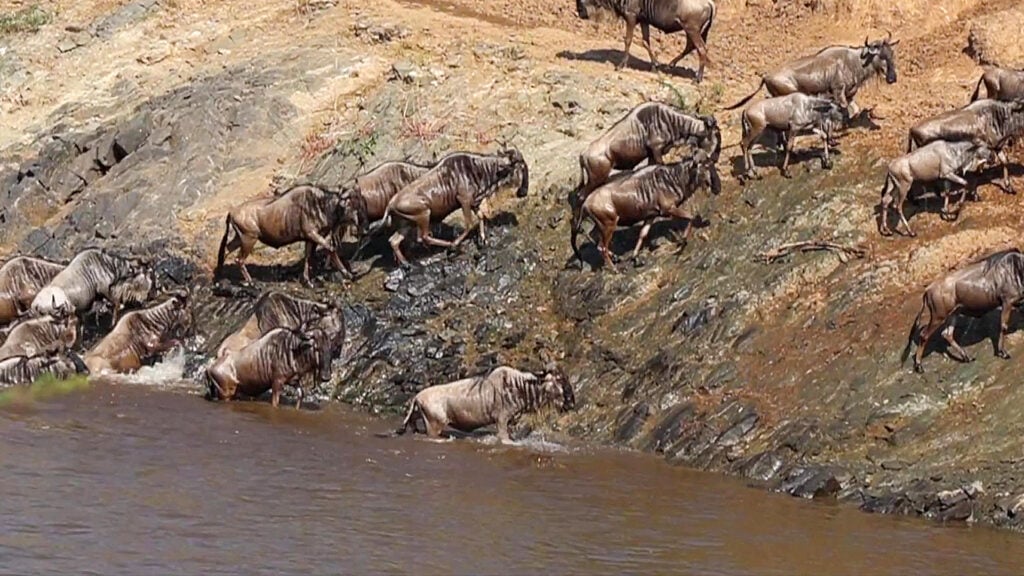
With amazing speed and precision, the crocodile burst from beneath the water where it had been lurking unseen, and seized the wildebeest’s neck in its jaws, before slowly dragging it below the surface.
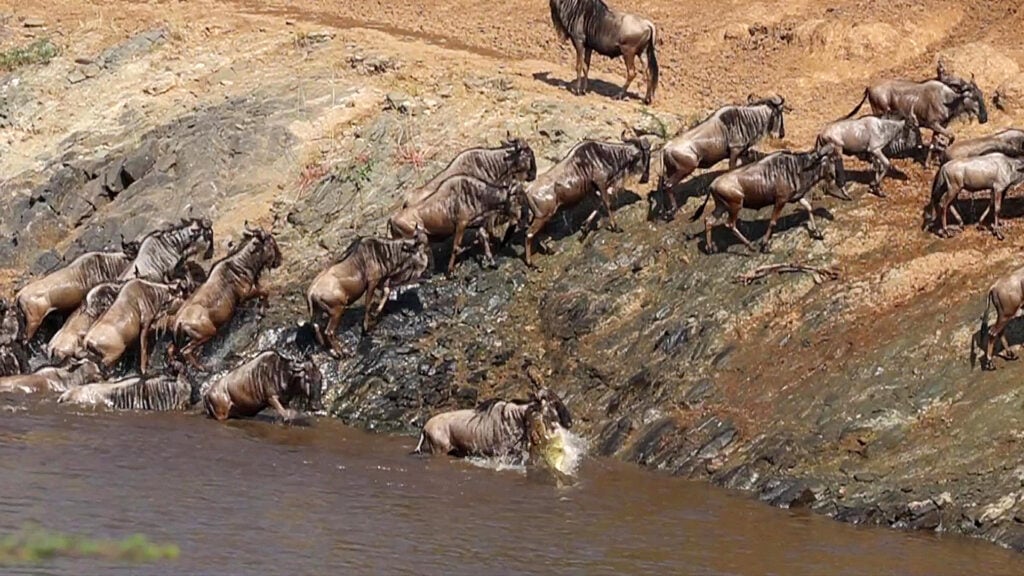
There were only a few splashes, and then it was over. It was an amazing display of a crocodile’s hunting prowess for Rachel, but an unlucky end for one wildebeest among many.


