

These leopard cub siblings decided to keep themselves entertained while waiting for their mother. Fortunately, they were not left without anything to amuse them. While waiting for Mom, they discovered each other’s tails. The rest, you could say, was history!
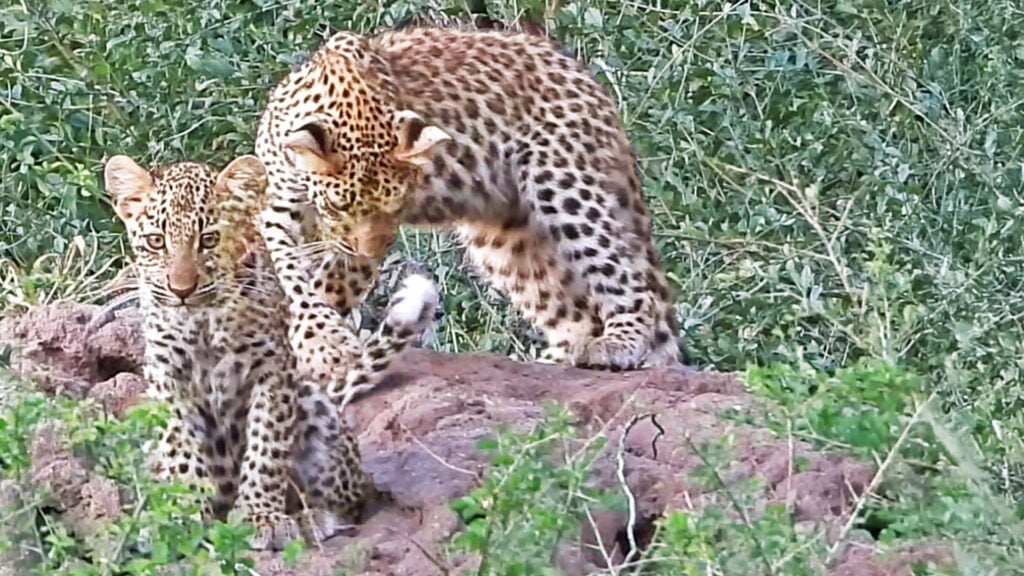
Curious cubs notice one another’s tails
These cubs had been hidden behind a sandy mound, and surrounded by the thicket when their mother left to go hunting. With Mom away, they saw this as an opportunity to play.
They emerged from their hiding place and climbed on top of the mound. This was when the fun and games began.
Much as all baby animals, leopard cubs are inherently playful and curious. This playfulness serves its purpose. While playing, cubs will learn essential life skills, such as balance, coordination and hunting skills.
See more incredible sightings
Keep watching more memorable bushveld sightings with us. Join our WhatsApp group where you will be updated with regular sightings. Click here to join.
Get our Best Sightings as they Come in
Stalking and hunting skills strengthened during play
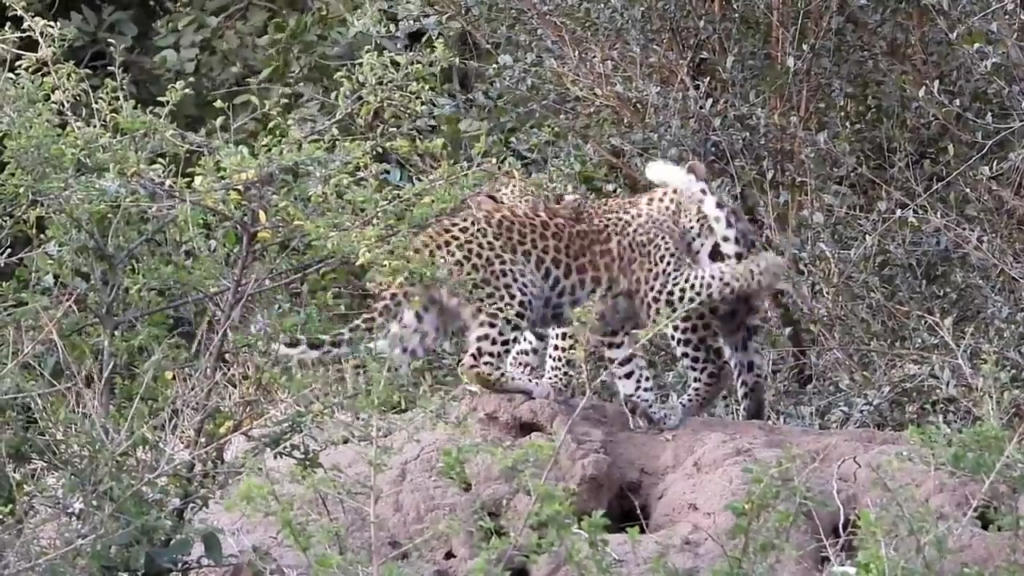
These cubs detected movement from one another’s tails, and this became the opportunity to hone some stalking and hunting skills… all in the name of fun.
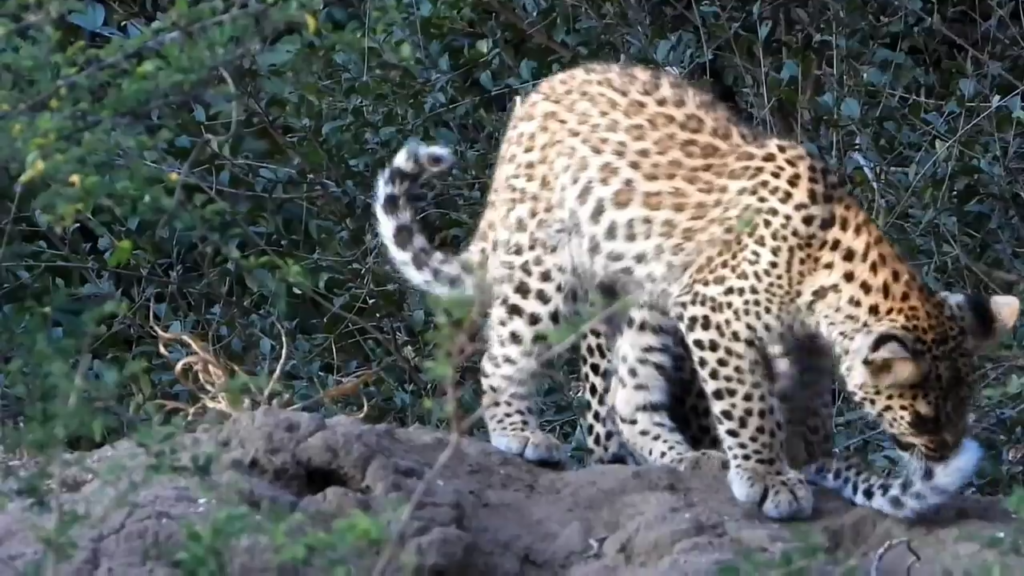
The cubs climbed over one another, examining each other’s lively tails and biting where and as they deemed necessary.
They repeatedly tried to catch the flicking spotted tails which seemed impossible to pin down.
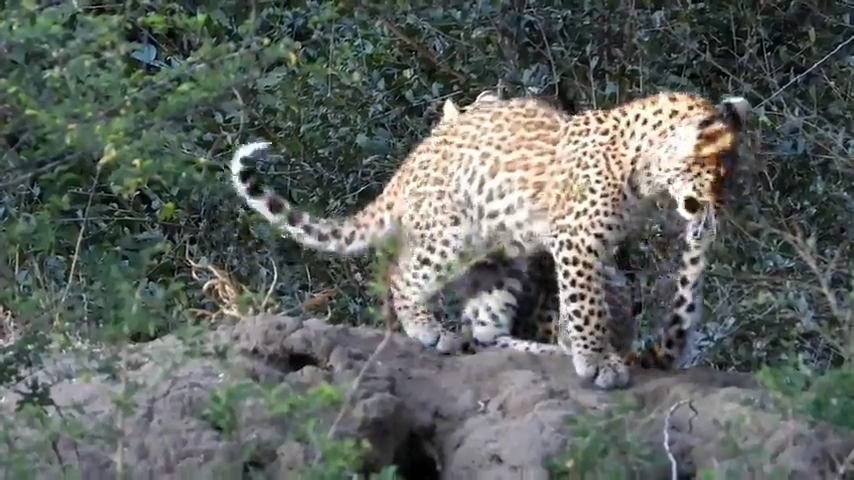
Leopard mothers raise their cubs alone and are extremely protective during the first few months of life. While the cubs remain hidden, the mother leaves periodically to hunt.
During these absences, leopard cubs will often entertain themselves through play, but they still remain vulnerable to predators such as lions, hyenas and even other leopards.
Camouflage keeps cubs’ presence relatively hidden
In the open and with their attention focused on one another and playtime, these cubs were vulnerable. Thankfully there was thick vegetation around them, providing something of a covering.
Also, their spotted coats provided excellent camouflage, allowing them to blend into the surrounding bush while they explored their environment.
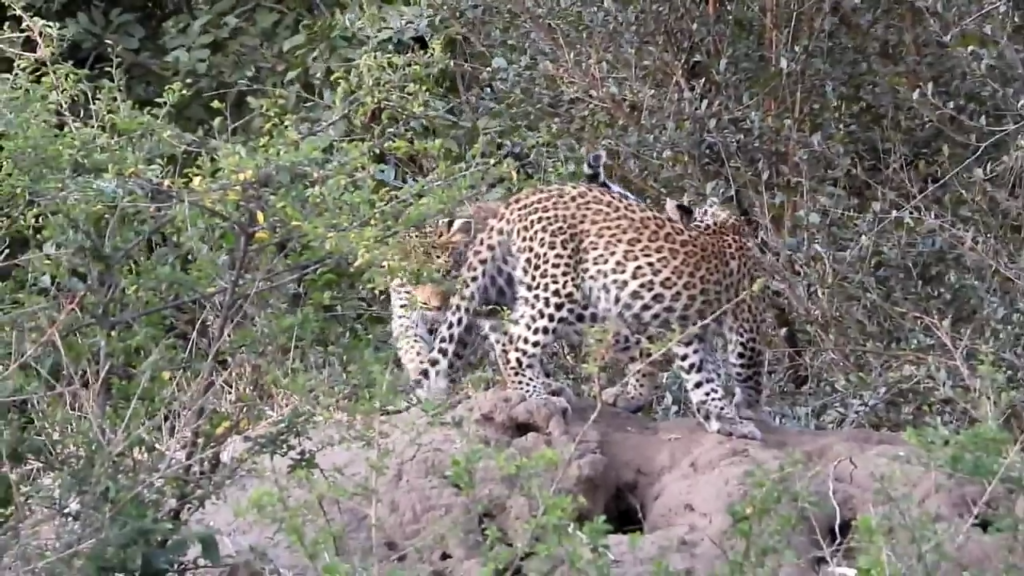
Wrestling ensues as playtime continues
They turned around one another, each pursuing the other’s tail. The setting provided for some poignant viewing.
Though they were small, they were already demonstrating substantial prowess and skill.
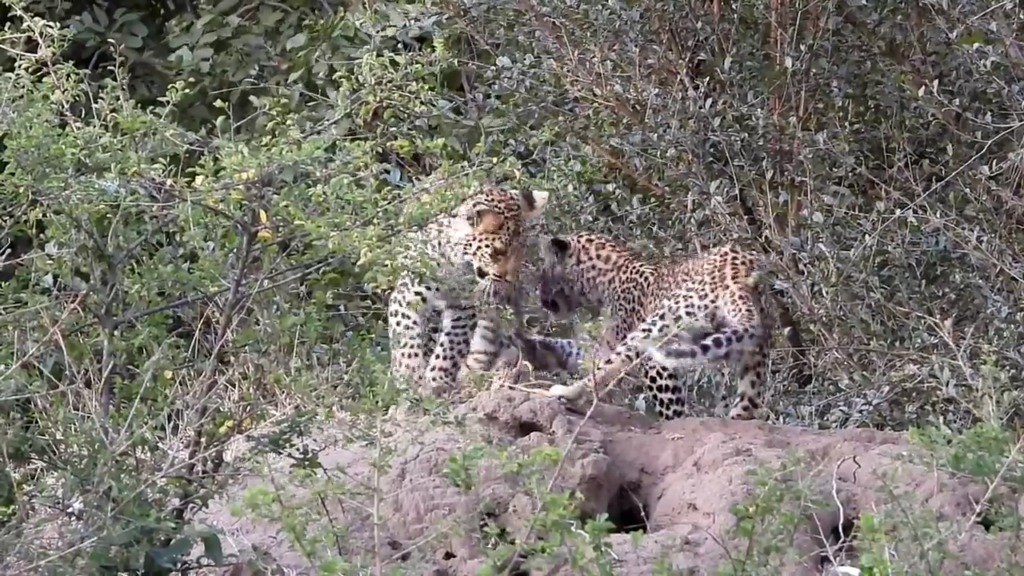
Then it was time to wrestle some more. Teeth were bared, paws lashed out… these were small leopards, but in their hearts, they were fierce apex predators.
Leopards are among the most adaptable big cats in Africa and Asia, able to survive in habitats ranging from dense forests and mountains to dry savannas and areas close to cities. They are also solitary animals and spend much of their lives alone, except during mating or when females are raising cubs.
While this leopard mother was out for the moment, she would soon return, hopefully with a kill in tow or to lead her cubs to a kill, for their nourishment and strengthening.
A rare glimpse into the softer side of leopards
Moments like these offer a rare glimpse into the softer side of one of Africa’s most elusive big cats.
Alberto saw firsthand how even powerful predators begin life as playful and inquisitive youngsters.


