

Life is full of ‘firsts’. The same is true for animals. While humans take a couple of months to begin to take their first steps, little elephants are early bloomers, standing up and even walking on their very first day!
Elephants, like many large mammals, are precocial. This means that they are born relatively developed compared to species like humans.
A newborn calf usually tries to stand within the first 30 minutes to 2 hours after birth.
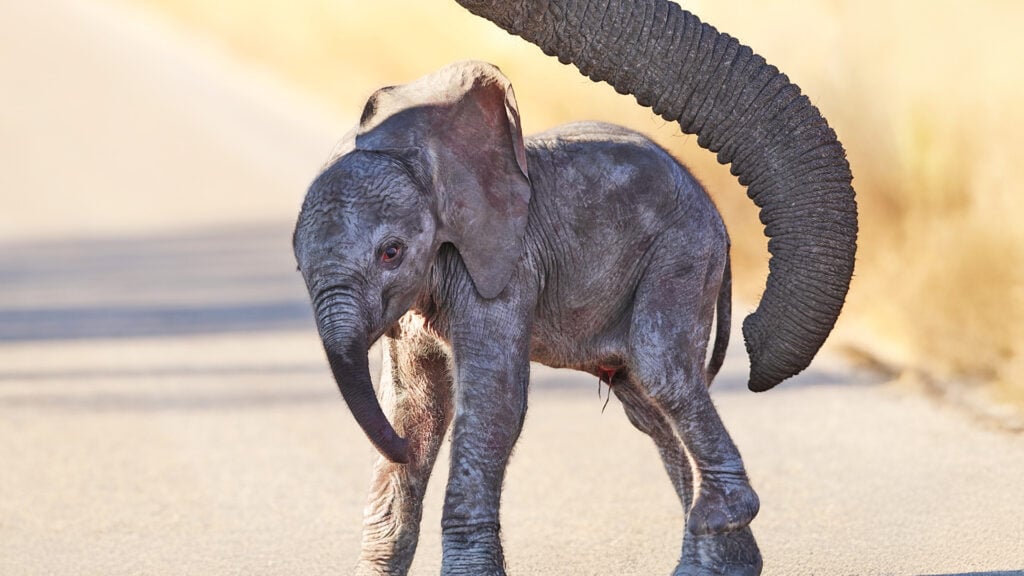
A front row seat to witness an extraordinary ‘first’
JP’s beautiful clipping gives viewers the chance to watch the memorable moments of a baby elephant’s first steps from up close.
What is strikingly evident is the mother elephant’s support, as her calf staggers forward, wobbly and unsure.
The mother keeps a close eye on the tiny elephant, and has her trunk ready to assist it if needs be.
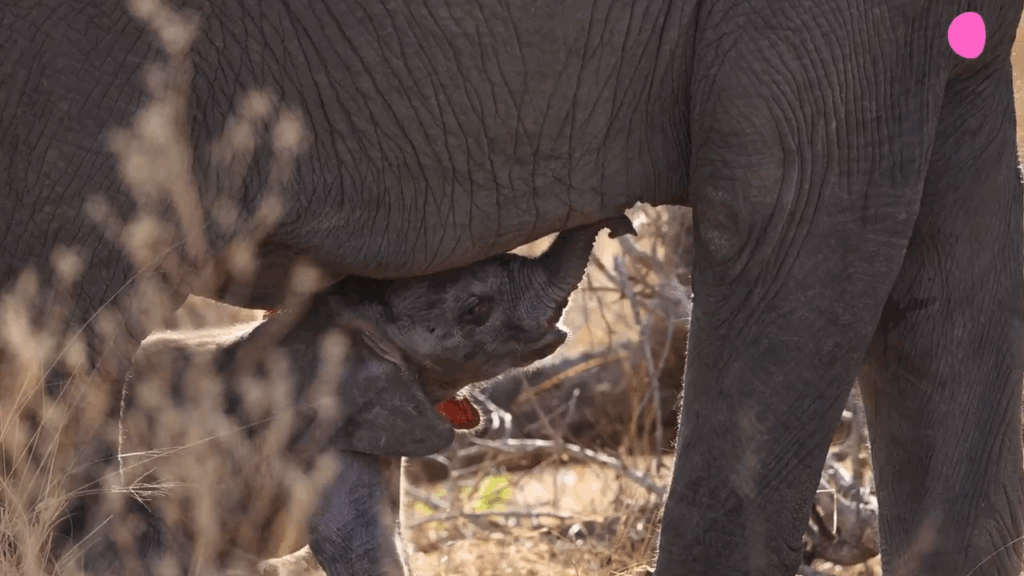
Baby elephants are born weighing around 100kg and standing nearly a metre tall. They are surprisingly strong at birth but still unsteady on their legs.
Within minutes to hours after birth, they will instinctively try to rise, wobbling as they push their bulky body upright with oversized feet which seem too big for their frame.
Get our Best Sightings as they Come in
At first, each attempt looks clumsy. Knees will buckle and legs will spread awkwardly. Many times the calf will tumble back into the safety of the dust or grass. However, they eventually get it right.
As with all little ones, walking is initially clumsy and awkward, but when the baby gets it right, there’s no stopping them!
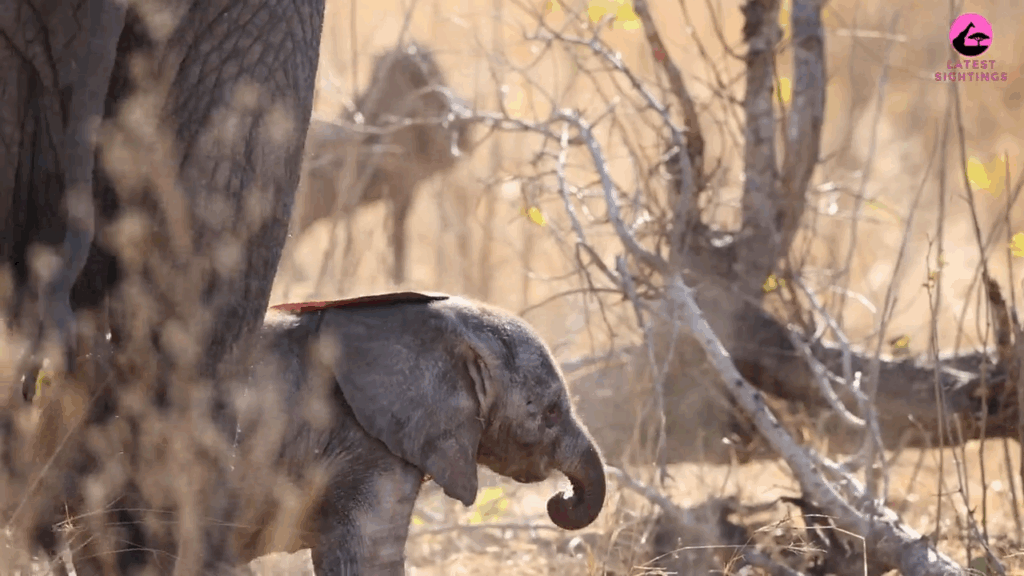
In this sighting, it was the mother’s encouragement which spurred the little one on to keep trying in spite of setbacks. Here, the calf was guided by determination and the gentle nudges of its mother.
It kept getting back up and its shaky movements became more and more coordinated.
It eventually managed short, uncertain steps, trunk swinging with imbalance, before finally finding a rhythm.
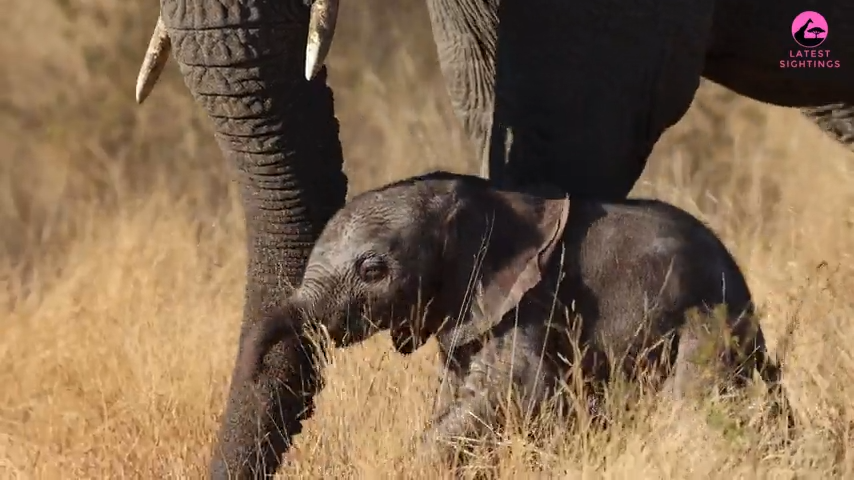
Mother and calf begin their first journey together
The mother and her calf walked through the long grass, staying close to each other. Even at this young age the calf had formed a strong bond with its Mom which was evident to spectators.
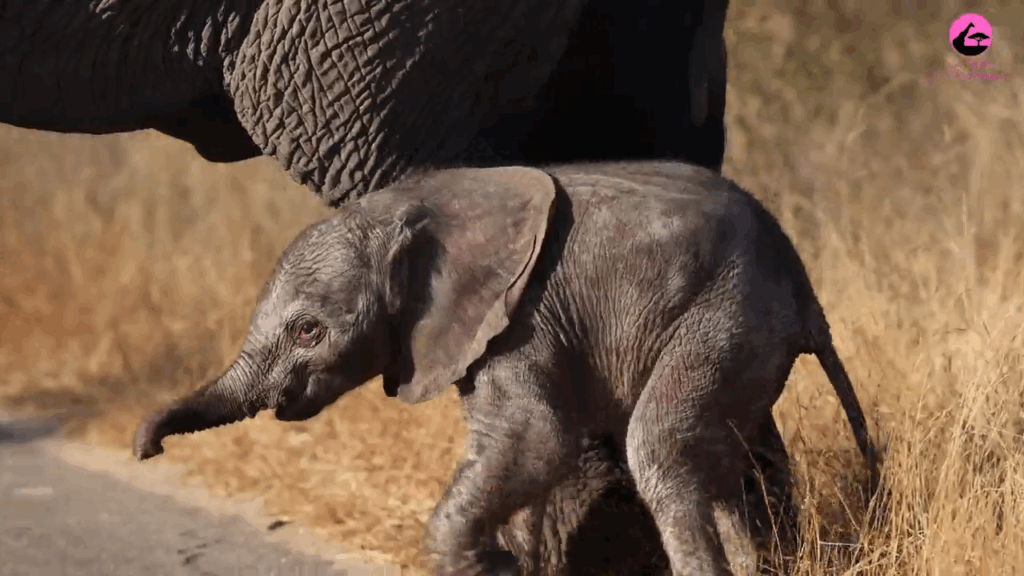
They eventually came to the road, but continued to walk. The tiny elephant showed signs of struggling. At one point, its legs buckled to a kneel, however, the mother was soon standing over it and lifting it up by its belly using her trunk.
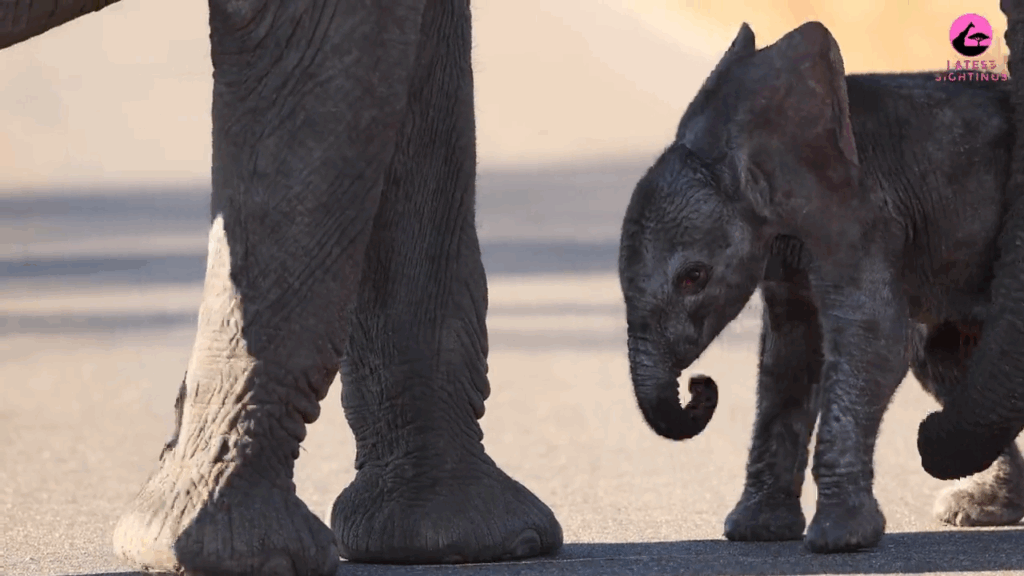
An essential skill for survival
These first steps of an elephant are vital.
In the wild, mobility ensures safety. Being able to walk also allows the newborn to stay close to its protective herd and begin learning the skills it will need for survival.
By the end of the first day of their lives, most calves can walk well enough to keep up with the herd, although they may still trip over their own feet! They might even trip over their own trunks. Trunk training is a whole other lesson they will have to learn.


