

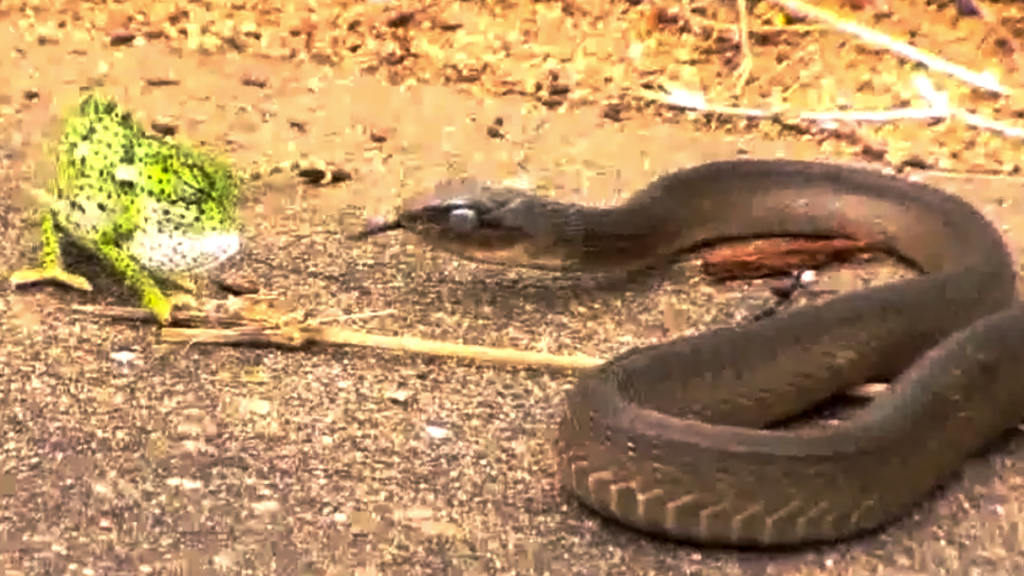
While on safari, many make the mistake of seeking out action involving the “big stuff”. For the sharp-eyed, however, there are many small-scale battles being fought.
Thinus Smith sent this unusual footage to Latest Sightings. He filmed it while on a game drive in South Africa’s Kruger National Park.
Snake on the verge
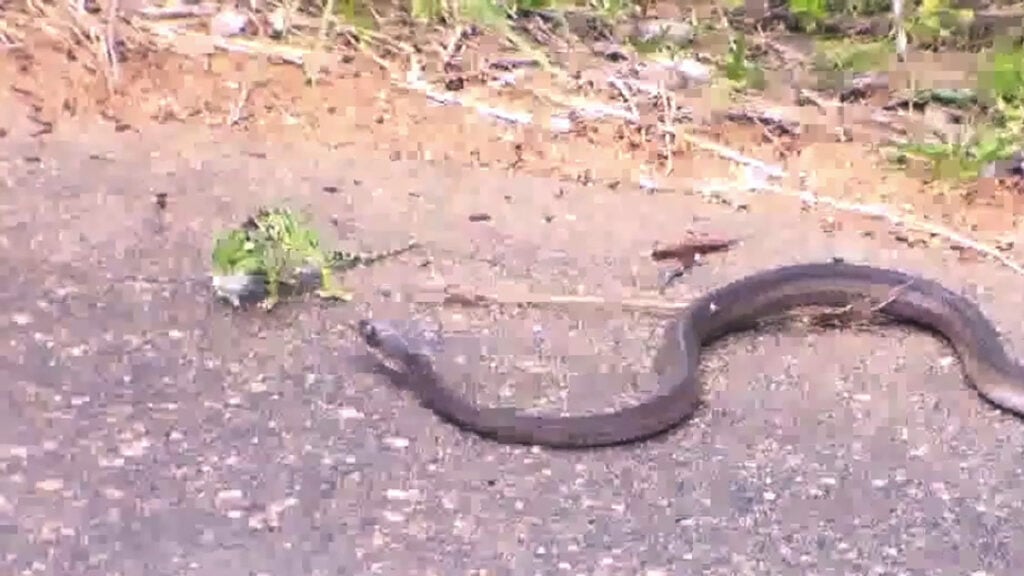
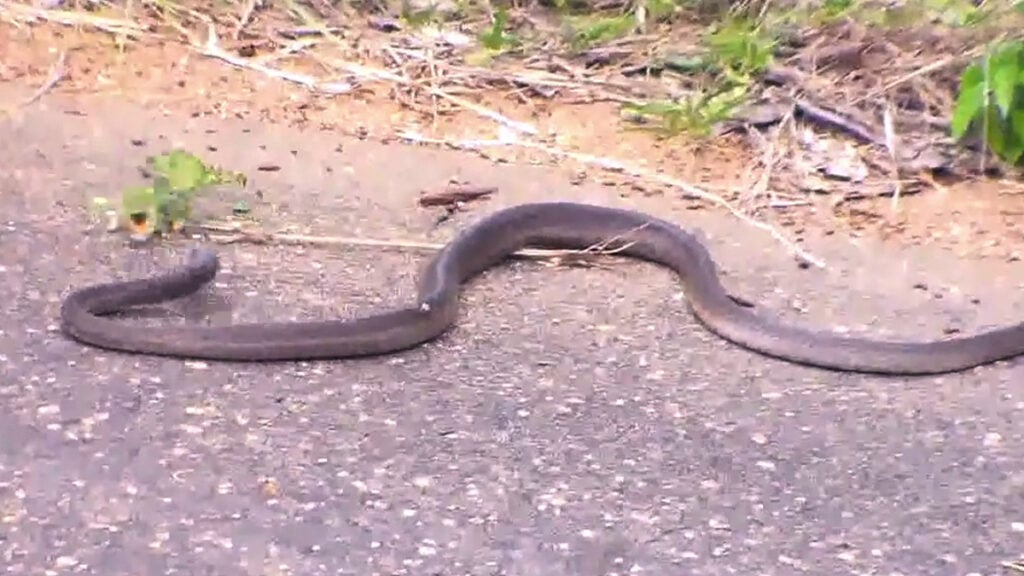
As we join Thinus at his sighting, we see something the less sharp-eyed among us might have missed. Curled against the grassy verge of the road is a dark-coloured snake.
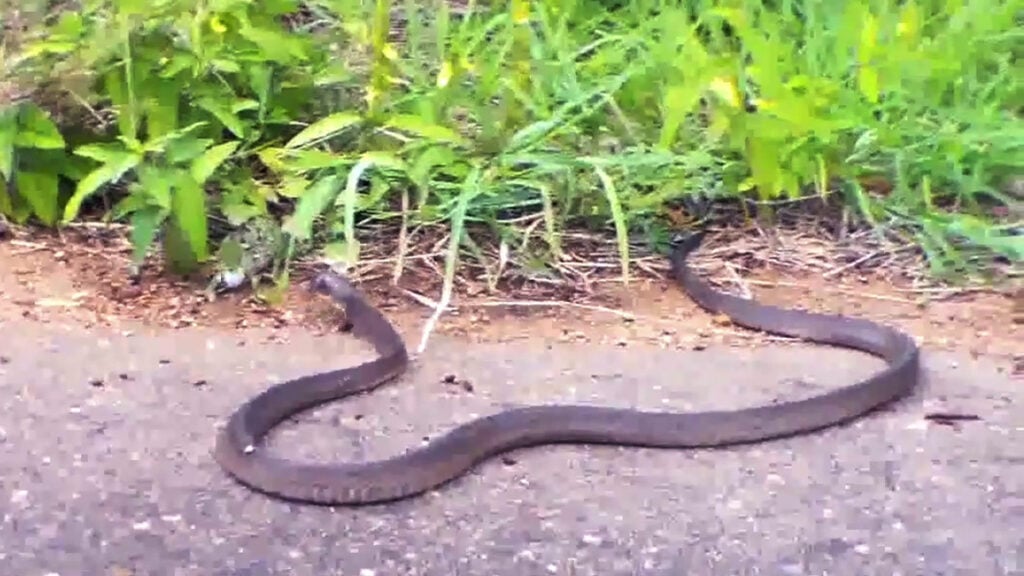
Although the footage is somewhat blurry, it appears to be a herald snake (Crotaphopeltis hotamboeia), also known as a red-lipped herald. They are endemic to sub-Saharan Africa.
Standing its ground
As we watch, we soon discover why the snake hasn’t slithered off, as snakes often do when humans approach. It has discovered a potential meal.
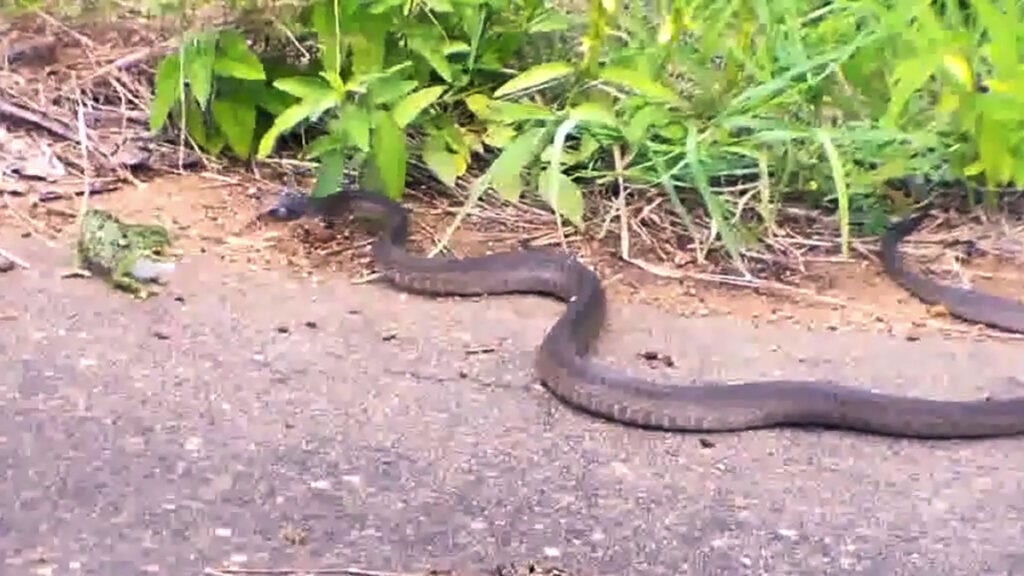
Alongside the snake, a flap-necked chameleon is standing its ground. Like the herald, it is also a native of sub-Saharan Africa.
Never Miss A Viral Safari Video
Unusual sightings, like this snake hunting a chameleon, are popular with our members. To be among the first to see our latest sighting videos, join our exclusive alert list. Click the button above to join the WhatsApp chat right now and never miss another thrilling moment.
Defensive aggression
Since chameleons are quite slow-moving creatures, it cannot simply run away from the predatory snake. As such, its only option is to try to repel the attack.
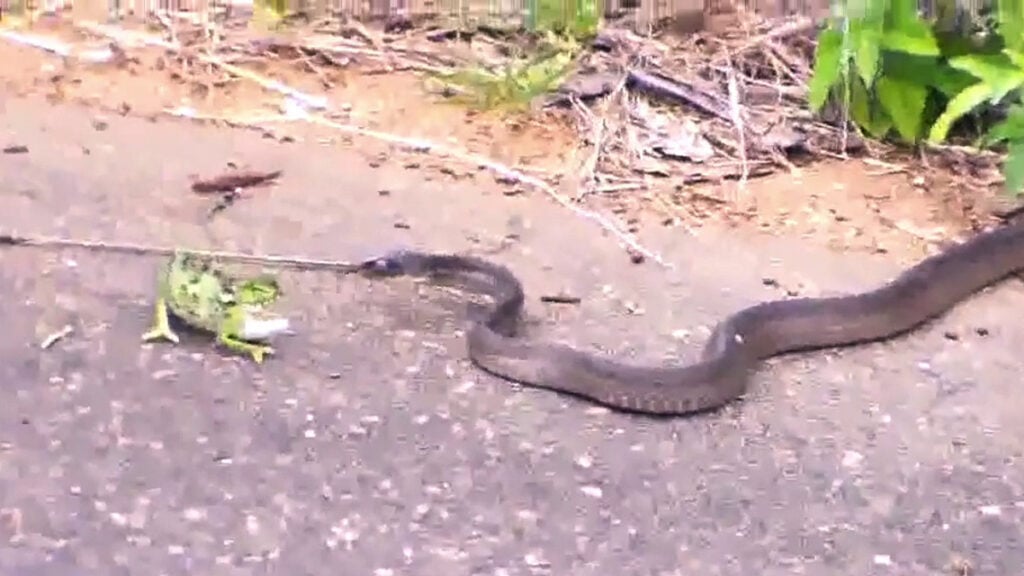
Consequently, it positions itself side-on to the snake, making itself appear bigger. Additionally, it inflates its body while gaping threateningly at its foe.
Mildly venomous
As the stand-off ensues, the snake tries to get within striking distance. Herald snakes are only mildly venomous.
Accordingly, they tend to sedate rather than kill their prey before consuming it whole. But to do so, it must bite in such a way that its small fangs can penetrate the chameleon’s tough skin.
Showing off not hiding
As you’d expect, though, the chameleon is not about to stand idly by, waiting to be bitten. Instead, every time the snake gets too close, it tries to bite it.
It is interesting to note the chameleon’s coloration in the video. Its bright green, spotted markings are the sign of an angry chamelon.
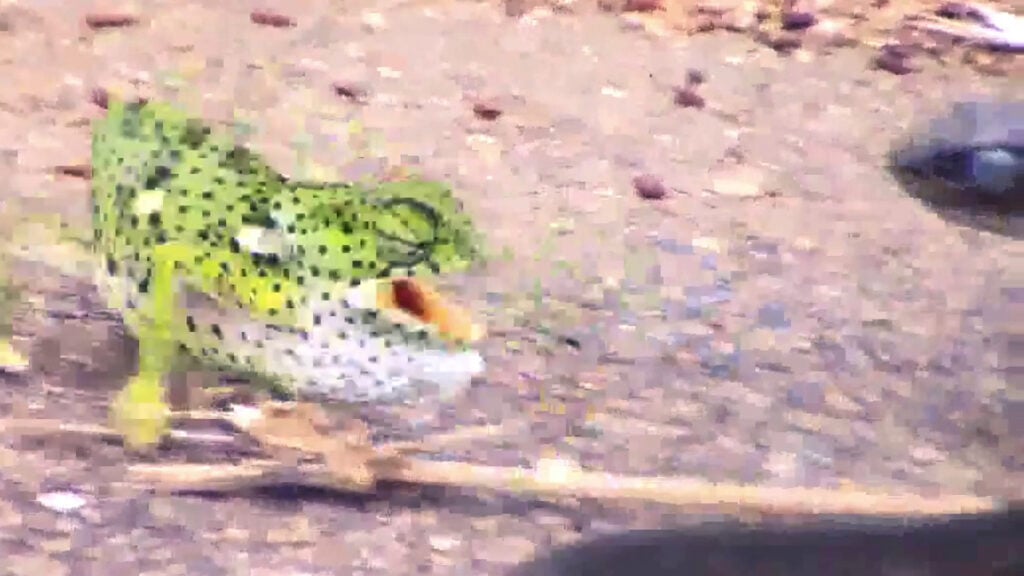
If it were scared, its colour would darken. Contrary to popular belief, chameleons don’t change colours to hide but to display their mood.
Get our Best Sightings as they Come in
Mid-moult
Another interesting aspect of the video is the fact that the snake appears to be moulting. Note the milky, blue colour of its eye.
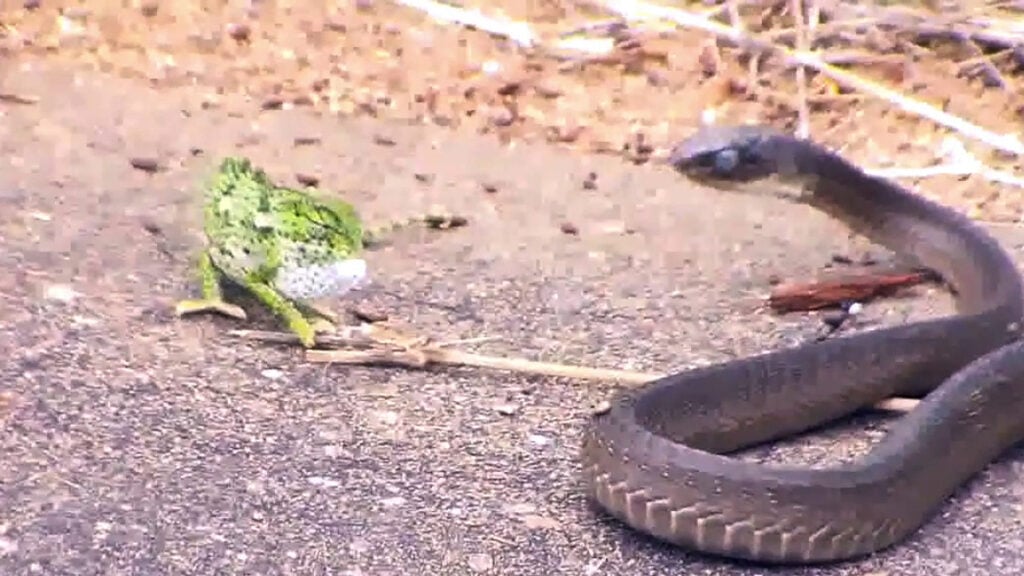
This is caused by a lubricating fluid between the old and new layers. During this phase, their eyesight is diminished, which may explain why the snake hesitates to strike.
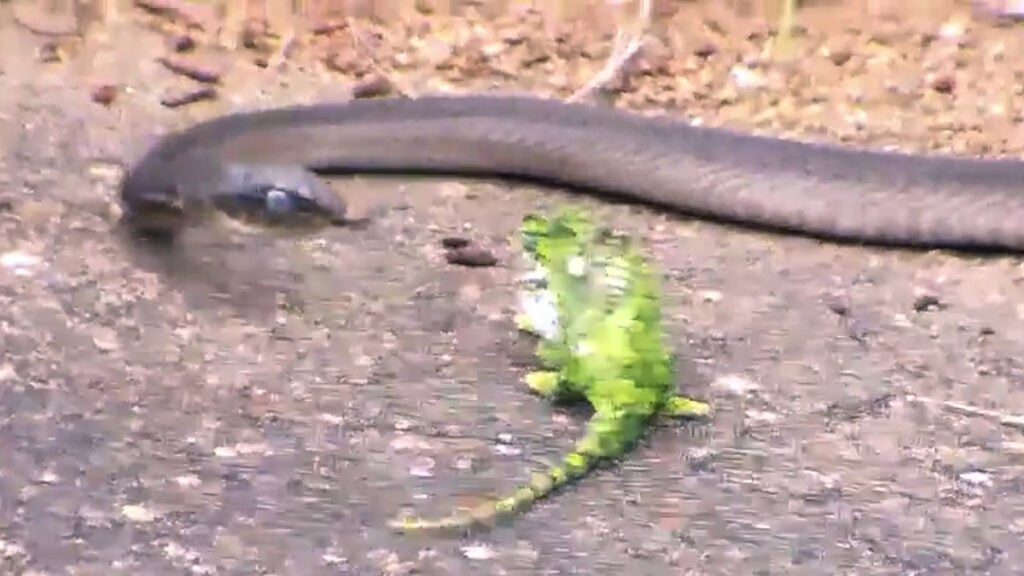
However, snakes have other means of detecting prey. Note the snake’s constantly flickering tongue. Snakes use their tongues to smell for prey.
Not hanging around
After repeated failed attempts, the snake finally manages to latch onto the chameleon. Importantly, it has bitten behind the chameleon’s head, meaning the chameleon can’t bite it back.
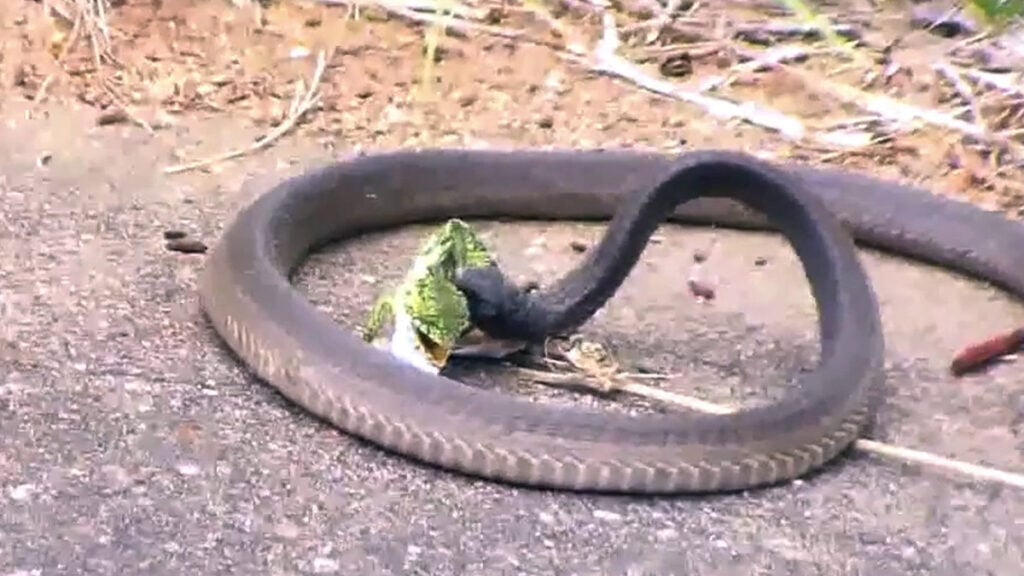
From then on, the battle leans decisively in the snake’s favour.
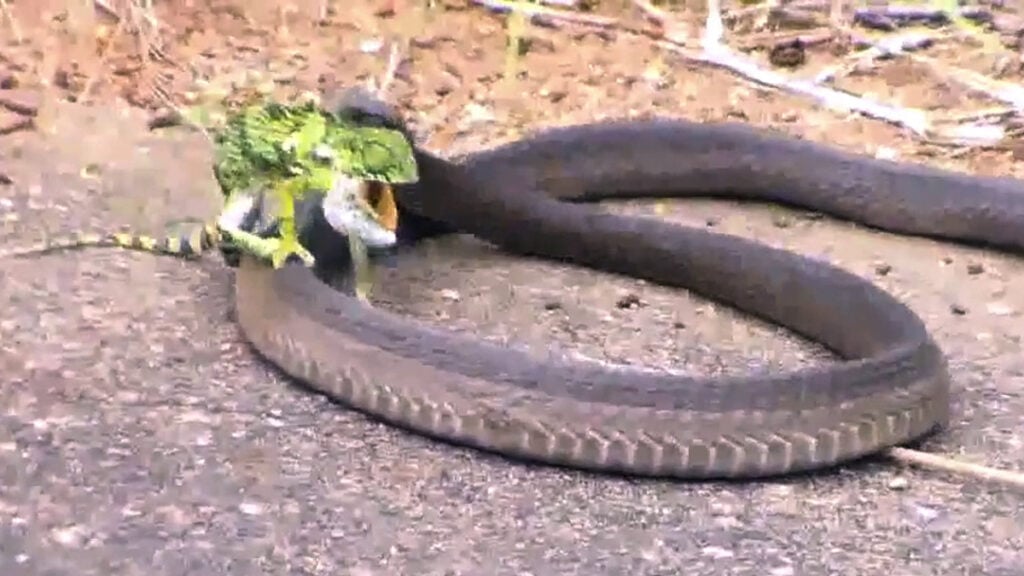
Unsurprisingly, the enraged chameleon’s gaping and hissing have no effect on the snake.
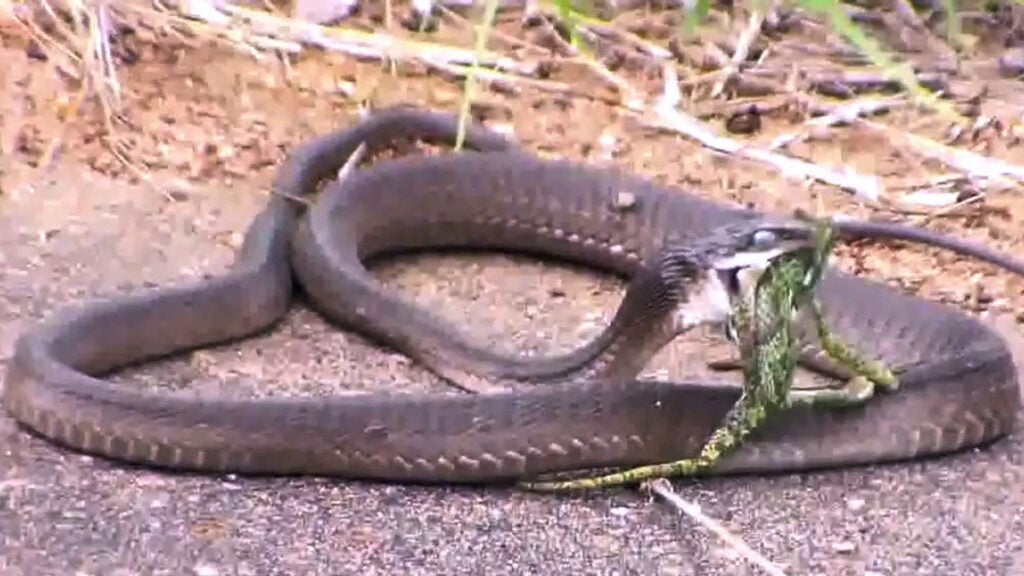
Its prey secured, the snake doesn’t hang around. To avoid losing its meal to another predator or becoming a meal itself, it must move to cover quickly.
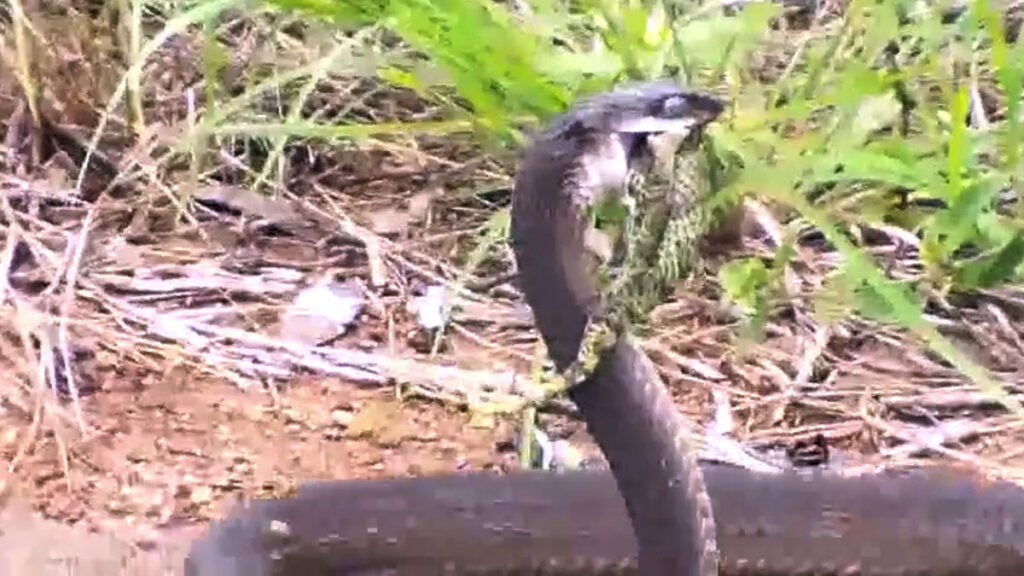
Consequently, the snake raises its head and moves into the undergrowth without further ado.


